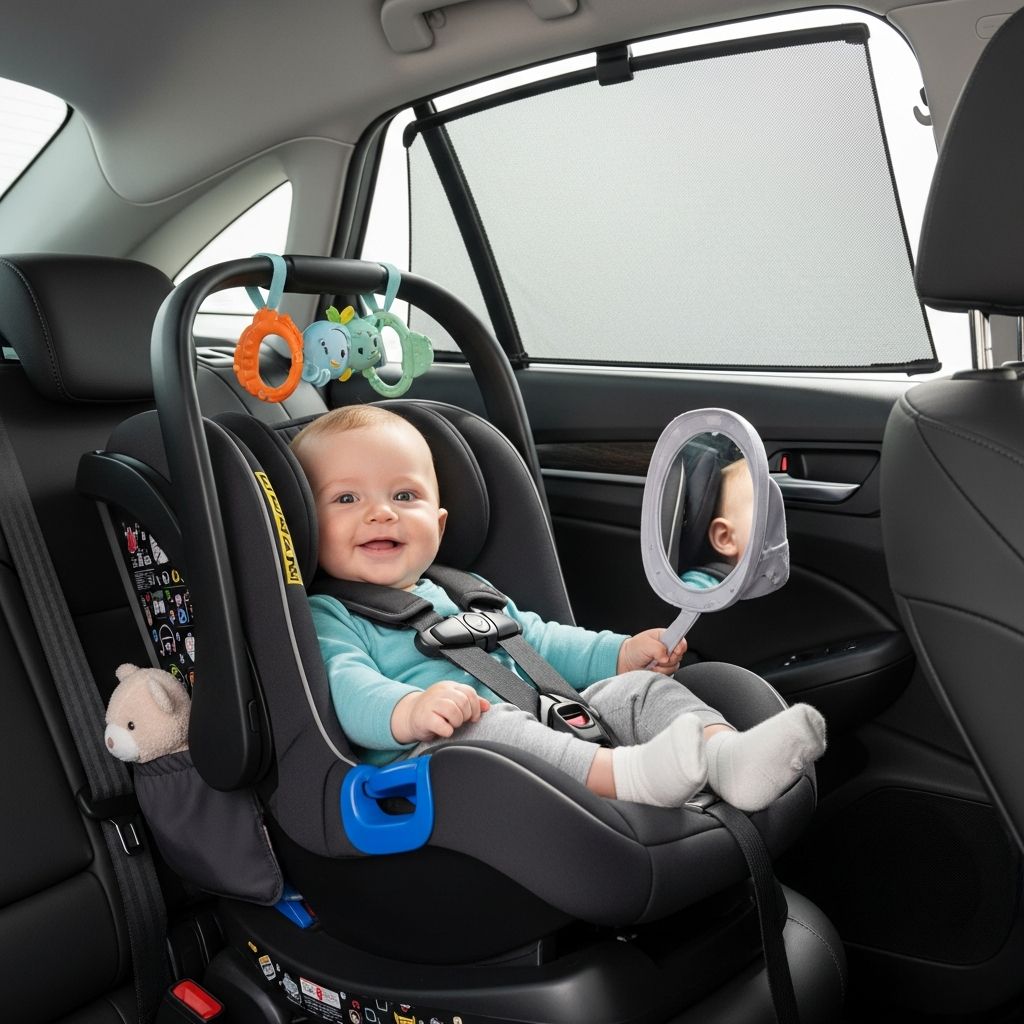
Many parents face the challenge of babies who cry or fuss in car seats, turning short trips into stressful ordeals. Proper installation, comfort adjustments, and understanding infant development can transform these experiences while prioritizing safety. Rear-facing seats remain the gold standard for infants, protecting their necks and spines during crashes.
Understanding Why Infants Resist Car Seats
Infants often protest car seats due to unfamiliar reclined positions that differ from upright holding, restricted movement limiting self-soothing, or overstimulation from passing scenery. Newborns’ immature neck muscles make rear-facing essential, yet it can feel confining. Digestive discomfort from gas or reflux may worsen in a semi-reclined posture, and separation anxiety peaks around 6-8 months, amplifying distress during buckling. Hunger, tiredness, or wet diapers before trips contribute too. Recognizing these triggers allows targeted solutions without compromising safety protocols.
Mastering Rear-Facing Car Seat Installation
Correct installation is foundational for both safety and comfort. Always position rear-facing seats in the back seat, away from front airbags that pose severe risks to infants. Use the vehicle’s lower anchors or seat belt—never both—to secure tightly; the seat should move less than 1 inch side-to-side or front-to-back.
Follow the seat’s recline indicator precisely: too upright risks head flop and airway restriction, while excessive recline heightens crash injury potential. Shoulder straps must sit at or below shoulders, harness snug (no pinchable slack), and chest clip at armpit level. These steps, per NHTSA guidelines, reduce injury risk by 70-80%.
| Common Installation Mistake | Correct Practice | Safety Benefit |
|---|---|---|
| Front seat placement | Back seat, rear-facing | Avoids airbag deployment hazards |
| Loose fit (>1 inch movement) | Tight with LATCH or belt lock-off | Prevents seat shift in crashes |
| Wrong recline angle | Match indicator level | Maintains airway and head control |
| Bulky clothing under harness | Thin layers, blanket over | Ensures snug fit without compression gap |
Enhancing Comfort Without Sacrificing Safety
Comfort tweaks must align with manufacturer guidelines. Avoid thick coats or blankets under harnesses, as they compress in crashes, loosening fit. Opt for lightweight clothing and tuck blankets over straps post-buckling. Rolled receiving blankets beside the head provide neck support for newborns, preventing slouching.
- Use manufacturer-approved inserts only for infants under 3 months.
- Position a small rolled towel under the crotch strap if permitted, to curb leg sliding.
- Ensure even weight distribution to avoid tipping on uneven surfaces outside the car.
For longer trips, schedule feeds and naps to coincide with drives, minimizing hunger cries. White noise apps or soft music mimic womb sounds, calming vestibular systems attuned to motion.
Pre-Trip Routines for Stress-Free Buckling
Establish positive associations by buckling during happy moments, like post-feeding when content. Practice short stationary sessions with toys or mirrors for distraction, gradually extending to drives. Warm the seat in winter with a blanket removed before use, preventing cold shock.
Change diapers, burp, and swaddle lightly beforehand. Sing familiar songs during buckling to signal safety. Consistency builds tolerance, reducing resistance over weeks.
Addressing Common Age-Specific Challenges
Newborns (0-3 Months)
Focus on head control: use side supports and ensure recline keeps heads from flopping. Limit non-car use to 2 hours max to avoid positional asphyxia.
4-6 Months
Teething or growth spurts heighten fussiness. Offer pacifiers approved for car use and check for proper harness growth adjustments.
6-12 Months
Separation anxiety peaks; maintain eye contact via rearview mirrors with toys. Legs bending over seat edges is safe—do not forward-face early.
Entertainment and Distraction Techniques
Safe toys clipped to seats (no handle hangs) provide engagement without projectile risk. Blackout shades reduce visual overload, while dangling soft toys or board books encourage reaching within harness limits.
- Mirrors for parent visibility foster security.
- Portable fans for airflow in heat.
- Chew toys for teething relief.
Rotate items to sustain interest. For extreme cases, consult pediatricians about reflux wedges if manufacturer-approved.
Long-Haul Trip Strategies
Break journeys into 1-2 hour segments with stops for stretching. Travel during peak sleep windows, using motion to induce drowsiness. Pack a car-seat-friendly travel system compatible with strollers for seamless transitions. Hydrate parents for calm responses—modeling serenity influences baby mood.
When to Transition from Infant Seats
Switch to convertible seats rear-facing until max height/weight (often 2+ years), then forward-facing with harness, boosters by 4-7 years, seat belts by 8-12. Premature transitions spike injury risks; heed NHTSA: back seat until 12.
Frequently Asked Questions
Can I use a thick blanket in winter?
No—dress in thin layers and cover over harness to maintain snug fit.
How long should my baby stay rear-facing?
As long as possible, per seat limits—ideally to age 2 or beyond.
What if my baby slouches?
Use permitted rolled towels at sides or crotch; avoid aftermarket padding.
Is it okay to leave baby in the seat outside the car?
Briefly on flat, firm surfaces; keep fully harnessed to prevent falls.
How tight should the harness be?
No pinchable slack at shoulders; chest clip at armpits.
Professional Help and Resources
Local fire stations or hospitals offer free inspections. Apps from NHTSA simulate fits. Persistent crying warrants pediatric checks for reflux or sensory issues.
References
- Do’s and Don’ts of Infant Car Seat Use — Consumer Reports. 2023-10-12. https://www.consumerreports.org/babies-kids/car-seats/dos-and-donts-of-infant-car-seat-use-a1085378476/
- Car Seat Safety: Newborn to 2 Years — Children’s Hospital of Philadelphia. 2024-05-15. https://www.chop.edu/centers-programs/car-seat-safety-kids/car-seat-safety-by-age/newborn-2-years
- Car Seats: Information for Families — American Academy of Pediatrics (HealthyChildren.org). 2025-01-20. https://www.healthychildren.org/English/safety-prevention/on-the-go/Pages/Car-Safety-Seats-Information-for-Families.aspx
- Car seat safety: Avoid 9 common mistakes — Mayo Clinic. 2024-08-10. https://www.mayoclinic.org/healthy-lifestyle/infant-and-toddler-health/in-depth/car-seat-safety/art-20043939
- Car Seat Safety Tips — Buckle Up for Life. 2023-11-05. https://www.buckleupforlife.org/wp-content/uploads/Car-Seat-Safety-Tips-English-BUFL.pdf
- Car Seat & Booster Seat Safety, Ratings, Guidelines — NHTSA. 2025-02-01. https://www.nhtsa.gov/vehicle-safety/car-seats-and-booster-seats