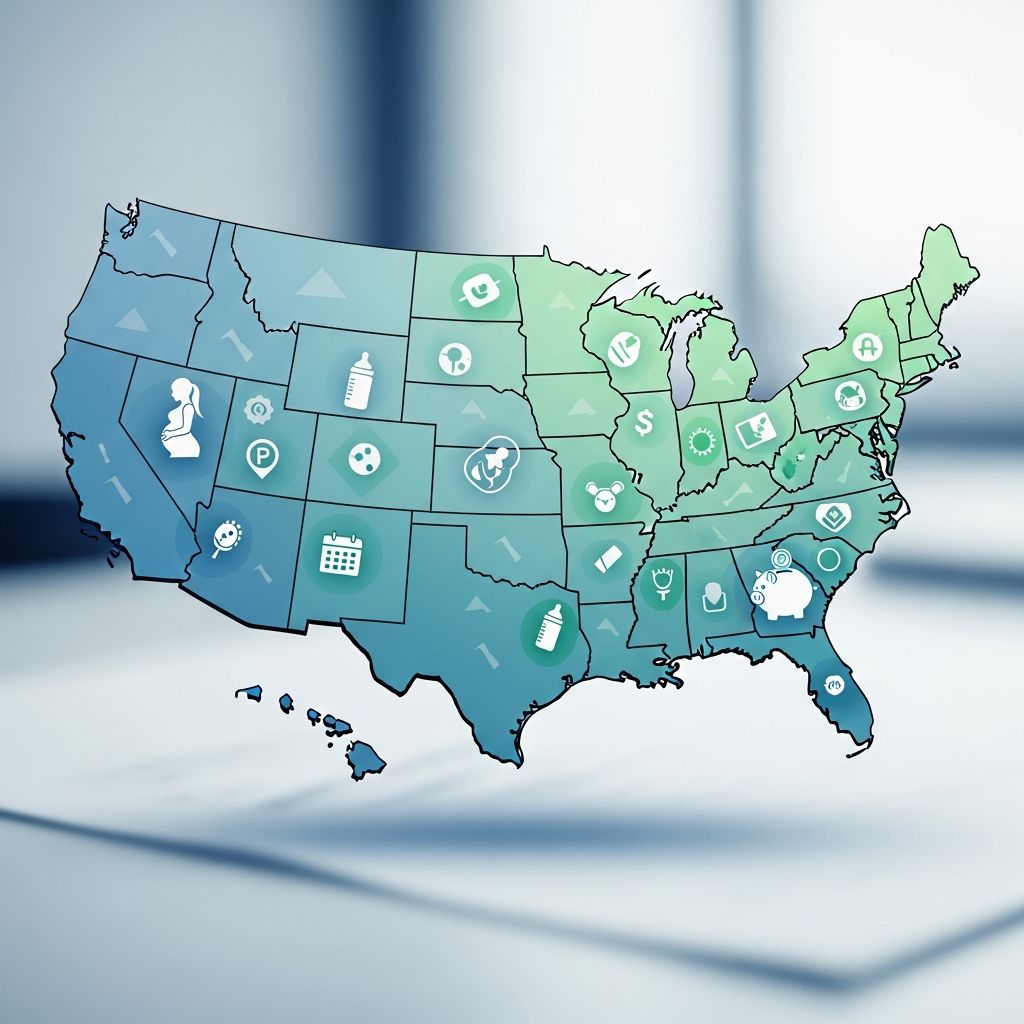
New parents in the United States face a patchwork of leave policies that combine federal guarantees with varying state-level benefits. While the federal Family and Medical Leave Act (FMLA) offers basic job protection, many states have introduced paid family and medical leave programs to support recovery from childbirth and bonding with newborns. This guide details entitlements nationwide, highlighting 2026 updates like expanded coverage in Colorado and Minnesota.
Federal Foundation: Understanding FMLA Protections
The cornerstone of maternity leave nationwide is the FMLA, which provides eligible employees with up to 12 weeks of unpaid, job-protected leave annually. This covers the birth or adoption of a child, bonding time, or serious health conditions related to pregnancy. To qualify, workers must have 12 months of service, 1,250 hours worked in the prior year, and employment at a company with 50+ employees within 75 miles.
Employers must maintain group health insurance during FMLA leave, and upon return, employees get their original or an equivalent position with the same pay and benefits. However, FMLA is unpaid, prompting many to use accrued PTO, short-term disability, or state paid programs for income replacement.
- Key FMLA uses for parents: Childbirth recovery, newborn bonding (up to 12 weeks), adoption/foster care placement.
- Limitations: No pay guarantee; excludes smaller employers and newer hires.
- Tip: Combine with state benefits for partial wage replacement where available.
States Leading with Paid Family Leave Programs
Thirteen states plus Washington, D.C., now offer paid family leave (PFL) or paid family and medical leave (PFML) as of 2026, funded via payroll contributions from employees, employers, or both. These provide wage replacement (typically 60-90% of pay, capped) during maternity or parental leave, often stacking with FMLA for enhanced protection.
| State | Weeks of Paid Leave | Benefit Rate | 2026 Updates |
|---|---|---|---|
| California | Up to 8 (PFL) + disability | 60-70% wage replacement | Ongoing expansions |
| New York | 12 weeks | 67% up to $1,228.53/week | Benefit cap increased |
| New Jersey | 12 weeks | 85% wage replacement | Stable program |
| Rhode Island | 4-6 weeks (temp disability + TDI) | Varies by wage | No major changes |
These programs cover birthing parents’ recovery and non-birthing parents’ bonding time equally, promoting family equity.
2026 Game-Changers: New and Expanding Programs
Colorado’s FAMLI Enhancements
Colorado’s Family and Medical Leave Insurance (FAMLI) program, covering all private employers, sees major boosts in 2026. Eligible employees gain 12 extra weeks of paid leave for newborns in neonatal intensive care units (NICU) or higher-level care, on top of standard 12 weeks for bonding or medical recovery. Pregnancy-related serious conditions add four more weeks, potentially totaling 28 weeks.
Premiums drop slightly to 0.88% of wages, split between employers and employees. Job protection applies universally.
Minnesota’s Paid Leave Launch
Minnesota Paid Leave (MPL) rolled out benefits January 1, 2026, offering 12 weeks medical leave for personal health issues (including pregnancy complications) and 12 weeks family leave for bonding or caregiving, combinable up to 20 weeks per benefit year. Funded by premiums (employers cover at least half), it applies to nearly all employees after meeting earnings thresholds.
Separate from sick time laws, MPL ensures broad access with job protection.
Maine’s PFML Activation
Maine’s Paid Family and Medical Leave begins May 1, 2026, post-payroll deductions started in 2025. All private employers (even size 1+) must provide up to 12 weeks paid leave for private/public sector workers employed 120+ days and meeting earnings criteria. Covers family/medical needs with shared contributions.
Maryland’s Delayed Rollout
Maryland FAMLI contributions start 2027, benefits 2028 (postponed again). Plans include parental/medical leave with inflation-tied benefits, but regulations pending.
Regional Spotlights: Northeast and West Coast Leaders
West Coast: Washington’s Paid Family and Medical Leave expands job protection in 2026, allowing FMLA to offset against 16 weeks total (coordinating federal/state). Oregon and California maintain robust PFL with 12+ weeks paid.
Northeast: New York’s 2026 max weekly benefit rises to $1,228.53 (67% of state average weekly wage), applicable from the first day of leave even if spanning years. Intermittent leave restarts claims after 3 months for potential higher rates. Massachusetts and Connecticut offer 12-20 weeks combinable PFML.
States Without Paid Leave: Unpaid Options Only
Most states rely solely on FMLA’s unpaid framework. Examples:
- Florida, Texas, Georgia: FMLA if eligible; no state paid programs. Average leave: 10 weeks using PTO/disability.
- Expansions pending: Nebraska, Oklahoma piloting voluntary programs.
Employers may offer supplemental paid leave voluntarily; 25% provide 6-8 weeks fully paid maternity.
Eligibility Essentials and Application Tips
State programs vary: most require 6-12 months employment, minimum earnings (e.g., Maine’s 120 days), excluding self-employed unless opted in. Benefits calculated on prior wages, often 60-85% replacement with caps.
- Check employer size and your tenure against FMLA/state rules.
- Notify employer 30 days advance for foreseeable leave (e.g., due date).
- File claims via state portals (e.g., NY’s paidfamilyleave.ny.gov).
- Coordinate with short-term disability for birthing parents.
Phased returns, like part-time first month back, recommended for smooth transitions.
Employer Responsibilities and Best Practices
Businesses must post notices, track contributions (e.g., MN premiums due April 30, 2026), and restore jobs post-leave. Smaller firms in universal states like CO/ME face new compliance; opt-outs rare.
Best policies: 6-8 weeks fully paid, equal parental leave, inclusivity for adoption/foster, clear communication.
Frequently Asked Questions (FAQs)
Is maternity leave paid federally in the US?
No federal paid maternity leave exists. FMLA is unpaid; 14 states/DC provide paid via PFML programs.
How many weeks can new parents typically take?
FMLA: 12 unpaid. Paid states: 8-20 weeks partial pay. Average actual: ~10 weeks.
Does paid leave cover non-birthing parents?
Yes, most state programs include bonding for all parents, adoptive/foster included.
What if my leave spans 2025-2026?
Rates apply from first day (e.g., NY 2026 cap if starting then).
Am I eligible if self-employed?
Often yes via opt-in (e.g., CO FAMLI); check state rules.
Planning for Your Family Leave
Research your state’s program early—many require pre-leave filings. Consult HR or state labor departments for personalized advice. As 2026 brings expansions to millions, more families gain support for vital early months.
References
- 2026 Family and Medical Leave Law Updates: What Employers in Seven States Need to Know — Epstein Becker Green. 2026-01 (approx). https://www.ebglaw.com/insights/publications/2026-family-and-medical-leave-law-updates-what-employers-in-seven-states-need-to-know
- State paid family leave benefit changes in 2026 — HR Dive. 2026 (recent). https://www.hrdive.com/news/state-paid-family-leave-benefit-changes-in-2026/809625/
- U.S. Maternity Leave in 2026: Laws & State Comparisons — Playroll. 2026. https://www.playroll.com/blog/maternity-leave-united-states
- New York Paid Family Leave Updates for 2026 — NY Paid Family Leave. 2026. https://paidfamilyleave.ny.gov/2026
- The Complete Guide to US Family and Medical Leave Rules for 2026 — Benely. 2026. https://benely.com/the-complete-guide-to-us-family-and-medical-leave-rules-for-2026/
- In 2026, More Workers Nationwide Than Ever Will Have Paid Leave — A Better Balance. 2026. https://www.abetterbalance.org/in-2026-more-workers-nationwide-than-ever-will-have-paid-leave-new-laws-you-should-know-about/