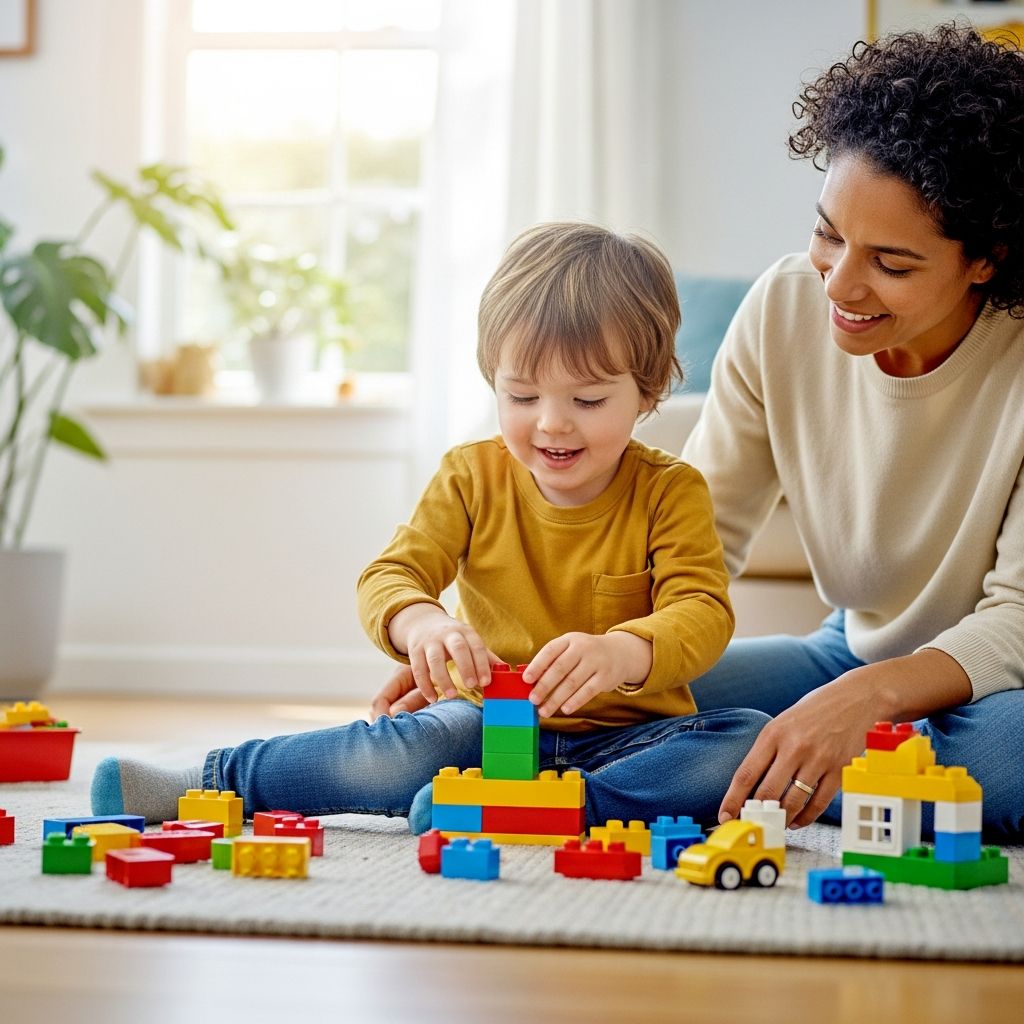
Few toys inspire as much excitement—and as much parental hesitation—as LEGO. Tiny bricks promise creativity, focus, and hours of imaginative play, but they also seem to invite chaos: sharp pieces underfoot, half-built masterpieces on every surface, and the constant fear of a small child putting a brick in their mouth.
This guide walks through how to introduce LEGO to your young child in a way that feels safe, age-appropriate, and manageable for the whole family. It offers concrete strategies so those first bricks become the foundation of a lifelong love of building, not a source of daily frustration.
Why LEGO Is Worth the Effort
Before dealing with the mess and the tiny parts, it helps to remember why LEGO is worth introducing in the first place. These small bricks support a surprising range of skills and can grow with your child for many years.
- Creativity and imagination: Open-ended building encourages kids to dream up their own worlds, vehicles, and stories instead of relying solely on screens or scripted toys.
- Problem-solving and persistence: When a tower falls or a design doesn’t work, children naturally experiment, adjust, and try again.
- Fine motor skills: Picking up, positioning, and snapping bricks together builds hand strength and coordination needed for writing and daily tasks.
- Early STEM thinking: Kids informally explore balance, symmetry, counting, patterns, and simple engineering as they build.
- Social and emotional growth: Collaborative building teaches turn-taking, negotiation, and handling disappointment when things break or plans change.
Is Your Child Ready for LEGO?
There is no single “right” age to introduce LEGO, but there are helpful signs that your child may be ready to move from chunky blocks to interlocking bricks. Readiness is more about behavior, motor skills, and attention than the number on the box.
Signs of Readiness
- Shows interest in stacking, lining up, or arranging toys rather than only throwing or mouthing them.
- Can focus on a simple activity (like drawing or puzzles) for at least 5–10 minutes.
- Follows basic instructions such as “put the block here” or “hand me the blue one.”
- Has mostly outgrown the phase of putting every object in their mouth.
- Uses a pincer grasp (thumb and forefinger) to pick up small objects.
Age-Appropriate Brick Types
Picking the right brick size is the most important early safety decision. Here is a simple reference to guide you.
| Age range (approx.) | Recommended type | Key features |
|---|---|---|
| 1–2 years | Very large, chunky blocks (oversized alternatives to standard bricks) | Too big to swallow, easy to grip, limited variety to prevent overload |
| 2–3 years | Larger toddler bricks (similar to DUPLO-style) | Still safe in size, simple shapes, bright colors, basic animals/vehicles |
| 3–5 years | Toddler/transition bricks; a few larger standard bricks with supervision | More variety, simple wheels, windows, and figures; guided building |
| 5+ years | Standard LEGO-sized bricks and simple themed sets | Smaller pieces, printed instructions, more complex builds possible |
Setting Up a LEGO-Friendly Environment
Environment is half the battle. A few thoughtful choices up front can prevent many of the classic headaches (lost pieces, painful steps, and toppled towers).
Choose a Home Base
Instead of letting bricks migrate to every room, pick one main spot where LEGO lives. This makes clean-up easier and reduces the risk of stepping on stray pieces in the dark.
- Use a washable play mat or rug so pieces are easier to see and gather.
- Consider a low coffee table, train table, or dedicated building tray to keep creations off the floor and away from pets or younger siblings.
- Keep the area well-lit; dim corners invite missed bricks and hidden hazards.
Clever Storage That Kids Can Manage
Perfectly color-sorted, Instagram-ready bins look nice, but young kids rarely maintain them. Focus on systems your child can actually use independently.
- One large bin for everything: Simple and realistic for toddlers and preschoolers.
- Shallow trays or under-bed boxes: Allow kids to see pieces at a glance, reducing frustration.
- Labeled buckets: Sort only by broad category—”bricks,” “wheels,” “figures”—if your child enjoys sorting.
- Build plate storage: Slide baseplates upright along the side of a box or in a magazine holder to prevent warping.
Safety First: Minimizing Risks Without Killing the Fun
Even the most responsible child can drop pieces or get carried away during play. A few ground rules allow freedom while keeping everyone safe—especially babies and pets.
Choking Hazards and Age Gaps
- Keep standard-size LEGO bricks and very small accessories in a closed container out of reach of toddlers or babies.
- If you have multiple children, create a clear rule: “Small bricks stay at the table; big bricks can go on the floor.”
- Supervise closely during mixed-age play and end the session with a quick sweep of the area for any stray pieces.
Protecting Feet, Floors, and Sanity
- Use a large fabric play mat with a drawstring that doubles as a storage bag; when playtime ends, pull the string and pour pieces back into a bin.
- Set a boundary that bricks stay off walkways, stairs, and under furniture where they are likely to be stepped on or sucked into vacuum cleaners.
- Teach your child to pause and tidy a few times during long building sessions instead of waiting until complete exhaustion at the end.
First LEGO Sessions: How to Start Gently
Your child’s first few experiences with LEGO shape how they feel about building in general. A low-pressure, playful introduction is more effective than handing over a complicated set with strict rules.
Keep It Short and Sweet
- Begin with 10–15 minute sessions, especially for toddlers or easily frustrated kids.
- Offer a modest number of bricks rather than dumping out the entire collection; fewer choices can mean more creativity and less overwhelm.
- Join in at first, but let your child lead. Follow their ideas rather than pushing your own elaborate designs.
Simple First Activities
Start with activities that are open-ended, easy to “win,” and hard to get wrong.
- Color towers: Challenge your child to build the tallest tower of a single color, or to create a rainbow of stacked colors.
- Shape matching: Ask them to find “two pieces the same” or build a shape that matches a drawing you make on paper.
- Build and knock: For younger children, create mini towers together and let them be in charge of knocking them down.
- Copy a simple model: Build a small car or house with just a handful of bricks, then invite your child to make “one like it, but their way.”
Balancing Instructions and Free Play
Many parents wonder whether to focus on following the instruction booklet or on creative, no-rules building. Both approaches offer value, and alternating between them usually works best.
Benefits of Guided Building
- Helps children learn to follow sequences, pay attention to details, and persist through multi-step tasks.
- Gives a clear, satisfying end result that can boost confidence—especially for kids who like structure.
- Introduces new building techniques (like using hinges or gears) they might not discover on their own.
The Power of Free Building
- Encourages imagination and storytelling; kids turn simple brick piles into cities, spaceships, or made-up creatures.
- Allows children to experiment without fear of doing it “wrong” or breaking the rules of an instruction booklet.
- Lets siblings of different ages collaborate more easily, since they are not all trying to follow the same page.
A helpful rhythm is to use instructions when first opening a set, then quickly give permission to modify, rebuild, or dismantle the official model to create something new. Make it clear that instructions are an option, not the only “correct” way to play.
Handling Frustration, Perfectionism, and Broken Builds
What feels like a tiny problem to an adult—an accidentally knocked-over tower or a missing piece—can feel huge to a young child. Anticipating big feelings around LEGO can help you respond calmly and supportively.
When Things Break
- Empathize first: “You worked hard on that car. It’s really disappointing when it breaks.”
- Offer a clear next step: “Want help fixing it, or do you want to build something new?”
- If siblings are involved, focus on problem-solving (“How can we rebuild and make a space where no one steps?”) rather than blame.
Supporting the “Little Perfectionist”
- Normalize mistakes: Share that all builders, even adults, try designs that don’t work the first time.
- Point out progress rather than perfection: “Look how much taller your towers are compared to last week.”
- Encourage flexible thinking: Ask, “What else could this become?” instead of “Can you fix it exactly?”
Making LEGO a Family Activity
LEGO can be more than just a solitary pastime; it can act as a gentle way to connect as a family without the pressure of big conversations or structured games.
Ideas for Shared Builds
- Family city: Each person designs one building or vehicle and adds it to a shared “town.”
- Story challenge: Build characters (people, animals, robots) and take turns telling parts of a story using the models.
- Theme nights: Choose a theme—space, jungle, underwater—and everyone builds something that fits.
House Rules That Keep Peace
- Agree on how long finished models can stay built before they return to the general pile.
- Set up a “special shelf” or box for creations your child wants to display temporarily.
- Teach “ask before dismantling” so siblings do not destroy each other’s work.
Screen-Free Learning With LEGO
As kids get older, LEGO can gently introduce more explicit learning concepts without turning playtime into a rigid lesson. Many simple games blend fun and education seamlessly.
Early Math and Logic Ideas
- Practice counting by building towers with a set number of bricks, then comparing heights.
- Create patterns (red-blue-red-blue) and have your child continue or change the pattern.
- Sort bricks by size or shape and talk about “longer/shorter,” “wider/narrower,” or “more/fewer.”
Storytelling and Language Play
- Ask your child to “give you a tour” of their creation, describing rooms, characters, and what they do.
- Turn builds into a mini stage for puppets or figures and act out simple scenes together.
- Invent “missions” (rescuing an animal, crossing a river) that require kids to explain their design choices.
Sample LEGO Session Plan (30–40 Minutes)
For families who like a bit of structure, here is an example of a short, balanced LEGO session you can adapt to your child’s age and interests.
- 5 minutes – Setup: Spread a mat, pick a small set of bricks or a simple kit, and agree on a general idea (cars, animals, houses).
- 10–15 minutes – Guided build: Follow a few steps of instructions together or copy a simple model.
- 10–15 minutes – Free build: Encourage your child to change, add to, or combine the model with their own ideas.
- 5 minutes – Show and tell: Have your child explain what they built and name their creation.
- 5 minutes – Clean-up: Sing a short clean-up song or race a timer while putting pieces back.
Frequently Asked Questions
1. My toddler still mouths toys. Is LEGO off-limits?
If your child regularly puts objects in their mouth, standard LEGO bricks should wait. Offer only very large, toddler-safe blocks under close supervision, and keep all smaller pieces securely stored until the mouthing phase has clearly passed.
2. How many bricks do we really need to start?
You do not need a giant tub of bricks on day one. A single small set or a basic box with a few dozen pieces is enough to test your child’s interest, learn their preferences, and decide how much more to invest in the future.
3. What if my child only wants to follow instructions and never free builds?
Some kids truly love the structure and clarity of instruction-based sets. You can gently invite creativity by asking small, low-pressure questions like, “What would you add if you could?” or “How would you change this roof?” rather than insisting they abandon instructions completely.
4. What if my child gets upset whenever a creation is taken apart?
For children who are very attached to their builds, agree in advance on how long they can remain assembled and where they will be stored. Taking a quick photo before dismantling also helps them feel that their work is remembered and respected.
5. How can I keep LEGO from taking over the entire house?
Choose one or two designated building areas and keep storage containers in those spaces. Make a household rule that bricks do not travel to bedrooms, bathrooms, or the dining table, and be consistent with quick end-of-day sweeps to return strays.
Final Thoughts
Introducing LEGO to your child does not have to mean surrendering your home to scattered bricks and daily power struggles. With age-appropriate pieces, a manageable setup, and a few clear rules, you can create a playful environment where your child learns, experiments, and grows—while you keep your feet, your schedule, and your patience mostly intact.
Over time, the small rituals around building—spreading out the mat, choosing bricks, showing off a finished design—can become a quiet, shared rhythm in your family life. Those little plastic bricks then become more than a toy; they become a familiar way to connect, unwind, and watch your child’s ideas gradually take shape, brick by brick.