A no-technology sleepover can feel radical in a world where group photos, gaming apps, and endless videos seem like the default entertainment. Yet when you strip away the screens, you make more room for laughter, connection, and creativity. This guide walks you through planning a memorable, drama-light, screen-free sleepover that tweens will actually talk about the next day (in a good way).
Why Go Screen-Free for a Sleepover?
Setting a no-tech rule for a tween sleepover is less about punishment and more about protecting the vibe. Without phones and tablets, kids are more likely to:
- Talk to each other instead of sitting in separate corners scrolling or gaming.
- Feel less pressure to pose, perform, or compare themselves on social media.
- Engage in active, imaginative play and group games that create shared memories.
- Avoid late-night drama fueled by group chats, posts, or messages from kids who aren’t invited.
Framing the night as a special unplugged event rather than a list of restrictions helps kids buy into the idea from the start.
Step 1: Set Expectations Before Invitations Go Out
The easiest way to avoid conflict on the night of the party is to communicate clearly well in advance. Treat the no-tech policy as a feature of the party, not a hidden rule.
- Use the invite to set the tone: Add a line like “This is a screen-free sleepover—bringing your best stories and silliest game ideas encouraged!”
- Loop parents in: Let caregivers know you’ll have a place to safely store phones and that kids can contact home through you if needed.
- Offer an exception plan: If a child uses a phone for medical or anxiety reasons, coordinate a quiet, respectful setup (for example, phone on silent but accessible in a labeled basket nearby).
Step 2: Create a Screen-Free Zone That Feels Special
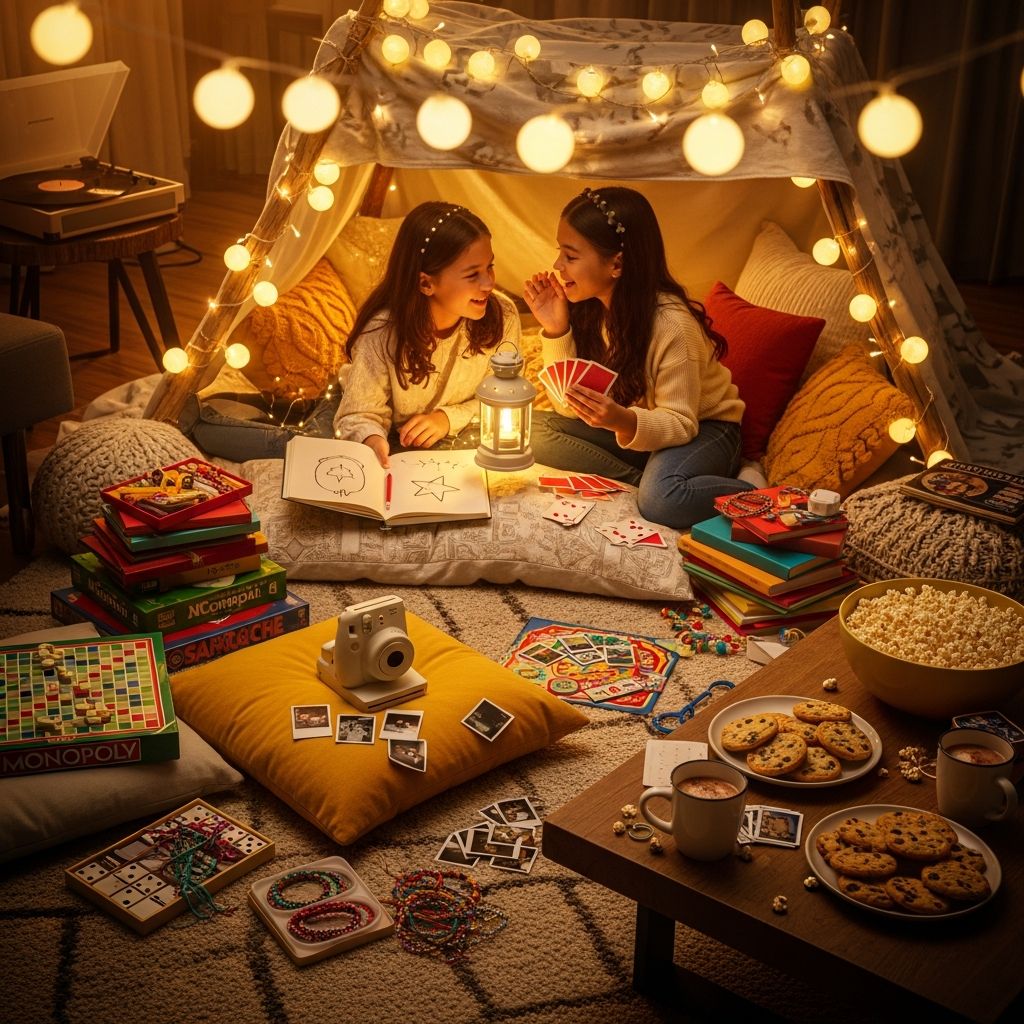
If kids walk into a space that feels cozy and intentional, they’re much less likely to miss their devices. You don’t need expensive decor—just a bit of atmosphere.
- Cozy corner: Pile up blankets, sleeping bags, and pillows in one area to make a shared “sleepover nest.”
- Soft lighting: Use string lights, battery candles, or a small lamp to avoid harsh overhead lighting.
- Activity station: Place a low table or a cleared floor area with board games, card decks, markers, paper, and a few simple crafts.
- Snack bar: A designated snack spot minimizes crumbs everywhere and gives kids a fun place to gather.
Suggested Evening Timeline
You don’t have to schedule every minute, but a loose structure helps the night flow. Adjust times based on your family’s routine and how late you’re comfortable with kids staying up.
| Time Block | Focus | Ideas |
|---|---|---|
| Arrival & Icebreakers | Get comfortable | Drop phones in a basket, quick name game, tour of party zones. |
| Early Evening | High-energy fun | Movement games, team challenges, scavenger hunt. |
| Mid Evening | Creative & calm | Crafts, storytelling, collaborative activities. |
| Late Evening | Wind-down | Quiet games, gentle conversations, lights dimmed. |
| Morning | Closure | Simple breakfast, quick clean-up, group photo with a real camera. |
Fun No-Tech Activities Tweens Will Actually Enjoy
The key to a successful unplugged sleepover is having more ideas than you think you’ll need. That way you can change direction if the group’s energy dips or a game isn’t working.
1. High-Energy Group Games
Start the night with active games that help kids burn off excitement and get comfortable around each other.
- Indoor relay challenges: Create simple relay races with items like spoons and cotton balls, socks and laundry baskets, or balloons and plastic cups.
- “Human knot” teamwork: Have kids stand in a circle, grab random hands across the circle, then work together to untangle without letting go.
- Shadow tag or flashlight tag (with rules): In a darkened room or yard, use a flashlight beam as “tag,” keeping safety boundaries very clear.
2. Creative Stations and DIY Fun
Once the initial buzz settles, move into quieter but still engaging activities. These give kids a chance to talk and bond while their hands stay busy.
- Friendship accessory corner: Set out string, beads, and charms for friendship bracelets, keychains, or zipper pulls.
- Design-your-own snack mix: Line up bowls of cereal, pretzels, popcorn, and chocolate chips so kids can assemble their own personal snack bags.
- Mini poster art: Give each guest a piece of cardstock and markers to design a poster with a funny quote, their name in bubble letters, or a made-up band name.
3. Conversation-Based Games
Without phones, kids might feel awkward about starting deeper conversations. Simple prompt games give them a starting point.
- Question jar: Fill a jar with folded slips of paper containing light questions such as “What food would you eat every day if you could?” or “What’s a talent you want to learn?” One person draws and everyone answers.
- “Two truths and a twist”: Each guest says two true facts and one partly-true or exaggerated statement about themselves. The group guesses which is the twist.
- Story building circle: One person starts with a single sentence. Going around the circle, each person adds a line to build a funny, unpredictable story.
Low-Drama Rules That Keep the Night Calm
Rules don’t have to ruin the fun. Present them as group agreements you’re making so everyone feels treated fairly and safely.
- No secret filming or photos: Even if you’re not allowing phones, it helps to clearly say that no one will be recorded without their knowledge.
- Bedroom boundaries: Decide which rooms are off-limits and whether doors should stay open when kids are hanging out.
- Respecting differences: Remind kids that everyone has different comfort levels about scarier games, gross-out humor, or personal questions, and those limits should be honored.
- Lights-out compromise: Choose a “quiet time” when lights are dimmed and outside voices are replaced with whispers or soft talking, even if kids aren’t fully asleep.
Handling Phones Gracefully
Even in a no-tech sleepover, phones will probably arrive with the guests. Instead of turning it into a battle, turn it into a simple system.
- Phone check-in basket: Place a small basket or box near the entry with labels or tags for each child’s name. Phones go in on arrival and are switched to silent.
- Emergency access: Let kids know they can ask to use their phone to check in with caregivers at a set time, like after dinner or before bed.
- Use a separate camera: If you want photos, use a basic camera or a family device that you control, and promise to share the pictures with parents afterward.
Sleepover Menu: Simple, Fun, and Low-Mess
Food can quickly become the most stressful part of hosting, but it doesn’t need to be elaborate. Tweens usually prefer familiar, “build-it-yourself” options.
- DIY dinner: Options like build-your-own tacos, personal mini pizzas, or baked potato bars let kids customize their meal and help themselves.
- Snack bar: Place popcorn, pretzels, cut fruit, and a few treat options within reach. Bowls with names or stickers help limit confusion.
- Breakfast basics: In the morning, keep it easy with muffins, fruit, yogurt, or cereal. A simple, cheerful breakfast brings the night to a calm close.
Sleep and Comfort: Planning for Different Personalities
Not every child will be used to sleeping away from home, and even confident kids can feel a little off in a different environment. Plan for both the night owls and the early birds.
- Layered sleep space: Have a few extra blankets, a night light, and an option for someone to sleep slightly apart from the group if they need more quiet.
- Comfort options: Let kids know they can text or call home through you, bring a favorite stuffed animal, or choose a quieter activity if they’re overwhelmed.
- Morning transition: Some kids wake very early. Set out a low-key morning basket with books, coloring pages, or simple puzzles they can use without waking everyone.
Printable-Style Game Ideas (You Can Create at Home)
You don’t need official printables to add structure; you can handwrite or quickly type up simple sheets that make activities feel more “official.”
- Scavenger list: Create a list of items or descriptions like “something that smells good,” “something older than you,” or “something that makes a cool sound.” Kids can search around the house (within your chosen area) and bring items back to a shared spot.
- Would-you-rather cards: On small slips of paper, write pairs of silly choices such as “Would you rather live in a treehouse or on a boat?” Then place them in a bowl and take turns answering.
- Creative challenge sheet: List small creative tasks: “Draw a new ice cream flavor,” “Invent a superhero,” “Write a three-line poem about snacks.” Kids can pick and complete them at their own pace.
Ideas for Different Types of Tweens
Not every group will enjoy the same type of activities. Mixing options helps everyone find something they like.
| Tween Type | What They Might Enjoy Most | Good Activity Matches |
|---|---|---|
| High-energy extroverts | Movement, competition, group laughter | Relay races, group games, scavenger hunts. |
| Quiet or shy kids | Small-group chats, creative projects | Craft stations, story-building, question jar. |
| Detail-oriented planners | Organizing activities, keeping score | Being the scorekeeper, team captain, or game helper. |
| Big imaginations | Make-believe, storytelling, design | Character-creation games, mini poster art, drama skits. |
FAQs About No-Tech Tween Sleepovers
What if a guest refuses to give up their phone?
It helps to avoid power struggles in front of the group. You can quietly step aside with the child and say something like, “This party is meant to be screen-free so everyone feels included. Let’s keep your phone in this safe spot, and if you need it to talk to your grown-up, just ask me.” If the child still resists, you can call their caregiver to decide together what to do. Having clearly stated the rule on the invitation gives you support in this moment.
What if kids say they’re bored without technology?
Sometimes “I’m bored” really means “I don’t know what to do next.” Have a mental list of backup activities like drawing challenges, card games, or a new round of a favorite game. You can also put the choice back on them by asking, “Want a silly game, a calm activity, or something creative?” Giving them control over the category can spark more enthusiasm.
How many kids is ideal for a no-tech sleepover?
For many families, a range of three to six guests is manageable. Fewer kids often means deeper conversation and easier logistics; more kids can create big-group energy but may need more structured activities and extra adult help. Consider your space, your own energy level, and your child’s social dynamics when deciding.
Should I stay involved or let them run the show?
You don’t need to be in the middle of every game, but being nearby and occasionally checking in keeps things from drifting into chaos or unkindness. A good balance is to lead the first couple of activities, then step back while letting them know you’re close if they need ideas, a referee, or a snack refill.
How do I handle kids who get homesick?
Homesickness can happen even with confident tweens. Offer a quiet space to talk, a comforting item like an extra blanket, and the chance to call home. Let them know it’s completely okay if they decide to be picked up early—leaving doesn’t mean they failed at the sleepover. Keeping the tone accepting reduces shame and makes it easier for them to listen to what they actually need.
Making the Night Memorable (Without Evidence Online)
A no-tech sleepover isn’t about having proof on social media; it’s about stories kids tell afterward. A shared joke from a late-night conversation or a ridiculous relay race can mean more than any perfectly filtered group photo. When the screens stay out of the way, tweens have a rare chance to practice real-world friendship skills: reading each other’s feelings, compromising on activities, and including everyone.
With a little planning and a calm, confident approach, an unplugged sleepover can become one of those small, shining memories your tween carries into their teen years—no chargers required.