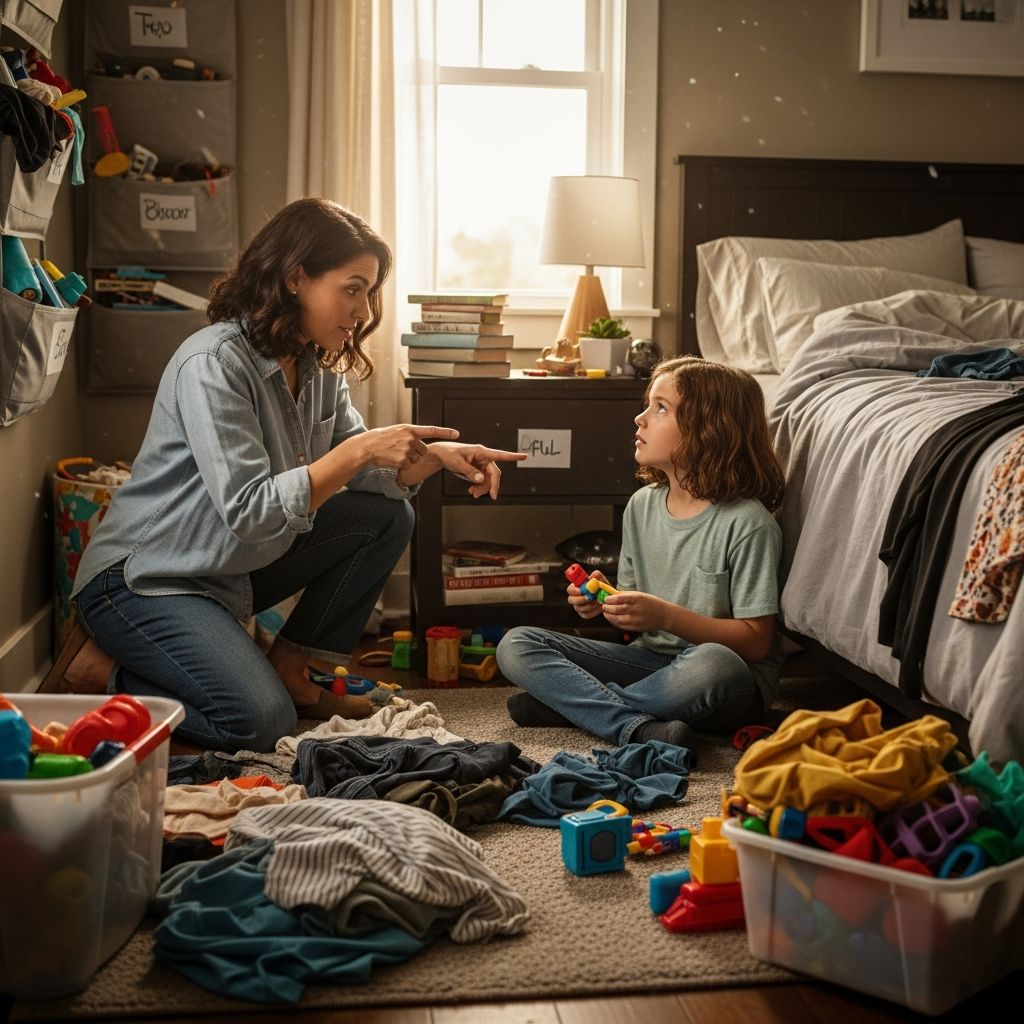
Many parents feel stuck in a constant loop of nagging, arguing, and cleaning when it comes to their children’s messy bedrooms. This guide explains why kids struggle with clutter, how to teach real organizing skills, and what systems help families keep bedrooms reasonably tidy without a daily battle.
Why Kids’ Bedrooms Get So Messy
Before expecting children to keep a perfectly neat room, it helps to understand why their spaces so often look like a disaster zone. A messy bedroom is usually less about defiance and more about skills, development, and environment.
- Overwhelm and limited skills: Looking at a whole messy room can feel impossible to a child who has never been taught how to break tasks into steps.
- Too much stuff: When toys, clothes, and collections exceed available storage, even motivated kids can’t put things away in a logical, consistent place.
- Different priorities: Kids usually care more about play, friends, and hobbies than about where socks live, so tidying rarely feels urgent.
- Developing brains: Planning, organizing, and remembering multi-step directions are executive-function tasks that are still maturing throughout childhood and adolescence.
Seeing mess as a skills-and-systems issue, not just a behavior problem, makes it easier to respond calmly and constructively.
Setting Realistic Expectations by Age
Expectations should match a child’s age and abilities. The goal is progress and participation, not perfection. Use the following as a flexible guide rather than a strict checklist.
| Age Range | Typical Abilities | Reasonable Bedroom Tasks |
|---|---|---|
| 3–5 years | Short attention span; learns best by imitation and play. |
|
| 6–9 years | Can follow simple routines with visual reminders. |
|
| 10–13 years | Capable of multi-step tasks with some supervision. |
|
| 14+ years | Increasing independence; learning time management. |
|
Use age guidelines to adjust expectations and gradually transfer more responsibility as children mature and demonstrate consistent skills.
Creating a Clear Family Standard for Bedrooms
Conflict often grows when parents and kids have different, unspoken standards for what counts as a “clean room.” Instead of arguing every weekend, define a simple, shared baseline together.
- Describe, don’t label: Replace vague complaints like “This room is disgusting” with clear outcomes such as “The floor is clear and the bed is made.”
- Pick a realistic baseline: Decide on non-negotiables (e.g., no food, no dirty dishes left overnight, clear walking path) and let less important details go.
- Write it down: Create a short, kid-friendly list or illustrated chart that defines “Ready for the day” or “Room is done” in specific steps.
A clear standard reduces arguments because everyone knows exactly what the goal looks like and when the task is finished.
Breaking Down “Clean Your Room” Into Steps
The phrase “clean your room” is too vague for many children. Turning it into a short, predictable sequence helps kids understand what to do and in what order.
Sample Step-by-Step Bedroom Routine
- Make the bed: Straighten sheets and pull up the blanket.
- Clothes check: Put dirty clothes in the hamper and hang or fold clean ones.
- Floor sweep: Pick up toys, books, and trash from the floor.
- Surface reset: Clear desk, nightstand, and dresser of dishes and random items.
- Quick trash run: Empty small trash can into main bin if it is more than half full.
For younger children, place visual prompts or simple pictures in order on the bedroom wall or closet door so they can follow the sequence without constant reminders.
Designing a Bedroom That’s Easy to Maintain
Even the most cooperative child will struggle to keep a tidy room if the layout and storage are too complicated. The environment should make the preferred behavior the easiest option.
- Reduce the number of steps: Use open bins instead of complex labeled boxes with lids so kids can toss toys in quickly.
- Keep essentials at kid-height: Place hooks, shelves, and hampers where children can reach them without climbing or opening heavy drawers.
- Group like with like: Store all art supplies together, all dolls together, all building sets together, and so on, to make both play and cleanup more intuitive.
- Limit surface clutter: Reserve desks and nightstands for a few daily items to discourage piles of random objects.
When the room is physically designed for quick cleanup, children are more likely to keep up with basic tidying independently.
Decluttering With Your Child, Not For Them
Parents are often tempted to clean and purge when the child is at school or sleeping. While this can create a short-term sense of order, it removes a key learning opportunity and can damage trust if favorite items seem to disappear.
Collaborative Decluttering Steps
- Choose a small area: Instead of tackling the whole bedroom, start with one drawer, one shelf, or one category of toys.
- Sort into simple piles: Use three containers labeled “Keep,” “Donate/Share,” and “Trash/Recycle.” Keep the labels large and clear.
- Ask guiding questions: “Do you still use this?”, “Does it fit?”, or “Would someone else enjoy this more?”
- Respect some sentimental items: Allow a limited “treasure box” where kids can keep special objects that matter only to them.
- End with a visible win: Take a moment to appreciate the tidy drawer or shelf so your child links the effort with a positive outcome.
Shared decluttering builds decision-making skills and helps children develop a sense of ownership over their space.
Motivating Without Constant Nagging
Endless reminders to clean can strain parent-child relationships. Motivating kids works best when it connects with their interests, sense of autonomy, and need for structure.
- Use short, calm prompts: Replace long lectures with brief cues tied to routines, such as “Before we leave, check your room chart.”
- Pair chores with routines: Connect quick tidying to predictable times like after breakfast, before screen time, or before bedtime reading.
- Offer meaningful choices: Let kids decide whether they want to clean while listening to music, set a timer, or focus only on one section at a time.
- Use positive recognition: Notice effort and small improvements, not just fully finished rooms.
When children feel some control and see clear benefits, they are more likely to cooperate and develop internal motivation over time.
Natural Consequences and Reasonable Limits
Some parents rely only on punishment or threats to get bedrooms cleaned, which can turn chores into a power struggle. Instead, use natural consequences that connect directly to the state of the room.
- Link access to environment: If the floor is unsafe or the bed is buried in clutter, sleepovers or new toys may need to wait until the room meets the agreed baseline.
- Protect shared spaces: It is reasonable to require that items left in family areas return to the bedroom or are temporarily stored in a “lost and found” basket.
- Stay consistent, not harsh: Calmly follow through on previously explained limits instead of escalating with new threats in the moment.
Clear, predictable boundaries help children understand that bedrooms are part of the family home, not entirely separate from household expectations.
Special Considerations for Teens
Teen bedrooms often become private sanctuaries filled with schoolwork, hobbies, and emotional mementos. Parents must balance respect for growing independence with basic health and safety needs.
- Negotiate rather than dictate: Collaboratively define a baseline such as “no food left to rot, clear path to the door, and weekly laundry done” while accepting that some clutter is part of teen life.
- Schedule check-ins, not surprise inspections: Agree on times to look over the room together instead of random drop-ins that feel intrusive.
- Connect room care to life skills: Frame cleaning as preparation for dorms, roommates, and adult responsibilities, not just compliance with house rules.
Respectful negotiation fosters cooperation and maintains connection during a stage when teens naturally seek more control over their environment.
Sample Weekly Bedroom Cleaning Plan
A simple, predictable schedule can reduce last-minute panic and help children know what is expected on different days. Adjust timing and tasks based on family routines and the child’s age.
| Day | Focus | Time Goal |
|---|---|---|
| Monday | Quick reset: Make bed, clear floor, hamper check. | 10–15 minutes |
| Wednesday | Desk and school zone: Organize backpack, papers, and supplies. | 10–20 minutes |
| Friday | Pre-weekend tidy: Gather laundry, remove dishes, trash check. | 15–20 minutes |
| Sunday | Deeper clean: Change sheets, dust main surfaces, quick declutter. | 20–30 minutes |
Keeping sessions short and focused increases the chance that kids will participate without feeling overwhelmed.
Frequently Asked Questions About Messy Bedrooms
1. How messy is too messy?
A bedroom usually crosses the line from normal kid clutter to a genuine problem when it becomes unhealthy or unsafe. Signs include spoiled food, mold, pests, blocked exits, or piles that create a tripping hazard. Everyday clutter like clothes on a chair or toys on a shelf is common and can be addressed gradually through routines and clear standards.
2. Should I ever clean my child’s room for them?
Helping is different from doing everything. It is fine to coach and work alongside your child, especially when introducing new routines or tackling a major reset. Completely taking over on a regular basis, though, can send the message that they are not capable and deprives them of learning opportunities. Aim to gradually shift from “doing for” to “doing with” and eventually to “supporting from the doorway.”
3. What if my child refuses to clean at all?
Persistent refusal may mean the task feels too big, too unclear, or too disconnected from what matters to them. Start by shrinking the task to one tiny area (for example, “Just pick up socks”), using a timer, or pairing cleaning with something enjoyable like music. If battles continue, revisit your expectations, involve your child in setting the standard, and use consistent, calm follow-through on reasonable consequences.
4. Can a messy room be a sign of a deeper issue?
Sometimes. A persistently chaotic room, especially when combined with problems in school, mood changes, or difficulty with daily routines, can signal challenges with attention, organization, or mental health. Consulting a pediatrician, counselor, or specialist can help determine whether the mess is primarily a developmental stage, a skills gap, or part of a broader concern.
5. How do I handle siblings with different standards of neatness?
Every child has a unique temperament. One may naturally enjoy order while another is more relaxed about clutter. Use a shared family baseline for health and safety in all bedrooms but allow some individual variation beyond that. Avoid constant comparisons, which can create resentment, and instead focus on each child’s progress relative to their own starting point.
Building Lifelong Habits, Not One-Time Cleanups
The ultimate goal is not a Pinterest-perfect bedroom but teaching children to manage their space in a way that supports their wellbeing. That means emphasizing habits, routines, and skills over occasional deep clean marathons.
- Keep instructions simple and consistent so cleaning feels predictable and doable.
- Design the room so that putting things away is as easy as dropping them on the floor.
- Model realistic, balanced attitudes toward mess, showing that tidiness matters but relationships and mental health matter more.
Over time, small, repeated actions turn bedroom care into a normal part of daily life rather than a constant source of conflict.