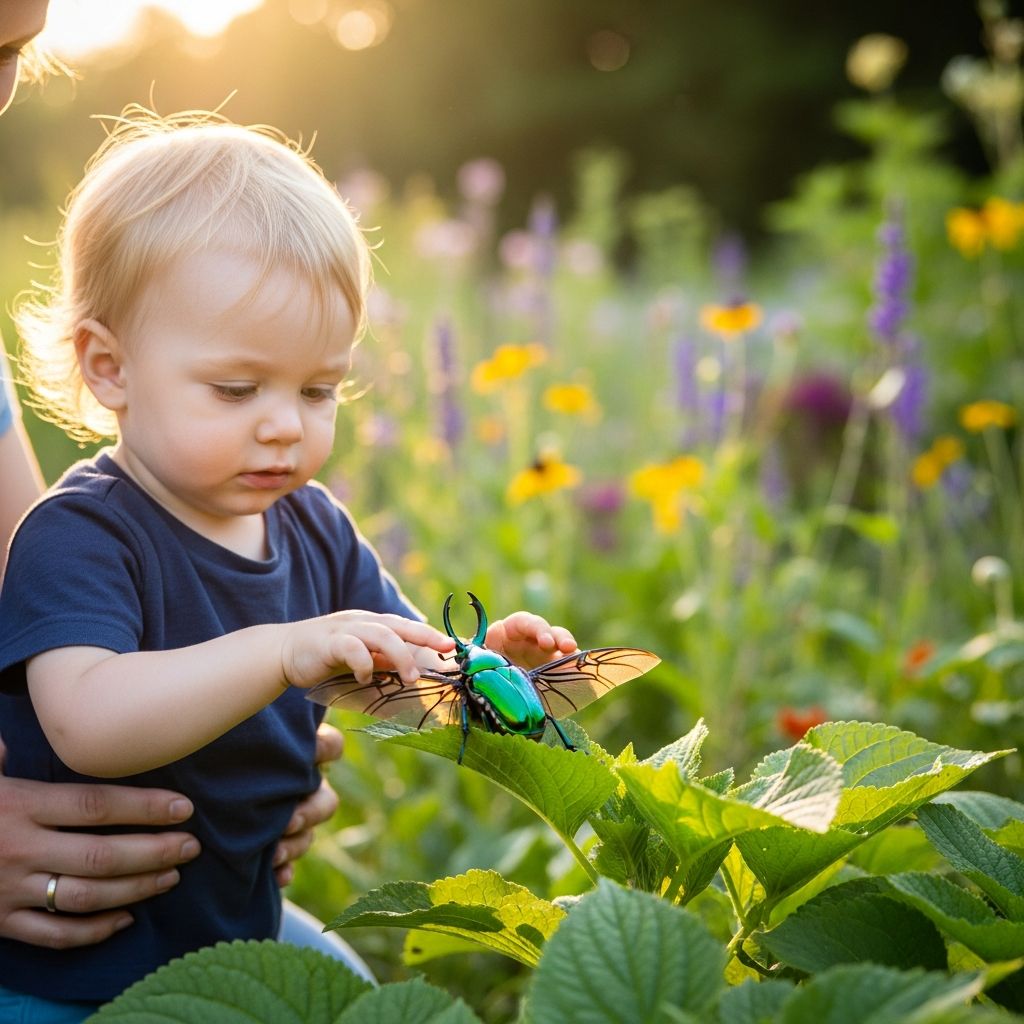
Many toddlers suddenly become afraid of bugs, turning a sunny afternoon in the garden into tears, clinging, and desperate pleas to go inside. This fear can be intense and confusing, but with patient, respectful support, parents can help young children feel safer and more confident around the tiny creatures that share their world.
Why Bugs Feel So Scary To Young Children
From an adult perspective, a tiny ant or fly seems harmless, but to a toddler, it can feel like an unpredictable invader. Understanding the roots of this fear helps you respond with empathy instead of frustration.
- Size and perspective: To a small child, a bee buzzing close to their face can feel as big and overwhelming as a large bird might feel to an adult.
- Movement and unpredictability: Bugs move quickly, appear suddenly, and don’t follow obvious rules, which can be deeply unsettling for children who crave predictability.
- Limited experience: If your toddler has only recently started spending more time outdoors, they simply haven’t had many chances to learn that most bugs are not dangerous.
- Big imagination: Toddlers often fill in gaps in understanding with dramatic images and stories, which can magnify fear.
When you remember that your child is not being dramatic on purpose but is genuinely overwhelmed, it becomes much easier to stay calm and supportive.
Normal Fear Or Something More?
Almost all young children go through phases of intense fear—of the dark, loud noises, strangers, or bugs. These fears are usually temporary and part of healthy brain development. Still, parents often worry about whether a child’s reaction is still in the “normal” range.
| Typical Bug Fear In Toddlers | When To Watch More Closely |
|---|---|
| Short-lived crying or clinging when a bug flies near, then calming with your reassurance. | Extreme distress that lasts long after the bug is gone and is hard to soothe. |
| Refusal to sit on the grass or go near flowers some days, but able to play outdoors at other times. | Persistent refusal to go outside at all or to enter certain rooms because a bug “might” be there. |
| Occasional bad dreams about bugs that resolve with comfort and time. | Frequent nightmares, new sleep problems, or panic-like reactions linked to insects. |
| Fear that slowly improves as your child gains experience and information. | Fear that continues to get worse over months or spreads to more and more situations. |
If your child’s fear leads to serious avoidance of everyday activities or has been escalating for a long time, consider checking in with a child-focused mental health professional for guidance. For most toddlers, however, consistent, gentle support from caregivers is enough to help them through this stage.
Your Calm Matters More Than Any Script
One of the most powerful tools you have is your own nervous system. Your child reads your face, body, and tone long before they process your words. If you shriek, swat, or tense up around bugs, your toddler learns: “These things really are dangerous.”
- Check your own reactions: Notice whether you flinch, freeze, or make fearful comments about insects. Even subtle tension teaches your child that bugs are a serious threat.
- Practice neutral or positive language: Instead of “Gross!” or “Yuck, I hate spiders,” try “That’s a little spider. Let’s move it outside,” in a calm, matter-of-fact tone.
- Model respectful behavior: Gently removing a bug rather than squashing it sends a message that the situation is manageable and under control.
You don’t need to love insects yourself; you just need to act like they are something you can handle. Over time, your toddler will borrow this sense of capability.
Responding In The Moment: Step-By-Step
When your toddler panics about a bug, your goal is to help their body and brain feel safe again while also giving them a tiny dose of new learning. The following sequence can help you stay grounded and supportive.
- Move to actual safety if needed. If there is a realistic risk (for example, many wasps or a biting insect on bare skin), calmly relocate. Avoid dramatic movements or shouting.
- Connect before you explain. Get down at your child’s level, offer physical closeness if they want it, and acknowledge their feeling. A simple, warm statement like “You were really scared when that bug flew close” helps them feel understood.
- Help their body calm down. Slow your breathing, speak softly, and invite them to take “soft breaths” with you. Some children like squeezing your hand or hugging a stuffed animal.
- Offer a short, honest explanation. Once they are calmer, give a simple fact: “That was a fly. Flies buzz around people, but they don’t want to hurt you.” Avoid long lectures.
- Validate and gently reframe. You might say, “It’s okay to feel scared when something surprises you. We can practice together so bugs feel less scary over time.”
- Return to play. Help them re-engage in a pleasant activity rather than replaying the incident. This teaches their brain that fear can rise and fall without taking over the whole day.
Even if your child seems inconsolable at times, the repetition of this calm, respectful response lays powerful groundwork for more confidence later.
Age-Appropriate Education: Turning Mystery Into Understanding
Fear thrives in uncertainty. When toddlers have no idea what bugs are doing or why they move the way they do, their minds often fill the gap with frightening assumptions. Gradual, playful education reduces that unknown.
- Use simple, concrete facts: Explain that butterflies drink from flowers, ants carry crumbs, and bees collect nectar. Stick to one small idea at a time.
- Highlight helpful roles: Many bugs pollinate plants, break down leaves, or eat pests. Even a brief remark like “Bees help flowers grow” can shift a child’s perspective over time.
- Choose gentle visuals: Look at illustrated books with friendly-looking insects rather than realistic, close-up photos that might be overwhelming.
- Follow your child’s lead: If they show curiosity, answer questions. If they appear overwhelmed, pause and return to a neutral topic.
The goal is not to deliver a science lesson, but to slowly replace “unknown scary thing” with “small creature that has a job.”
Playful Exposure: Tiny Steps, Not Pushes
For many children, gradual exposure—very small, manageable experiences with bugs—helps reduce fear over time. The key is to go at a pace that your toddler can handle while feeling supported, never forced.
Gentle Exposure Ideas
- Toy bugs first: Start with plastic or plush insects. You might drive them around in toy cars, build them a “bug house” from blocks, or tuck them into a pretend bed.
- Observe from far away: Watch a line of ants from several steps back or look at a spider web from across the patio. Comment casually without pressure to come closer.
- Watch short videos together: Choose calm, child-friendly clips that show bugs moving slowly in nature. Keep sessions brief and stop if your child looks uncomfortable.
- Create stories: Make up simple tales where the bug is shy, silly, or busy. Storytelling allows your child to process feelings in a safe, imaginative way.
Over days or weeks, you can gradually shift from far-distance observation to slightly closer looks, always checking your child’s signals. Progress may be uneven, and that is completely normal.
Outdoor Time Without Overwhelm
Parents often worry that a toddler’s bug fear will mean months of staying indoors. Instead of avoiding nature altogether, aim to design outdoor time that feels as safe and predictable as possible while still gently stretching your child’s comfort zone.
- Choose your environment: Start with places that have fewer insects, like open grassy areas rather than dense shrubs or tall flowers that attract bees.
- Time your outings: Earlier morning or cooler times of day may mean fewer flying insects, making outdoor time feel more manageable.
- Use “safety anchors”: Let your child bring a familiar comfort item (blanket, toy, hat) outside. A predictable routine, like always starting at the same bench, also helps.
- Offer a clear plan: Briefly explain what you will do if a bug comes near, such as “If we see a bee, we will stand still and wait for it to fly away, or we will walk calmly over here.”
The message you want to convey is: “We still enjoy the world, and if bugs show up, we have a calm plan.”
Respecting Feelings While Building Bravery
It can be tempting to brush off your child’s fear with “Don’t be silly” or to insist that they touch a bug “to prove it won’t hurt.” Although the intention is often to toughen them up, these approaches can backfire by making a child feel misunderstood and alone.
What To Avoid
- Laughing at your child’s fear or imitating their reaction.
- Forcing them to get close to, touch, or hold a bug before they are ready.
- Using shaming language such as “babies are scared of bugs” or “your little sister isn’t afraid.”
- Dismissing their feelings with “There’s nothing to be scared of” rather than acknowledging the emotion.
What To Do Instead
- Reflect the feeling: “That really surprised you, and your body felt scared.”
- Reassure their safety: “I’m right here with you. We can handle this together.”
- Offer small choices: “Do you want to watch the bug from my lap or from over on the steps?”
- Recognize effort: “You stayed outside even though you felt nervous. That was very brave.”
When children feel accepted, they gradually build their own internal courage rather than pretending to be brave just to please adults.
Simple Phrases To Use With A Frightened Toddler
In a tense moment, it can be hard to find the words that both validate and soothe. Having a few phrases in mind can make it easier to respond calmly and consistently.
- “You didn’t like that bug flying so close to you. It felt scary.”
- “Your heart is beating fast. Let’s hold hands and take soft breaths together.”
- “That was a little ant. Ants walk around looking for crumbs. They don’t want to hurt you.”
- “You are safe with me. If we see another bug, we will handle it together.”
- “You were worried, and you still stayed outside. That’s your brave growing.”
You can adjust the language to fit your child’s age and personality, but keep the structure: name the feeling, give a bit of information, and emphasize safety and togetherness.
When A Bite Or Sting Happens
Sometimes a child’s fear begins after a real negative experience such as a mosquito bite or bee sting. The pain and shock may confirm their belief that all bugs are dangerous, so your response afterward is especially important.
- Address comfort first: Treat the bite or sting according to medical guidance and focus on soothing your child physically and emotionally.
- Tell the story calmly: Later, briefly narrate what happened in a non-dramatic way: “A bee stung you when it felt trapped. We helped your skin, and now your body is healing.”
- Differentiate types of bugs: Clarify that most insects do not sting or bite and that even those that do usually only react when they feel threatened.
- Teach practical precautions: Simple habits like wearing shoes outside or avoiding touching unknown insects help your child feel more in control.
Over time, this balanced approach—neither minimizing pain nor catastrophizing it—helps your child integrate the experience without developing a lasting phobia.
When To Consider Professional Support
While most toddler fears of bugs fade with patient guidance, some children develop intense, long-lasting anxiety that gets in the way of daily life. If you notice certain red flags, outside support may be helpful.
- Your child consistently refuses to go outdoors or into certain rooms because a bug “might” be there.
- The fear leads to frequent meltdowns, sleep problems, or physical symptoms such as stomachaches whenever bugs are mentioned.
- The intensity of the fear has increased over months despite your gentle efforts.
- Your child has many other strong, persistent fears that interfere with play, learning, or social time.
A child-oriented therapist can guide you through structured steps—often involving gradual exposure and coping skills—to help your child regain a sense of safety. Seeking help is not a sign of failure; it is an act of care for both you and your child.
Frequently Asked Questions
Is it my fault my toddler is scared of bugs?
Fear is a normal part of development and is influenced by many factors, including temperament, experiences, and what children see around them. Even if you also dislike bugs, you can still help your child feel safer by working on calmer reactions and using more neutral language going forward.
Should I just keep my child indoors until they grow out of it?
Complete avoidance usually strengthens fear over time because the brain never has a chance to learn that the situation can be handled. Instead, aim for gentle, supported exposure: short outdoor periods in low-bug areas, with clear plans and lots of reassurance.
Is it okay to get rid of bugs in front of my child?
Sometimes you may choose to kill insects for health or safety reasons, but whenever possible, modeling gentle removal teaches your child that bugs are manageable, not monstrous. If you do need to eliminate a bug, keep your tone matter-of-fact and avoid dramatic reactions.
What if my child becomes obsessed and talks about bugs all day?
Repetitive questions often signal that a child is trying to process something big. Answer calmly, provide brief information, and then invite them back into play. If the preoccupation is intense or accompanied by major distress for a long period, consult a pediatric professional.
Can older siblings making jokes make things worse?
Yes, teasing or intentionally scaring a younger child with bugs can intensify fear and erode trust. Setting clear family boundaries around kindness and respect—no using bugs to startle someone—is an important part of helping the fearful child feel safe.
Helping Your Child Build A Lifelong Sense Of Safety
A toddler’s fear of bugs might seem like a small phase, but how you respond can shape more than just their attitude toward insects. Each time you stay present with their big feelings, offer information without pressure, and gently invite them back into the world, you are teaching deep lessons: feelings are allowed, support is available, and scary things can become manageable over time.
Your child does not need to end up loving every creature that crawls or flies. With your calm guidance, however, they can grow from panicked avoidance to cautious curiosity—and eventually, to the quiet confidence that comes from knowing they can handle discomfort without being overwhelmed by it.