Your chest after birth can feel like a completely different body part: heavier, softer, lopsided, leaky, tender, and somehow always in the way. Instead of fighting those changes, this guide shows you how to dress your postpartum chest with comfort, support, and a sense of humor, while still feeling like yourself.
Understanding Your Postpartum Chest (and Why It Feels So Weird)
Pregnancy and postpartum surge-and-crash hormone shifts can change breast size, shape, density, and sensitivity several times in a matter of weeks. For many new parents, the chest becomes both a food source and a focal point of discomfort, which makes everyday dressing more complicated than simply grabbing the old pre-baby T-shirt. Recognizing that this constant change is normal helps you make kinder, more flexible choices about your clothes.
- Expect your size to fluctuate dramatically in the first 6–8 weeks after birth.
- Fullness and engorgement often peak a few days after milk “comes in.”
- If you are not breastfeeding, your breasts may still swell and then gradually soften as milk supply decreases.
Instead of chasing a perfectly stable bra size, focus on temporary solutions that stretch, adjust, and move with you during this intense phase.
Common Postpartum Breast Changes (and What They Mean for Clothing)
Every body is unique, but several breast changes are so common that clothing strategies can be tailored around them. Understanding these patterns can help you anticipate fit issues and prioritize comfort over unrealistic expectations of “bouncing back.”
| Change | How It Feels | Clothing Tip |
|---|---|---|
| Rapid volume increase | Heavy, full, sometimes painful | Choose supportive bands, wide straps, and stretchy cups that allow expansion. |
| Engorgement & tenderness | Hard, tight, very sensitive to touch | Avoid underwires and stiff seams; opt for soft bralettes and seamless designs. |
| Leaking milk | Wet spots, damp fabric, odor risk | Wear nursing pads and dark or patterned tops to camouflage leaks. |
| Size asymmetry | One side larger, especially between feeds | Look for stretchy cups and removable pads to balance the look. |
| Long-term softening | Softer tissue, less upper fullness | Consider lightly molded cups or balconette styles that lift without squeezing. |
None of these changes are flaws; they are physical proof of the work your body has done. The goal is not to hide your chest but to support it in ways that reduce pain and increase your ability to move through the day.
How to Measure and Reassess Your Bra Size Postpartum
Your pre-pregnancy bra drawer is probably lying to you right now. A good fit can dramatically reduce back pain, shoulder strain, and bra-induced rage, especially when your breasts are heavier than usual. Even if you only invest in one or two well-fitting bras, it can change how you feel in every outfit.
Measuring at Home
You do not need a professional fitting to get a ballpark size, particularly when you know your size will change again. Use a soft tape measure and a non-padded bra or simply measure while braless if that feels better.
- Measure your band: Wrap the tape snugly around your ribcage, directly under your breasts. Round to the nearest whole number.
- Measure your bust: Measure around the fullest part of your chest, keeping the tape level but not tight.
- Calculate the difference: Subtract band measurement from bust measurement to estimate your cup size (larger differences typically mean larger cup letters).
Use this as a starting point, not a permanent label. Buy bras with flexible features—multiple hook positions, stretchy fabric, and adjustable straps—so your bra can adapt alongside your body.
Choosing the Right Bra for Each Postpartum Phase
Your needs on day three postpartum are very different from your needs at six months. Instead of searching for one “forever” bra, think about short phases and how your daily routine will change as feeding patterns and activity levels shift.
The First Weeks: Gentle Support and Maximum Forgiveness
In the early days, your chest may feel unpredictable from hour to hour. Comfort takes precedence over shape, lace, or structured silhouettes, especially if your nipples are sore or your breasts are engorged.
- Look for stretchy, seamless sleep bras or crop-top styles you can pull aside for feeding.
- Prioritize wide underbands that distribute weight without digging into your ribs.
- Choose breathable fabrics such as cotton or bamboo blends to reduce irritation and overheating.
Established Feeding Phase: Function Meets Everyday Style
Once your feeding routine feels more predictable, you can focus on blending practicality with aesthetics. Nursing clips, front closures, and easy access become essential if you breastfeed or pump regularly.
- Try nursing bras with drop-down cups or pull-aside panels for quick access.
- Seek molded but flexible cups if you prefer a smooth look under T-shirts.
- Consider one or two more structured bras for work or special outings, and keep softer ones for home.
Weaning and Long-Term Comfort
During and after weaning, your chest may deflate slightly, change shape, or settle somewhere between your pre-baby and peak nursing size. This is usually a better time to invest in more permanent bras.
- Get remeasured once your supply has decreased and your chest feels relatively stable.
- Explore styles that restore upper fullness visually, like balconette or lightly padded cups.
- If underwires were uncomfortable before, consider newer flexible-wire or wireless options with good structure.
Bralettes, Sports Bras, and Other Non-Traditional Options
You are not limited to traditional bras. Many new parents find that bralettes and sports bras provide the perfect mix of comfort and light support, especially during the chaotic newborn phase. The key is choosing designs that respect sensitive tissue rather than compressing it aggressively.
- Bralettes: Ideal for smaller or moderate busts and for days at home; look for wide bands and double-layered fabric for extra support.
- Soft sports bras: Great for walking and gentle movement; avoid high-compression styles that put pressure on ducts and may contribute to clogged areas.
- Built-in bra tanks: Helpful for layering under cardigans or button-downs when you want minimal hardware.
Consider building a small rotation: a sleep bra, a soft daytime bra, and one slightly more structured option for when you want to feel a bit more “dressed.”
Fabric, Fastenings, and Details That Matter
Postpartum skin often reacts more strongly to heat, moisture, and friction. Paying attention to fabrics and hardware can spare you chafing, rashes, or that end-of-day desperation to rip your bra off the second you walk in the door.
Smart Fabric Choices
- Breathable fibers: Cotton, modal, and bamboo blends are kind to sensitive skin.
- Stretch fibers: A moderate amount of elastane or spandex allows for size fluctuations without squeezing.
- Moisture management: Tops that dry quickly or wick away sweat can feel more comfortable during hot flashes or long nursing sessions.
Fastenings and Adjustability
- Look for bras with at least three rows of hooks so you can tighten the band as your ribcage reduces after pregnancy.
- Prioritize fully adjustable straps, especially if your shoulders slope or you are petite or tall.
- Ensure clips and snaps can be opened one-handed while holding a baby.
Small design features—plush-backed hooks, covered seams, padded strap tops—often make the difference between a bra you tolerate and one you reach for every day.
Outfit Ideas That Work With a Changing Chest
Once your underpinnings feel settled, you can think about the outer layers. The goal is not to conceal your body but to create outfits that work with nursing access, fluctuating size, and your current comfort level.
Easy Everyday Uniforms
Creating 2–3 go-to outfit formulas makes mornings easier, especially when you are short on sleep. Focus on pieces that mix and match without pinching the chest or clinging where you feel self-conscious.
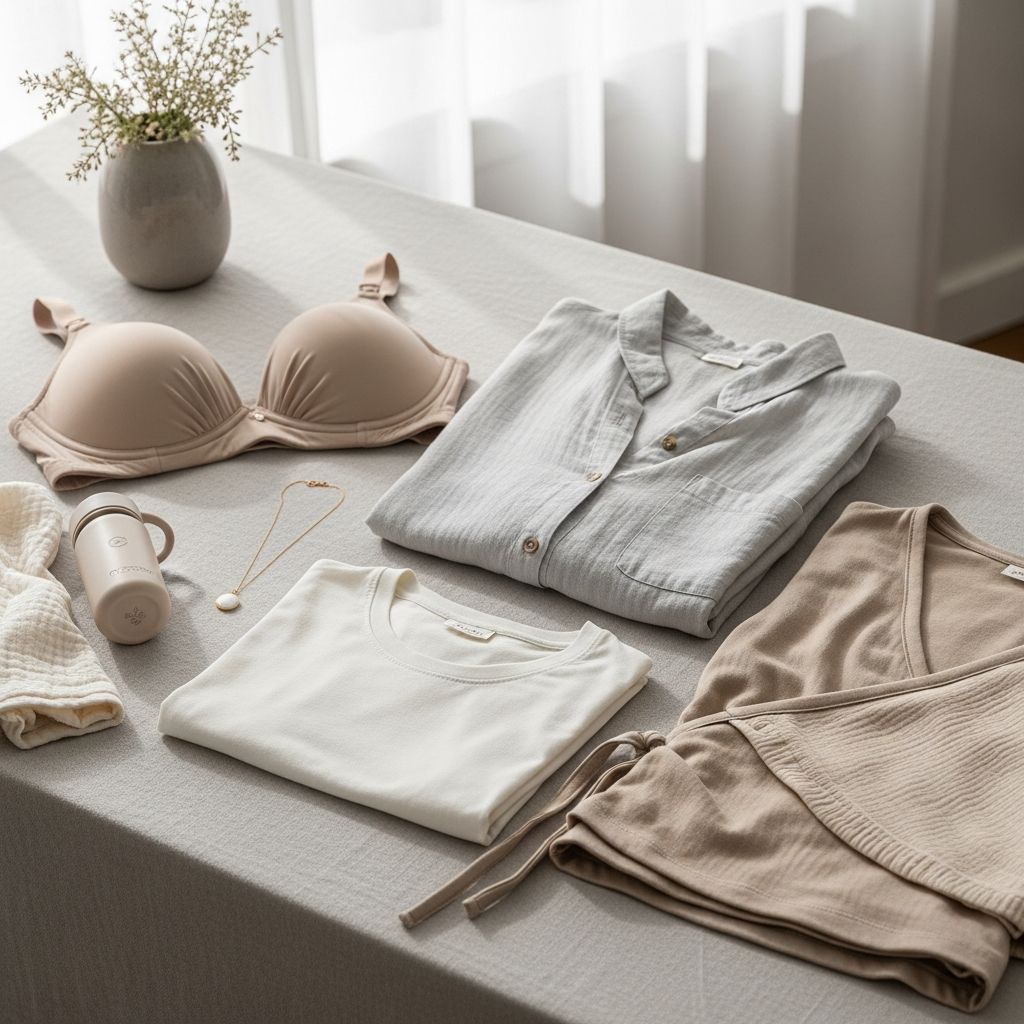
- Stretchy nursing tank + open cardigan + soft joggers: Quick access, layered coverage, and no waistband digging.
- Button-front shirt + high-rise leggings: Classic look that can shift from couch to quick errands.
- Wrap-style top + jeans with stretch: Adjustable neckline and a silhouette that highlights your waist without squeezing your bust.
Dressing Up Without Torturing Yourself
Special events, family photos, or returning to work can bring pressure to “look put together” even when your body still feels foreign. The secret is focusing on structure in the right places without forcing your breasts into shapes they are not ready for.
- Choose dresses with wrap fronts, surplice necklines, or smocked bodices for flexible fit.
- Use a camisole or bralette under low-cut tops if you need extra coverage while bending and lifting.
- Experiment with darker colors and prints if leaks or breast pads make you self-conscious.
Body Image, Confidence, and Mental Load
The postpartum chest comes with emotional weight as well as physical weight. You may mourn your old body, feel overexposed by constant feeding, or struggle when your breasts become more functional than sexual in your daily life. These feelings are normal and do not make you any less grateful for your baby.
- Give yourself permission to dress for how you feel now, not for a hypothetical future body.
- Unfollow social media accounts that make you feel ashamed or pressured to shrink quickly.
- Talk openly with your partner about how your chest feels to you—tender, off-limits, or completely neutral—so boundaries are clear.
Clothing is not a cure-all, but it can remove one layer of discomfort and free up mental energy for healing, bonding, and sleep.
When to Seek Medical or Professional Support
Some chest-related issues are more than style problems and deserve prompt medical or professional attention. Supportive clothing can help, but it should never replace proper care if you are in pain or worried about how your breasts feel.
- Contact a healthcare provider if you notice red, hot, or very painful areas, fever, or flu-like symptoms, as these may signal infection.
- Reach out to a lactation consultant for recurring clogged areas, nipple trauma, or latch-related pain.
- Consider a professional bra fitting once your size stabilizes to address chronic back, neck, or shoulder pain.
Asking for help is not vanity; it is part of taking care of the body that is working overtime for your family.
Quick-Reference Checklist: Building a Postpartum Chest Wardrobe
Use this checklist to assemble a small, functional collection of pieces that support your changing body. You do not need a massive shopping haul; a few thoughtfully chosen items can cover most situations.
- 2–3 soft, stretchy bras or bralettes suitable for sleep and lounging.
- 1–2 nursing bras with easy access for feeding or pumping.
- Breathable, washable nursing pads (reusable or disposable) plus a leak-friendly laundry plan.
- 2–3 tops with built-in access: button-downs, wrap styles, or nursing-specific designs.
- At least one outfit that feels “special” but still allows you to sit, feed, and move comfortably.
Think of this as a temporary capsule wardrobe focused entirely on kindness to your chest and your nervous system.
FAQs About Dressing Your Postpartum Chest
How soon should I buy new bras after giving birth?
It is wise to have at least one or two comfortable, stretchy bras or bralettes ready before birth, since your chest will likely feel very different as soon as your milk comes in. More structured nursing bras are best purchased a few weeks postpartum, once you have a better sense of your everyday size and how often you will be feeding or pumping.
Are underwire bras safe while breastfeeding?
Underwire bras are not automatically unsafe, but they must fit well and avoid pressing directly on breast tissue. In the early weeks, when engorgement and swelling are common, many people prefer wireless styles to reduce the risk of pressure points that could contribute to clogged areas.
What if I am not breastfeeding—do I still need special bras?
Even without breastfeeding, your breasts may swell temporarily and then gradually shrink or change shape. Soft, supportive bras with flexible sizing can make this transition more comfortable, especially if your usual underwires feel too tight or your usual cup size no longer fits smoothly.
How can I deal with leaks in public without feeling embarrassed?
Combine absorbent nursing pads with strategic clothing choices, such as patterned tops, layers, or darker colors that make wet spots less visible. Keeping a spare top in your bag (and a small wet bag for storing damp clothing) can also lower anxiety when you are out for longer stretches.
Will my breasts ever go back to their “old” size or shape?
Some people return close to their pre-pregnancy size, while others remain larger, smaller, or simply different in shape. Instead of waiting for your old chest to return, build a wardrobe around the body you have now, updating bras and tops again later if your size changes significantly after weaning or as time passes.
Most importantly, remember that your chest is not a problem to be fixed; it is a part of a body that has done extraordinary work. Clothing is simply a tool to support that body while you navigate this new chapter.