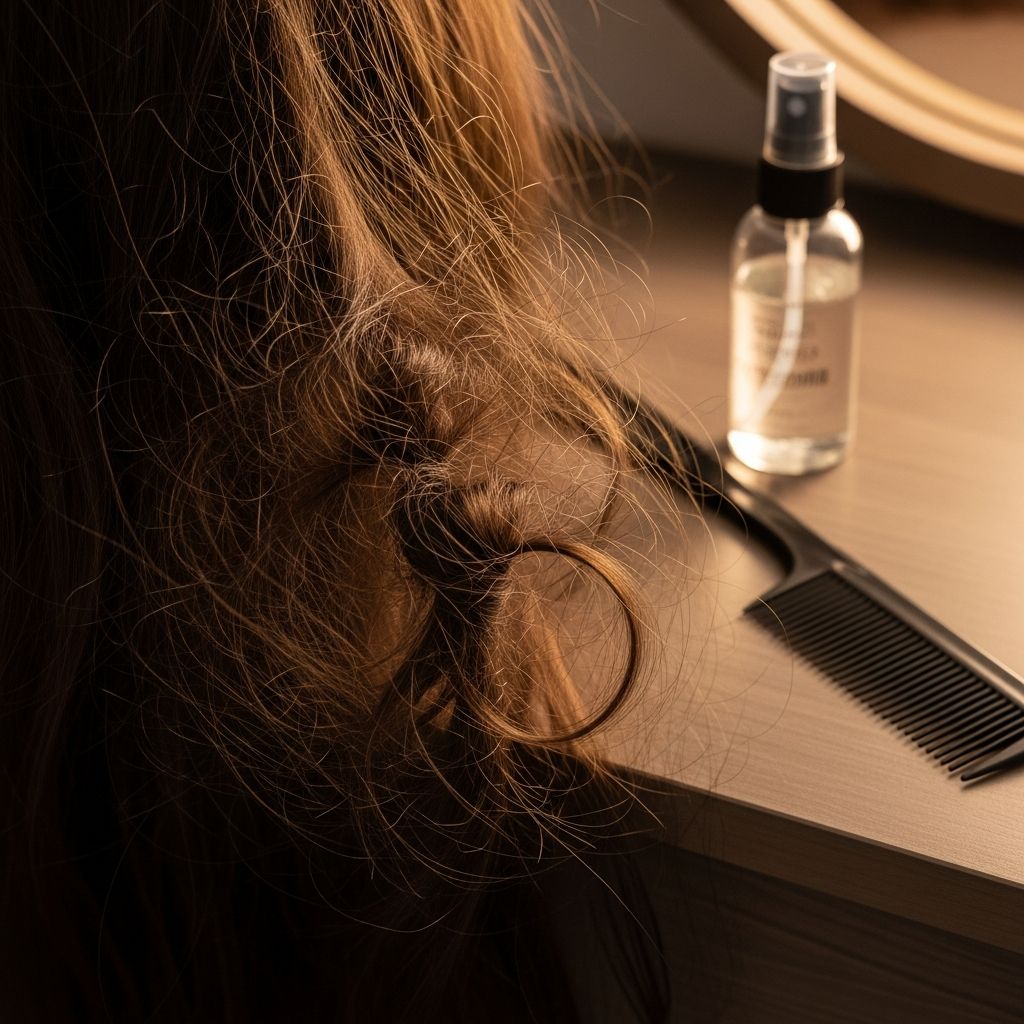
Severe hair tangles and mats can feel like a hair emergency, but with patience, the right products, and a smart plan, most knots can be removed without drastic haircuts.
Why Hair Forms Extreme Tangles
Understanding why hair tangles so badly is the first step to fixing the problem and keeping it from coming back. Different causes call for slightly different strategies, but they all respond best to gentle, methodical care instead of panic-driven brushing.
- Friction and dryness: Rough towel-drying, rubbing on pillows, and dry ends make strands catch on each other more easily.
- Neglected brushing or combing: Going days or weeks without detangling, especially with long or textured hair, lets small knots accumulate into major mats.
- Improper product use: Using harsh shampoos without conditioner, or skipping leave-ins on fragile hair, removes protection and encourages tangling.
- Protective styles left in too long: Braids, twists, or buns that stay in past their ideal wear time can compact shed hair into dense tangles.
- Lifestyle factors: Illness, stress, or limited mobility sometimes delay regular hair care, leading to extreme knots over time.
Before You Start: Set Expectations and Protect the Hair
Detangling a serious knot is not a five-minute task. Mentally preparing for slow progress will help you stay gentle and avoid breakage or unnecessary cutting.
- Plan for enough time: Severe mats may take several hours to work through safely.
- Accept that you may lose some hair: Shedding and breakage happen, but careful technique minimizes it.
- Prioritize comfort and breaks: Have water, a mirror, and a comfortable seat; pause if your arms or scalp feel sore.
Always remember that the goal is preserving as much healthy hair as possible, not finishing as fast as possible.
Essential Tools and Products for Serious Knots
The right tools can be the difference between salvaging a tangle and accidentally snapping off large chunks of hair. Aim for slip, control, and minimal snagging.
- Detangling or leave-in conditioner: Look for formulas that offer “slip” (hair feels very slick and slippery) to help strands slide apart.
- Lightweight oil or serum: A few drops of silicone-based serum or light plant oil can lubricate stubborn knots.
- Wide-tooth comb: Essential for gently working out larger tangles without shredding hair.
- Detangling brush: Flexible, cushioned bristles can help, but only after big knots are loosened with fingers or a comb.
- Hair clips or ties: Sectioning clips keep detangled hair separated so it does not re-tangle.
- Spray bottle with water: For some hair types, damp (not dripping) hair plus conditioner is easier to detangle than bone-dry strands.
- Tail comb or pointed tip: Helpful for gently picking apart dense mats, not for rough combing.
Quick Reference: Detangling Toolkit
| Item | Best For | How It Helps |
|---|---|---|
| Leave-in conditioner | Most hair types | Adds slip, reduces friction while you work through knots. |
| Wide-tooth comb | Curly, coily, wavy, thick hair | Separates larger tangles without shredding curls or coils. |
| Detangling brush | Straight to wavy, or moderately curly hair | Distributes product and smooths after major knots are removed. |
| Light oil/serum | Dry, damaged, or color-treated hair | Lubricates stubborn tangles and protects fragile ends. |
| Sectioning clips | All hair lengths and densities | Divides hair into manageable areas and prevents re-tangling. |
Step-by-Step Method: How to Safely Detangle a Major Tangle
This step-by-step approach focuses on patience, small sections, and working from the ends upward so you protect the scalp and the hair shaft.
1. Decide: Dry, Damp, or Wet?
Some hair behaves better partially dry, while others detangle best in the shower with conditioner. Choose based on your texture and the severity of the mat.
- Straight or fine hair: Slightly damp with leave-in or detangling spray often works best.
- Curly or coily hair: Wet hair saturated with slippery conditioner is usually easiest to separate.
- Very dense mats: Start dry with oil or serum to gently pry them open before adding water and conditioner.
2. Section the Hair
Never attempt to detangle the entire head at once. Breaking the job up makes the process more manageable and less painful.
- Divide hair into four to eight sections, depending on length and thickness.
- Secure each section with a clip or loose band.
- Work on one section at a time, keeping others out of the way.
3. Saturate the Tangles with Slip
Product is your best friend when dealing with severe knots. Dry hair plus aggressive combing is a fast route to breakage.
- Apply a generous amount of leave-in conditioner or slippery rinse-out conditioner to the first section.
- Add a few drops of oil or serum to the most tangled areas.
- Let the mixture sit for 5–10 minutes so it can soften the knot internally.
4. Start with Your Fingers
Fingers can feel which areas are tight, which strands are fragile, and where to pull gently or stop. This reduces the risk of simply ripping through a tangle.
- Hold the hair above the tangle with one hand to protect the scalp from pulling.
- Use the other hand to gently separate small pieces of hair away from the knot.
- Look for and remove loose shed hairs that may be tying the tangle together.
5. Work from the Ends Upward
Once the worst of the mat has been loosened by hand, you can introduce tools—but always from the outside in and from ends to roots.
- Begin with a wide-tooth comb at the very ends, removing small snags.
- Gradually move a bit higher as each lower area glides through the comb.
- Never drag the comb from scalp to ends through a tight knot; this compresses the tangle and breaks hair.
6. Alternate Between Finger Detangling and Tools
The most efficient approach is often a back-and-forth rhythm between fingers and comb or brush. This helps you ease apart the knot instead of forcing it.
- When the comb meets heavy resistance, stop and switch back to fingers or a pointed tip to open the area.
- Reapply conditioner or spray when the hair stops feeling slippery.
- Once the section is smooth, twist or braid it loosely so it does not retangle.
7. When to Consider Trimming
In some situations, cutting a small area is more protective than trying to save every single strand. The goal is thoughtful trimming, not an impulsive chop.
- If a knot is solid, painful, and unmoving even after product and patient work, a small targeted snip may be necessary.
- Whenever possible, cut below the tightest point of the knot so you keep as much length as you can.
- After detangling, consider a light overall trim to remove split, rough ends that are likely to tangle again.
Different Hair Types, Different Detangling Strategies
Hair type dramatically affects how and when you should detangle. Adjusting your approach to your natural texture decreases damage and frustration.
Straight and Fine Hair
- Use lightweight products to avoid weighing hair down; a thin spray detangler may be better than heavy creams.
- Detangle when slightly damp, not soaking wet, to reduce fragility.
- Choose soft-bristle or cushioned brushes that glide instead of snagging.
Wavy and Curly Hair
- Detangle primarily on wet hair coated in conditioner to maintain curl pattern.
- Favor wide-tooth combs and fingers over narrow brushes to prevent frizz and breakage.
- Work in small, clearly defined sections to keep track of what is already smooth.
Coily and Kinky Hair
- Always use abundant slip: rich conditioners, creams, and oils are your main tools.
- Finger detangling may be more effective than combs for very tight textures.
- After detangling, set hair in twists, braids, or other stretched styles to avoid immediate re-knotting.
Color-Treated or Damaged Hair
- Be extremely gentle; these strands are often weaker and more porous.
- Avoid rough towels, intense heat, and harsh shampoos during and after detangling.
- Follow your detangling session with a repairing mask or bond-building treatment if appropriate for your hair.
How to Prevent Future Tangles and Mats
Once you have rescued your hair from serious tangles, prevention becomes your best friend. Small daily habits make a huge difference over time.
Daily and Nightly Habits
- Brush or comb gently from ends upward once or twice a day, according to your texture.
- Sleep on a satin or silk pillowcase or wear a satin bonnet to reduce friction.
- Loosely braid or twist long hair before bed to keep it contained.
- Avoid tight elastics; choose soft scrunchies or snag-free ties instead.
Wash-Day Strategies
- Before shampooing, gently detangle dry or slightly damp hair to remove shed strands.
- Apply conditioner generously and detangle in the shower if your texture allows.
- After washing, blot or squeeze with a soft towel instead of rubbing hair vigorously.
Protective and Low-Manipulation Styles
- Use braids, buns, and twists to keep hair contained—especially on windy days or during exercise.
- Rotate styles and do not leave protective looks in longer than recommended for your hair.
- Moisturize and gently detangle between styles to prevent hidden tangles.
Signs You Should See a Professional
Most tangles can be handled at home with time and care, but some situations call for a trained stylist. Seeking help is not a failure; it is a smart choice to protect your hair and scalp.
- The mat covers a large portion of your head and feels densely compacted.
- You experience significant pain whenever you try to touch or move the knot.
- The hair has been neglected for weeks or months and is intertwined with heavy buildup.
- You suspect scalp issues such as sores, infection, or extreme tenderness under the mat.
A professional can combine detangling products, tools, and advanced techniques—and, when necessary, do strategic cutting—to achieve the best possible result with the least damage.
Frequently Asked Questions About Severe Hair Tangles
1. Is cutting everything off the only solution for matted hair?
No. In many cases, thoughtful, patient detangling with ample conditioner and proper tools can save a significant amount of length. However, if a mat is extremely tight, has been in place for a very long time, or is causing pain or scalp problems, some cutting may be the healthiest option.
2. How long should I expect serious detangling to take?
Depending on hair length, density, and how compact the tangles are, detangling can take anywhere from 30 minutes to several hours. It is perfectly normal—and often safer—to break the process into multiple sessions rather than pushing through in one sitting.
3. Is it better to detangle on wet or dry hair?
There is no single right answer for everyone. Straight and fine hair may respond better to detangling when slightly damp, while curly and coily hair typically detangles more easily when wet and coated in conditioner. If a mat feels very solid, loosening it with oil first and then adding water and conditioner can be effective.
4. Why does my hair tangle so easily even when it is clean?
Frequent tangling is often linked to dryness, rough cuticles, or mechanical friction. Skipping conditioner, using harsh shampoos, constantly rubbing hair with towels, or sleeping on cotton pillowcases without protection can all make hair more prone to knotting. Regular moisture, gentle handling, and protective styles can greatly reduce the problem.
5. Can kids’ hair be detangled the same way as adults’?
The basic principles are the same: work in sections, use plenty of slip, start at the ends, and be gentle. With children, it is especially important to communicate, take breaks, and distract them with something engaging. Using soft tools, kid-friendly products, and turning detangling into a routine rather than a rare emergency can make the experience much easier.
6. How can I tell if I am being too rough?
If the scalp feels sore, the comb keeps snapping through knots, or you see a lot of short, broken pieces rather than long shed hairs, it is a sign you need to slow down and add more product. Detangling should involve steady, controlled tension and gradual loosening, not yanking or sudden jerks.
Key Takeaways for Healthy, Tangle-Free Hair
Severe tangles are stressful, but they are rarely hopeless. With the right mindset, tools, and techniques, you can rescue your hair today and set up a routine that keeps it smoother and easier to manage going forward.
- Be patient, work in sections, and always start from the ends.
- Use generous slip—conditioner, detangling spray, and light oils—to help strands slide apart.
- Match your detangling strategy to your hair type and current condition.
- Adopt protective daily and nightly habits so that major mats become a thing of the past.