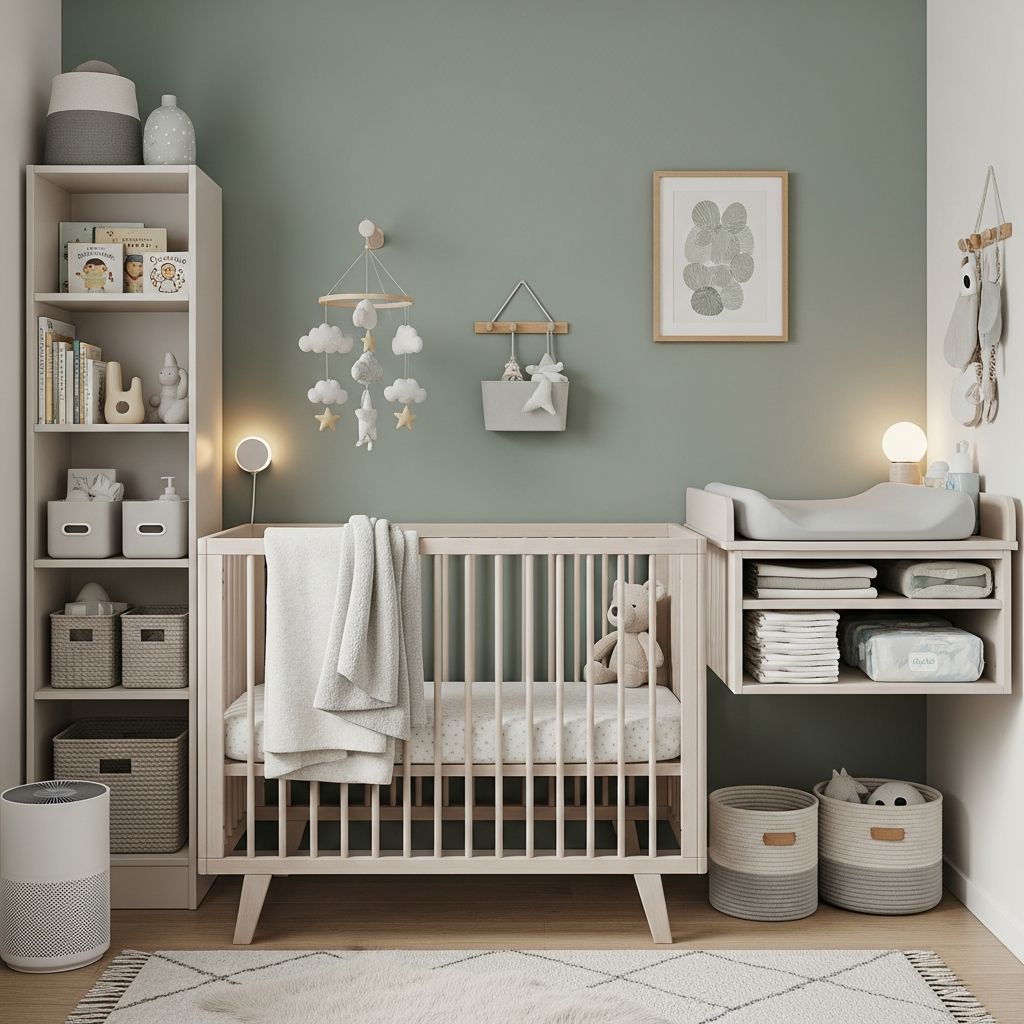
Bringing home a baby does not require a huge, picture-perfect nursery. With some thoughtful planning, a very small corner, alcove, or section of your bedroom can become a calm, organized space that meets all your baby’s needs.
This guide walks through how to design, furnish, and organize a tiny nursery so it feels peaceful for the baby and practical for exhausted parents.
Start with the Three Core Needs
In a very small nursery, every inch matters, so focus first on what your baby truly needs from the space. Most families can begin by building around three essentials: a place to sleep, a place to change diapers, and a spot to store daily gear.
- Sleep zone: A safe crib, mini crib, or bassinet that meets current safety standards.
- Changing zone: A surface at a comfortable height plus storage for diapers and wipes.
- Storage zone: A compact system for clothes, blankets, and baby care basics.
Once those three pieces are in place, you can layer in extras like a feeding chair, décor, and play space if room allows.
Choosing the Right Sleep Space
The sleep space will usually be the largest object in your tiny nursery, so choosing the right style and placement is critical. Think about both the first few months and how long you want the sleep solution to last.
Mini crib, bassinet, or full-size crib?
| Option | Space Needed | How Long It Lasts | Best For |
|---|---|---|---|
| Bassinet | Very small footprint | Newborn to roughly 4–6 months (check weight limits) | Parents who want baby close in their bedroom and plan to switch to a crib later |
| Mini crib | Smaller than standard crib, larger than bassinet | Often through the first year or longer depending on size and model | Small rooms or nursery nooks where a standard crib overwhelms the space |
| Standard crib | Largest footprint | Can be used into toddler years, especially convertible models | Families with slightly more room or planning to avoid buying multiple sleep setups |
In extremely tight quarters, a mini crib or compact crib that folds or has built-in storage can be a smart compromise between longevity and space savings.
Smart crib placement in a tiny room
When placing the crib, prioritize both safety and flow. Try to keep the sleep space away from drafty windows, cords, or heavy objects that could fall nearby.
- Place the crib with one long side against a wall to free up valuable floor area.
- Leave enough space on at least one side for changing sheets and lifting your baby in and out.
- Avoid placing shelves or artwork directly above the crib; keep the area visually calm and physically clear.
Designing a Compact Changing Area
A traditional changing table takes up more room than many small nurseries can spare. Instead, think about how you can make an existing surface safely pull double duty.
Space-saving changing solutions
- Dresser + changing pad: Place a non-slip changing pad on top of a low dresser that will stay in the room long after the diaper years.
- Changing basket on a shelf: Use a secure shelf or console that’s already in the room, as long as it’s stable and at a comfortable height.
- Fold-away changing station: In very tight spaces, a fold-down wall-mounted table with a pad can create a changing surface that tucks away when not in use.
Whatever setup you choose, secure the pad according to manufacturer directions and keep one hand on baby at all times during changes.
Organizing diapering essentials
Diaper changes are much easier when everything is within arm’s reach. Use small, labeled containers so you can grab what you need without rummaging around while your baby fusses.
- Keep diapers, wipes, cream, and spare onesies in shallow baskets inside the top dresser drawer.
- Use a small caddy on top of the dresser or mounted to the wall for the items you reach for every few hours.
- Consider a slim diaper pail or even a lidded trash can with individual odor-control bags if you are short on floor space.
Making the Most of Vertical Space
When floor space is limited, the walls become your best friends. Vertical storage lets you keep surfaces clear and the room easier to clean, while still giving every item a proper home.
- Floating shelves: Mount narrow shelves high enough that a curious toddler cannot reach them, and use them for light items like décor, books, or extra wipes.
- Hooks and rails: Hang swaddles, towels, wearable blankets, and diaper bags from sturdy hooks or wall-mounted rails.
- Over-the-door organizers: Use pockets for spare diapers, burp cloths, bibs, socks, or tiny shoes.
As you add vertical storage, keep the room from feeling cluttered by editing ruthlessly. Open space on the walls can make even a tiny nook feel breathable.
Under-Crib, Closet, and Hidden Storage
Small nurseries work best when every hidden area is used thoughtfully. Look for “dead space” under furniture and in closets that could quietly hold baby gear.
Under-crib storage strategies
- Choose low rolling bins or soft fabric boxes that slide under the crib for extra sheets, seasonal clothes, or back-up diapers.
- Label each bin clearly so you can pull out only the one you need in the middle of the night.
- If the crib is too low, bed risers designed for safe furniture lifting may create just enough room for shallow storage.
Making a tiny closet work harder
- Add a second hanging rod lower down for baby clothes, leaving the top rod for grown-up items or extra gear.
- Use hanging fabric shelves for folded onesies, sweaters, and sleep sacks.
- Store outgrown clothes in labeled bins on the highest shelf so they are out of the way but easy to find later.
When there is no closet at all, a narrow wardrobe cabinet, a clothing rack with a curtain, or even a tall bookcase fitted with baskets can stand in as organized clothing storage.
Creating a Feeding and Snuggle Corner
Even in a very small nursery, a dedicated spot for feeding and cuddling can make those long nights feel more manageable. This area does not have to be large, but it should be comfortable and supportive.
Choosing a chair that fits
- Look for a slim rocking chair, glider, or cushioned armchair with armrests and good back support.
- Measure carefully; in tight quarters, a compact nursery glider or even a supportive desk chair can work.
- Place a small, stable side table or wall-mounted shelf within easy reach for water, burp cloths, and your phone.
If your bedroom doubles as the nursery, you might skip a separate chair and instead create a feeding station on your own bed with extra pillows and a basket of essentials beside it.
Lighting, Color, and Atmosphere
The mood of a small nursery is shaped less by square footage and more by how it feels when you step inside at midnight. Gentle lighting and restful colors can make even a tiny corner feel like a sanctuary.
Layered lighting for day and night
- Soft overhead light: Use a warm bulb and, if possible, a dimmer switch so you can soften the brightness for bedtime.
- Task lighting: Add a small lamp or wall sconce near the feeding area or changing station for focused, low-level illumination.
- Night light: A subtle night light allows you to check on the baby without fully waking anyone.
Avoid harsh blue-white bulbs; warmer tones tend to feel cozier and are often easier on sleepy eyes.
Color choices that open the room
- Choose light or mid-tone walls to reflect more light and make the room appear larger.
- Limit the number of dominant colors; two or three soothing tones plus a few small accents usually feel calmer than a busy palette.
- Use pattern thoughtfully—perhaps a single accent wall, a patterned rug, or a few printed textiles rather than many competing prints.
Remember that you and your baby will both spend a lot of time here in the dark and low light, so prioritize comfort over trendiness.
Floor Space, Rugs, and Early Play
As your baby grows, you will want at least a small area for tummy time and early play. In a small nursery, this usually means carving out just enough open floor between the crib and dresser.
- Choose a soft, easy-to-clean rug or foam play mat that defines a small play zone.
- Keep larger toys in another room, bringing them in only when needed so the nursery stays open and walkable.
- Use one low basket for a rotating selection of books and simple toys instead of keeping every toy in the nursery.
Even a single clear patch of floor can be enough for daily stretch-and-play sessions when thoughtfully arranged.
Shared Rooms and Nursery Nooks
Many families do not have a separate room for the baby at all. Instead, they carve out a nursery nook in their own bedroom, a living room corner, or a shared sibling space.
Defining the baby’s corner
- Use a rug, room divider, or curtain to visually separate the nursery nook from the rest of the room.
- Position the crib or bassinet against a wall and anchor the nook with a single piece of art or a mobile hung nearby.
- Keep the baby’s storage vertically aligned (for example, crib, wall shelf, and hooks stacked along one wall) to minimize sprawl.
When sharing a room with an older child, keep baby items near the crib and designate a separate shelf or bin system for the older sibling’s things to avoid confusion.
Safety First in Small Spaces
In a compact nursery, safety often comes down to smart placement and avoiding clutter. A minimalist approach can make it easier to keep the room safe as your baby grows more mobile.
- Anchor tall furniture, such as dressers and bookcases, securely to the wall.
- Keep cords for blinds, lamps, and monitors out of reach and properly secured.
- Maintain a clear crib: a firm mattress and fitted sheet only, without pillows, bumpers, or loose blankets.
- Leave open pathways so you are less likely to trip while carrying a sleepy baby in the dark.
Regularly scan the room from your baby’s eye level as they grow; what feels safe for a newborn may need tweaks once they start rolling or pulling up.
Editing, Rotating, and Letting Go
One hidden advantage of a tiny nursery is that it naturally encourages you to keep only what you truly use. Instead of fighting the limited space, treat it as a built-in reminder to keep things simple.
- Store a few next-size-up items within reach and put the rest elsewhere until needed.
- Rotate toys and books every few weeks so the space feels fresh without adding more clutter.
- Say yes to offers of hand-me-downs, but be selective; keep only what fits your layout and storage plan.
If you find yourself constantly moving items out of the way to access something else, that is a sign the room is trying to tell you it has too much stuff. Editing sooner rather than later will make daily life easier.
Sample Tiny Nursery Layout Ideas
Every home is different, but thinking in terms of zones can help you map out your own layout. Below are two simple, text-based layout ideas to spark your imagination.
Layout Idea 1: Narrow Room
- Long wall: Place the crib centered on the longer wall to create a visual focal point.
- Opposite wall: Position a slim dresser with a changing pad on top; hang shelves or hooks above for extra storage.
- Window end: Use the brighter end of the room for a small chair or simply keep it open as a mini play zone.
Layout Idea 2: Nursery Nook in Main Bedroom
- Bedside nook: Place a bassinet or mini crib along the wall beside your bed.
- Shared dresser: Assign the top drawers of your existing dresser to the baby, and add a changing pad on one end.
- Wall storage: Mount two or three small shelves above the dresser for diapers, wipes, and a soft lamp.
Before committing, use painter’s tape on the floor to outline furniture footprints and walk through nighttime routines to check for awkward spots.
Frequently Asked Questions
How small is too small for a nursery?
There is no universal minimum size, because many families use only a portion of a room. The key is whether you can safely fit a sleep space, a changing area, and some storage while still moving comfortably around the room.
Can the baby sleep in our bedroom instead of a separate nursery?
Many parents choose to keep the baby in their bedroom for the early months to make night feeds easier and to stay close. In that case, treating one wall or corner as a mini nursery—with a crib or bassinet plus organized storage—often works well.
Do we really need a dedicated changing table?
No, a separate changing table is optional. A secure changing pad on top of a dresser or another stable surface can be just as functional and is usually a better use of space in a tiny room.
How can we make the nursery feel special if it is just a corner?
Thoughtful details go a long way in a small area. A favorite print or mobile, a soft rug, matching storage baskets, or a simple color theme can make the nook feel intentional and welcoming without taking up extra room.
What should we buy first for a very small nursery?
Start with the sleep space and whatever you will use as a changing station, then add storage solutions. Once those essentials are in place and you see how much room remains, you can decide whether you have space for extras like a chair or additional décor.
A tiny nursery can absolutely be a nurturing, organized place for both baby and parents. By focusing on essentials, using vertical and hidden storage, and keeping the overall design calm and simple, you can make even the smallest corner of your home feel like a thoughtfully designed baby haven.