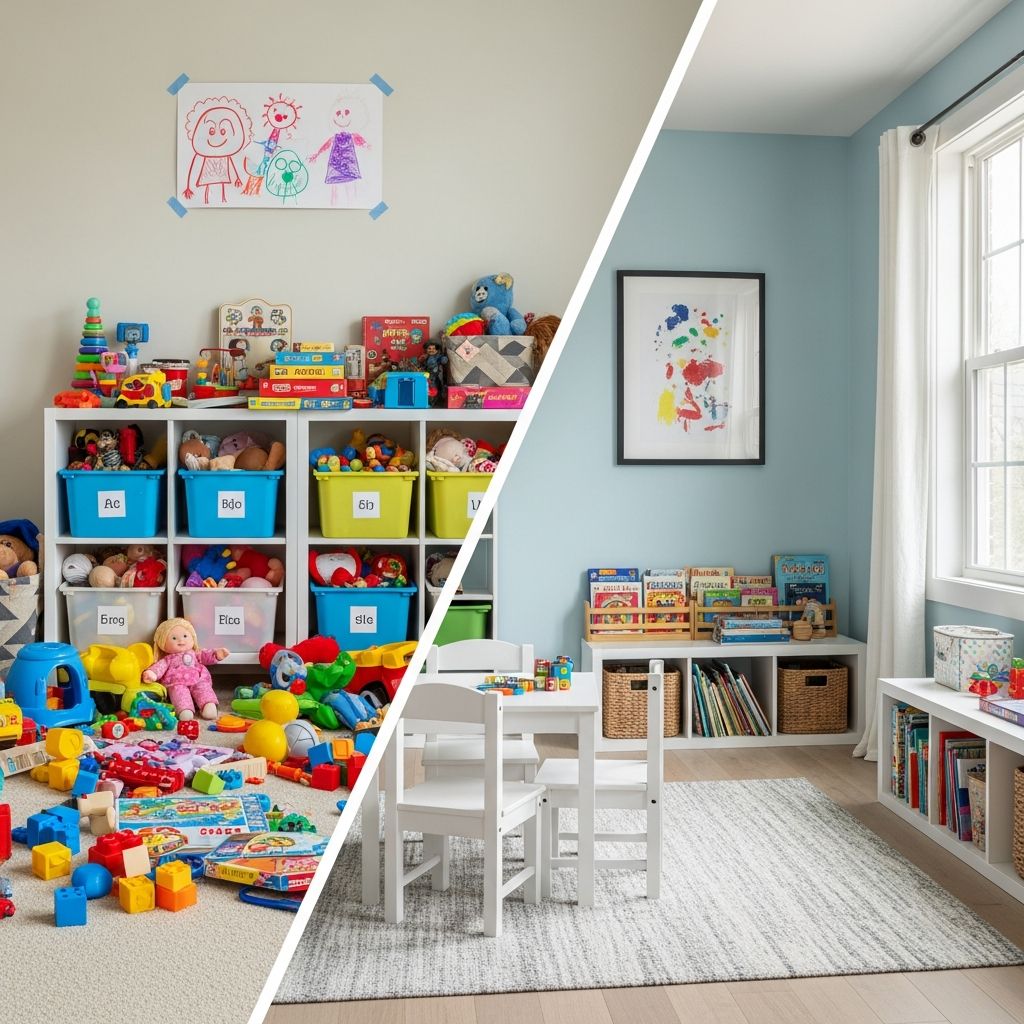
A cluttered playroom can turn family time into a frustrating battle against endless toys. By systematically reducing excess and implementing smart organization, parents can create a space that invites creativity and simplifies daily routines. This guide offers fresh, actionable strategies drawn from proven family experiences to help you achieve a serene, functional play area.
Assess the Current State of Your Play Space
Begin by evaluating what you have. Walk into the room and note overwhelming areas: overflowing shelves, scattered small pieces, or forgotten corners piled with unused items. Take inventory without judgment—count toy categories like blocks, dolls, vehicles, and art supplies to identify duplicates or underused items.
- Photograph before-and-after states for motivation.
- Observe your child’s play patterns over a week to see favorites emerge.
- Measure shelf and bin capacities to plan realistic storage.
This initial survey prevents rash decisions and sets a foundation for targeted changes. Families report that this step alone reduces decision fatigue during the main declutter phase.
Master the Art of Letting Go: Decluttering Essentials
Decluttering starts with commitment to ‘less is more.’ Aim to remove items that no longer serve joy or development. Sort into categories: keep, donate, trash, or sell. Do an initial solo pass for obvious discards like broken toys or stained books to streamline family involvement later.
Key Items to Purge Immediately
| Category | Examples to Remove | Reason |
|---|---|---|
| Art Supplies | Broken crayons, half-used sketch pads | Wasted space; encourages buying new |
| Puzzles & Games | Missing pieces, incomplete card decks | Frustrating to play; incomplete sets |
| Books | Ripped pages, outgrown board books | Preserves quality collection |
| Toys | Single-use electronics, duplicates | Limits imagination; creates clutter |
| Stickers & Crafts | Mostly empty sheets, dried glue | Minimal value left |
Target biannual purges, aligning with holidays or birthdays when new items arrive. Involve kids by turning it into a game: ‘treasure hunt for forgotten toys.’ This builds responsibility while avoiding resistance.
Implement Toy Rotation for Endless Engagement
Toy rotation breathes new life into collections by limiting access to a subset at a time. Store extras out of sight, swapping every 1-2 weeks based on interest dips. This mimics novelty without buying more, reducing overwhelm and boosting play depth.
- Curate Baskets: Select 8-12 versatile toys per rotation, focusing on open-ended play like blocks or fabric scraps.
- Label and Store: Use clear bins for rotations, labeled by theme (e.g., ‘Imagination Builders’).
- Observe and Swap: When play wanes, retire items and introduce fresh ones ceremoniously.
- Review Quarterly: Donate perpetually ignored toys transparently with child input.
Parents note children engage longer with fewer options, as abundance dilutes attention. This method sustains curiosity, especially for ages 2-8.
Design Functional Zones for Effortless Order
Divide the playroom into activity-specific zones to promote intuitive cleanup. Assign shelves or mats for similar items, ensuring accessibility for young users. Zones evolve with ages: toddlers need low, open storage; older kids benefit from hooks and cubbies.
- Creative Corner: Art table with washable mats, stacked trays for supplies.
- Building Bay: Low shelves for blocks, trains; magnetic boards for structures.
- Role-Play Nook: Dress-up rack, pretend kitchen on wheels.
- Quiet Zone: Book ledges, puzzles in zip bags.
Use vertical space wisely: over-door organizers for small items, under-shelf baskets for overflow. Clear zones cut cleanup time by 50%, per family testimonials.
Smart Storage Solutions Tailored for Kids
Choose containers that match child capabilities—open bins over lidded ones for quick access. Labels with pictures aid pre-readers; color-coding simplifies matching.
Top Storage Hacks
- Unlidded Bins: Fabric cubes for loose toys; easy toss-in.
- Ziploc Bags: For puzzle pieces, small sets—replace bulky boxes.
- Shelving Upgrades: Adjustable units maximize height usage.
- Wall Systems: Pegboards for hanging tools, nets for balls.
- Mobile Carts: Roll-out for seasonal rotations.
Prioritize durability: wipeable surfaces withstand spills. Invest in multi-use furniture like ottomans with hidden compartments for dual play-storage.
Involve the Family: Building Lasting Habits
Decluttering succeeds when everyone participates. Model enthusiasm by decluttering your own spaces first. Assign age-appropriate tasks: sorting for toddlers, labeling for school-age kids. End sessions with play in the refreshed space to associate change positively.
Daily rituals reinforce order: 10-minute tidy-ups with timers and music. Praise efforts over perfection. Track progress with charts for motivation.
Maintenance Strategies for Long-Term Success
Prevent rebound clutter with rules: one-in, one-out for gifts. Schedule monthly spot-checks. As kids grow, adapt—phase out baby toys, introduce complex sets.
Deep cleans quarterly: vacuum crevices, wipe shelves. This sustains the calm, making the playroom a joy sanctuary.
Frequently Asked Questions (FAQs)
What age is best to start toy rotation?
Begin around 18 months when attention spans lengthen; adjust frequency by age.
How do I convince kids to part with toys?
Frame as helping others; let them choose donations for empowerment.
What’s the ideal number of toys out at once?
10-15 for most families, ensuring deep engagement without overwhelm.
Can I apply this to shared sibling spaces?
Yes—personalize bins within zones to reduce conflicts.
How often should I fully declutter?
Twice yearly, plus mini-passes monthly.
References
- Decluttering Kids Playroom: Printable Checklist — Kate Decorates. 2023-05-15. https://www.katedecorates.co/home-organization-tips/declutter-organize-playroom-kids-rooms-39-things-purge-right-now-plus-free-printable-checklist/
- 25+ Organized Playroom Storage Ideas — Just a Girl and Her Blog. 2024-02-10. https://justagirlandherblog.com/organized-playroom-storage-ideas/
- Playroom Before and After: 11 Decluttering Tips — Chalk Academy. 2023-11-20. https://chalkacademy.com/decluttering-with-kids-tips/
- How to Declutter and Organize Your Playroom — Mother.ly. 2024-08-01. https://www.mother.ly/life/how-to-declutter-organize-play-room/
- American Academy of Pediatrics: Tips for Organizing Children’s Spaces — AAP.org. 2025-01-15. https://www.aap.org/en/patient-care/healthy-active-living-for-families/organizing-childrens-spaces/