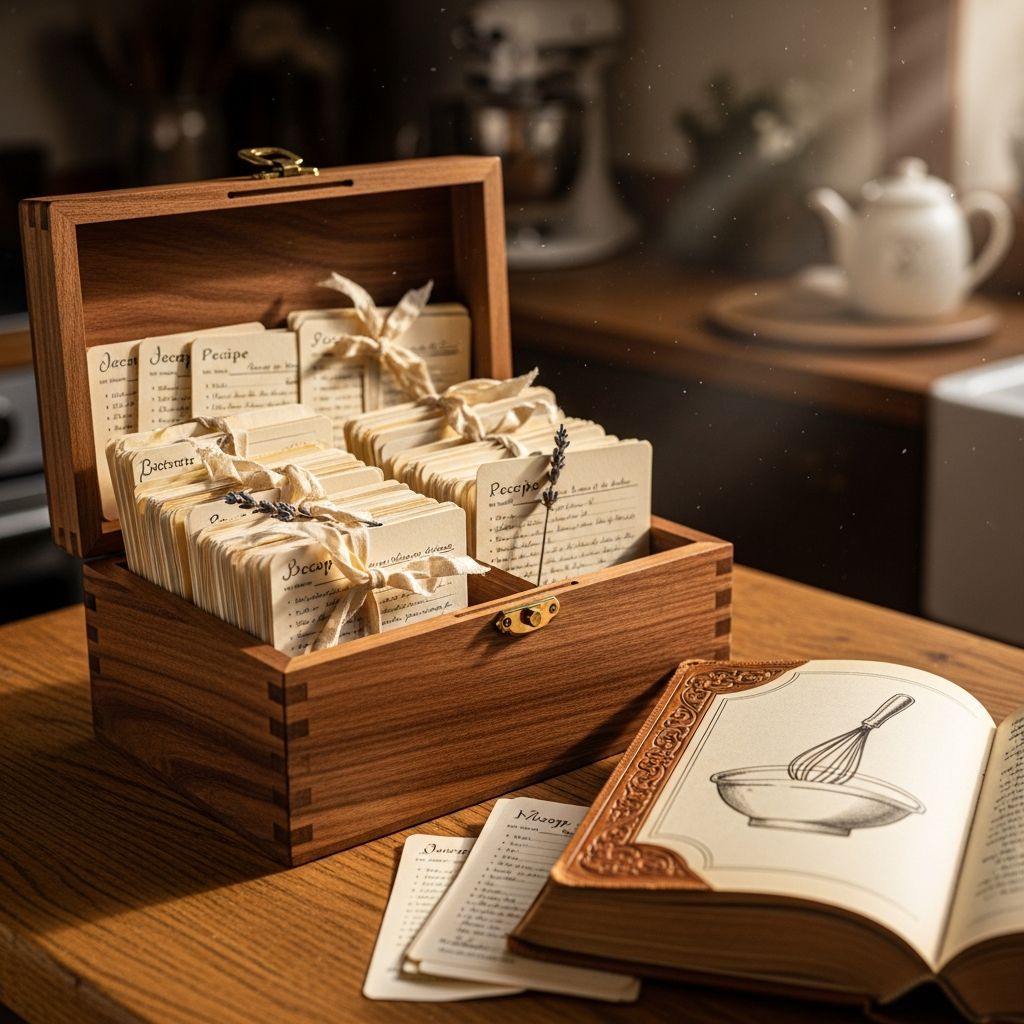
An heirloom recipe box is more than a kitchen accessory; it is a living archive of stories, flavors, and family traditions captured on paper. Thoughtfully built, it becomes a beautiful object that keeps loved ones close every time you cook.
Why a Recipe Box Still Matters in a Digital World
In an age of cooking apps, food blogs, and social media, it is easy to overlook the quiet power of a handwritten recipe. A recipe box brings focus back to the people behind the food, honoring the cooks whose handwriting, notes, and splatters tell a story.
- Tactile cards slow you down, helping you savor the process instead of scrolling endlessly for ideas.
- Handwriting, smudges, and margin notes add emotional value that a digital file can rarely match.
- A curated box becomes a shared family reference, not just a private device screen.
Choosing the Right Box: Form Meets Meaning
The physical container you choose sets the tone for your heirloom recipe collection. Think of it as a frame for your family’s culinary artwork: durable enough to last, but beautiful enough to leave out on the counter.
Key Features to Look For
- Durable material: Wood, metal, or sturdy cardstock that can survive years of opening, closing, and moving.
- Ample capacity: Enough room for current recipes and future additions without crowding.
- Easy access: A lid that opens smoothly and stays out of the way while you cook.
- Card compatibility: Sized intentionally for your preferred card size (commonly 3×5 or 4×6 inches).
- Design harmony: Colors and patterns that complement your kitchen and reflect your personal style.
Materials and Styles at a Glance
| Material | Look & Feel | Best For | Care Tips |
|---|---|---|---|
| Wood | Warm, timeless, slightly rustic or classic | Long-term heirloom, engravings, gifting | Wipe with a dry or slightly damp cloth; avoid soaking or direct sunlight. |
| Metal | Retro, sleek, or industrial depending on finish | Busy kitchens, easy cleaning, vintage lovers | Dry thoroughly to avoid rust; line the bottom with a card or cloth. |
| Decorative cardboard | Playful, colorful, often patterned | Budget-friendly collections, themed sets | Keep away from moisture; consider placing inside a cupboard. |
| Ceramic or stone | Artisanal, substantial, sculptural | Display pieces, small curated collections | Handle gently; avoid extreme temperature changes. |
Designing Your Recipe Cards with Intention
The cards inside your box are where memories and instructions meet. Well-designed cards make cooking easier and keep your collection coherent and visually pleasing.
What Every Recipe Card Should Include
- Recipe name: Clear and specific, often with who it came from in smaller text.
- Source: “Grandma Anna, 1980s” or “Adapted from neighbor Carol,” to preserve context.
- Ingredients list: Ordered logically, usually in the sequence they are used.
- Steps: Concise, numbered instructions that a future cook could follow without guesswork.
- Notes section: Space for substitutions, baking pan sizes, or serving ideas.
- Occasion tags: Words like “holiday,” “weeknight,” or “make-ahead” in a corner.
Handwritten vs. Printed Cards
Handwriting holds emotional weight, but printed cards can be easier to read and replace. Many families blend both approaches to balance beauty, practicality, and sentiment.
- Use handwritten cards for legacy recipes passed down from parents, grandparents, or other relatives.
- Use printed cards for new experiments, online finds you love, or recipes you share often.
- Scan important handwritten cards and save digital copies in case of spills or damage.
Organizing Your Box So You Actually Use It
A gorgeous recipe box is only helpful if you can quickly find what you need on a busy evening. Simple, consistent organization keeps your heirloom box functional instead of purely decorative.
Smart Category Ideas
- By course: Appetizers, mains, sides, desserts, breads, breakfasts, drinks.
- By protein or base: Poultry, beef, vegetarian, pasta, grains, seafood.
- By occasion: Weeknight quick meals, holidays, celebrations, potluck favorites.
- By cook: “Mom’s recipes,” “Dad’s grill,” “Aunt Maria,” “Kids’ picks.”
How to Use Dividers Effectively
Dividers act like chapter markers in a book, guiding you to the right cluster of recipes in seconds. They also help you see gaps in your collection, inspiring future additions.
- Choose sturdy dividers that peek above card height for quick browsing.
- Label both the top and front edges so titles are visible from different angles.
- Consider color-coding categories with small stickers or colored pens.
- Reserve one divider at the front for “This Week” or “In Rotation” recipes.
Preserving Family History Through Food
Food is often the most vivid way to remember gatherings, holidays, and ordinary days at home. A recipe box can double as a small family archive when you pair dishes with stories and details.
Attaching Stories to Recipes
- Write a brief memory on the back of the card: who taught you the dish, where you ate it, or why it matters.
- Note regional or cultural roots, such as “Polish Christmas tradition” or “Sunday lunch in our first apartment.”
- Include names and dates whenever possible to help future generations understand the timeline.
Adding Photos and Mementos
Visual elements deepen the sense of connection and help younger relatives recognize the faces behind the recipes. Without turning the box into a scrapbook, you can tuck in a few meaningful keepsakes.
- Slip a small photo of the original cook behind their signature recipe card.
- Add a tiny envelope with a note, a copied doodle from a grocery list, or a snippet of a holiday menu.
- Write mini “interviews” with older relatives about their favorite meals and store them as special cards.
Creating a Living Collection, Not a Museum Piece
For your heirloom box to stay relevant, it must evolve with your life. New dietary needs, time constraints, and cooking interests will shape which recipes deserve a permanent spot.
A Simple System for Updating
- Once or twice a year, flip through the box and pull out recipes you no longer make.
- Move rarely used but meaningful recipes into a separate “Keepsake Only” section.
- Promote new favorites into prime positions near the front of their categories.
- Use a small pencil dot or date in the corner to mark when a recipe last earned a spot on your table.
Turning Recipe Boxes into Meaningful Gifts
A thoughtfully assembled recipe box makes a heartfelt gift for milestones like weddings, housewarmings, and graduations. Unlike generic kitchen gadgets, it carries personal history and encouragement for future meals.
Occasions Perfect for an Heirloom Recipe Box
- Weddings: Invite guests to contribute favorite recipes for the couple’s new home.
- Baby showers: Collect comforting meals and easy weeknight recipes for exhausted new parents.
- Graduations: Send a student off with simple, budget-friendly recipes from family and friends.
- Retirements: Celebrate a cook’s career with all their signature dishes in one place.
How to Invite Others to Contribute
Crowdsourcing recipes brings variety and connection to the gift. It also ensures the box represents a whole community, not just one person.
- Include blank cards in invitations and ask each person to write down a favorite recipe.
- Offer prompts like “the dish you always bring to parties” or “a meal that reminds you of the recipient.”
- Encourage contributors to add a short note or blessing on the back of the card.
Styling Your Recipe Box as Everyday Kitchen Decor
When your recipe box is visible and accessible, you are more likely to use it. Treat it as both a tool and a decorative piece that reflects the mood of your kitchen.
Placement and Pairing Ideas
- Place the box near your main prep area, within arm’s reach of cutting boards and spice racks.
- Pair it with a small stand or clip to hold an open card upright while you cook.
- Change the surrounding decor seasonally, such as adding a small vase of herbs or a candle.
Care, Protection, and Backups
Paper is vulnerable to spills, steam, and time, so some basic safeguards will help your heirloom last. A few small habits can protect decades of memories from accidental damage.
Protecting Cards from Wear and Tear
- Use plastic sleeves or laminating pouches for heavily used recipes.
- Keep the box away from direct sunlight and stovetop steam vents.
- Wipe hands before handling cards when working with oil, sauces, or raw meat.
Creating a Simple Backup System
Even the most careful cook can spill sauce or misplace a favorite card. Having duplicates ensures the legacy continues regardless of accidents.
- Periodically photograph or scan your most treasured recipes and save them in a cloud folder.
- Share copies with close relatives so the collection lives in more than one home.
- Consider printing a small booklet with the top family favorites every few years.
Sample Structure for a Family Recipe Box
Every family cooks differently, but using a clear and flexible structure keeps your collection approachable. The following sample layout can be adapted to suit your unique traditions and tastes.
| Section | Example Subcategories | Notes |
|---|---|---|
| Everyday Meals | Quick pastas, skillet dinners, sheet-pan meals | Place at the front of the box for easy access on busy days. |
| Comfort Classics | Soups, casseroles, slow-cooker favorites | Highlight recipes associated with sick days and cozy weekends. |
| Celebrations | Holiday roasts, birthday cakes, traditional sides | Include notes about which holiday or event each dish belongs to. |
| Breakfast & Brunch | Pancakes, egg bakes, special pastries | Useful for weekend planning and holiday mornings. |
| From the Garden | Salads, preserves, seasonal vegetable dishes | Great for gardeners and seasonal eaters. |
| Sweet Treats | Cookies, pies, candies, puddings | Flag kid-friendly recipes with a simple icon or sticker. |
| Heirloom Originals | Handed-down family recipes, vintage clippings | Consider using a special color or border for these cards. |
Frequently Asked Questions
How many recipes should go into an heirloom recipe box?
There is no magic number, but a well-loved box usually prioritizes quality over quantity. Aim for a core collection of recipes you actually use, plus a smaller archive of meaningful dishes that tell your family’s story.
What if my handwriting is messy?
Imperfect handwriting is still personal and valuable, especially to children and grandchildren who will treasure anything in your own hand. If legibility is a concern, you can print a typed version on the front and add a brief handwritten note or signature on the back.
Can I mix printed recipes from websites with family recipes?
Absolutely—modern cooking inspiration can comfortably sit alongside traditional dishes. Consider rewriting your favorite online recipes onto cards so they match the aesthetic and feel more intentional within the box.
How do I encourage relatives to share their recipes?
Approach the request as a compliment, explaining that you want to preserve their signature dishes for future generations. Offer a simple card template or even offer to write the recipes for them if they prefer to dictate instead of writing.
What if my family’s recipes are scattered in notebooks and loose papers?
Start by gathering everything into one temporary folder or box, without worrying about order. Work through them in small sessions, choosing which recipes to recopy, which to archive, and which no longer serve your current life.
Bringing It All Together in Your Kitchen
An heirloom recipe box is both deeply practical and quietly emotional: it helps you put dinner on the table while preserving the voices and tastes of people you love. With a thoughtful container, organized cards, a touch of storytelling, and simple maintenance, you can build a legacy that is opened, read, and cooked from for years to come.