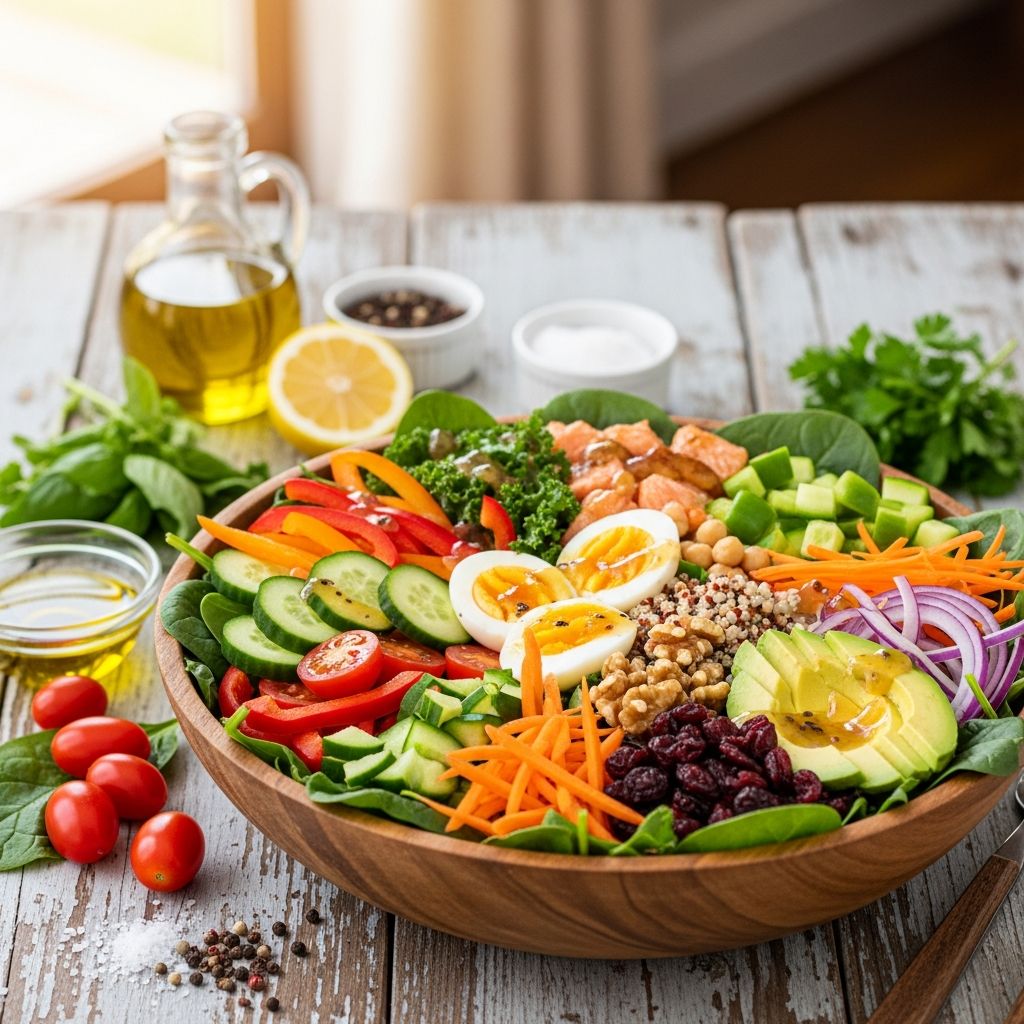
Salads offer a versatile canvas for delivering essential nutrients in a single bowl, making them ideal for busy families aiming to prioritize health without sacrificing taste. By thoughtfully combining leafy foundations, colorful produce, sustaining proteins, wholesome grains, beneficial fats, and zesty dressings, parents can create meals that appeal to children while promoting balanced nutrition. This guide draws on principles from registered dietitians to empower you in constructing salads that provide fiber for digestion, protein for growth, and vitamins for immunity.
Establishing a Vibrant Leafy Foundation
The base of any standout salad begins with nutrient-packed greens, which form the bulk of the dish while keeping calories low. Aim for 2 cups per serving to ensure ample volume and fiber intake, supporting steady energy and gut health. Diverse greens introduce varied flavors and micronutrients: spinach delivers iron and folate crucial for development; kale offers hearty texture with vitamin K for bone strength; arugula adds a peppery kick rich in antioxidants.
For family appeal, mix tender options like butter lettuce with crisp romaine. Baby spinach blends well for picky eaters due to its mild taste. Non-starchy additions like shredded cabbage or radicchio enhance crunch without excess carbs. These choices align with dietary guidelines recommending half your plate as vegetables for optimal health.
- Spinach: High in vitamins A and C, perfect for immune support.
- Kale: Packed with calcium, ideal for growing bones.
- Arugula: Low-calorie with glucosinolates for detoxification.
- Mixed lettuces: Versatile base for customizable bowls.
Incorporating Colorful Vegetables for Variety
Layering 1-2 cups of chopped vegetables introduces vibrant hues, textures, and a spectrum of phytonutrients. Bell peppers provide vitamin C for collagen production; broccoli contributes sulforaphane, an anti-inflammatory compound; carrots supply beta-carotene for eye health. Tomatoes and cucumbers add juiciness, while red onions bring bold flavor with quercetin, an antioxidant.
Chopping vegetables into kid-friendly sizes encourages participation. Roasting or lightly steaming denser veggies like Brussels sprouts enhances sweetness, making them more palatable. This step ensures salads aren’t bland, boosting family adherence to vegetable-rich diets. Studies from health authorities emphasize diverse produce for comprehensive nutrient coverage.
| Vegetable | Key Nutrients | Prep Tip |
|---|---|---|
| Bell Peppers | Vitamin C, Antioxidants | Slice thin for crunch |
| Broccoli | Vitamin K, Fiber | Blanch for tenderness |
| Cucumbers | Hydration, Potassium | Peel if preferred |
| Carrots | Vitamin A, Beta-Carotene | Shred for easy eating |
Boosting Satiety with Quality Proteins
Protein transforms a salad from side dish to main course, targeting 20-30 grams per serving for muscle repair and fullness. Lean choices like grilled chicken, turkey, or tofu deliver efficiency without excess fat. Seafood such as salmon offers omega-3s for brain health; eggs provide complete amino acids. Plant-based options like chickpeas or lentils add fiber alongside protein, ideal for vegetarian families.
Portion to 3-4 ounces—about a palm-sized amount—to balance the plate. Pre-cooked options save time, and involving kids in selecting proteins fosters ownership. Efficient proteins prevent over-reliance on calorie-dense add-ins like cheese, maintaining the dish’s lightness.
- Chicken Breast: Lean, versatile, high in B vitamins.
- Salmon: Omega-3 rich for heart and cognitive benefits.
- Chickpeas: Plant protein with prebiotic fiber.
- Hard-Boiled Eggs: Affordable, portable protein source.
Adding Complex Carbs for Sustained Energy
Often overlooked, complex carbohydrates like quinoa, farro, or sweet potatoes provide lasting fuel and chew. Aim for ¼-½ cup cooked to match balanced plate models, preventing blood sugar spikes. These starchy elements add heartiness, making salads suitable for lunch or dinner.
Grains absorb dressings, enhancing flavor cohesion. For children, familiar carbs like pasta or corn kernels ease acceptance. Whole grains support microbiome diversity per nutrition research.
Enhancing with Healthy Fats
Fats in moderation—1-2 tablespoons—promote absorption of fat-soluble vitamins and satisfaction. Avocado slices offer creaminess with monounsaturated fats; nuts like almonds provide vitamin E; seeds such as chia deliver omega-3s. Limit to a golf ball-sized portion to control calories.
These elements create textural contrast, crucial for enjoyable eating. Olives or a drizzle of olive oil in dressing suffice for most needs.
Perfecting Dressings and Flavor Enhancers
Dressings tie components together; opt for 1-2 tablespoons homemade versions with olive oil, vinegar, herbs, and minimal sugar. Yogurt-based for creaminess or tahini for nuttiness keep nutrition high. Experiment with citrus or mustard for zest without excess sodium.
Quick Yogurt Dressing: Whisk Greek yogurt, lemon juice, garlic, and dill. Per 2 Tbsp: 23 calories, 3g protein.
Sample Family-Friendly Salad Recipes
Tropical Protein Power Bowl
Base: Spinach and romaine. Veggies: Pineapple chunks, cucumber, red pepper. Protein: Grilled shrimp. Carbs: Quinoa. Fats: Avocado, sunflower seeds. Dressing: Lime vinaigrette. Serves 4; prep 15 min.
Crunchy Harvest Medley
Base: Kale mix. Veggies: Roasted carrots, broccoli, onion. Protein: Turkey slices. Carbs: Farro. Fats: Walnuts. Dressing: Balsamic herb. High in fiber for digestion.
Nutrition Benefits of Balanced Salads
These compositions deliver 400-600 calories per serving, balancing macros: 50-60% carbs from veggies/grains, 20-30% protein, 20% fats. They combat micronutrient gaps common in children’s diets, per USDA guidelines.
Common Mistakes and Fixes
- Too skimpy: Bulk up with more greens/veggies.
- Dressing overload: Use sparingly or dip.
- No protein: Always include for satiety.
- Blandness: Layer herbs, spices, acids.
Frequently Asked Questions
What makes a salad ‘balanced’ for kids?
A balanced salad includes greens (half the bowl), protein (palm-sized), carbs (fist-sized), and fats (thumb-sized) to mimic a complete meal.
How much salad per person?
4-6 cups total volume for adults; scale down for kids to encourage finishing.
Can salads be meal-prepped?
Yes; store components separately and assemble fresh to maintain crispness.
Best proteins for vegetarians?
Tofu, beans, eggs, tempeh provide complete nutrition without meat.
How to get kids excited about salads?
Let them build their own with fun toppings like seeds or fruit bits.
References
- How to build a balanced, satisfying salad — Teladoc Health. 2023. https://www.teladochealth.com/library/article/how-to-build-a-balanced-satisfying-salad
- How to Build a Healthy and Balanced Salad — The Whole Scoop Blog. 2022. https://thewholescoopblog.com/how-to-build-a-healthy-and-balanced-salad/
- Fueling Facts: How to Make a Balanced Salad + 5 Salad Recipes — Shiftlife. 2024. https://www.shiftlife.com/articles/fueling-facts-balanced-salads
- How To Make A Balanced Salad — A Little Nutrition. 2023. https://www.alittlenutrition.com/how-to-make-a-balanced-salad/
- Build a Healthy Salad — Academy of Nutrition and Dietetics. 2024. https://www.eatright.org/food/food-preparation/cooking-tips/build-a-healthy-salad