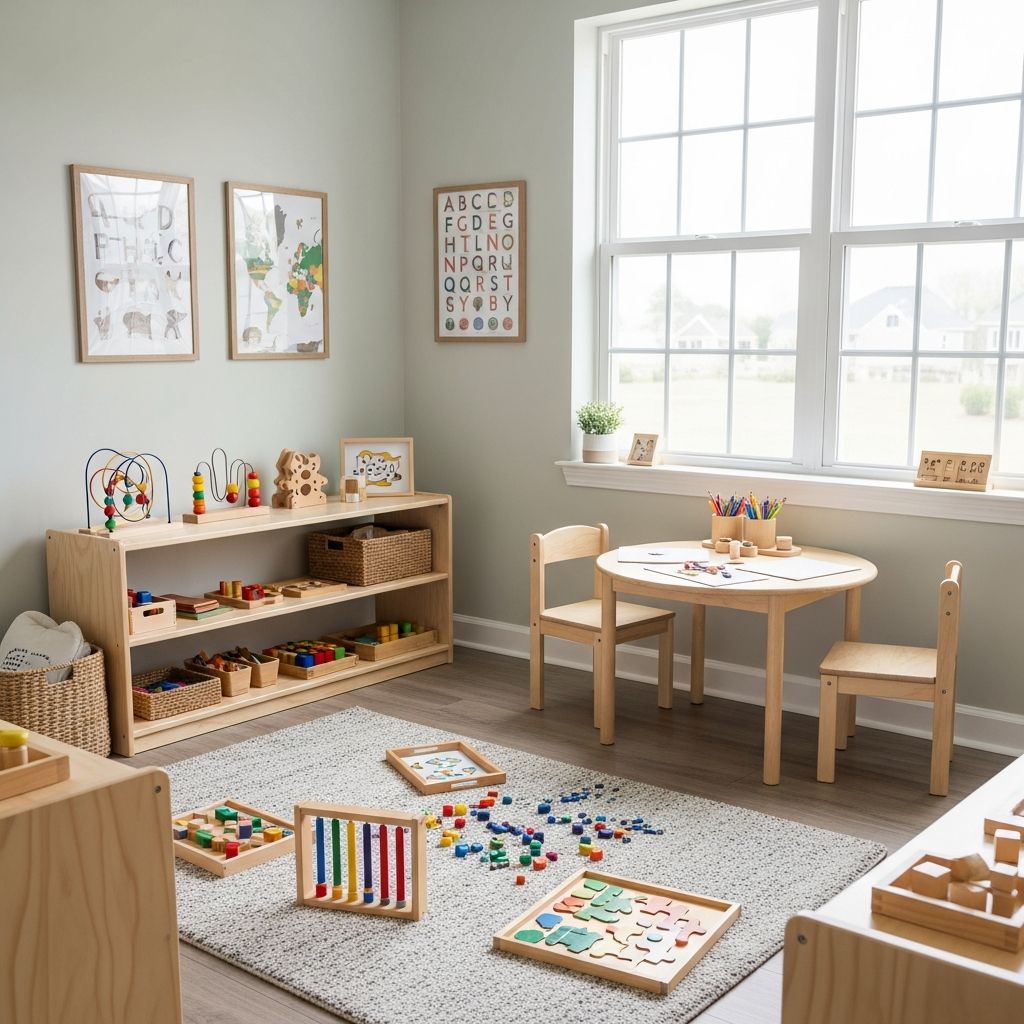
Creating a dedicated play area rooted in Montessori philosophy empowers children to explore, learn, and grow independently. This approach emphasizes simplicity, accessibility, and purposeful materials to nurture concentration, motor skills, and curiosity without overwhelming stimulation.
Core Principles of a Montessori-Inspired Play Environment
The foundation of any effective Montessori playroom lies in principles that prioritize the child’s natural developmental needs. By focusing on order, beauty, and freedom within limits, parents can design spaces that invite self-directed discovery rather than dictate play.
- Simplicity and Order: Limit visible items to prevent distraction and encourage deep focus on fewer activities.
- Child Accessibility: Ensure all elements are sized and placed for easy reach, promoting autonomy.
- Natural Integration: Incorporate organic materials and elements from nature to connect children with their surroundings.
- Zone-Based Layout: Divide the space into distinct areas for various activities to guide natural transitions.
- Rotation Strategy: Cycle toys periodically to maintain engagement and mastery over time.
These elements create a calm atmosphere where children feel capable and confident, aligning with Montessori’s view of the prepared environment as a key to learning.
Planning Your Playroom Layout for Optimal Flow
A well-thought-out layout maximizes usability in even small spaces. Start by assessing the room’s dimensions and your child’s age to allocate areas efficiently. Aim for an open central zone surrounded by specialized corners.
| Zone | Purpose | Key Features |
|---|---|---|
| Central Open Floor | Gross motor development | Uncluttered space for movement, cushions for tumbling |
| Activity Shelf Area | Fine motor and cognitive play | Low shelves with 6-8 trays of materials |
| Reading Nook | Language and quiet time | Forward-facing books, soft seating |
| Practical Skills Corner | Daily life imitation | Child-sized tools like pitchers and brooms |
| Movement Zone | Physical challenges | Climbing structures, balance elements |
Position furniture to allow free circulation, with shelves against walls and tables in the center for collaborative play. This setup supports seamless activity shifts and reduces parental intervention.
Selecting and Organizing Toys and Materials
Quality trumps quantity in a Montessori playroom. Choose open-ended, realistic items made from wood, fabric, or metal that invite repeated use and skill-building. Display only a curated selection to foster choice-making.
Implement a rotation system: Store excess items out of sight and swap them bi-weekly based on your child’s interests. This keeps the space fresh and prevents overwhelm. Use trays or baskets for each activity to teach containment and order—group related items like stacking blocks or sorting beads together.
- Infants (0-12 months): High-contrast mobiles, soft rattles, grasping toys.
- Toddlers (1-3 years): Nesting cups, shape sorters, simple puzzles.
- Preschoolers (3+ years): Advanced blocks, lacing cards, matching games.
Avoid battery-powered or single-function toys; opt for those that evolve with the child, such as modular blocks for building forts or vehicles.
Incorporating Child-Sized Furniture and Safety Features
Furniture scaled to a child’s height is non-negotiable for independence. Low tables, chairs, and shelves allow easy access and cleanup, reinforcing responsibility.
Baby-proof thoroughly: Secure heavy items, cover outlets, and eliminate sharp edges. Create a “yes space” where exploration is safe without constant supervision—include reachable snacks, water pitchers, and wiping cloths.
Recommended essentials:
- Webbing-free open shelves for visibility.
- Stable, lightweight tables for art or meals.
- Mirrors at floor level to encourage movement observation.
- Soft rugs or mats defining workspaces.
These choices not only enhance safety but also build confidence as children navigate their environment unassisted.
Infusing Nature and Aesthetic Harmony
Montessori spaces thrive on beauty and connection to the natural world. Introduce plants, shells, pinecones, or fresh flowers in low vases accessible to little hands. Hang artwork—nature prints, family photos, or child creations—at eye level to inspire appreciation.
Use a neutral palette with subtle colors from wooden toys and fabrics. This visual calm supports concentration, contrasting chaotic toy overload. Soft lighting from child-safe lamps adds warmth without glare.
Fostering Independence Through Practical Life Activities
Integrate real-life tasks to develop coordination and purpose. Set up stations for pouring water, sweeping, or folding cloths using appropriately sized tools.
Benefits include:
- Improved fine motor control.
- Sense of contribution to family life.
- Preparation for self-care routines.
Observe your child to tailor activities— if they gravitate toward kitchen play, provide a low step stool and safe utensils.
Common Challenges and Practical Solutions
Small spaces or budget constraints are frequent hurdles. Solutions include multi-functional furniture like play couches that double as climbing aids or storage. For clutter-prone families, designate a hidden rotation bin and commit to weekly reviews.
Table of Quick Fixes:
| Challenge | Solution |
|---|---|
| Limited square footage | Vertical shelving, wall-mounted art |
| High toy volume | Donation/rotation purge |
| Messy aftermath | Trays for easy tidy-up |
| Boredom sets in | Themed rotations (e.g., nature week) |
Patience is key; evolve the space as your child grows.
Frequently Asked Questions (FAQs)
What is the ideal number of toys to display in a Montessori playroom?
Limit to 6-10 items to promote focus and mastery. Rotate others weekly.
Do Montessori playrooms need expensive furniture?
No, prioritize function over cost—DIY low shelves or thrift finds work well.
How do I introduce toy rotation without resistance?
Involve your child in selecting and storing items, framing it as a fun refresh.
Can this setup work for multiple ages?
Yes, use divided shelves or separate zones tailored to each child’s stage.
What if my child ignores the prepared space?
Model use gently, then step back—independence builds over time.
Long-Term Benefits of a Montessori Playroom
Beyond immediate play, these environments cultivate lifelong skills like self-regulation, problem-solving, and respect for order. Children gain confidence from successful independent tasks, setting a strong foundation for school and beyond.
Regular observation refines the space, ensuring it remains relevant. Parents report reduced tantrums, longer play sessions, and easier tidying as natural outcomes.
References
- 7 Steps to Setting Up a Montessori Playroom That Truly Works — Guidepost Montessori. 2023-05-15. https://guidepostmontessori.com/blog/montessori-playroom-ideas/
- Create a Montessori Playroom with Play Furniture — House of Noa. 2024-02-10. https://www.thehouseofnoa.com/blogs/news/how-to-create-a-montessori-inspired-playroom-using-play-furniture
- How to Montessori your child’s play space — Lovevery Blog. 2023-11-20. https://blog.lovevery.com/parent-family-life/how-to-montessori-your-childs-play-space-by-montessori-madre/
- Setting Up a Best Montessori Playroom at Home — Montessori Hollywood. 2024-01-08. https://www.montessorihollywood.org/blog/setting-up-a-best-montessori-playroom-at-home
- Building a Montessori Play Area: Essential Toys for Every Age — Montessori Generation. 2023-09-12. https://montessorigeneration.com/blogs/montessori/montessori-play-area
- Montessori Playroom – How To Create A Montessori Play Space — Montessori Method. 2022-07-30. https://montessorigeneration.com/blogs/montessori/montessori-play-area
- Montessori Playroom: 10 Simple Principles — Montessori Up. 2023-03-05. https://www.montessoriup.com/montessori-playroom/