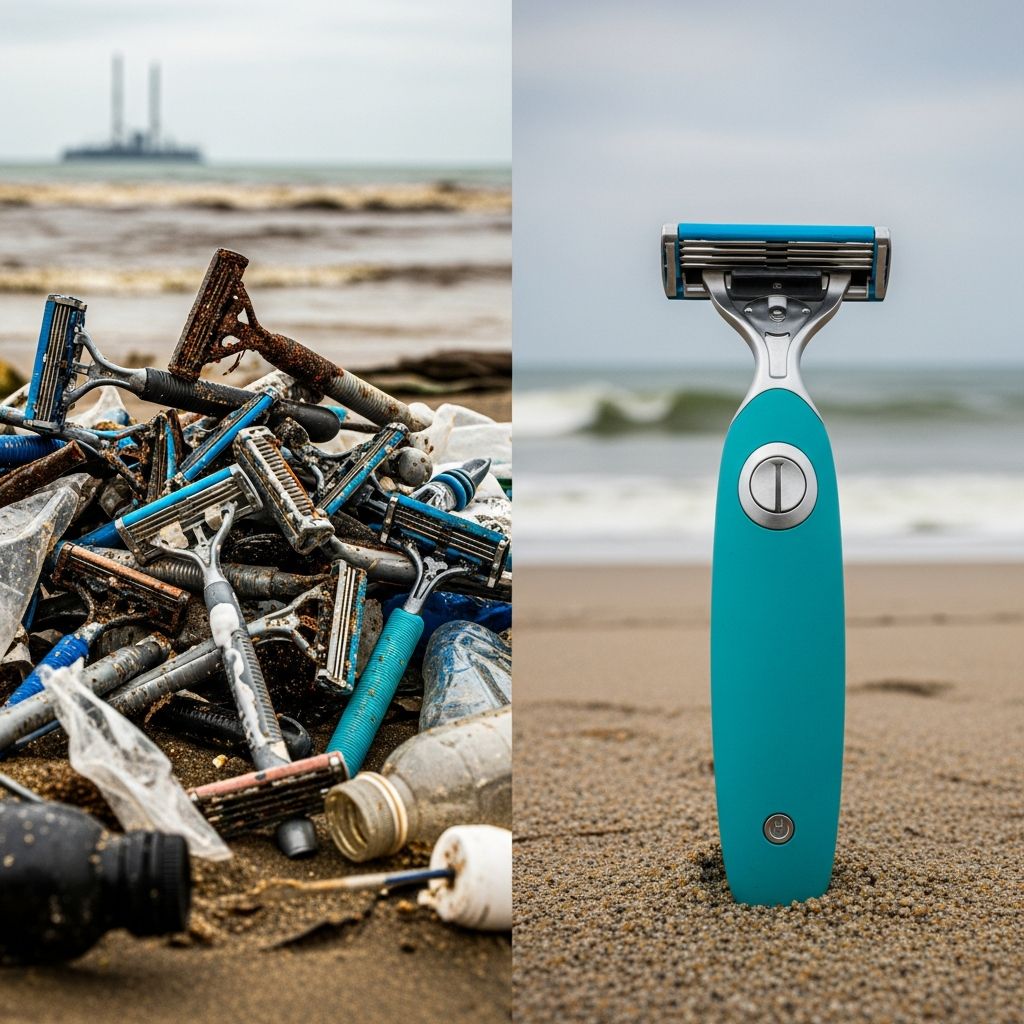
The Razor’s Edge: Convenience vs. Consequences
Disposable razors have become a staple in bathrooms worldwide, offering quick, easy grooming for millions. Yet, behind their sleek packaging and sharp blades lies a hidden cost: a growing environmental crisis fueled by plastic waste, carbon emissions, and health risks. As consumers become more aware of their impact, the shaving industry is undergoing a quiet revolution, with sustainable alternatives emerging as a smarter, greener choice for the future .
How Disposable Razors Harm the Planet
Every year, billions of disposable razors are discarded, most ending up in landfills where they can take hundreds of years to decompose. The mixed materials used in their construction—plastic, steel, and sometimes rubber—make recycling nearly impossible, leading to a never-ending stream of waste .
- Over 2 billion disposable razors are thrown away annually in the United States alone .
- Each razor contributes to the global carbon footprint, with production, packaging, and transportation all adding to greenhouse gas emissions .
- As razors break down, they release microplastics into the environment, contaminating waterways and entering the food chain .
The Health Risks of Plastic Razors
Beyond environmental damage, disposable razors pose health risks to both humans and wildlife. Microplastics from razors can leach toxins into soil and water, eventually making their way into the food supply. Animals often mistake plastic waste for food, leading to ingestion and harm .
- Microplastics are linked to hormonal disruptions and other health issues in humans .
- Plastic waste in oceans and rivers threatens marine life and ecosystems .
- Chemical leaching from razors can contaminate groundwater and drinking water sources .
Sustainable Shaving Alternatives
Switching to sustainable shaving options is one of the simplest ways to reduce your environmental impact. Reusable razors, made from metal or bamboo, offer a long-lasting alternative that minimizes waste and carbon emissions .
- Safety razors use replaceable blades, drastically reducing plastic waste .
- Bamboo razors are biodegradable and eco-friendly, offering a renewable option for conscientious consumers .
- Some brands now offer recycling programs for razor blades, further reducing landfill waste .
Benefits of Sustainable Shaving
Choosing a sustainable razor not only helps the planet but also offers personal benefits. Reusable razors are often more cost-effective in the long run, and many users report a closer, more comfortable shave compared to disposable options .
| Feature | Disposable Razor | Sustainable Razor |
|---|---|---|
| Waste Generated | High (plastic, mixed materials) | Low (metal, bamboo, recyclable blades) |
| Carbon Footprint | High (production, packaging, transport) | Low (long-lasting, fewer replacements) |
| Cost Over Time | High (frequent purchases) | Low (one-time purchase, replace blades) |
| Health Impact | Potential microplastic exposure | Minimal environmental toxins |
How to Make the Switch
Transitioning to sustainable shaving is easier than ever. Start by researching eco-friendly brands and products, and consider joining community initiatives that promote recycling and responsible disposal. Small changes in your grooming routine can have a big impact on the planet .
- Choose razors made from metal or bamboo.
- Support brands with recycling programs for blades.
- Dispose of used blades responsibly to prevent injury and pollution.
- Spread awareness about the environmental impact of disposable razors.
FAQs
Are disposable razors recyclable?
No, most disposable razors are made from mixed materials that cannot be recycled through standard curbside programs. They usually end up in landfills .
How long does a disposable razor last?
A typical disposable razor is designed for 3 to 10 shaves before it becomes dull and is discarded .
Are sustainable razors more expensive?
While the initial cost may be higher, sustainable razors save money over time because they require only occasional blade replacements .
Can microplastics from razors affect my health?
Yes, microplastics can leach toxins into the environment and enter the food chain, potentially affecting human health .
What are the best sustainable razor brands?
Look for brands that use metal, bamboo, or offer blade recycling programs. Popular options include safety razors and eco-conscious startups .