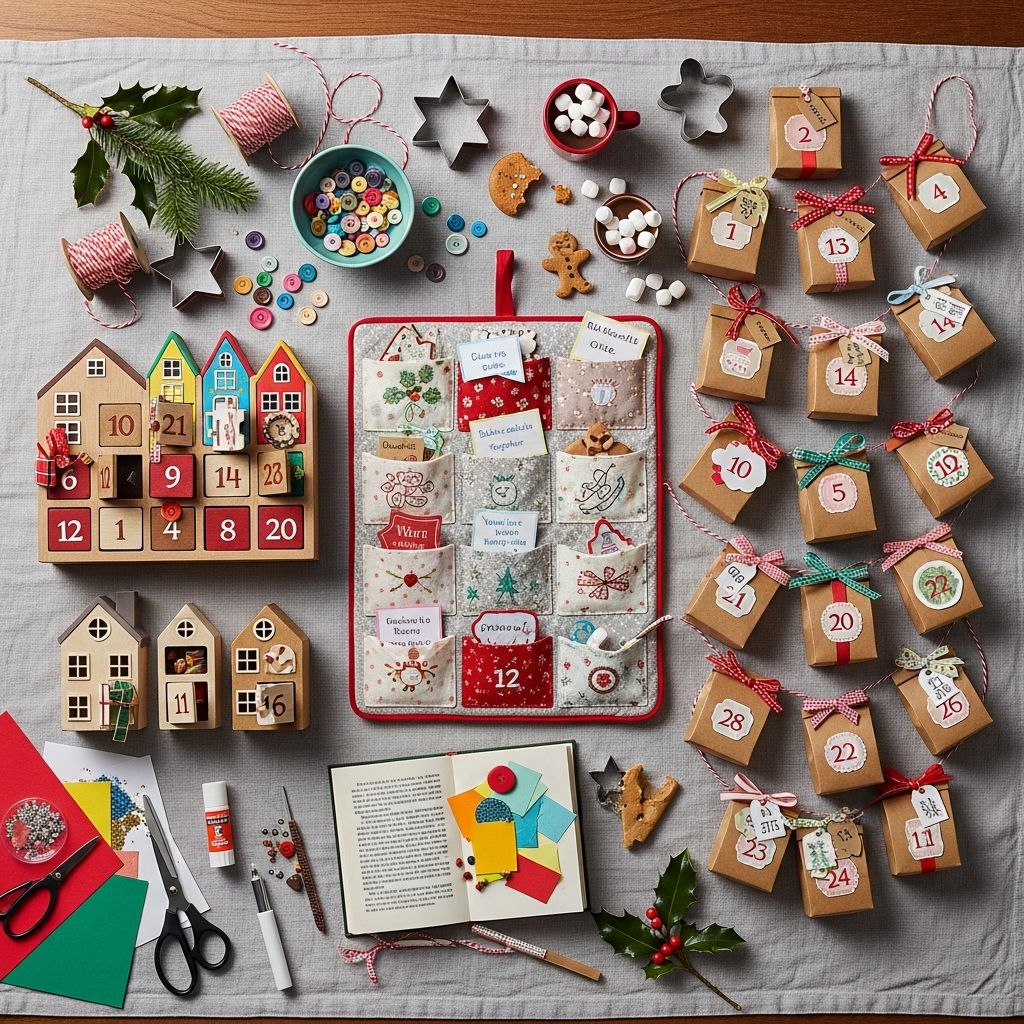
An Advent calendar can be much more than a countdown to December 25. Done thoughtfully, it becomes a rhythm for your month: a daily reminder to pause, connect, and celebrate together in the middle of a hectic season.
This guide walks you through how to create an Advent calendar that fits your family’s energy, budget, and values. You will find practical planning tips, creative filler ideas, and variations for different ages and family structures, all organized for quick reference.
Why Advent Calendars Matter for Families
Psychologists note that shared traditions and rituals help children feel stable, connected, and part of something bigger than themselves. Simple repeated activities—like opening a tiny door or envelope each day—can offer that sense of continuity and belonging.
- Connection: A daily moment together, even just 10 minutes, can strengthen family bonds and positive communication.
- Anticipation: Counting down days helps young children understand time and gives them something joyful to look forward to.
- Values in action: Including acts of kindness, giving, or faith practices shows children what your family cares about in concrete ways.
- Memories, not clutter: Activity-based calendars focus on experiences instead of accumulating toys and trinkets.
Step-by-Step: Plan Your Advent Calendar Without Stress
Before buying treats or printing activity slips, spend a few minutes planning. A little prep prevents mid-December overwhelm.
1. Decide Your Main Goal
Choose one or two priorities for this year’s calendar. Some possibilities:
- Quality time: Focus on simple, low-cost activities you can do together at home.
- Service: Highlight kindness, generosity, and community involvement.
- Faith: Include readings, prayers, or reflections that match your tradition.
- Creative play: Emphasize crafts, storytelling, and imaginative activities.
Let this goal guide what you include and what you skip.
2. Map Your December Calendar First
Look at your actual schedule before you assign activities to days.
- Mark nights with work events, concerts, or travel.
- Highlight weekends and school breaks.
- Note any important dates (birthdays, religious observances, community events).
Then match harder activities (baking, outings) to open days and keep busy days reserved for ultra-simple surprises.
3. Choose a Container Style That Fits Your Space
Your calendar doesn’t need to be elaborate to be magical. Use what you already have when possible.
| Calendar Style | What It Looks Like | Best For |
|---|---|---|
| Reusable wall hanging | Fabric or felt with pockets or rings | Families who like a decor piece they can refill each year |
| Mini envelopes or bags | Paper envelopes or small drawstring bags clipped to string | Flexible, easy to rearrange, space-saving |
| Box or basket calendar | Numbered small boxes or folded notes in a basket | Young kids who might tug on hanging decor |
| Digital/printed list | Printable checklist or digital slide for each day | Minimalists, travelers, or classrooms |
4. Balance Activities, Treats, and Rest Days
Not every day needs a big project. In fact, alternating effortful and easy days can make the calendar more sustainable and more fun.
- Active days: Baking, crafts, small outings, visits with friends or relatives.
- Quiet days: Storytime, a special snack, a short video call with grandparents.
- Rest days: A single chocolate, a sticker sheet, or a note that says, “Tonight we go to bed early and read by the tree lights.”
Activity Ideas by Time and Energy Level
Use this menu of ideas to fill your calendar according to how much time and energy you realistically have each day.
Quick and Easy (10 Minutes or Less)
- Read one winter or holiday picture book together.
- Have hot chocolate or warm cider by the tree or a candle.
- Play one favorite family board or card game.
- Listen to three holiday songs and have a living-room dance party.
- Make paper snowflakes and tape them to windows.
- Write a short note or drawing to mail to a grandparent or friend.
Medium Effort (30–60 Minutes)
- Bake a simple batch of cookies or brownies and decorate them.
- Walk or drive around to look at neighborhood lights with a thermos of cocoa.
- Have a “cozy night”: pajamas, a movie, and popcorn on the floor.
- Make salt dough or cinnamon ornaments for the tree.
- Work on a holiday puzzle together for 30 minutes.
- Create a family gratitude chain, writing something you’re thankful for on each strip.
Higher Effort (Plan for a Weekend or Day Off)
- Visit a local holiday market, concert, or community event.
- Go ice skating or sledding, depending on your climate.
- Have a family “craft fair” where each person chooses one project.
- Volunteer together: donate gifts, help a food bank, or support a local charity.
- Take a day trip to visit relatives or a special seasonal display.
Non-Candy Filler Ideas Kids Actually Enjoy
If you prefer to avoid daily candy, there are many small, inexpensive items and ideas that still feel exciting.
Creative and Crafty Surprises
- Stickers or temporary tattoos with winter themes.
- Washi tape, glitter glue pens, or a new set of crayons.
- Mini coloring pages rolled like scrolls.
- Parts of a craft kit spread over several days (e.g., ornament pieces on day 5, paint on day 6).
Experience Coupons
“Coupons” work especially well for older children and are budget-friendly.
- “Choose what we eat for breakfast tomorrow.”
- “One round of hide-and-seek after dinner.”
- “You pick the board game we play tonight.”
- “Stay up 20 minutes past bedtime to read.”
- “Family walk after dark with flashlights or glow sticks.”
Little Comforts and Practical Treats
- Holiday socks or mittens.
- Fun toothbrush, lip balm, or bath crayons.
- New bookmark or mini notebook.
- Single-serve packet of hot cocoa or herbal tea for older kids.
Adapting Your Advent Calendar by Age
Children of different ages engage with countdown rituals differently. Tailor the contents and expectations to match their stage of development.
For Toddlers and Preschoolers
- Keep activities very short and sensory-rich (lights, music, textures).
- Repeat favorites frequently; young children love repetition.
- Use sturdy containers and larger items to avoid choking hazards.
- Focus more on the ritual of opening than on complex projects.
For School-Age Kids
- Let them help plan a few days of the calendar.
- Include simple responsibilities: wrapping a gift, writing a card, or helping bake.
- Try age-appropriate craft or building kits spread across multiple days.
- Mix in chances to practice kindness and empathy (choosing a toy to donate, making cookies for neighbors).
For Tweens and Teens
- Shift from trinkets to experiences: outings, coffee or cocoa dates, movie nights.
- Offer decision power: “You pick tonight’s activity” or “You plan a festive playlist.”
- Consider including a charitable giving budget they help allocate.
- Add creative challenges (photography walk, short video project, themed baking competition).
Making Room for Giving and Gratitude
Research on youth development suggests that volunteering and helping others can support empathy, social skills, and a sense of purpose. The Advent season is a natural time to build these values into your calendar.
Simple Service-Oriented Ideas
- Choose a new or gently used toy together to donate.
- Write thank-you notes to teachers, coaches, or caregivers.
- Drop off food or toiletries at a local donation bin.
- Leave a kind note or small treat on a neighbor’s doorstep.
- Pick up litter safely at a nearby park or along your usual walking route.
Gratitude Rituals for the Countdown
- Keep a jar where each day’s slip prompts, “Today I’m grateful for…” and add everyone’s responses.
- Create a paper garland where each link lists something you appreciate, then hang it near your calendar.
- At dinner, ask one simple question: “What made you smile today?”
Faith and Reflection Ideas (Optional)
If your family observes Advent as a religious season, you can easily integrate short spiritual practices. Many families use a simple reading plan, lighting candles, or guided prayers.
- Assign a short reading, verse, or reflection to each day.
- Light a candle and take one quiet minute together.
- Use age-appropriate storybooks to explain the themes of hope, peace, joy, and love.
Keep It Sustainable: Realistic Expectations
It is easy to feel pressure to create a picture-perfect December. In reality, children benefit most from consistent, warm, and low-stress interactions. Here are ways to keep your Advent calendar realistic.
- Plan to skip: Build in “buffer days” labeled, “Surprise free day—do something cozy of your choice.”
- Prepare swap-outs: Keep a few ultra-simple backup slips ready (“tonight we listen to one song together”) for days that go off the rails.
- Share the load: Let older kids or another caregiver host certain days.
- Embrace imperfection: If you miss a day, you can always combine two slips the next day or quietly remove one.
Frequently Asked Questions (FAQs)
Do I need to start on December 1 for an Advent calendar to work?
No. You can begin whenever it is realistic for your family. Many people use 12-day or even one-week countdowns. The impact comes from the ritual and connection, not the exact number of days.
How can I make an Advent calendar on a tight budget?
Focus on experiences and use materials you already own. Activity slips, homemade coupons, library books, and simple walks to see lights cost little or nothing. Small reusable containers or envelopes can be used again each year, reducing ongoing costs.
What if my kids fight over who opens the calendar?
Rotate turns by date (odd/even days), or let one child open the envelope while another reads the note aloud or chooses the specific variation of the activity. You can also create separate, smaller calendars if sharing becomes a major stressor.
Is it okay to include candy or toys?
Yes. Small treats can be part of the fun, especially when balanced with activities and experiences. If you’re concerned about sugar or clutter, limit edible treats to certain days and use practical items—like craft supplies or socks—that you planned to buy anyway.
How do I keep the calendar fun for older kids and teenagers?
Give them a voice in planning, lean into experiences (outings, movie nights, special snacks), and invite them to lead a few activities for younger siblings. You can also incorporate their interests such as music, photography, or cooking challenges.
References
- Fiese BH, Tomcho TJ, Douglas M, et al. A review of 50 years of research on naturally occurring family routines and rituals: Cause for celebration? — Journal of Family Psychology. 2002-06-01. https://doi.org/10.1037/0893-3200.16.4.381
- United States Conference of Catholic Bishops. Advent: A Season of Preparation. — USCCB. 2023-11-27. https://www.usccb.org/prayer-worship/liturgical-year/advent
- National Endowment for the Arts. Why the Arts Matter. — NEA. 2020-01-15. https://www.arts.gov/impact/why-arts-matter
- Corporation for National and Community Service. The health benefits of volunteering: A review of recent research. — CNCS. 2007-04-01. https://americorps.gov/sites/default/files/evidenceexchange/FR_HealthBenefits.pdf