Nowruz, the Persian New Year, is a joyful celebration of spring, renewal, and hope that centers around family, food, and meaningful symbols laid out on a special display called the Haft-Seen table.
This guide offers parents, caregivers, and educators a simple way to understand the tradition of Haft-Seen and turn it into a hands-on, kid-friendly celebration at home or in the classroom.
What Is Nowruz?
Nowruz literally means “new day” and marks the arrival of spring in the Northern Hemisphere, often aligning with the spring equinox. It is celebrated across Iran and many other countries, as well as by families around the world who cherish the values of renewal, peace, and connection.
Instead of focusing on one single day, Nowruz is part of a season of rituals: cleaning the home, visiting loved ones, preparing special foods, and gathering around the Haft-Seen table at the exact moment the new year begins.
Understanding the Haft-Seen Table
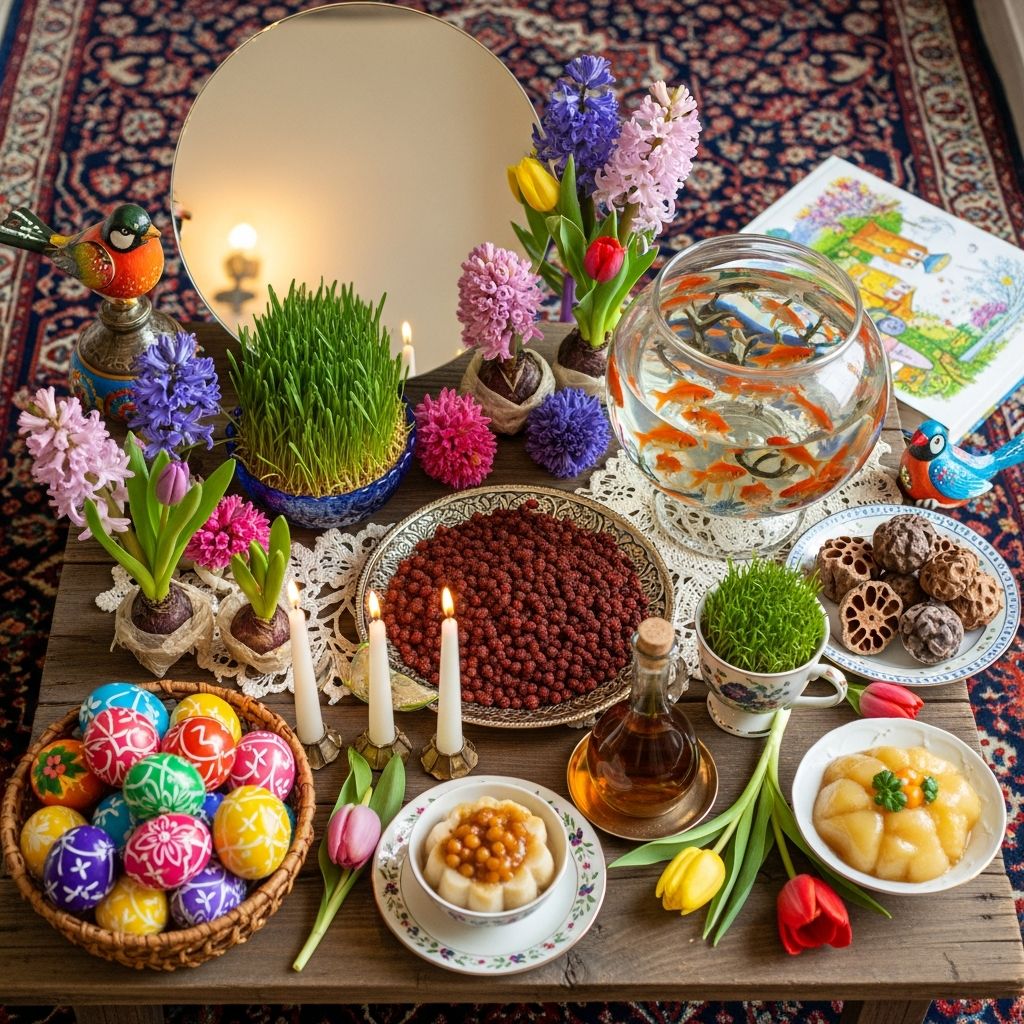
The Haft-Seen table is the symbolic heart of a Nowruz celebration. The name comes from the Persian word for the number seven and the letter “S,” referring to seven key items that each begin with that letter in Persian and carry a special meaning.
Beyond these seven items, families often add decorative objects, meaningful books, candles, and flowers to express their own hopes and values for the year to come.
Core Symbols at a Glance
| Item (Persian) | Literal Meaning | Symbolic Message |
|---|---|---|
| Sabzeh | Sprouted greens | New life, fresh beginnings, and the energy of spring. |
| Samanu | Sweet wheat pudding | Patience, abundance, and the rewards of hard work. |
| Senjed | Dried oleaster fruit | Love, wisdom, and grounded affection. |
| Seer | Garlic | Health, protection, and strength. |
| Sib | Apple | Beauty, well-being, and a healthy body. |
| Somāq | Sumac spice | Sunrise, warmth, and the victory of light over darkness. |
| Serkeh | Vinegar | Patience, experience, and resilience. |
This core set is flexible: some homes substitute or add items, but the overall message is always about growth, protection, and hope.
Optional Items and Their Meanings
Many Haft-Seen tables include extra items that do not begin with the same letter in Persian but carry their own powerful symbols. These additions allow each family to personalize the display and emphasize values that matter most to them.
- Mirror: Encourages self-reflection and clarity as you step into a new year.
- Decorated eggs: Represent fertility, creativity, and the promise of new generations.
- Goldfish or symbolic fish: Stand for life, movement, and change.
- Candles: Bring light, joy, and guidance to the celebration.
- Coins: Express wishes for prosperity, stability, and generosity.
- Spring flowers (often hyacinths): Celebrate beauty and the return of color to the earth.
- A cherished book: May be poetry, scripture, or a favorite story that reflects wisdom and shared values.
These optional items make the table visually rich and give families more opportunities to talk with children about values and intentions for the year ahead.
Step-by-Step: Setting Up Your Haft-Seen
Creating a Haft-Seen table does not require expensive supplies. With a bit of planning and creativity, you can assemble a simple, meaningful display using items from your kitchen, garden, or local market.
1. Choose the Right Location
Select a low table, sideboard, or a clear section of the dining table that everyone can gather around easily. The spot should be stable, safe for children, and visible enough to feel like the focal point of your celebration.
2. Prepare Your Surface
Cover the chosen area with a cloth in light, spring-inspired colors such as white, green, or soft pastels. If you like, add a runner or lace overlay to create layers and texture without overcrowding the space.
3. Arrange the Seven Core Items
Place each of the seven symbolic items in its own small dish or bowl. Spread them evenly across the table so that each can be seen from different angles, leaving room for decorations, candles, and flowers.
4. Add Decorative and Personal Touches
Once the core items are in place, bring in the mirror, candles, eggs, coins, and flowers. You can also include family photos, handwritten wishes for the year, or artwork created by your children.
5. Light and Gather at New Year’s Moment
Just before the new year moment (the exact time of the spring equinox), gather around the table together. Light the candles, share a quiet reflection or a few words of gratitude, and then celebrate with hugs, music, and a festive meal.
Involving Children in Every Step
Children often respond most strongly to traditions when they can touch, create, and make decisions. By actively involving them in the preparation of the Haft-Seen, you help them absorb cultural knowledge and feel pride in the celebration.
Kid-Friendly Ways to Help
- Let children rinse and arrange apples, garlic, and other non-fragile items in bowls.
- Invite them to pick the tablecloth or choose the arrangement of candles and flowers.
- Ask them to create labels or small cards identifying each item and its meaning.
- Give them a central role in lighting (or switching on) candles under adult supervision.
- Include children in saying a wish, affirmation, or goal for the new year.
Simple Crafts to Enrich Your Haft-Seen
Hands-on projects help bring the symbolism of Haft-Seen to life. The goal is not perfection but participation, using materials you already have whenever possible.
Decorated Wish Eggs
Instead of just coloring eggs, turn them into little carriers of hopes and intentions. You can use real eggs (blown out and cleaned) or sturdy wooden or plastic versions.
- Have each family member write a short wish or goal for the year on a small piece of paper.
- Place the paper inside the egg (for hollow shells) or tape it gently to the underside of the egg stand.
- Decorate the eggs with bright colors, patterns, and symbols that feel meaningful.
- Display them around the mirror or flowers on the Haft-Seen table.
Paper Sabzeh Garden
If real sprouts are not available or you want an extra craft, create a “paper garden” to accompany your table.
- Cut strips of green paper in varying shades and lengths.
- Invite children to curl, fold, or crinkle the strips to mimic blades of grass or leaves.
- Glue the strips into small bowls or onto cardboard circles to form mini gardens.
- Place these gardens near the real sabzeh or in spots where kids can easily see their handiwork.
Family Intention Cards
Use simple index cards or folded cardstock to create a set of “intention cards” to tuck around the table.
- On one side, write a single word: “Kindness,” “Courage,” “Patience,” “Joy.”
- On the other side, write or draw one way to practice that intention in everyday life.
- Place the cards under candles, near the mirror, or beside the apples and coins.
Making Nowruz Inclusive and Accessible
Nowruz and Haft-Seen can be celebrated by families of any background who want to honor spring, renewal, and cross-cultural understanding. With a little explanation, children quickly grasp that they are joining a global tradition of welcoming light and life.
Educators can use Haft-Seen as a starting point for exploring geography, language, plant life, and family traditions from different cultures, inviting students to compare it with holidays they already know.
Tips for Non-Persian Households and Classrooms
- Be clear that you are honoring a tradition that comes from Persian and neighboring cultures; mention where it is celebrated and how important it is to those communities.
- Use maps, images, or short videos (where allowed) to show children how Nowruz is marked in different regions.
- Invite families who celebrate Nowruz to share recipes, stories, or photos if they feel comfortable.
- Focus on universal themes: spring, kindness, gratitude, and starting fresh.
Planning a Family Nowruz Day
Beyond the table itself, a family Nowruz celebration can include meals, storytelling, music, and visits (in person or virtual) with loved ones. Planning the day together can build anticipation and create lasting memories.
Sample Nowruz Family Schedule
| Time | Activity | Focus |
|---|---|---|
| Morning | Quick tidy-up and fresh flowers | Clearing space and inviting spring energy. |
| Late Morning | Crafts: eggs, paper gardens, intention cards | Creativity and hands-on learning. |
| Afternoon | Preparing food and setting the table together | Collaboration and cultural storytelling. |
| New Year Moment | Gather at Haft-Seen, light candles, share wishes | Reflection, gratitude, and connection. |
| Evening | Festive meal and calls or messages to loved ones | Community and celebration. |
Frequently Asked Questions About Haft-Seen and Nowruz
Do I have to include every traditional item for my Haft-Seen to “count”?
No. It is ideal to include the seven core items if possible, but many families adapt based on what is available, substituting or simplifying when needed. The intention behind the table—honoring spring, health, and abundance—is more important than perfect accuracy.
Can I celebrate Nowruz if my family is not Persian or from a country that observes it?
Yes, as long as you approach the tradition with respect and a desire to learn rather than to claim it as your own invention. Take time to acknowledge its origins and share that context with children so they understand the cultural background.
What if I cannot find some of the traditional foods or plants?
You can use symbolic substitutes and clearly explain to children what each item is meant to represent. For example, any fresh green sprouts or herbs can stand in for sabzeh, and any fragrant flower can evoke the spirit of spring.
How do I help children understand the symbolism without making it feel like a lecture?
Turn explanations into short stories and questions. For instance, while placing apples on the table, ask, “What helps us stay healthy?” or “What makes the world feel beautiful to you?” so that symbolism becomes part of a conversation rather than a lesson.
Is there a specific greeting we should say on Nowruz?
A common English-friendly greeting is simply “Happy Nowruz!” or “Happy Persian New Year!” Families who speak Persian or related languages may use traditional phrases, but a sincere wish for a bright and peaceful new year is always appropriate.
Carrying the Spirit of Nowruz Into the Year
Even after the candles are blown out and the table is cleared, the themes of Nowruz offer guidance for the months ahead: care for the earth, care for one another, and a belief that light can return after any winter.
By inviting children into the creation of a Haft-Seen table, families give them a living reminder that new beginnings are always possible—and that traditions, when shared with love and creativity, can shape memories for a lifetime.