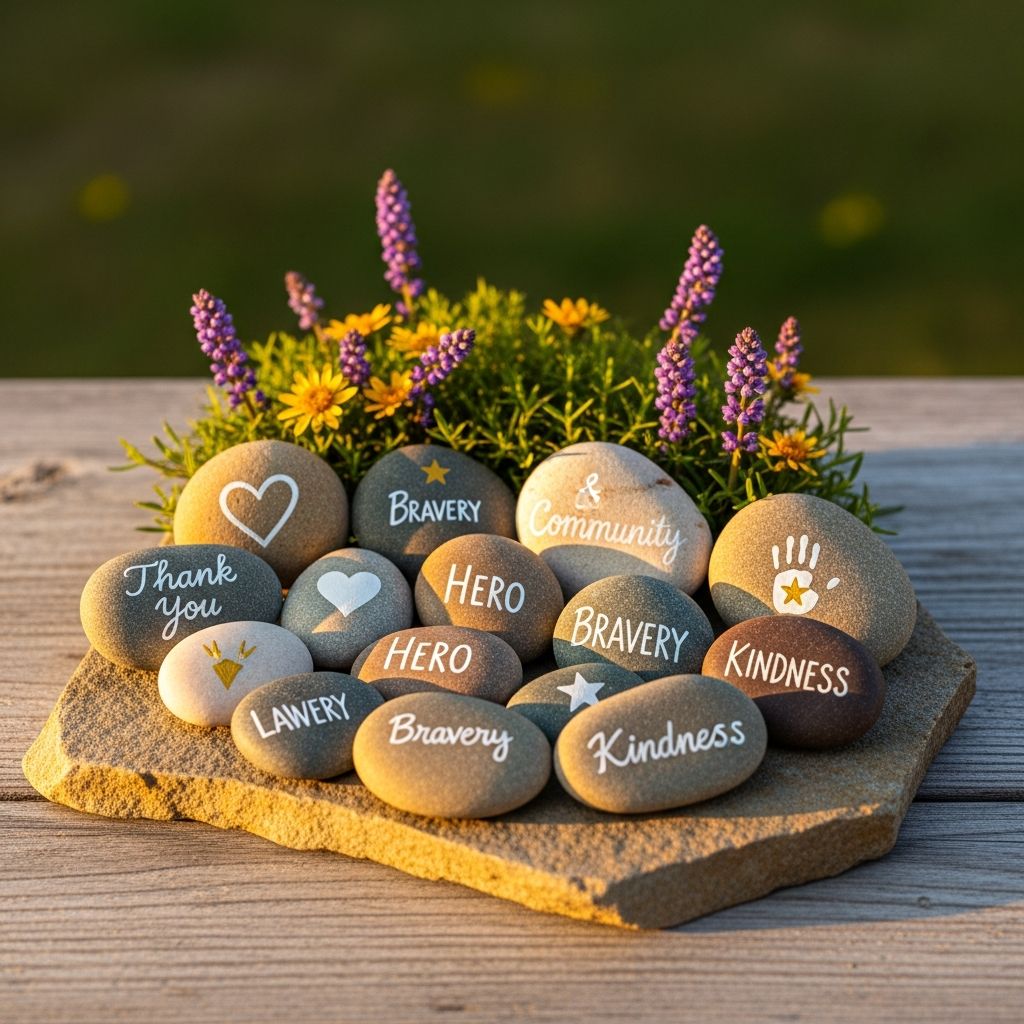
Transform simple stones into powerful symbols of appreciation by creating a gratitude rock garden dedicated to the essential workers who keep communities running. This hands-on project blends art, empathy, and outdoor time into an uplifting experience for families, classrooms, and neighborhoods.
Why a Gratitude Rock Garden Matters
In every community, essential workers show up daily in visible and invisible ways. A gratitude rock garden offers a gentle, visual reminder that their efforts are seen, appreciated, and valued. It turns a small corner of a yard, school, or public space into a living thank-you note made of color, encouraging words, and creativity.
- It gives children a concrete way to express gratitude and learn empathy.
- It provides adults with a simple, low-cost way to recognize community heroes.
- It invites passersby to pause, reflect, and feel supported during stressful times.
Choosing Who Your Garden Honors
Before painting, decide together who the garden will honor. This focus shapes the words, symbols, and colors you use on each rock. Essential workers include many more people than first come to mind, so invite kids to think broadly about who helps keep life moving smoothly.
- Medical and health workers: doctors, nurses, lab technicians, paramedics, pharmacists, clinic staff.
- Public safety workers: firefighters, police officers, emergency dispatchers, rescue teams.
- Community support workers: teachers, school staff, counselors, social workers, childcare providers.
- Infrastructure and service workers: grocery clerks, delivery drivers, postal workers, sanitation crews, utility workers, public transit staff.
- Local heroes: neighbors who check on others, volunteers, faith leaders, and nonprofit staff.
Writing down a simple dedication such as “For everyone who keeps our community safe and strong” can help guide the designs and messages as you paint.
Suggested Locations for Your Rock Garden
A gratitude rock garden can be as small as a circle of stones around a tree or as large as a landscaped corner filled with flowers and painted rocks. Choose a place that is both safe and visible, and be sure you have permission to use the space if it is not your own property.
- Front yard beds or around a mailbox, where delivery workers and pedestrians can see the messages.
- Near a sidewalk or pathway, arranged along the edge so they are easy to notice but not a tripping hazard.
- At a community space such as a school, library, or place of worship (with approval).
- In a container garden on a porch or balcony if you live in an apartment.
Wherever you place it, think about how people will encounter the rocks. A garden that feels like a small discovery—noticeable yet respectful of the surroundings—often has the most impact.
Basic Supplies You Will Need
You can complete this project with simple materials found at home or at a local craft or hardware store. The list below can be adjusted depending on budget, age of participants, and how durable you want the rocks to be.
- Smooth, clean rocks (river stones or landscaping stones work well).
- Acrylic craft paint or paint pens suitable for outdoor use.
- Permanent markers for outlining and lettering.
- Clear outdoor sealer or varnish to protect designs.
- Paintbrushes in different sizes (including at least one fine brush).
- Water cup, paper towels, and palette or disposable plate for mixing colors.
- Scrap paper for sketching designs and practicing words.
- Optional: stencils, stickers (sealed under varnish), or painter’s tape for clean shapes.
Planning Your Kindness Themes
Before anyone dips a brush in paint, set aside a few minutes to brainstorm themes together. This helps the group move beyond generic smiley faces and encourages more thoughtful messages related to essential workers and resilience.
- Ask: “What makes someone an everyday hero?” or “How do essential workers help us each day?”
- List feelings you want to evoke, such as hope, strength, comfort, calm, or encouragement.
- Assign broad categories (gratitude, bravery, community, healing) and let each person choose a category for their rocks.
Once you have themes, encourage participants to sketch quick thumbnails of rock designs. This step helps kids think about balancing images and words on a small surface.
Design Ideas for Tribute Rocks
To keep the project accessible for all ages, mix very simple designs with slightly more detailed options. You can create a cohesive garden by repeating a few elements—like a particular color, heart symbol, or border style—across multiple rocks.
| Design Style | Visual Elements | Ideal For |
|---|---|---|
| Simple Symbols | Hearts, stars, rainbows, bandaged hearts, helping hands | Young children or first-time painters |
| Occupation Icons | Stethoscopes, books, delivery trucks, school buses, grocery carts | Older kids and teens |
| Word Focus | Single powerful word in bold letters, decorative borders | Anyone who loves lettering |
| Landscape Scenes | Sunrises, city skylines, small houses, gardens, roads | Adults or experienced painters |
| Pattern Rocks | Dots, stripes, chevrons, mandalas, color blocking | People who enjoy repetitive designs |
Encourage each participant to create at least one “thank-you” rock that directly refers to essential workers and one rock that offers a more general uplifting message for anyone who passes by.
Step-by-Step: Painting Your Rocks
Painting kindness rocks can be done in one session or spread over several days, depending on how many rocks you plan to make. The steps below keep the process manageable, even for groups with a wide range of ages.
- Clean and dry the rocks. Rinse off dirt, scrub gently if needed, and let them dry completely so paint adheres well.
- Apply a base coat. Cover one side of each rock with a solid or gradient background color. Lighter colors are usually easier to write on later.
- Sketch the design lightly. Use a pencil or very light paint to outline main shapes or the placement of words.
- Fill in main shapes. Paint symbols, scenes, or patterns before adding text. Allow each color to dry to reduce smudging.
- Add details and words. Use fine brushes or paint pens for outlines, small shapes, and lettering.
- Seal the surface. Once fully dry, coat each rock with an outdoor sealer, following product directions for drying time and ventilation.
Setting up a drying area lined with newspaper or a plastic tablecloth helps keep your space tidy and provides a dedicated “gallery” where finished rocks can be admired before installation.
Meaningful Words and Phrases to Use
Many people feel pressure to come up with the “perfect” phrase, but simple, sincere words often resonate most. Short messages are easier to fit on small stones and easier for passersby to read quickly.
- Use single words such as “Hope,” “Courage,” “Gratitude,” “Unity,” or “Heroes.”
- Write short affirmations thanking specific groups, such as “Thank you, nurses” or “Delivery drivers, you matter.”
- Add gentle reminders like “You are not alone” or “Your work changes lives.”
Encourage children to speak from their own experience. A rock painted with “Thank you for bringing our groceries” might feel more personal and heartfelt than a polished but generic message.
Involving Kids of Different Ages
A gratitude rock garden becomes more meaningful when it reflects many hands and perspectives. Adapting tasks to different age groups keeps everyone engaged and helps younger artists feel successful.
- Toddlers: Stick to finger painting, simple dots, and broad swirls of color without text.
- Early elementary: Paint hearts, rainbows, smiley faces, and trace over lightly written words in marker.
- Older kids and preteens: Design occupation-specific rocks, write their own messages, and assist with layout.
- Teens and adults: Create more detailed art, manage sealing, and help plan the overall garden arrangement.
You can also assign roles beyond painting, such as photographer, layout planner, or “word brainstorm leader,” so that kids who feel unsure about drawing still have a meaningful part to play.
Arranging and Displaying the Garden
The way you arrange the rocks helps tell the story of your tribute. Take time to place them thoughtfully instead of scattering them randomly. Invite everyone to suggest ideas and then experiment until the layout feels balanced.
- Create clusters for different kinds of workers (for example, health care, education, deliveries) and label each area with a simple sign.
- Arrange rocks in shapes such as a heart, spiral, wave, or path that leads visitors through the garden.
- Mix painted rocks with plants, mulch, and unpainted stones to create contrast and highlight the messages.
A small weather-resistant sign explaining that the garden is dedicated to essential workers helps visitors understand the purpose, especially if the tribute sits in a public or shared space.
Keeping Your Rock Garden Safe and Respectful
Because this project takes place outdoors, it is important to consider safety, accessibility, and respect for shared spaces. A well-maintained garden shows that the messages of gratitude are ongoing, not a one-time gesture.
- Place rocks where they will not interfere with lawnmowers, walkways, or wheelchair access.
- Keep rocks away from natural habitats or areas where added objects could harm wildlife or violate local rules.
- Secure permission from property owners or administrators before setting up a garden in shared or public areas.
- Periodically check for chipped paint, faded messages, or rocks that have shifted into unsafe spots.
Posting a brief note on a neighborhood board or school newsletter can also prevent confusion by explaining that the rocks are part of a kindness and gratitude project.
Turning It into a Community Project
While a single family can create a powerful gratitude garden, inviting others to participate multiplies its meaning. Community involvement also exposes more children and adults to the idea of creative acts of kindness.
- Host a neighborhood rock-painting afternoon with spaced tables or a shared supply station.
- Invite classmates, scout troops, or clubs to contribute one rock each to the garden.
- Set up a “take a rock, leave a rock” spot where people can swap messages over time while keeping the tribute alive.
Consider adding a small notebook in a weather-resistant container where visitors can write short thank-you notes to essential workers who might pass by and read them later.
Linking the Project to Social-Emotional Learning
This craft offers an ideal opportunity to talk with kids about empathy, resilience, and community support. Instead of treating the activity as just a painting project, use it as a springboard for reflection and conversation.
- Ask questions such as “How do you think nurses feel when they are very busy?” or “How can we show appreciation even after the crisis has passed?”
- Encourage kids to imagine a tired essential worker discovering the garden and ask what kind of message might lift that person’s spirits.
- Highlight how small acts of kindness can ripple outward, influencing others to act kindly as well.
You can even connect the project to a gratitude journal, where children list people who helped them during the week and brainstorm ways to say thank you.
Maintaining and Refreshing the Garden Over Time
Painted rocks gradually weather, and community needs evolve. Treating your gratitude rock garden as a living project keeps it from becoming neglected and reminds participants that appreciation should be ongoing.
- Host seasonal “rock refresh” days to repaint faded stones and add new messages.
- Rotate in rocks that honor different groups of workers at various times of the year.
- Invite new neighbors or new classmates to contribute a rock when they join your community.
Over time, the garden can become a visual history of how your family, school, or neighborhood has recognized the people who keep everyone safe, fed, educated, and connected.
Frequently Asked Questions
How many rocks do we need to start?
You can start with as few as five to ten rocks. A small, thoughtfully arranged cluster often looks more intentional than a large number of randomly placed stones. As interest grows, you can gradually add more rocks or invite others to contribute.
What if we do not have access to outdoor space?
If you lack a yard or shared garden, create a portable version. Arrange painted rocks in a shallow planter or tray filled with sand, pebbles, or soil and place it near a window, on a balcony, or inside a lobby or classroom with permission.
Which paints last longest outdoors?
Acrylic craft paints labeled for outdoor or multi-surface use typically perform well on rocks when combined with a clear sealer. Paint pens designed for outdoor surfaces can also provide clean lines and readable text, especially for lettering.
Can we give the rocks directly to essential workers instead?
Yes. Some families choose to create both a stationary garden and individual rocks to gift or include with thank-you cards. If you plan to deliver rocks to workplaces, call ahead to confirm that staff are comfortable receiving and displaying them.
How can we prevent rocks from being taken or moved?
Because your garden is meant to spread kindness, it is best to accept that some rocks may eventually travel. If you want them to remain in place, consider adding a small sign that asks visitors to enjoy the messages with their eyes and leave the rocks in the garden for everyone to share.
Building a Lasting Culture of Appreciation
A gratitude rock garden may start as a simple craft, but it can grow into a tradition that shapes how children and adults talk about service, sacrifice, and community. Every time someone walks past a brightly painted rock and feels seen or encouraged, the project achieves its purpose.
Most importantly, the garden reminds everyone that even small, creative gestures can honor the people whose efforts often go unnoticed. With a few stones, some paint, and a shared intention to say “thank you,” any space can become a quiet, colorful tribute to everyday heroes.