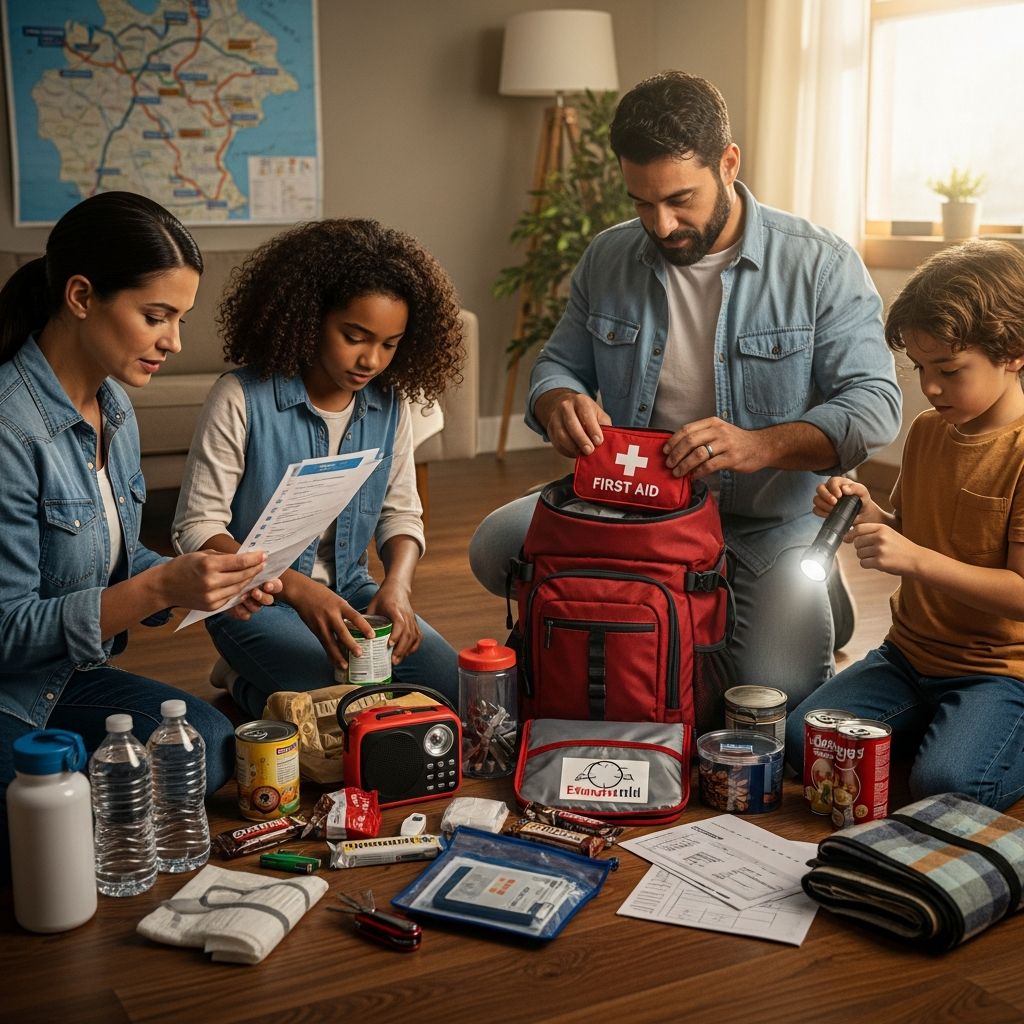
Creating a solid emergency plan is crucial for every household, especially those with children, pets, or members with special needs. This guide provides a step-by-step framework to organize vital information, assign roles, and assemble resources, ensuring everyone knows what to do during unexpected events like natural disasters, power outages, or medical emergencies.
Understanding the Need for Family Readiness
Emergencies can strike without warning, disrupting daily life and separating family members. A well-thought-out plan minimizes chaos by outlining communication strategies, meeting points, and essential actions. Official guidelines emphasize tailoring plans to unique family dynamics, including ages, health conditions, and locations where members spend time.
Statistics from government agencies show that families with pre-made plans respond 30-50% faster to crises, reducing injury risks and stress. Start by discussing potential hazards in your area, such as floods, earthquakes, or severe storms, and involve all household members in the planning process.
Step 1: Compile Essential Household Details
Begin with a central document listing every family member’s core information. This serves as a quick reference for rescuers or caregivers.
- Full names and dates of birth: For identification.
- Contact numbers: Home, work, cell, and backups.
- Social Security numbers: For official aid access (store securely).
- Key personal notes: Allergies, blood types, or daily routines.
Create a table for clarity:
| Name | Date of Birth | Phone Numbers | Special Notes |
|---|---|---|---|
| John Doe | 01/15/2010 | 555-0101 (cell) | Asthma, carries inhaler |
| Jane Doe | 03/22/2015 | 555-0202 (school) | Peanut allergy |
Print multiple copies and store them in emergency kits, vehicles, and with trusted contacts.
Step 2: Build a Network of Emergency Contacts
Identify reliable people outside your immediate household. Prioritize out-of-town contacts (O-T-C) since local lines may overload during disasters.
- At least two out-of-town relatives or friends: They can relay messages.
- Two local neighbors or friends: For mutual check-ins and aid.
- Dependent care backups: Schools, daycare, or workplaces with pick-up authorizations.
Sample contact table:
| Name | Relationship | Address/Phone/Email | Role |
|---|---|---|---|
| Uncle Bob | O-T-C | Seattle, WA / 555-0303 / bob@email.com | Message relay |
| Neighbor Lee | Local | Next door / 555-0404 | Check on pets |
Share your full plan with these contacts and ensure children memorize key numbers.
Step 3: Document Medical and Health Profiles
Health details can be lifesavers. List conditions, medications, providers, and accommodations for disabilities.
- Chronic conditions: Diabetes, epilepsy, mobility issues.
- Medications: Dosages, frequencies, prescriptions.
- Allergies and immunizations: With dates.
- Assistive devices: Wheelchairs, hearing aids, service animals.
Include end-of-life preferences if applicable, such as advance directives or DNR orders. For children with disabilities, note behavioral triggers or calming techniques.
Caregiver details:
| Caregiver/Service | Phone | Services |
|---|---|---|
| Home Health Aid Co. | 555-0505 | Daily meds for senior |
| Pediatrician Dr. Smith | 555-0606 | Allergy specialist |
Step 4: Map Out Emergency Response Protocols
Define procedures for common scenarios, customized to schools, workplaces, and home.
- School protocols: Pick-up plans, lockdown responses, reunification sites.
- Workplace: Evacuation routes, shelter-in-place rules.
- Home scenarios: If inaccessible, unsafe, or if separated.
If we can’t enter home: Go to [Neighborhood meeting place, e.g., park corner]. Contact O-T-C.
If separated: Text/email first (less network strain), then call. Use social media for updates.
Assign roles: One for pets, one for grabbing kits, one for shutting utilities.
Step 5: Plan for Pets and Special Circumstances
Pets require specific handling. Identify boarding options or carriers in advance.
- Pet meds, food for 72 hours.
- Leashes, crates, vaccination records.
- For pregnant women or elders: Extra hydration, comfort items.
Evacuation priorities: Humans first, then pets. Have duplicate keys with neighbors.
Step 6: Assemble Your Emergency Supply Kits
Prepare kits for home, car, work/school. Aim for 72 hours self-sufficiency.
Basic Kit Essentials
- Water: 1 gallon/person/day.
- Food: Non-perishables, manual can opener.
- First aid: Bandages, antiseptics, pain relievers, prescriptions (7-day supply).
- Tools: Flashlight, multi-tool, duct tape, wrench for utilities.
- Hygiene: Soap, sanitizer, toilet paper, feminine products.
- Communication: Battery radio, whistles, chargers.
- Documents: Copies of IDs, insurance, plan in waterproof bag.
Customize for kids: Comfort items, games, formula. For cars: Blankets, flares, jumper cables.
Step 7: Visualize Your Home and Evacuation Routes
Draw a simple home diagram marking exits, utilities, kit locations, and hazards (e.g., gas lines).
- Primary/secondary evacuation routes.
- Neighborhood rally point (e.g., mailbox cluster).
- Off-site meeting spot (e.g., relative’s house).
Practice drills quarterly to build muscle memory.
Before, During, and After Crisis Actions
Before
- Monitor weather/alerts via apps/radio.
- Secure home: Trim trees, charge devices.
During
- Stay informed via NOAA radio.
- Shelter/evacuate per officials; avoid flooded roads.
- Use texts for family check-ins.
After
- Account for all members/pets.
- Document damage for insurance.
- Review and update plan.
Frequently Asked Questions (FAQs)
Q: How often should we update our family emergency plan?
A: Review annually, after life changes (births, moves), or post-event. Update contacts and kits every 6 months.
Q: What if a child is at school during an emergency?
A: Provide schools with authorization forms for pick-ups. Teach kids to follow school protocols and contact O-T-C.
Q: How do we handle power outages with medical devices?
A: Have backup batteries/generators. List needs in plan and inform neighbors.
Q: Are there plans for pets in shelters?
A: Many designate pet-friendly zones. Pack pet kits separately; know local animal services.
Q: What’s the minimum water storage?
A: One gallon per person/pet per day for 3 days minimum. Rotate stock.
Practice Makes Prepared
Run tabletop exercises: Simulate scenarios, time responses. Involve kids age-appropriately to reduce fear. Digital backups (apps, clouds) complement paper plans, but prioritize offline access.
This guide, inspired by official templates, equips families for resilience. Customize and commit to readiness for peace of mind.
References
- Household Emergency Plan Template — SLCC Emergency Prepare. Accessed 2026. https://i.slcc.edu/emergency-prepare/docs/Personal%20Prepare%20Amature%20radio/Household-Emergency-Plan-template.pdf
- Household Emergency Plan Template — Clark County Public Health. 2013-09-23. https://clark.wa.gov/sites/default/files/dept/files/public-health/Emergency_Prep/householdplan.pdf
- Family Emergency Plan Template — Minnesota Department of Health. Accessed 2026. https://www.health.state.mn.us/communities/ep/family_plan.docx
- Make a Plan for Emergencies — American Red Cross. Accessed 2026. https://www.redcross.org/get-help/how-to-prepare-for-emergencies/make-a-plan.html
- Make a Plan — Virginia Department of Emergency Management. Accessed 2026. https://www.vaemergency.gov/prepare/make-a-plan
- Planning for Emergencies — Montgomery County OEMHS. Accessed 2026. https://www.montgomerycountymd.gov/oemhs/plan/