Your belly button may be small, but it is a surprisingly common source of odor, irritation, and skin infection. Because it is easy to overlook in the shower, sweat, oil, dead skin cells, and even lint can build up and feed bacteria or yeast, especially in deep or folded navels.
This guide explains why belly button hygiene matters, how to clean innies, outies, and piercings, what products to use, and when a smell or discharge suggests you should talk to a doctor.
Why Your Belly Button Needs Special Attention
The belly button is a small hollow or bump where the umbilical cord once attached. For many adults, especially those with an “innie,” it is essentially a warm, moist pocket with folds of skin that can trap debris. That environment is ideal for microbes.
- Trapped sweat and oil: Sebum (skin oil) and sweat collect and mix with dust and clothing fibers.
- Dead skin build-up: Natural shedding of skin cells creates a fine, sticky layer that holds more dirt.
- Limited airflow: Deep navels get little air and can stay damp for hours after a shower or workout.
- Microorganisms: Bacteria and yeast normally live on skin, but trapped moisture and buildup let them multiply and cause odor or infection.
Regular, gentle cleaning removes this debris and helps prevent:
- Persistent odor
- Redness and irritation
- Itching or burning
- Infections with discharge or crusting
How Often Should You Clean Your Belly Button?
There is no single schedule that fits everyone, but experts agree that the belly button should be part of your ongoing hygiene routine.
| Situation | Suggested Cleaning Frequency |
|---|---|
| General daily hygiene | Rinse with mild soap and water during each shower; do a more focused clean weekly. |
| Deep “innie” belly button | Targeted gentle cleaning 1–2 times per week, more often if you sweat heavily. |
| Frequent workouts or hot climate | Light cleaning after sweaty activities plus regular shower care. |
| Healed piercing | Clean like a normal navel; ensure jewelry and skin are rinsed and dried each day. |
| New piercing (not healed) | Follow piercer or clinician instructions, often 1–2 saline cleans per day until healed. |
Products and Tools: What To Use (and Avoid)
Because belly button skin can be delicate, the products you choose matter.
Safe choices for most people
- Mild, fragrance-free soap: Dermatologists and medical centers recommend gentle, unscented soaps to reduce irritation and contact dermatitis.
- Warm water: Helps dissolve sweat and oils without stripping the skin barrier.
- Soft washcloth or cotton swabs: Allow you to reach folds without aggressive scrubbing.
- Isotonic saline solution: Particularly helpful around piercings to gently rinse away crusts without harsh chemicals.
What to avoid inside the belly button
- Harsh or heavily scented soaps: May dry and irritate sensitive skin.
- Strong antiseptics or alcohol (repeatedly): Short-term use may be suggested by a clinician, but frequent use can over-dry and damage the skin barrier.
- Lotions and oils inside deep innies: Moisturizer trapped in a closed space can encourage microbial growth and odor.
- Rigid tools or long fingernails: Risk scratching the skin and opening a path for infection.
Step-by-Step: Cleaning an “Innie” Belly Button
Innies are more likely to collect debris and develop a noticeable smell if not cleaned regularly. A careful, gentle method is important.
- Start in the shower.
Let warm water flow over your abdomen for a minute to soften any buildup. - Apply mild soap.
Put a drop of fragrance-free soap on a fingertip or the edge of a washcloth. - Clean around the entrance.
Gently rub the outer rim of the navel in small circles, avoiding aggressive pressure. - Reach inside carefully.
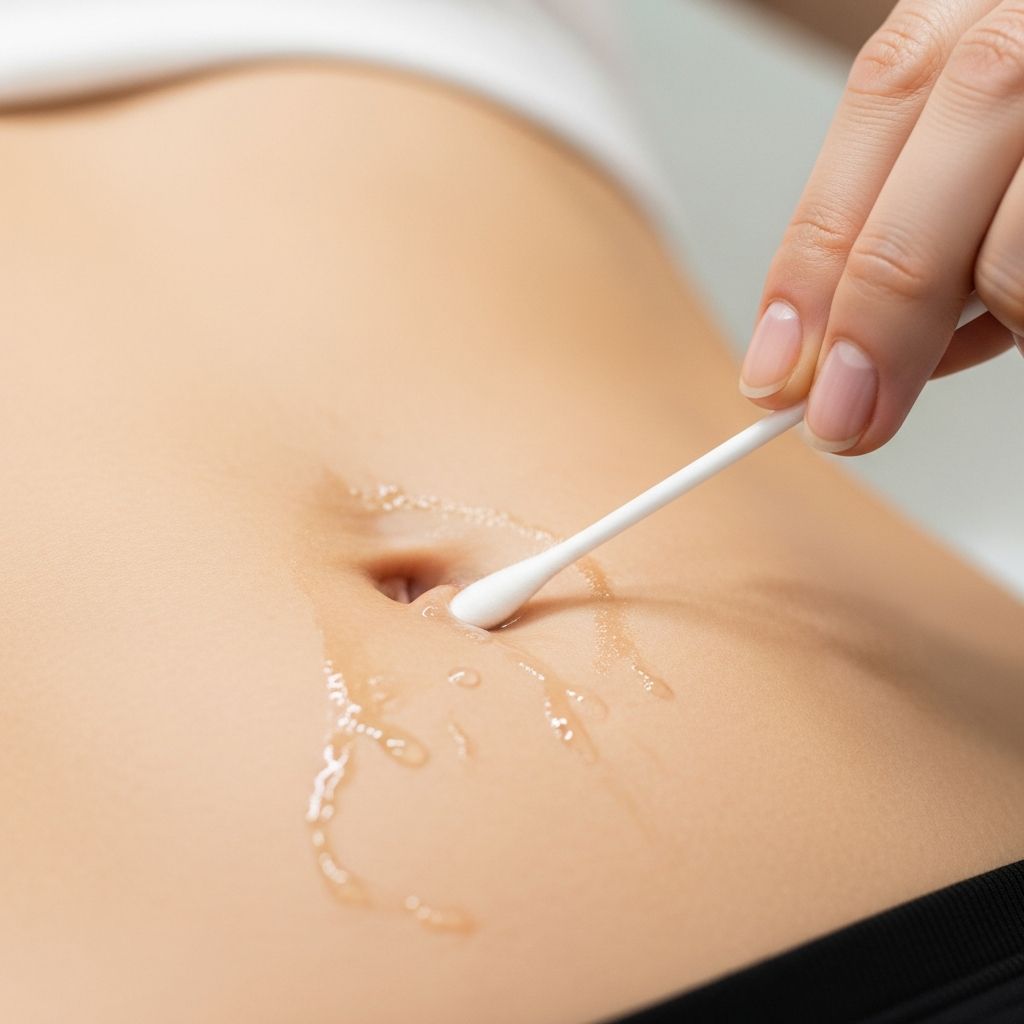
If your navel is deep:Moisten a cotton swab with warm water and a trace of mild soap. Gently roll it along the inner surfaces, avoiding forceful poking. Replace the swab if it becomes visibly dirty and continue until it comes out mostly clean. - Rinse thoroughly.
Use clean warm water (with a new swab, fingertip, or washcloth) to remove all soapy residue. - Dry completely.
Pat dry with a soft towel, then use the corner of the towel or a dry cotton swab to gently blot any remaining moisture.
Avoid scrubbing so hard that the skin stings or turns bright red; this can create tiny breaks that invite infection.
Step-by-Step: Cleaning an “Outie” Belly Button
Outies sit more on the surface and usually collect less hidden debris, but they still require regular washing, especially after sweating.
- Use warm water and mild soap in the shower.
Lather a soft washcloth with gentle soap and wash the navel and surrounding skin. - Rinse fully.
Make sure no soap remains in creases or under small folds. - Pat dry.
Use a clean towel to dry the area thoroughly, paying attention to any small dips. - Optional light moisturizing.
If the skin is dry or flaky, you can apply a small amount of fragrance-free moisturizer on the surface, not deep into creases.
Caring for a Pierced Belly Button
A piercing creates a channel through the skin that can allow bacteria to enter. Fresh piercings need more structured care than healed ones.
New or healing piercings
Healing can take several months. During this time, follow the piercer’s or clinician’s instructions closely.
- Wash hands thoroughly with soap and water before touching the jewelry or the area.
- Use a sterile saline solution or commercially prepared wound wash to gently clean around the piercing.
- Apply the saline with a clean cotton ball or gauze pad; let it soak for a few minutes to loosen crusts.
- Avoid twisting or rotating the jewelry unless specifically advised, as this can irritate healing tissue.
- Rinse off any residue with clean water and gently pat dry with a disposable towel or clean cloth.
- Skip alcohol, hydrogen peroxide, or harsh antiseptics unless a healthcare professional recommends them; they can slow healing by damaging healthy cells.
Healed piercings
Once fully healed, the piercing can be cared for much like an unpierced navel.
- Clean the area daily in the shower with mild soap and water, making sure to rinse under and around the jewelry.
- Periodically remove jewelry (if safe and not at risk of closing) to clean both the jewelry and the skin where it sits.
- Dry the area thoroughly afterwards to prevent trapped moisture and odor.
Why Belly Buttons Sometimes Smell
A mild, temporary odor that improves right after washing is usually due to buildup of sweat, sebum, and dead skin that has allowed bacteria to multiply. Thorough cleaning and drying often solve the problem within a few days.
However, certain signs suggest a possible infection or other skin condition:
- Strong or persistent foul smell that returns quickly after cleaning
- Thick, yellow, green, bloody, or cheesy discharge
- Redness spreading beyond the navel
- Swelling, warmth, or significant tenderness
- Crusting, raw skin, or blisters
- Fever or feeling unwell, especially with a new piercing
If you notice these symptoms, it is important to contact a healthcare professional. Infections may require prescription treatments such as topical or oral antibiotics or antifungal medicines.
Common Mistakes To Avoid
Good belly button care is about balance: clean enough to prevent buildup, but gentle enough to protect the skin barrier.
- Over-cleaning several times a day: Can lead to dryness, irritation, and micro-tears that increase infection risk.
- Ignoring rinsing: Leaving soap or saline residue inside may irritate the skin.
- Leaving it damp: Moisture trapped in an innie or around jewelry promotes bacterial and yeast growth.
- Using sharp or rigid tools: Hairpins or pointed objects can scratch or puncture skin.
- Covering odor with perfume: Sprays or scented oils do not fix the cause and can worsen irritation.
Who Needs Extra Belly Button Care?
Some people are more likely to develop odor, buildup, or infections and may benefit from slightly more frequent or attentive cleaning.
- People with deep or narrow innies: Debris is more likely to get trapped and overlooked.
- Individuals with obesity: Skin folds around the abdomen can retain more moisture and friction.
- Those with diabetes or weakened immune systems: May be more prone to skin infections and slower wound healing.
- People who sweat heavily or exercise often: Extra sweat and friction from clothing can contribute to buildup.
- Anyone with a piercing: Both new and old piercings require regular, thoughtful hygiene.
Frequently Asked Questions (FAQs)
Is it normal to have some belly button odor?
A mild smell that improves after a good wash is common, especially in deep innies. Persistent, strong odor that quickly returns, especially with discharge, redness, or pain, can indicate infection and should be checked by a healthcare professional.
Can I safely use a cotton swab inside my belly button?
Yes, as long as you are gentle and do not push forcefully. Experts recommend moistening the swab with water and mild soap, using light pressure, and stopping if you feel pain. Avoid digging deeply or using it repeatedly in irritated skin.
Should I put lotion inside my belly button?
For most people, it is better to moisturize only the surrounding skin, not deep inside an innie. Extra moisture trapped in a closed space can foster bacterial or yeast overgrowth and odor. If the area is very dry or flaky, a tiny amount of fragrance-free moisturizer on the surface is usually enough.
What does an infected belly button look or feel like?
Signs of infection include worsening redness, warmth, swelling, significant tenderness, and discharge that may be yellow, green, or bloody. The area may smell strongly, and you might feel generally unwell or develop a fever. These symptoms warrant prompt medical advice, especially with a new piercing.
How long does a belly button piercing take to heal?
Healing times vary, but sources commonly report that navel piercings can take several months to fully heal, sometimes up to a year. During this period you should follow aftercare instructions carefully, avoid trauma to the area, and seek professional help if you notice signs of infection.
References
- Dirty Belly Button: Why and How to Clean Your Navel — Healthline. 2019-11-25. https://www.healthline.com/health/dirty-belly-button
- How To Clean Your Belly Button — Cleveland Clinic Health Essentials. 2022-10-25. https://health.clevelandclinic.org/how-to-clean-belly-button
- Belly Button: How to Clean Your Belly Button — Goldenberg Dermatology (patient education PDF). 2023-02-01. https://goldenbergdermatology.com/wp-content/uploads/2023/02/a12.pdf
- Why does my belly button smell? Causes and how to clean it — Medical News Today. 2017-12-19. https://www.medicalnewstoday.com/articles/320706
- When was the last time you cleaned your belly button? — Boots UK Wellness Advice. 2023-06-01. https://www.boots.com/wellness-advice/healthy-lifestyle/how-to-clean-your-belly-button