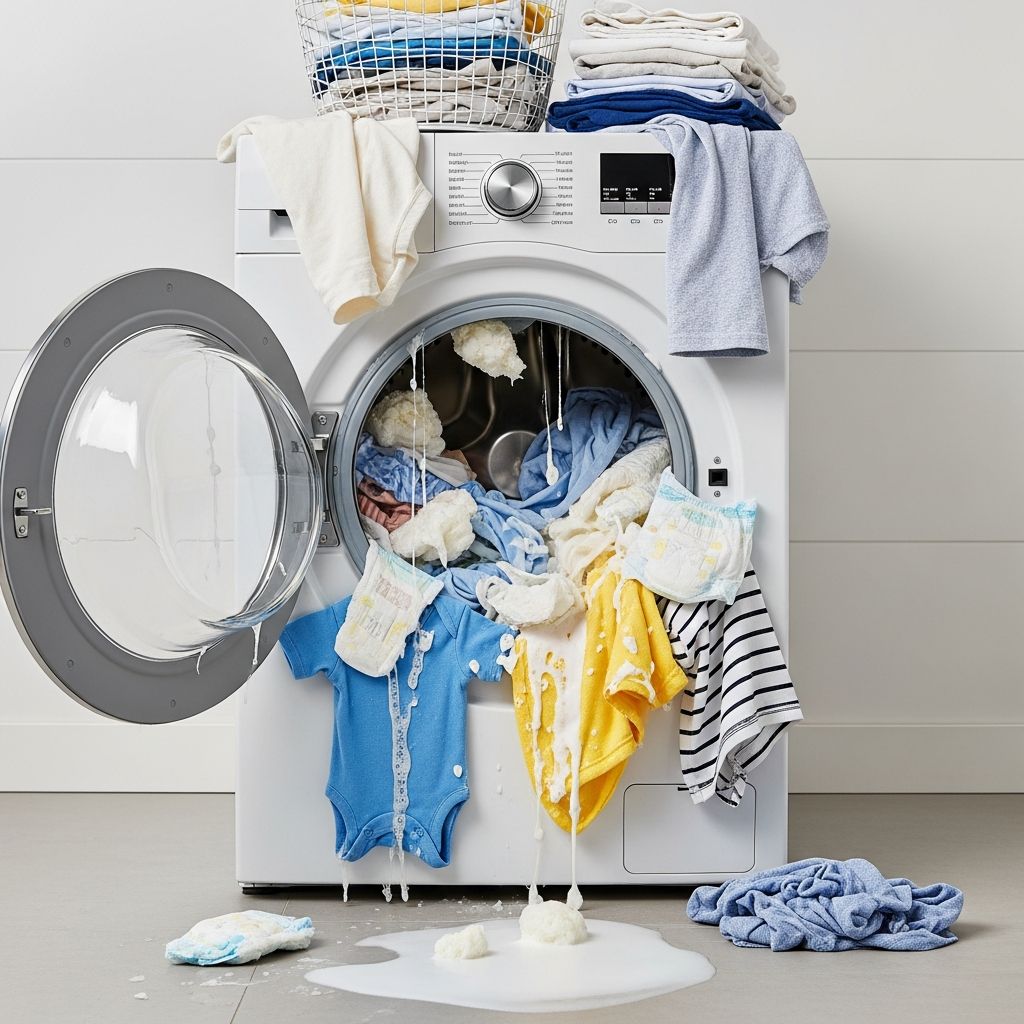
Every parent eventually opens the washing machine to find a nightmare: clothes coated in clear gel beads and slimy clumps from a forgotten disposable diaper. The mess looks catastrophic, but in most cases your appliance and laundry can be fully rescued with some patience and the right strategy.
This guide explains why disposable diapers explode, how to safely clean your washer and clothes, and what to do afterward to keep everything safe, sanitary, and running smoothly.
Why Disposable Diapers Make Such a Huge Mess
Modern disposable diapers rely on a material called superabsorbent polymer (SAP) in their core. These are usually sodium polyacrylate granules that swell into a gel when they come into contact with liquid, allowing the diaper to hold many times its own weight in moisture.
- Inside the diaper: SAP granules are mixed with fluff pulp to quickly pull moisture away from the skin and lock it inside a gel structure.
- In the washing machine: prolonged contact with water overloads the SAP, causing it to burst through the diaper lining and scatter as jelly-like beads and crystals.
- On your laundry: the swollen gel sticks to fabric fibers and hides in seams, pockets, and elastic casings.
According to large diaper manufacturers, these gel materials are generally considered non-toxic and are designed to be safe for normal diaper use. However, they are extremely annoying to clean and can temporarily clog filters or drains if not dealt with properly.
Is Your Washing Machine Ruined?
The mess looks worse than it is. Appliance industry guidance indicates that one exploded disposable diaper is very unlikely to permanently damage a washing machine, though it can require extra cleaning cycles to remove residue.
Serious problems are uncommon because:
- Most of the gel clumps are too soft to damage metal parts.
- Residual material usually flushes out in subsequent rinse or self-clean cycles.
- Washer designs are built to handle small foreign items like lint, tissue, or the occasional coin.
The main risks are temporary blockages in filters or drain structures and poor cleaning performance until the gel is removed. Both are fixable at home in most cases.
Immediate Actions: What To Do The Moment You Notice the Diaper
When you first open the lid or door and see gel everywhere, resist the urge to start another cycle immediately. Follow these quick steps instead:
- Stop the machine. Cancel any remaining cycles so the gel doesn’t get further forced into crevices.
- Locate the diaper remains. Look for the torn shell, elastic bands, and backing; these pieces can trap more gel.
- Grab basic supplies:
- Garbage bag or can
- Paper towels or old rags
- Optional: rubber gloves
- Optional: a handheld or shop vacuum for dry gel
Once you are set up, you can start the cleanup in a controlled, methodical way.
Step-by-Step: How To Rescue Your Clothes
Your laundry is probably covered in beads and slime, but it is usually salvageable. Work through these steps patiently.
1. Remove Clothes and Shake Them Out
Take each item of clothing out of the washer one at a time.
- Hold each piece over a sink, bathtub, or outside area.
- Shake vigorously to dislodge as many gel beads as possible.
- Use your hand or a paper towel to scrape off visible clumps from seams and pockets.
Expect this to be messy. The goal is not perfection; it is to remove most of the gel so your next wash or dry cycle can handle the rest.
2. Decide: Rewash First or Go Straight to the Dryer?
Parents and manufacturers differ slightly on whether to rewash or dry first. Both approaches can work:
| Option | Advantages | Best For |
|---|---|---|
| Rewash first | Removes more loose gel in a controlled way; helps flush remnants from the drum and drain. | Parents worried about sensitive skin; heavy fabrics that still feel slimy. |
| Dry first | Heat dries gel beads so they become crumbly; much of the residue ends up in the lint trap. | Faster cleanup; lighter loads; when most clumps are already removed. |
A manufacturer-style approach is to rewash the clothes on a regular cycle after you’ve shaken them, then dry as usual. This gives the best chance of removing residue from both fabrics and the machine itself.
3. Run a Rinse or Normal Wash Cycle
- Place the shaken clothes back in the drum.
- Add your usual detergent.
- Choose a regular or heavy-duty cycle with an extra rinse if available.
This step helps lift remaining gel off the fabric and dilute leftover particles before they dry and harden.
4. Dry and Check the Results
- Dry the laundry on a normal setting suitable for the fabric types.
- After drying, inspect garments under good light.
- If you see a few stray beads, you can brush or shake them off easily now that they are dry and brittle.
- For babies with very sensitive skin or eczema, consider a second wash cycle to remove all traces of residue, since irritants trapped in textiles can worsen symptoms.
How To Clean the Inside of the Washing Machine
Your machine’s drum, door gasket, and possibly the detergent drawer are probably dotted with clear gel and bits of fluff. A quick but thorough cleaning will restore normal performance.
1. Manually Remove Visible Clumps
- Use paper towels or an old cloth to scoop out large clumps from the drum.
- Pay attention to the rubber door seal on front-loading machines; gently pull it back to check the folds.
- Drop all clumps and diaper pieces directly into a trash bag, not down the drain.
Manually removing solids is important because many household plumbing systems are not designed to handle large amounts of gel-like material at once.
2. Wipe Down Surfaces
- Dampen a cloth with warm water and a small amount of mild detergent.
- Wipe the drum, glass door, rubber seals, and any accessible plastic surfaces.
- Use cotton swabs or an old toothbrush to reach narrow crevices if necessary.
This removes most residue and prevents gel from drying onto the metal or plastic surfaces.
3. Run an Empty Rinse or Self-Clean Cycle
Most manufacturers recommend running an empty cleaning cycle without laundry after a major mess inside the drum.
- Select a rinse, tub clean, or self-clean function, if your model has one.
- Use hot water if your machine and plumbing allow it safely.
- Skip extra detergent; you just want to flush away particles.
Appliance industry representatives note that this kind of maintenance cycle helps clear debris and other residues from the drum and internal water paths, restoring performance.
4. Check Filters and Drains (If Accessible)
Some front-loading washers have an accessible filter or pump screen behind a lower-front panel. If your manufacturer’s manual allows user access:
- Unplug the machine first.
- Place a shallow tray or towel beneath the filter door.
- Open slowly; a small amount of water may drain out.
- Remove any visible gel clumps or diaper fragments.
Follow the instructions in your washer’s user manual or on the manufacturer’s official website for your exact model to avoid damaging parts.
Is the Diaper Gel Safe?
The swollen beads all over your laundry are unsettling, especially if you have crawling babies or curious toddlers nearby. Large diaper brands and regulatory summaries indicate that the absorbent gel used in diapers is generally considered non-toxic under normal use and is not expected to cause systemic poisoning if small amounts are accidentally ingested.
However:
- Skin irritation is possible, particularly in children with existing dermatitis or breaks in the skin.
- Swallowed clumps could pose a choking hazard, particularly for young children.
- Loose particles should be treated as household waste and kept away from pets and kids.
To be safe, thoroughly clean any surfaces where beads have fallen and keep children away from the laundry area until the mess is fully contained.
When To Call for Professional Help
Most diaper-in-the-washer incidents are fixable at home. Still, there are cases when calling an appliance technician or plumber is reasonable:
- Standing water remains in the drum after cleaning and running a drain or spin cycle.
- You hear unusual grinding or knocking sounds after the incident.
- The washer repeatedly shows drain-related error codes despite filter checks.
- You notice leaks around the base of the machine.
If the machine is under warranty, check the manufacturer’s service instructions before attempting any deep disassembly.
Preventing Future Diaper Laundry Disasters
Once you have cleaned up a diaper explosion, you will be motivated to avoid repeating the experience. Simple changes to your routine can dramatically reduce the odds.
Smart Habits for Busy Parents
- Dedicated diaper disposal: Put a small, clearly labeled trash can or diaper pail right next to the laundry basket to separate items immediately.
- Daily pocket check: Before loading the washing machine, quickly check pockets and waistbands for diapers, wipes, tissues, and small toys.
- Teach older kids: If toddlers and preschoolers help with laundry, explain that diapers always go in the trash, not the hamper.
- Use a pre-sort system: Consider mesh bags or separate bins for baby clothes so you are more likely to notice a stray diaper during sorting.
Special Considerations for Night Diapers and Pull-Ups
Nighttime diapers and pull-ups are especially easy to miss because they often look like underwear or shorts when crumpled up.
- Choose a distinctive brand or pattern so they are visually different from regular clothing.
- Make changing out of night gear part of a simple, repeatable morning routine: remove diaper → throw away → then place pajamas in the hamper.
- If another caregiver or older sibling helps dress the child, walk them through the steps so everyone handles diapers the same way.
Frequently Asked Questions (FAQs)
Will a disposable diaper in the washer permanently damage my machine?
In most situations, no. Industry representatives report that an exploded diaper is unlikely to cause permanent harm to a residential washer, though it can require manual cleanup and a self-clean or rinse cycle to remove debris.
Are the gel beads toxic for my child?
The superabsorbent polymers used in diapers are generally considered non-toxic and are tightly regulated for safety in baby products. However, they can irritate sensitive skin and pose a choking risk if swallowed in clumps, so you should clean them up promptly and keep them away from children and pets.
Do I need to throw away all the clothes from the load?
Usually you can save the entire load. Shake off as much gel as possible, then rewash and dry. For babies with conditions like atopic dermatitis, one extra wash cycle may help ensure that any remaining residues or fragrances are rinsed away to avoid flare-ups.
Can diaper gel clog my plumbing?
Small amounts typically flush away, but large clumps could interfere with filters or pumps inside the washer. That is why experts advise manually removing visible gel and running an empty rinse or self-clean cycle instead of relying solely on the drain to handle everything.
Is it safe to use bleach when cleaning after a diaper explosion?
For most incidents, bleach is unnecessary. Warm water, detergent, and an empty rinse or self-clean cycle are usually enough. If your washer manufacturer recommends periodic bleach cleaning for mold control, follow their instructions, but do not exceed the concentrations specified on the product label or in the user manual.
References
- Use and Care Manuals for Home Laundry Appliances — Whirlpool Corporation. 2023-05-01. https://www.whirlpool.com/services/manuals.html
- Clothes Washer Safety and Maintenance — Association of Home Appliance Manufacturers (AHAM). 2022-06-15. https://www.aham.org/
- Atopic Dermatitis in Children — American Academy of Dermatology Association. 2023-02-10. https://www.aad.org/public/diseases/eczema/childhood
- Household Irritants and Childhood Eczema — National Eczema Association. 2022-09-05. https://nationaleczema.org/eczema/
- Superabsorbent Polymer (SAP) Safety Assessment in Baby Diapers — EDANA (European Disposables and Nonwovens Association). 2021-11-01. https://www.edana.org/industry-initiatives/superabsorbent-polymers
- Disposable Diapers and Health: An Overview — U.S. Consumer Product Safety Commission (CPSC). 2020-08-20. https://www.cpsc.gov/Safety-Education