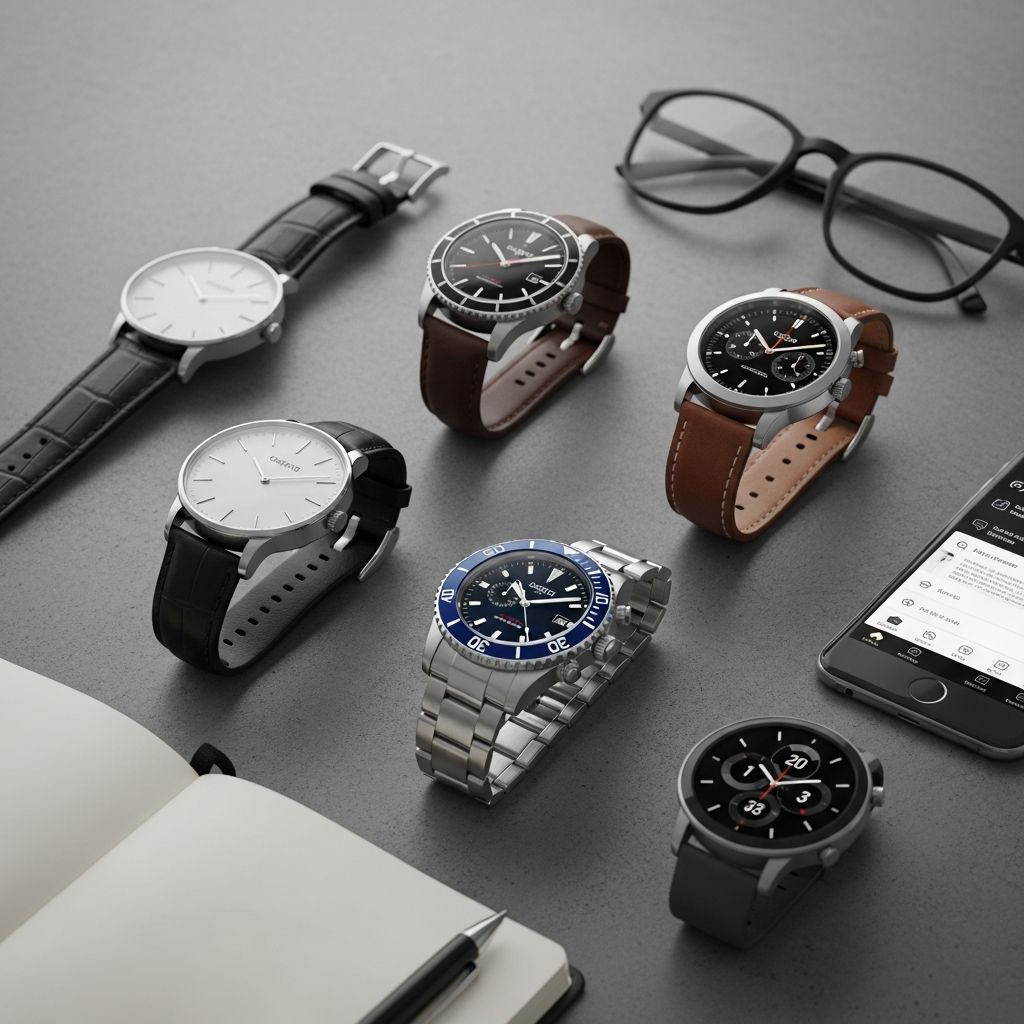
Watches have shifted from purely practical tools to everyday companions that mix style, usefulness, and emotional value. Whether you are timing naps, tracking meetings, or sneaking in a run before dinner, the right watch can quietly keep your day on track and reflect who you are.
Why Watches Still Matter in a Smartphone World
Even with phones on every surface, a dedicated watch offers instant readability, fewer distractions, and a subtle way to manage time without pulling out a glowing screen at every turn. A quick glance at your wrist during a work call or playground run looks calmer and more intentional than unlocking a phone.
Watches also carry emotional weight in a way phones rarely do. A well-chosen piece can mark milestones like promotions, anniversaries, or the birth of a child and later be passed down as a reminder of those seasons of life. That combination of usefulness and sentiment keeps watches relevant long after notifications move to the next device.
Major Watch Categories You Should Know
Instead of starting with brands, start with categories. Understanding the main watch types makes it easier to match a model to your lifestyle and wardrobe. Below are the broad families most people encounter.
Daily Casual Watches
These are your go-anywhere, do-anything pieces meant to handle office days, errands, and weekends without feeling fussy. They typically have simple dials, comfortable straps, and water resistance that survives rain and hand washing.
- Ideal for: Work-from-home days, school runs, casual offices.
- Look for: Clear hour markers, moderate case size (38–41 mm for most wrists), and easy strap replacements.
Sports and Dive Watches
Sports and dive watches prioritize toughness and legibility. Thick cases, rotating bezels, and luminous hands make them easy to read in bright sun or dim conditions, and higher water resistance lets them handle pools and oceans.
- Ideal for: Swimming, hiking, active trips, rough-and-tumble weekends.
- Look for: Screw-down crown, at least 100 m water resistance, durable rubber or steel bracelet.
Dress and Office Watches
Dressier watches favor slimmer cases and clean, uncluttered dials that disappear under a shirt cuff. They are not only for black-tie events; they also polish up a basic shirt-and-jeans outfit.
- Ideal for: Office meetings, date nights, formal events.
- Look for: Thin profile, leather strap, minimalist dial with clear hands and markers.
Field and Outdoor Watches
Field watches borrow from military roots: high contrast dials, 24-hour markings, and compact, rugged cases. They are easy to read at a glance and light on the wrist for long days outside.
- Ideal for: Camping, travel, yard work, weekends off the grid.
- Look for: Matte case finish, strong crystal, legible numerals, and comfortable fabric or rubber straps.
Smartwatches and Fitness Watches
Smartwatches bring phone-like features to your wrist with tracking for sleep, exercise, and notifications. Fitness-focused models lean harder into health metrics like heart rate, GPS routes, and workout modes.
- Ideal for: Runners, gym regulars, people who love data and notifications.
- Look for: Battery life that matches your habits, waterproofing for your sports, and simple, intuitive software.
How to Match a Watch to Your Lifestyle
Think of a watch like a pair of shoes: what works at the beach does not always suit a boardroom, and your everyday pair should be comfortable more than anything else. A clear picture of where and how you will wear your watch makes choosing far easier than starting with price or brand.
For Busy Parents
Between spilled snacks, playground sand, and wrestling with car seats, a fragile timepiece is a bad fit. Parents generally benefit from something that can take hits, rinse clean, and resist scratches.
- Lightweight resin or stainless-steel case with good shock resistance.
- Water resistance of at least 50–100 m for splashes and impromptu swims.
- A legible dial with luminous markers for dark nurseries and early mornings.
For Office and Hybrid Workers
A simple, versatile watch can live on your wrist from Zoom calls to in-person meetings. Aim for something that reads cleanly on camera and looks intentional with a blazer or polo.
- Balanced size (often 38–40 mm) that does not overpower the wrist.
- Neutral dial colors like black, white, blue, or gray for easy pairing.
- Quick-release straps so you can swap between leather and steel in seconds.
For Travelers and Commuters
Travel throws changing time zones, long days, and tight connections at your schedule. Watches with travel-friendly features reduce friction and help you stay oriented.
- World time or GMT complications for tracking a second time zone.
- Durable, low-profile case that does not snag on luggage or jacket cuffs.
- Travel-friendly straps: metal bracelets for versatility or rubber for humid climates.
For Athletes and Weekend Warriors
Runners, cyclists, and gym regulars benefit from watches that log workouts and recover quickly from sweat, impact, and frequent washing. Some prefer digital or smart models; others like analog sports watches with timing bezels.
- Timer or chronograph function to track intervals and workouts.
- Replaceable rubber or silicone straps for comfort and durability.
- Optional smart features like GPS, step counting, and heart-rate monitoring.
Watch Movements Explained (Without the Jargon)
The “movement” is the engine inside your watch. Understanding the three main types helps you prioritize what matters: low maintenance, tradition, or tradeoffs between the two.
| Movement Type | How It Works | Pros | Cons | Best For |
|---|---|---|---|---|
| Quartz | Battery powers a tiny quartz crystal that vibrates to keep time. | Very accurate, low cost, minimal maintenance. | Battery changes every few years, less romantic to enthusiasts. | Everyday wear, kids’ watches, budget-friendly picks. |
| Automatic (Mechanical) | Wrist movement winds a spring that stores energy and drives gears. | Traditional craftsmanship, smooth ticking seconds hand. | More expensive, needs occasional servicing, can lose or gain seconds daily. | Enthusiasts, heirloom pieces, special-occasion watches. |
| Hand-Wound (Mechanical) | Wearer winds the crown by hand to power the spring. | Strong vintage charm, tactile daily ritual. | Must be wound regularly, usually not ideal for rough use. | Collectors, people who enjoy analog rituals. |
For most people buying a first or primary watch, quartz offers the best mix of price, accuracy, and convenience. Mechanical watches shine when emotional value and craftsmanship matter more than perfect precision or low cost.
Key Materials and Features That Actually Matter
Spec sheets can feel like alphabet soup, but a few basic material choices go a long way toward determining how long your watch will last and how comfortable it feels. Focus on the case, crystal, strap, and water resistance before getting lost in minor technical terms.
Case and Bezel Materials
- Stainless steel: The standard for durable everyday watches; resists rust and looks good with both casual and dressy outfits.
- Resin or plastic: Lightweight, often found on sporty and kid-friendly models; great for high-impact use, less formal visually.
- Titanium: Lighter than steel and gentle on skin, with a slightly darker, modern look; great for large watches that still need to feel comfortable.
Crystal (the Transparent Cover)
- Acrylic: Very shatter-resistant and cheap but prone to scratches; can often be polished.
- Mineral glass: Common on mid-range watches, more scratch resistant than acrylic but can chip with very hard knocks.
- Sapphire: Highly scratch-resistant and found on higher-end watches; tends to cost more but keeps the dial looking clear for years.
Straps and Bracelets
- Leather: Comfortable and dressy, molds to your wrist over time but should be kept away from water.
- Rubber or silicone: Excellent for sweat and water; perfect for sports, summer, and parenting chaos.
- Stainless-steel bracelet: Very versatile, durable, and easy to clean; pairs well with both casual and business outfits.
- Nylon or fabric: Lightweight, breathable, inexpensive, and easy to swap; strong choice for field and outdoor watches.
Water Resistance Levels
Ignore marketing phrases like “splash proof” and look for numeric ratings. Common labels translate roughly to the following everyday guidance:
- 30 m: OK for hand washing and light rain, not for swimming.
- 50 m: Fine for brief swims but not heavy water sports.
- 100 m: Safe for most swimming and snorkeling.
- 200 m+: Suitable for diving and serious water use.
Budget Tiers: What You Can Expect at Each Level
Price does not line up perfectly with quality, but there are patterns at different budget levels. Instead of chasing the logo you have seen most often, think about what each range can realistically deliver.
| Price Range (USD) | What You Typically Get | Good Use Cases |
|---|---|---|
| Under $100 | Durable quartz movements, resin or steel cases, basic water resistance, simple designs. | Kids’ watches, backup beater watch, basic fitness or casual use. |
| $100–$300 | Better finishing, more style options, higher water resistance, some entry-level mechanical pieces. | First serious watch, everyday work watch, affordable dive or field models. |
| $300–$1,000 | Higher-grade materials, sapphire crystals, more refined mechanical movements. | Special occasion gifts, travel watches, long-term daily wear. |
| $1,000+ | Prestige brands, in-house movements, luxury materials, strong finishing and long-term service support. | Heirloom pieces, major life milestones, collectors and enthusiasts. |
Set a maximum budget before you start browsing, and then compare how different watches allocate that cost between movement, materials, and brand name. Often, less-hyped brands quietly offer better specs than more famous names at the same price.
Practical Checklist Before You Buy
A structured checklist turns shopping from overwhelming to manageable. Use the steps below as a pre-purchase filter so you end up with a watch that fits your life instead of just your search history.
- Measure your wrist: Use a soft tape measure or string. Most adults fall between 6 and 8 inches. Pair smaller wrists with smaller case sizes and shorter lug-to-lug distances for comfort.
- Define your main use: Rank your top two priorities (for example, work and travel, parenting and sports). Choose a watch optimized for those, not for every possible scenario.
- Choose a movement type: Decide whether you want low-maintenance quartz or the charm and complexity of mechanical.
- Decide on strap style: Pick the strap type that matches where you spend most of your time, then consider buying an extra option for flexibility.
- Check service and warranty: Look for realistic warranty periods and accessible service centers if you are investing serious money.
- Try it on, if possible: Case diameter alone is misleading; how the lugs curve, how the dial is laid out, and how thick the watch sits all change how it feels and appears.
Frequently Asked Questions About Modern Watches
How many watches does the average person really need?
Most people can comfortably cover their needs with two or three watches: one tough everyday piece, one slightly dressier option for work or events, and an optional sports or fitness watch if exercise is a big part of life. Starting with a single well-chosen everyday watch is often smarter than buying multiple mediocre ones.
Is an expensive watch always better?
High prices often reflect brand history, finishing, and mechanical complexity, but they do not always equal better timekeeping or durability. Many affordable quartz watches keep more accurate time than far more expensive mechanical models. Paying more makes the most sense when you care about design, craftsmanship, and long-term emotional value.
Can I wear the same watch to the gym and the office?
Yes, if you choose a sturdy, water-resistant model with a versatile design, such as a sportier steel watch with a clean dial. If you lift very heavy weights or do contact sports, a dedicated sports or fitness watch is safer for both your wrist and your nicer office watch.
Do I need a smartwatch if I already have a traditional watch?
Not necessarily. Smartwatches shine when you rely heavily on health metrics and phone notifications, but they require frequent charging and have a limited lifespan compared with traditional watches. Many people end up alternating: a smartwatch for workouts and a simpler analog watch for social occasions, work, and screen breaks.
What is the best first watch for a child or teen?
Start with an inexpensive, highly legible quartz watch on a comfortable strap that can handle water and rough use. Bright colors and simple dials help younger kids learn to read time, while teens might prefer designs that look closer to adult models but still offer strong durability.
Final Thoughts: Choose for the Life You Live Now
The best watch is not the most expensive model on a list or the name you see most often on billboards. It is the one that fits your actual day-to-day routine, feels good on the wrist for hours at a time, and makes you quietly happy every time you glance down at it.
Start with lifestyle, then function, then style, and finally budget. When those pieces line up, your watch becomes more than an accessory; it becomes a small, reliable companion that moves with you through work, family, and everything in between.