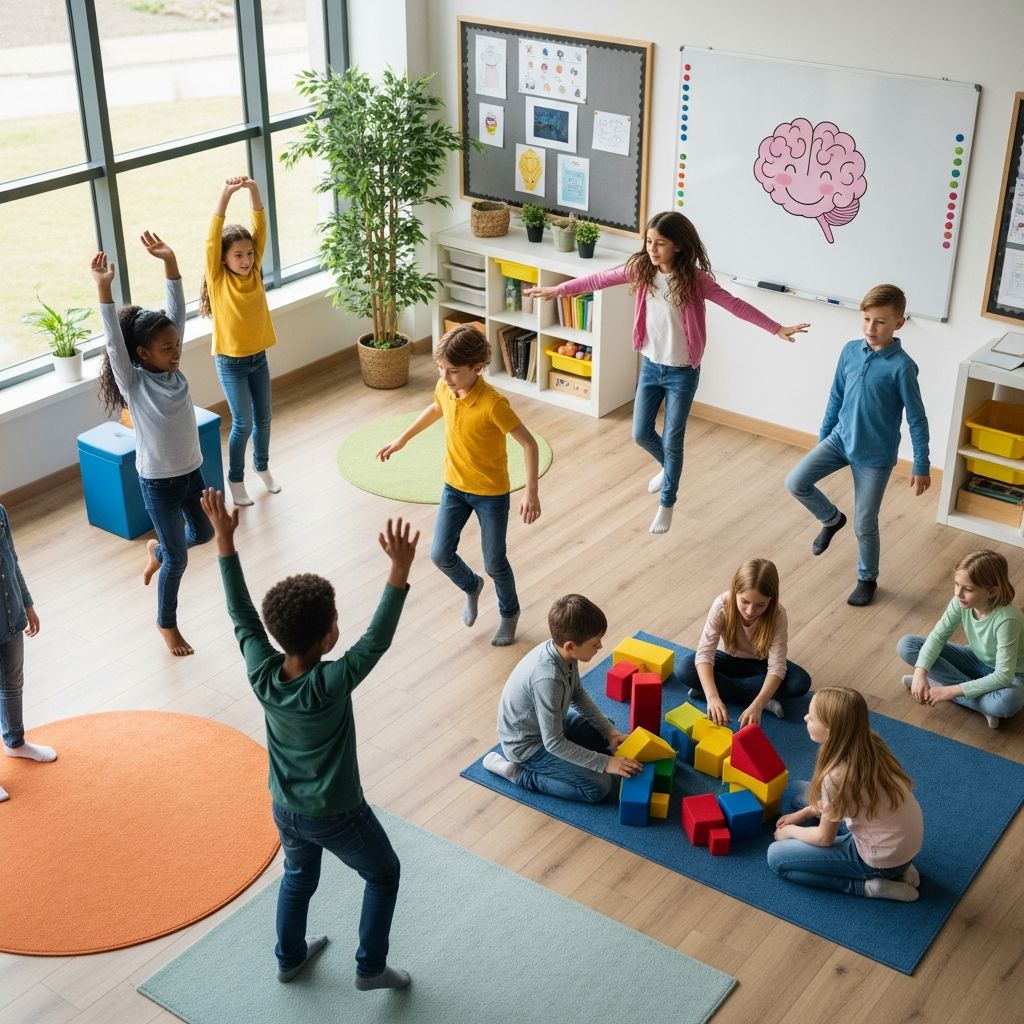
Short interruptions in mental tasks, known as brain breaks, provide children with essential resets that enhance cognitive performance and emotional balance. These brief pauses, lasting just a few minutes, allow young brains to recharge, leading to sustained attention and heightened productivity throughout the day.
Understanding the Science Behind Brain Breaks
The human brain, particularly in developing children, operates much like a high-performance engine that overheats without periodic cooling. Continuous focus on academic or sedentary activities depletes mental resources, increasing theta brain waves associated with fatigue. Research demonstrates that interspersing brief physical or creative activities reduces these waves, restoring motivation and sharpening concentration.
Physical movement during breaks increases blood flow and oxygen delivery to the brain, fostering neural growth in areas like the hippocampus, which governs memory and learning. A comprehensive report from the National Academy of Medicine highlights how such activities promote cognitive development and academic success in children. Moreover, studies involving over 1,000 primary school students show that classroom physical breaks correlate with superior spelling performance, foreign language acquisition, and cognitive inhibition— the ability to filter distractions.
Key Advantages for Children’s Development
- Sharpened Focus and Productivity: After a break, children return to tasks with renewed energy, tackling challenges more efficiently as their brains process information without overload.
- Stress and Anxiety Reduction: Playful pauses lower cortisol levels, helping kids manage school pressures and social dynamics, resulting in calmer behavior.
- Creativity Ignition: Unstructured time sparks divergent thinking, enabling innovative problem-solving; one study found participants twice as likely to solve puzzles post-break.
- Academic Enhancement: The spacing effect—breaking study into chunks—improves retention over cramming, a phenomenon replicated across species from humans to sea slugs.
- Physical and Emotional Gains: Movement boosts circulation, mood, and teacher-student bonds while curbing off-task behavior.
These benefits extend beyond immediate relief, building lifelong habits for resilience and self-regulation. A study on classroom-based physical activities confirmed gains in health knowledge, self-efficacy, and subjects like math and language.
Implementing Brain Breaks at Home
Parents can seamlessly integrate brain breaks into daily routines without disrupting flow. Aim for 2-5 minute intervals every 20-30 minutes of focused work, adjusting based on age—younger kids may need more frequent resets. Let children select activities to foster ownership, blending physical, sensory, and mindful options.
| Age Group | Ideal Break Frequency | Duration | Example Triggers |
|---|---|---|---|
| 3-5 years | Every 15 min | 3-5 min | After playtime or snack |
| 6-9 years | Every 25 min | 4-7 min | Post-homework chunk |
| 10+ years | Every 30-45 min | 5-10 min | Before screen time |
This table outlines tailored schedules to maximize effectiveness, drawing from educational psychology principles.
Dynamic Physical Activities to Energize
Movement-based breaks are powerhouse tools for brain health. Simple exercises elevate heart rates, delivering oxygen-rich blood to cognitive centers.
- Animal Mimicry March: Children imitate animals like frogs jumping or bears crawling, combining laughter with coordination for full-body engagement.
- Balloon Volleyball: Tap an inflated balloon without letting it touch the ground, honing reflexes and teamwork in a low-pressure game.
- Simon Says Freeze Dance: Dance freely to music, freezing on command; this builds listening skills alongside aerobic bursts.
- Wall Push Challenges: Face a wall for pretend pushes or high-knee marches, ideal for small spaces and quick energy spikes.
Incorporate these during homework transitions; evidence shows they outperform sedentary rests for attention restoration.
Calming Sensory and Mindfulness Options
Not all breaks require motion; sensory experiences soothe overstimulated minds, promoting emotional regulation.
- Breath Ballooning: Inhale deeply to ‘fill’ an imaginary belly balloon, exhale slowly; repeat 5 times to activate the parasympathetic nervous system.
- Texture Treasure Hunt: Feel household items like fuzzy blankets or smooth coins, describing sensations to ground awareness.
- Guided Visualization: Close eyes and journey to a favorite place, narrated by a parent, fostering relaxation and imagination.
- Mandala Coloring: Scribble intricate patterns briefly, channeling focus into art without performance pressure.
These techniques, supported by cognitive wellbeing frameworks, enhance mood and readiness for learning.
Creative and Imaginative Pursuits
Breaks that unleash creativity counter rote learning fatigue, nurturing innovative thinkers.
- Story Chain Building: Each family member adds a sentence to a silly tale, sparking narrative skills collaboratively.
- Object Remix: Transform everyday items—like a spoon into a magic wand—into props for impromptu role-play.
- Rhythm Clapping Circles: Create and echo clapping patterns, blending music with social bonding.
- Doodle Dash: Set a 2-minute timer for freeform drawing, encouraging uninhibited expression.
Such activities align with research on unstructured play boosting cognitive flexibility.
Brain Breaks in Classroom and Group Settings
Educators report marked improvements in engagement when breaks are routine. NSW Department of Education endorses them for better behavior and relationships. In groups, lead synchronized moves like group stretches or echo chants to unify energy.
For virtual learning, screen-free zones with jumping jacks or partner poses via voice maintain momentum. Track progress with a break chart, rewarding consistency to build habits.
Overcoming Common Hurdles
Resistance arises from time constraints, but micro-breaks prove efficient. If space limits options, seated twists or finger yoga suffice. Customize for neurodiverse needs—shorter, quieter for sensory sensitivities. Consistency trumps perfection; start small for buy-in.
Frequently Asked Questions
How often should kids take brain breaks?
Every 20-30 minutes for optimal focus, with duration scaling by age: 2-5 minutes for younger children, up to 10 for preteens.
Do brain breaks work for kids with ADHD?
Yes, movement breaks particularly aid attention and impulse control by boosting dopamine and neural connectivity.
Can screen-based activities count as brain breaks?
Prefer non-screen options to fully disengage; if used, opt for interactive apps sparingly to avoid digital fatigue.
What if my child resists breaks?
Involve them in choosing activities and use visual timers for gentle transitions, emphasizing fun over obligation.
Are there long-term effects from regular brain breaks?
Indeed, they promote sustained academic gains, healthier lifestyles, and emotional resilience into adulthood.
Building a Sustainable Routine
Anchor breaks to rituals like post-meal wiggles or pre-bed stretches. Apps or printable cards can randomize selections, keeping novelty alive. Monitor via journals: note focus levels pre- and post-break to quantify wins, reinforcing science with personal data.
Ultimately, brain breaks transform overwhelming days into balanced adventures, equipping children with tools for thriving in a demanding world. By prioritizing these pauses, parents and teachers invest in brighter, more capable futures.
References
- Kids Need “Brain Breaks.” Here’s Why — Henry Ford Health. 2025-08-01. https://www.henryford.com/Blog/2025/08/Brain-Breaks-For-Kids
- The Power of Taking a Brain Break — CambriLearn. N/A. https://cambrilearn.com/blog/the-power-of-a-brain-break
- Research-Tested Benefits of Breaks — Edutopia. N/A. https://www.edutopia.org/article/research-tested-benefits-breaks/
- Brain breaks for cognitive wellbeing — NSW Department of Education. N/A. https://education.nsw.gov.au/schooling/school-community/wellbeing-framework-for-schools/cognitive-wellbeing-strategies/brain-breaks-for-cognitive-wellbeing
- The Benefits of “Brain Breaks” — UConn KIDS. 2022-11-11. https://kids.uconn.edu/2022/11/11/the-benefits-of-brain-breaks/
- Kids Need Brain Breaks — And So Do Adults — BrainFacts.org. 2020-01-09. https://www.brainfacts.org/thinking-sensing-and-behaving/learning-and-memory/2020/kids-need-brain-breaks-010920
- The Impact of Brain Breaks Classroom-Based Physical Activities on … — PMC (NCBI). 2018-03-20. https://pmc.ncbi.nlm.nih.gov/articles/PMC5858437/