Choosing a stroller is one of the biggest gear decisions new parents make. It affects everyday routines, travel plans, and even how easy it is to leave the house for a quick coffee. With dozens of models, endless features, and a wide range of prices, the options can feel overwhelming.
This article breaks down stroller shopping into clear, manageable steps. Instead of focusing on specific brands, it helps you understand what actually matters for safety, comfort, and convenience so you can confidently choose the stroller that works for your life—not someone else’s.
Start With Your Daily Life, Not the Stroller
Before looking at features and price tags, take a step back and think honestly about how you will use a stroller in real life. A city parent who walks everywhere has very different needs from a suburban family who mainly uses the car. Clarifying your lifestyle first will quickly narrow your options.
- Where you live: Busy city sidewalks, rural gravel roads, or smooth suburban paths all demand different wheel quality and suspension.
- Transportation: Frequent car use, ride shares, or public transit will push you toward lighter, more compact strollers.
- Family plans: If you hope to have more than one child close in age, consider a stroller that can convert to a double or add a ride-on board.
- Storage space: Tiny apartment entryway or large garage? This affects stroller size and folding style.
- Physical limitations: If lifting heavy objects or bending is hard, prioritize low weight and simple, one-hand folding mechanisms.
Understanding the Main Stroller Types
Most strollers fall into a few broad categories. Knowing what each type does best helps you avoid buying multiple strollers you don’t really need.
Full-Size Everyday Strollers
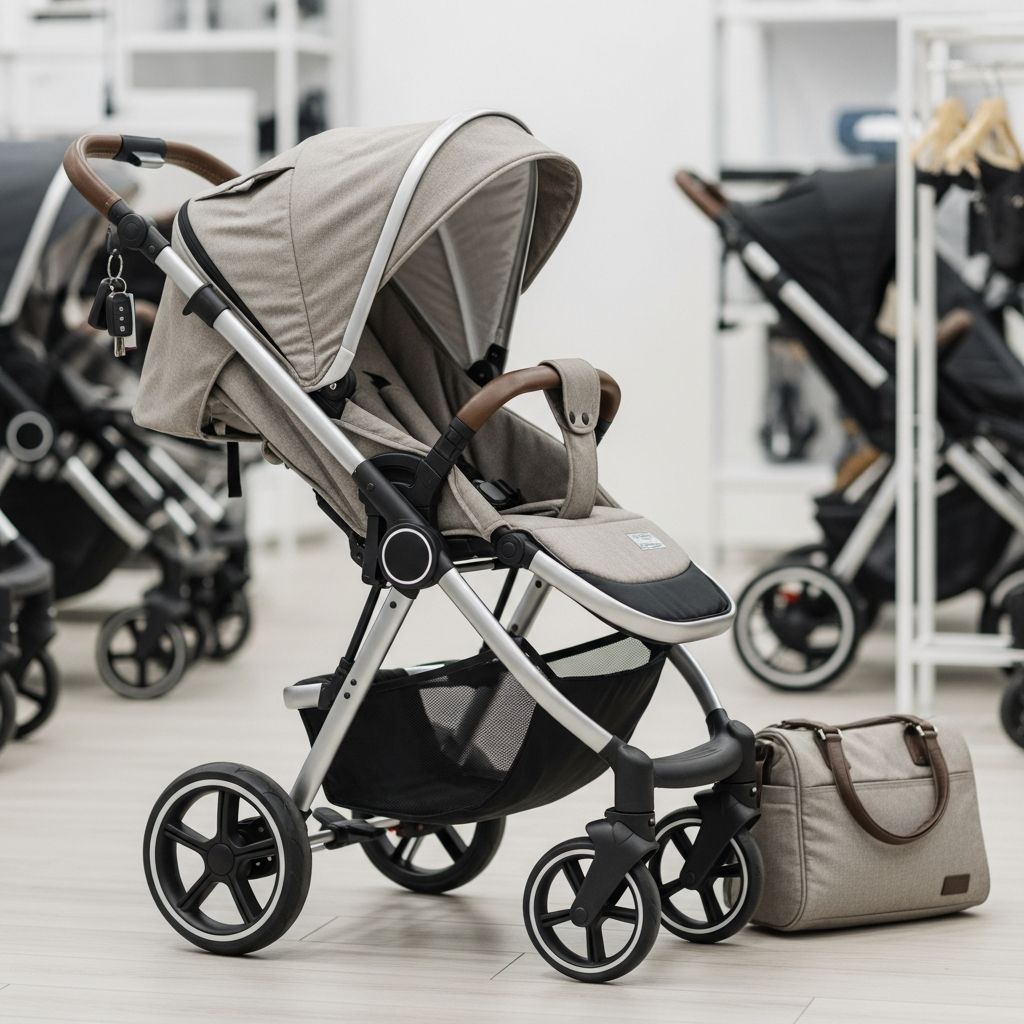
Full-size strollers are designed as your primary, do-everything option. They typically offer larger wheels, good storage, and a comfortable seat that can work from infancy through toddlerhood (sometimes with an added bassinet or infant car seat).
- Best for: Daily errands, long walks, and families who want one main stroller.
- Pros: Sturdy, comfortable ride, more storage, often compatible with infant car seats.
- Cons: Heavier and bulkier, may be awkward on public transport or in small car trunks.
Lightweight and Travel Strollers
Travel strollers prioritize compact folding, low weight, and portability. Some can even fit in overhead airplane bins, while others simply fold small enough for easy car and city use.
- Best for: Air travel, city life with lots of stairs, grandparents, or as a secondary stroller.
- Pros: Very light, easy to fold, great for quick trips and crowded spaces.
- Cons: Often less suspension, smaller wheels, and sometimes less storage or fewer comfort features.
Jogging and All-Terrain Strollers
Jogging strollers are built to handle running speeds and rougher surfaces. They usually include three large wheels, strong suspension, and a fixed or lockable front wheel for stability.
- Best for: Runners, hikers, or families living near trails or uneven terrain.
- Pros: Smooth ride, excellent shock absorption, very stable on bumps.
- Cons: Large and heavy, not ideal for tight indoor spaces or frequent car loading.
Convertible and Modular Strollers
Modular strollers allow you to change seat direction and configuration. Many start as a single stroller but can be expanded to carry two children with an additional seat, bassinet, or riding board.
- Best for: Families planning multiple children, or caregivers who value flexibility.
- Pros: Grows with your family, customizable seating, often compatible with multiple accessories.
- Cons: Higher price, heavier frame, and more pieces to store and manage.
Compact Comparison Table
| Type | Main Strength | Typical Drawback | Ideal Use Case |
|---|---|---|---|
| Full-size | Comfort and storage | Heavier and bulkier | Primary everyday stroller |
| Lightweight/travel | Portability and small fold | Less suspension and storage | Trips, city errands, backup |
| Jogging/all-terrain | Stable on rough surfaces | Large footprint | Running and outdoor adventures |
| Convertible/modular | Grows with family | Higher cost and weight | One-and-done multi-kid setup |
Key Features That Actually Matter
Marketing language can make every stroller sound revolutionary, but a few practical features have the biggest impact on daily use. Focusing on these will help you see through the noise.
Fold and Portability
The way your stroller folds will determine how easily you can get in and out of the house, car, or train. If possible, test the fold with one hand while holding something in the other to get a realistic sense of how it works.
- Look for a one-step fold if you will be folding it often, especially for car trips or public transit.
- Check whether it stands when folded; this is handy in restaurants, hallways, and small closets.
- Note the folded dimensions and compare them with your car trunk or storage space.
- Consider the total weight. Under 20 lbs feels manageable to most people; heavier may be fine if you seldom lift it.
Wheels, Suspension, and Maneuverability
Wheel quality makes a huge difference in how the stroller feels to push. Bigger, sturdier wheels usually move more smoothly over cracks, grass, or cobblestones, while small plastic wheels are better suited to malls and smooth sidewalks.
- Front swivel wheels make it easier to turn in tight spaces like stores and elevators.
- Lockable front wheels help when walking over gravel, snow, or uneven ground.
- Suspension systems reduce bumps, which is especially important for newborns and long walks.
- Test the stroller one-handed if possible; this reveals how well it truly maneuvers.
Seat Comfort and Recline
Your baby will spend a lot of time in the stroller seat, so comfort is more than a luxury. A well-designed seat supports your child’s body, allows different positions, and works as your baby grows.
- Look for a near-flat recline for naps and for use with younger babies (always check age and weight recommendations).
- Check padding and harness comfort, especially around the shoulders and between the legs.
- Some seats are reversible, letting your baby face you when smaller and face the world later.
- An adjustable footrest keeps little legs supported and can create a more comfortable sleeping surface.
Canopy, Storage, and Small Conveniences
These details may seem minor at first but often make the biggest difference once you’re using the stroller daily. Good shade and accessible storage can turn a frustrating outing into a smooth one.
- A large, extendable canopy protects from sun, wind, and light rain; mesh panels help with airflow.
- A peek-a-boo window lets you check on your child without stopping or leaning over.
- Look for a roomy under-seat basket if you plan to carry diaper bags, groceries, or jackets.
- Parent touches like cup holders, zip pockets, or phone trays make everyday use more pleasant, though they can often be added as accessories later.
Essential Safety Considerations
Most reputable strollers meet basic safety standards, but there are still key points to verify before making a purchase. Good safety design should feel obvious and easy to use, not complicated or fussy.
- Harness: A 5-point harness (shoulders, hips, and between the legs) is the safest and most common for modern strollers.
- Brakes: Test the brake with your foot. It should engage firmly and clearly and be easy to see when it is locked.
- Stability: Gently press down on the handle or hang a bag to see how prone it is to tipping.
- Frame and joints: Check for pinch points where small fingers could get caught when folding or unfolding.
- Recalls and compliance: Verify that the stroller complies with modern safety standards in your region and is not part of any recall.
Matching a Stroller to Your Lifestyle
Once you know the basics, circle back to your life and routines. Imagining specific daily scenarios helps you choose between models that might look similar on paper but behave differently in practice.
Urban Families
City dwellers often depend on a stroller the way others depend on a car. That means durability, maneuverability, and a manageable size are crucial.
- Prioritize easy steering and a narrow frame for crowded sidewalks and small shops.
- Consider a compact fold that works well in apartments, elevators, and public transit.
- Look for good suspension and sturdy wheels for curbs, cobblestones, and uneven pavements.
Suburban and Car-Dependent Families
If you will drive most places, trunk space and car-seat compatibility become major factors. A stroller that lives in the car needs to be easy to lift and stow several times a day.
- Check how easily the stroller fits in your trunk alongside groceries or luggage.
- Look for travel systems or adapters that securely click an infant car seat onto the frame.
- Moderate weight may be fine if the fold is straightforward and you do not have to carry it far.
Families Who Love Travel and Adventures
Parents who travel frequently or enjoy weekend adventures may want to invest in a secondary stroller for specific purposes, such as air travel or hiking.
- A lightweight travel stroller is ideal for airports, hotels, and city sightseeing.
- For hiking trails and parks, a jogging or all-terrain stroller will be more stable and comfortable for your child.
- Consider how easily the stroller can be carried up stairs, stored in overhead compartments, or checked at the gate.
Budgeting and Value: What to Spend Where
Strollers range from very affordable to eye-wateringly expensive. A higher price often reflects better materials or features, but it does not automatically guarantee the best fit for you. Start by defining a realistic budget, then decide where you are willing to compromise.
- Allocate more budget if you want a stroller that will last through multiple children or serve as both infant and toddler stroller.
- Save money by buying a simple, safe stroller and skipping premium fabrics or nonessential accessories.
- Consider secondhand options from trusted sources, but always check for recalls, wear, and missing parts.
- Think about the cost of accessories like rain covers, snack trays, or additional seats when comparing prices.
Practical Stroller Shopping Checklist
Use this checklist while you shop in person or compare models online. Treat it as a starting point and add any personal must-haves that suit your family.
Comfort and Fit
- 5-point harness that adjusts easily.
- Seat that reclines enough for naps.
- Adjustable footrest or leg support.
- Handlebar height that feels comfortable for the main caregiver.
Ease of Use
- Simple folding mechanism you can manage without watching a video.
- Reasonable weight for lifting into cars or up stairs.
- Basket accessible even when the seat is fully reclined.
- Intuitive brakes that clearly show when they are locked.
Long-Term Flexibility
- Compatibility with an infant car seat or bassinet, if needed.
- Option to add a second seat or ride-on board for another child.
- Replaceable parts such as wheels, canopy, or harness pads.
Basic Care and Maintenance Tips
A little routine care can keep your stroller safe, clean, and functioning well for years. You do not need special products; simple habits go a long way.
- Clean the fabric according to the manufacturer’s instructions; many covers can be spot-cleaned with mild soap and water.
- Inspect wheels and brakes regularly for debris, loose screws, or unusual resistance.
- Wipe down the frame to prevent dirt buildup in folding joints and locking mechanisms.
- Store indoors whenever possible to protect fabric and plastic from sun and weather damage.
Frequently Asked Questions About Strollers
Do I really need more than one stroller?
Some families are perfectly satisfied with a single, well-chosen stroller that handles most situations. Others find that pairing one full-size stroller with a compact travel stroller makes life easier, especially if they travel frequently or have limited storage.
Think about how often you will fly, use public transit, or navigate small spaces. If those situations are rare, you can likely get by with one stroller and perhaps borrow or rent a travel stroller when needed.
When can my baby ride in the stroller seat instead of a car seat or bassinet?
Most stroller seats are designed for babies who can hold their heads up steadily and sit with some support. Many parents transition from a car seat or bassinet attachment somewhere between 4 and 6 months, but always follow the manufacturer’s age and weight guidelines.
If you want to use the stroller from birth without a car seat, look for models specifically labeled as suitable for newborns, often with a fully reclining seat or dedicated bassinet.
What is the difference between a travel system and a regular stroller?
A travel system is a stroller that either comes bundled with a compatible infant car seat or is designed to securely attach one using adapters. This allows you to move a sleeping baby from car to stroller without unbuckling the harness.
A regular stroller may or may not offer car seat compatibility. If you prefer to avoid moving your baby in a car seat outside the car for long periods, you might choose a stroller with a newborn-ready seat instead of a full travel system.
How important is suspension on a stroller?
Suspension matters most if you regularly walk on uneven ground, such as cobblestones, gravel, or rough sidewalks. It smooths out the ride, making things more comfortable for both the baby and the person pushing the stroller.
For primarily indoor or mall use, basic wheels with little or no suspension may be fine. If you are unsure, test the stroller with some weight in it on different surfaces to see how it feels.
Can I hang bags on the stroller handle?
While many people do it, hanging heavy bags from the handle can make a stroller tip backward, especially when a lighter child is in the seat. This risk increases with smaller or more lightweight strollers.
Whenever possible, store heavier items in the basket under the seat and use hooks or organizers only for lighter items like a small purse, toys, or a light jacket.
Is it worth paying more for a premium stroller brand?
Premium strollers often offer better materials, smoother handling, and more refined details, which can feel great if you use the stroller heavily every day. They may also hold their resale value better if you plan to sell later.
However, if you primarily need a stroller for short errands or occasional outings, a midrange or budget-friendly option that meets safety standards and fits your lifestyle can be just as practical.
Final Thoughts: Confidence Over Perfection
No stroller can be perfect in every situation. There will always be tradeoffs between weight, size, comfort, and price. The goal is not to find the “best” stroller on paper, but the stroller that best matches your everyday reality and makes it easier to leave the house with your child.
By focusing on your lifestyle, key features, and safety fundamentals, you can choose a stroller with confidence—knowing that it fits your family, your budget, and your plans for the years ahead.