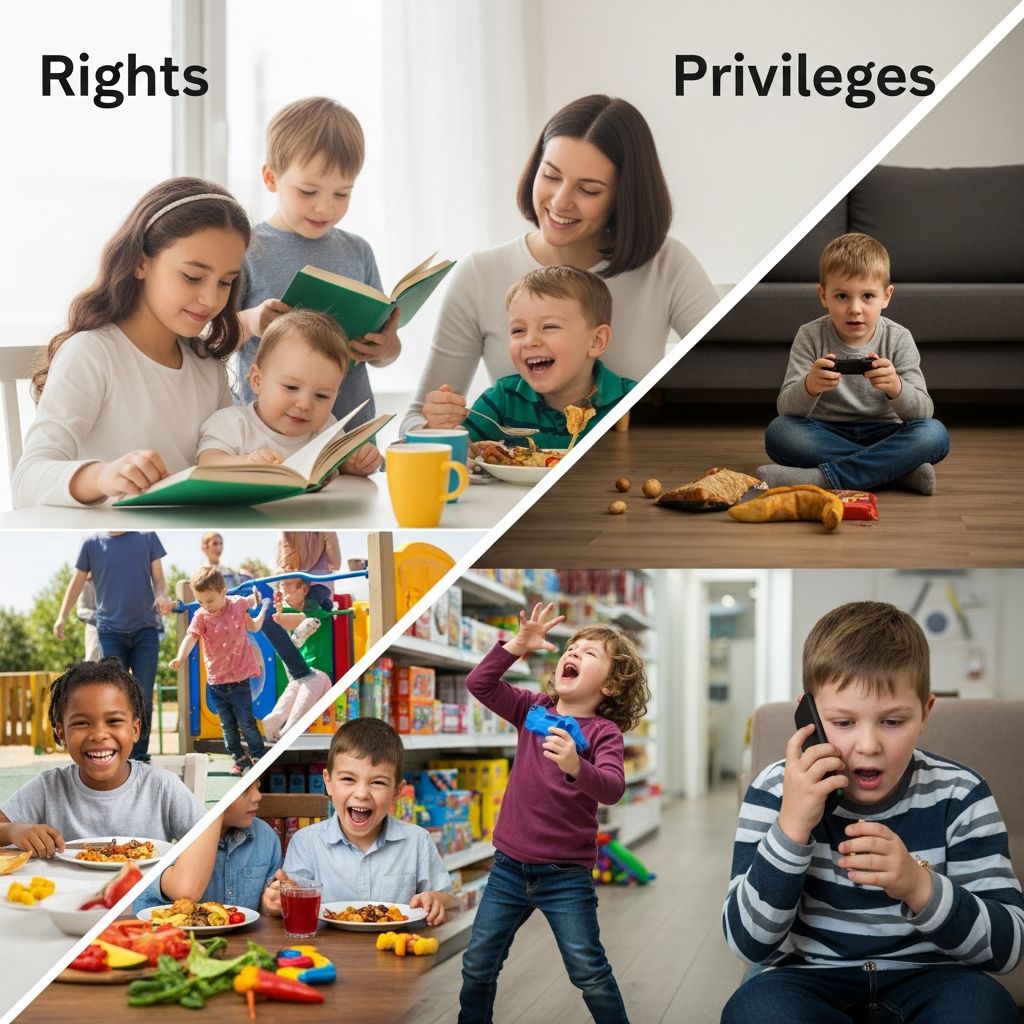
Effective parenting hinges on clearly distinguishing between what children fundamentally deserve as rights and what they must earn as privileges. This separation helps curb entitlement, promotes accountability, and equips kids with life skills for independence.
Defining Core Rights in Child Rearing
Children’s rights form the bedrock of parental responsibility, encompassing basic necessities that ensure survival, safety, and emotional well-being. These are non-negotiable provisions that parents must deliver without condition, as they align with legal and ethical standards of child care.
Fundamental rights include access to nutritious meals, a secure living environment, appropriate clothing, and medical attention when needed. Emotional support, such as unconditional love and affection, also qualifies as a right, nurturing a child’s sense of security and self-worth.
- Nutrition and Shelter: Providing balanced meals and a safe home prevents health risks and supports growth, as recognized in parental authority doctrines.
- Education Access: Ensuring school attendance fulfills legal obligations and prepares children for future success.
- Emotional Nurturance: Daily expressions of love build resilience, far outweighing material extras.
The parental-privilege doctrine legally affirms parents’ authority to make upbringing decisions, including discipline, provided it remains reasonable and does not endanger the child. Government intervention occurs only when welfare is genuinely at risk, underscoring parents’ primary role.
Privileges: Tools for Teaching Accountability
Privileges represent non-essential benefits that children enjoy at parents’ discretion, serving as motivators for positive behavior. Items like electronic devices, extracurricular outings, or trendy apparel fall into this category, as they enhance life but are not vital for basic needs.
Unlike rights, privileges must be earned through consistent responsibility, such as completing chores, respecting rules, and demonstrating self-control. This approach shifts the onus from parental enforcement to child-driven motivation.
| Category | Rights (Essentials) | Privileges (Earned) |
|---|---|---|
| Daily Needs | Three meals a day, clean clothes | Snacks beyond basics, designer brands |
| Technology | Supervised educational tools if required | Video games, unrestricted social media |
| Activities | School-mandated participation | Sports teams, entertainment events |
| Transportation | Rides to school/medical appointments | Friend visits, leisure outings |
By categorizing extras as privileges, parents teach delayed gratification and the value of effort, countering modern entitlement trends fueled by peer influences and consumer culture.
Why Clarity Prevents Family Conflicts
Confusion between rights and privileges breeds resentment and power struggles. Children accustomed to demanding gadgets as ‘needs’ react poorly to boundaries, viewing limits as unfair deprivations. Clear communication from the outset establishes expectations, reducing arguments.
Parents who blur lines risk raising entitled individuals unprepared for real-world consequences. Conversely, structured systems where privileges hinge on performance foster intrinsic motivation and self-regulation skills essential for adulthood.
Research from child development networks emphasizes combining privilege loss with positive reinforcement for optimal results, ensuring children feel supported amid accountability.
Implementing an Earned Privileges System
Transitioning to an earned privileges model requires patience and consistency. Begin by listing family rules tied to specific privileges, making criteria transparent and age-appropriate.
- Establish Clear Standards: Define ‘best effort’ in schoolwork, home cooperation, and off-track accountability.
- Communicate Calmly: Explain revocations without emotion, outlining restoration paths.
- Monitor Progress: Track behaviors positively, praising recommitment.
- Hold Firm: Resist bargaining; consistency rebuilds trust in the system.
This method differs from punitive consequences by empowering children to own their choices. When privileges lapse due to unmet commitments—not mere errors—kids learn to realign through effort. Chronic resistance may warrant full privilege suspension until renewed dedication emerges.
Parental Role: Guide, Not Peer
Children thrive under authoritative guidance, not friendship. Parents must prioritize limit-setting over popularity, as kids crave structure despite protests. Saying ‘no’ demonstrates love by preparing them for societal expectations.
A ‘good enough’ parent provides essentials, enforces boundaries, and models accountability. This balanced approach yields positive memories through shared joys earned via responsibility, not indulgence.
Common Pitfalls and How to Avoid Them
Many parents falter by over-explaining during heated moments or relenting under pressure. Instead, preemptive family meetings solidify agreements when tempers are cool.
- Avoid emotional revocations; stick to pre-agreed consequences.
- Don’t negotiate mid-conflict; revisit later calmly.
- Pair losses with growth opportunities, like problem-solving discussions.
Understanding underlying emotions prevents misuse of privileges as tools. If a child resists homework due to difficulty, address the root before applying consequences.
Long-Term Benefits for Child Development
Earned privileges cultivate resilience, work ethic, and emotional intelligence. Children learn that actions yield outcomes, mirroring adult realities like job performance affecting perks.
Studies affirm self-regulation gained through such systems boosts school success and workplace readiness. Families report reduced drama as kids internalize responsibility, strengthening bonds.
Frequently Asked Questions (FAQs)
What if my child argues privileges are rights?
Reaffirm basics calmly: ‘Food and safety are rights; fun extras are earned by showing respect and effort.’ Consistency wears down resistance.
How long should privilege loss last?
Tie duration to demonstrated change, typically 24-48 hours for minor issues, longer for patterns, ensuring restoration feels achievable.
Does this work for teens?
Yes, adapt for maturity: involve them in rule-setting, linking privileges like car use to proven reliability.
What about special occasions?
Maintain structure; exceptions should be rare and explained to preserve system integrity.
Can privileges motivate better than punishments?
Absolutely—earning shifts focus to positive action, building internal drive over fear.
Building Lasting Family Harmony
Mastering rights versus privileges transforms parenting from reactive battles to proactive growth. Parents who implement these principles report empowered children, peaceful homes, and confident futures. Start small, stay consistent, and watch responsibility flourish.
References
- Parental-Privilege Doctrine: Understanding Your Rights — USLegalForms. Accessed 2026. https://legal-resources.uslegalforms.com/p/parental-privilege-doctrine
- Loss of privilege & behaviour: 6-15 years — Raising Children Network (Australian Government-funded). 2023-02-09. https://raisingchildren.net.au/school-age/behaviour/rules-consequences/loss-of-privilege
- Getting Earned Privileges Right — Neil D. Brown, LCSW. Accessed 2026. https://neildbrown.com/podcast/getting-earned-privileges-right/
- Rights vs. Privileges: What Do Our Kids Deserve from Us? — Empowering Parents. Accessed 2026. https://www.empoweringparents.com/article/my-childs-rights-vs-privileges/
- Mama Mantra: Rights vs. Privileges — PrairieWifeinHeels. Accessed 2026. https://prairiewifeinheels.com/mama-mantra-rights-vs-privileges/