Music boxes sit at a beautiful crossroads between art, engineering, and emotion. Tiny gears, pins, and combs work together to create melodies that can soothe babies, spark nostalgia in adults, and turn ordinary moments into rituals. Whether you want a whimsical piece for a child’s room or an elegant gift for a milestone celebration, choosing the right music box takes a bit more thought than simply picking a pretty design.
This guide walks through every major choice: from traditional mechanisms and materials to themes, safety, personalization, and even how to display and care for your box so it becomes part of your family’s story.
Understanding How Music Boxes Work
Most traditional music boxes rely on a clockwork mechanism, where a wound spring gradually releases energy to turn a cylinder or disc covered in tiny pins. As it rotates, the pins pluck metal tines on a comb, creating individual notes that come together as a melody. The precision of these parts determines how smooth, rich, and reliable the sound will be.
Some modern designs use digital sound modules instead of mechanical movements. These offer more flexibility in tune choices and playback length but lack the visible moving parts many people find mesmerizing. Understanding which type of sound and experience you prefer is the first big step in choosing a box.
Key Types of Music Boxes
Music boxes come in a surprising variety of formats. Knowing the common types helps you match the box to the person and purpose you have in mind.
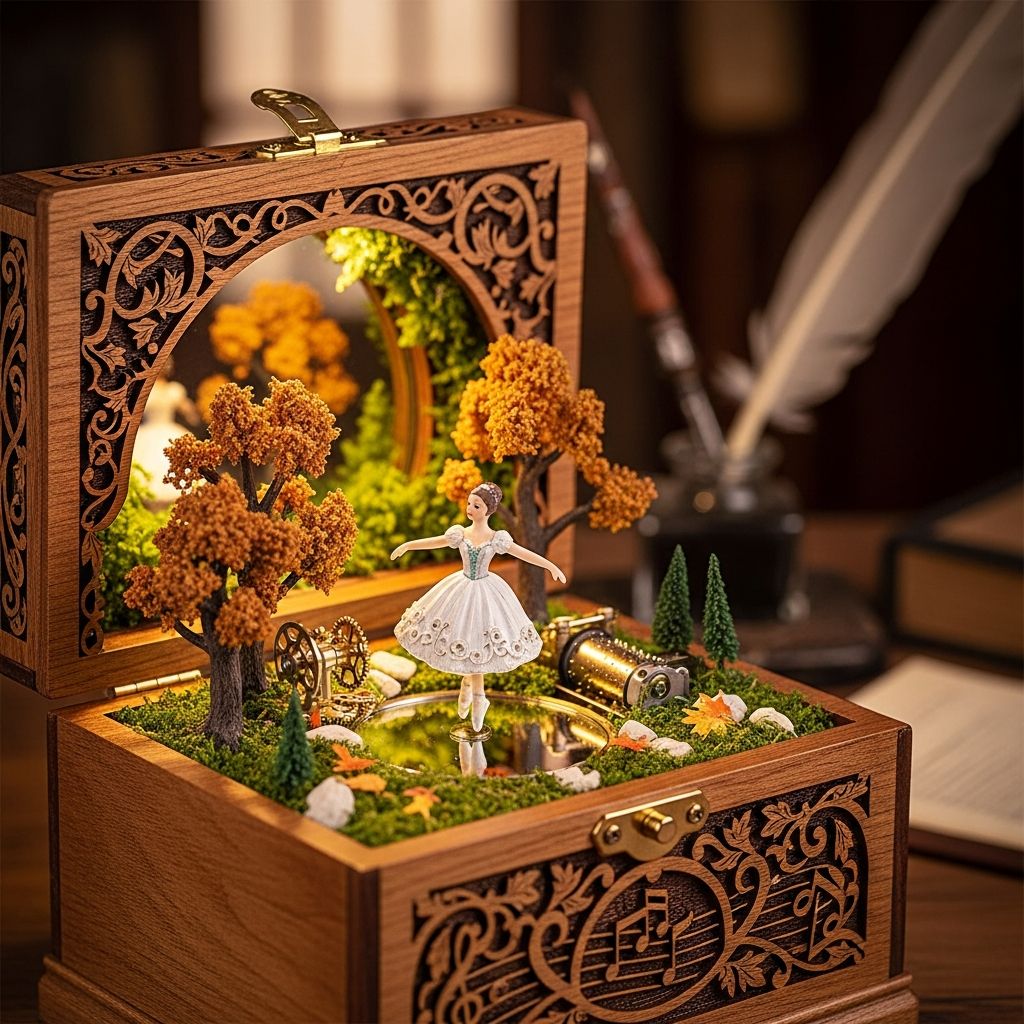
- Classic hinged box: Looks like a small jewelry or keepsake box with a lid that lifts to reveal the mechanism and a storage compartment.
- Figurine or carousel box: Often features dancers, animals, or carousels that rotate or move in time with the music.
- Jewelry music box: Combines compartments, ring rolls, and sometimes mirrors with a musical movement.
- Snow globe or dome: Encases a charming scene under glass or acrylic, often with glitter or faux snow that swirls while the tune plays.
- Wall or standing piece: Designed as decor first—with the mechanism integrated into a clock, plaque, or sculpture.
- Digital or programmable box: Uses electronic components to play preloaded or customized tunes, sometimes via USB or memory card.
Comparing Mechanism Styles
The heart of a music box is its mechanism. Even two boxes that look similar can feel completely different to use and hear, depending on how they’re built inside.
| Mechanism Type | How It Plays | Pros | Cons | Best For |
|---|---|---|---|---|
| Spring-wound cylinder | Wind a key; cylinder turns and pins pluck a metal comb. | Classic, tactile, visible movement, warm sound. | Usually fixed tune; limited play length; needs careful handling. | Heirloom-style gifts, nostalgic keepsakes. |
| Disc mechanism | Interchangeable discs spin and trigger comb tines. | Swappable tunes; often clearer, brighter tone. | Discs can be fragile; mechanism slightly bulkier. | Collectors, music lovers who want multiple songs. |
| Hand-crank | Turn a crank directly to move cylinder or strip. | Interactive, simple, inexpensive, fun for kids. | Sound stops when cranking stops; requires coordination. | Playful gifts, DIY projects, casual decor. |
| Digital module | Battery-powered speaker plays preloaded audio. | Longer tracks, multiple songs, higher volume options. | Less charm in the movement; depends on batteries. | Modern decor, custom songs, longer lullabies. |
Materials and Craftsmanship
The outer shell of the box affects both its durability and its overall mood. Wood offers warmth and a timeless feel, with options ranging from simple pine to rich walnut or mahogany. Hand-carved details or inlays add character but typically raise the price and demand more careful handling.
Metal and glass designs lean more modern and elegant. Metal cases can be engraved and often feel substantial, while glass-sided boxes show off the inner mechanism for those who enjoy watching the gears turn. Resin and plastic are frequently used for child-focused designs, prioritizing bright colors and durability over luxury finishes.
Choosing a Theme That Resonates
Because music boxes are as much about emotion as function, the visual theme is crucial. Themes can reflect hobbies, favorite stories, or moments you want to remember, like first birthdays or weddings. A well-chosen theme makes the box feel like it was made for the recipient, not pulled at random from a shelf.
Popular directions to consider include:
- Storybook and fantasy: Castles, unicorns, fairies, and beloved characters that capture a child’s imagination.
- Ballet and performance: Dancers, stages, or carousels that move gracefully with the melody.
- Nature and travel: Forests, seaside scenes, cities, or landmarks that recall favorite places.
- Classic elegance: Florals, filigree, and understated patterns that look at home in a formal living room.
- Seasonal and holiday: Winter villages, nativity scenes, or festive motifs brought out once a year as part of family tradition.
Selecting the Right Tune
Many buyers only think about the visual design and overlook the tune until they hear it at home. However, the melody will be the element that lingers in the background during quiet evenings or bedtime routines, so it’s worth choosing something intentional.
When deciding on a tune, consider:
- Mood: Gentle lullabies for nurseries, romantic themes for anniversaries, or upbeat melodies for playful decor.
- Personal significance: A song from a wedding, a piece a loved one played on piano, or a melody tied to a special trip.
- Complexity: Simple, repetitive tunes can be more soothing, while more intricate arrangements may appeal to music enthusiasts.
- Playback length: Some mechanisms loop a short phrase; others play a longer excerpt. Think about how long you want the music to last after each winding.
Music Boxes for Children and Nurseries
When buying for a baby or child, safety and practicality matter just as much as charm. Look for age-appropriate designs that stand up to everyday handling and won’t introduce hazards into the room. Many parents use a music box as part of a bedtime routine, so reliability is essential.
Features to prioritize include:
- Secure casing: No easily removable small parts that could become choking hazards.
- Soft-edged design: Rounded corners and smooth finishes, especially for boxes that might be within reach.
- Calming tune: Lullabies or gentle instrumentals instead of high-energy or jarring pieces.
- Volume level: Music that’s audible but not overpowering in a quiet bedroom.
Heirloom and Milestone-Ready Pieces
Some music boxes are meant to be more than decor; they are tangible reminders of life’s big moments. For birthdays, graduations, weddings, or memorials, treat the box like a piece of personalized jewelry: something meant to be kept and passed along.
For heirloom potential, consider:
- High-quality mechanism: A well-built movement that can be serviced or repaired over time.
- Timeless design: Classic lines and colors that won’t feel dated in a decade.
- Space for personalization: Areas on the lid, base, or inside panel where names, dates, or short messages can be added.
- Sturdy materials: Solid wood or metal that can stand decades of careful use.
Personalization and Custom Touches
Small details transform a beautiful object into a deeply personal one. Many modern music boxes allow customization, ranging from simple engravings to completely custom tunes uploaded via electronic modules. Thoughtful personalization can make a gift feel like a collaboration between you and the maker.
Popular personalization ideas include:
- Engraved names, initials, or dates on the lid or plaque.
- A short quote or dedication printed or etched inside the lid.
- A custom song chosen for its meaning to the recipient.
- Coordinating colors or motifs that match a nursery or living room.
Placement, Display, and Everyday Use
Where and how a music box is displayed influences how often it’s enjoyed. A box tucked away in a closet becomes a forgotten object; a box placed on a dresser, sideboard, or shelf can quietly become part of your family’s rhythm. Think of it as you would a favorite framed photo or plant: something that deserves a visible, accessible spot.
Consider these display tips:
- Place the box on a stable, flat surface away from high-traffic edges and curious pets.
- Avoid direct sunlight, which can fade finishes or heat internal parts.
- Keep it somewhere you naturally pass during bedtime routines or quiet evening moments.
- For open mechanisms, dust gently to preserve both appearance and function.
Care, Maintenance, and Longevity
Proper care helps a music box keep its tune and appearance for years. Mechanical movements, in particular, benefit from gentle handling and the occasional checkup, especially if they are older or more complex. Overwinding is one of the most common causes of damage, yet also one of the easiest to avoid.
Basic care guidelines include:
- Wind the key slowly and stop when you feel resistance; never force it past that point.
- Keep the box in a dry environment to prevent rust on metal parts or warping in wood.
- Wipe the exterior with a soft cloth; avoid harsh chemicals that can damage finishes.
- If the tune slows or sounds uneven, consult a specialist rather than attempting deep repairs yourself.
Quick Buying Checklist
When you’re ready to purchase, it helps to have a concise set of criteria to keep you focused. Use the following checklist as a guide while you compare different options online or in-store.
- Who is it for (age, personality, interests)?
- Primary purpose (decor, daily use, heirloom, toy, memorial)?
- Preferred mechanism (mechanical cylinder/disc, hand-crank, digital)?
- Desired tune and mood (lullaby, romantic, nostalgic, joyful)?
- Material and style (wood, metal, glass, resin; classic or playful)?
- Safety considerations (especially for children’s rooms)?
- Options for personalization (engraving, custom song, inscription)?
- Size and where it will be displayed in the home.
FAQs About Music Boxes
How long does a mechanical music box usually play after winding?
Most small spring-wound music boxes play anywhere from 15 seconds to a few minutes per full wind, depending on the size and quality of the movement. Larger, more intricate mechanisms can play longer, but every design has its own typical range, so product descriptions are worth checking carefully.
Is it possible to change the tune in a traditional cylinder music box?
In many mass-market cylinder boxes, the tune is fixed because the pins are built directly into the cylinder itself. Some high-end or specialized models allow cylinder swaps or include multiple cylinders, but this is not the norm for everyday gift-shop pieces, so assume the melody is permanent unless clearly stated otherwise.
Are digital music boxes less special than mechanical ones?
Digital boxes provide different advantages rather than being inherently lesser. They allow for longer songs, clearer audio, and sometimes multiple tracks or custom uploads, which can be extremely meaningful if you want a specific recording. Mechanical boxes, on the other hand, emphasize visible movement, tactile winding, and the slightly imperfect charm of plucked metal.
What should I avoid when my child wants to handle a music box?
For children, avoid designs with exposed, delicate mechanisms they can bend or pull and steer clear of tiny detachable decorations that might break off. Show them how to open, wind, and close the box gently, and consider reserving very fragile or sentimental pieces for supervised use only.
How do I know if a music box is good quality?
Signs of quality include a smooth, even sound without harsh buzzing, a solid-feeling case with aligned seams and hinges, and a key that turns consistently without grinding. Reputable makers often provide details about the mechanism type, number of notes, and materials used, which can help you compare options more objectively.
Choosing a music box is ultimately about matching a small instrument’s personality to your own memories and hopes. With a clear idea of mechanism, materials, theme, and tune, you can select a piece that doesn’t just sit on a shelf, but quietly becomes part of the soundtrack of your family’s life.