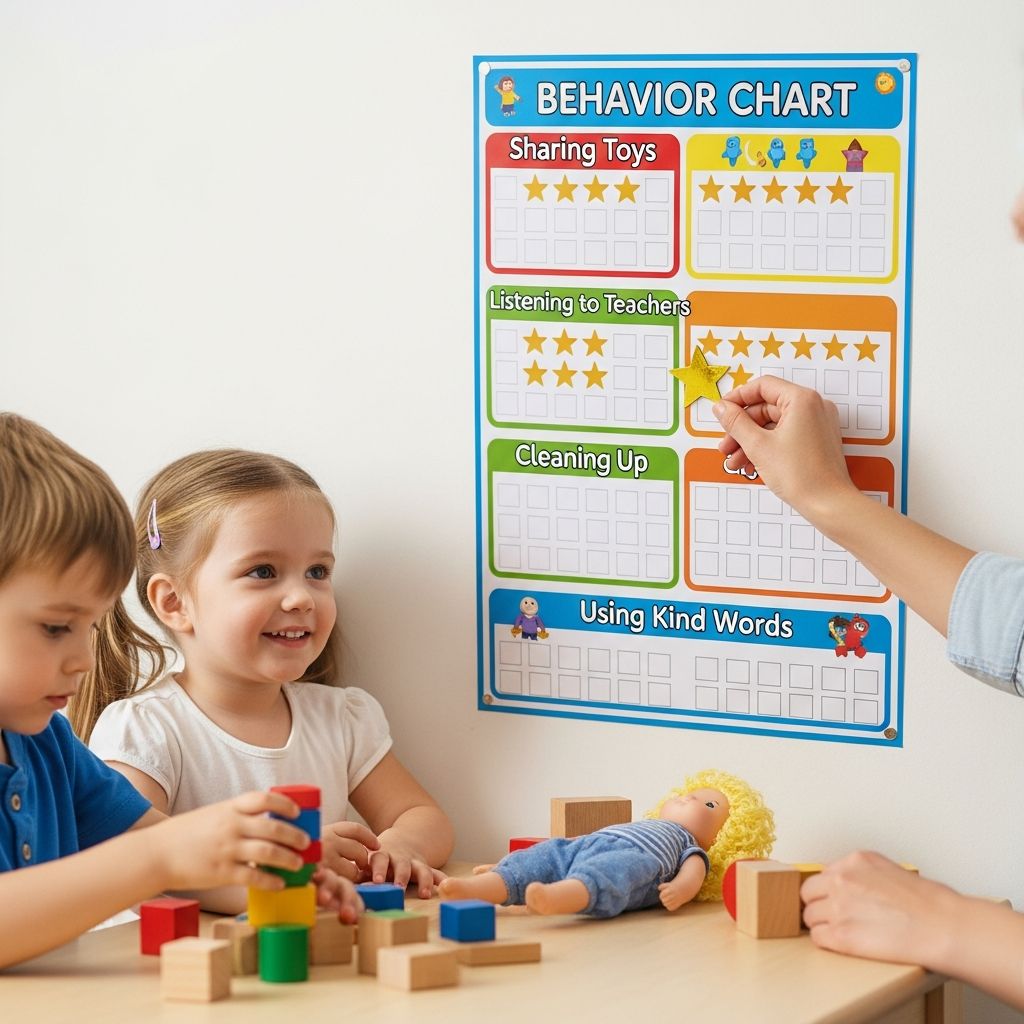
Behavior charts serve as visual aids to guide young children toward desirable actions, making discipline a positive and engaging process. These tools help parents and educators track progress, celebrate achievements, and gently correct missteps, particularly for ages 2 to 8 when kids thrive on immediate feedback and rewards.
Why Behavior Charts Work for Early Childhood
Young children respond best to clear, visual cues because their developing brains process pictures and colors more readily than abstract instructions. Behavior charts break down expectations into manageable steps, reinforcing good habits through positive reinforcement rather than punishment. Research shows that such strategies build self-regulation skills, reducing tantrums and increasing cooperation.
For toddlers and preschoolers, charts turn routine tasks into games. A simple sticker for brushing teeth or sharing toys creates excitement and motivation. Unlike verbal reminders, which fade quickly, charts provide a lasting record of success, helping children see their growth over time.
Core Principles of Designing Successful Charts
Start with age-appropriate goals: toddlers need one or two simple targets, like “use gentle hands,” while preschoolers can handle three to five, such as tidying toys or following directions. Use bright colors—green for great, yellow for trying, red for needs improvement—to make it intuitive.
- Keep it positive: Focus 80% on rewards, 20% on gentle corrections to avoid shame.
- Make rewards immediate: Stickers today lead to small treats tomorrow; delay too long, and interest wanes.
- Customize per child: Editable templates allow personalization for unique needs, like ADHD support with frequent check-ins.
- Review daily: Discuss the chart together to build accountability and pride.
Incorporate themes kids love—dinosaurs, rainbows, or puppies—to boost engagement. Digital apps offer portability for on-the-go tracking.
Types of Behavior Charts for Different Settings
Versatile designs suit home, preschool, or hybrid use. Here’s a breakdown:
| Type | Best For | Key Features | Examples |
|---|---|---|---|
| Daily Sticker Charts | Toddlers (2-4 years) | One behavior per day; instant stickers | Potty training, bedtime routines |
| Weekly Goal Trackers | Preschoolers (4-6 years) | Multiple goals; color-coded zones | Chores, sharing, listening |
| Stoplight Systems | Classrooms | Green/yellow/red cards for quick shifts | Group activities, transitions |
| Countdown Boards | High-energy kids | Visual timers for self-regulation | Naptime, cleanup |
| Reward Jar Charts | Families | Collective pom-poms for group prizes | Family harmony, manners |
Each type targets specific challenges. For instance, stoplight boards excel in group settings by visually signaling behavior shifts without singling out children.
Implementing Charts at Home: Step-by-Step Guide
Begin by observing your child’s routine. Identify pain points like mealtime battles or morning rushes. Create a chart with 4-6 boxes for daily checks.
- Set clear rules: Phrase positively, e.g., “I help set the table” instead of “No whining.”
- Choose visuals: Smiley faces or themed icons keep it fun.
- Introduce with enthusiasm: “This is our adventure map to superhero status!”
- Track consistently: Mark successes immediately; ignore minor slips.
- Reward milestones: After three greens, pick a park trip or extra storytime.
For potty training, a chart with wet/dry checks motivates independence. Parents report fewer accidents within a week when charts pair with praise.
Classroom Applications for Educators
In preschool, charts foster a structured yet joyful environment. Use individual trackers for personalized goals and group boards for class-wide expectations.
During naptime, a visual sequence—”toys away, potty, mat time, quiet body”—guides transitions. Children check off steps, gaining autonomy. For cleanup, themed charts like “Pirate Treasure Hunt” turn chores into quests.
Share charts via apps with parents for home reinforcement, creating a united front. Data from charts informs assessments, spotting trends like frequent yellows during circle time.
Customizing for Special Needs and Challenges
Children with ADHD or sensory issues benefit from frequent, short-interval charts. Editable versions let you add visuals like “First work, then break” boards.
- Emotional regulation: Track “calm breathing” with star bursts.
- Meltdowns: Note triggers and recovery for pattern analysis.
- Sharing struggles: Pair with role-play prompts.
Always pair charts with modeling: demonstrate the behavior first. If a child stalls, use the chart as a neutral prompt, not criticism.
Common Mistakes and How to Avoid Them
Pitfalls include too many goals, delayed rewards, or inconsistent use, leading to frustration. Limit to 1-2 behaviors initially; scale up as mastery grows.
Avoid punishment zones dominating the chart—focus on positives. If motivation drops, refresh with new themes or bigger rewards. Track your consistency too; lapses undermine trust.
Measuring Success and Long-Term Benefits
Success shows in fewer reminders needed and spontaneous good habits. After 2-4 weeks, fade the chart gradually to internalize behaviors.
Long-term, children gain resilience, empathy, and self-control—skills vital for school readiness. Studies affirm reward charts enhance emotional intelligence when used mindfully.
Frequently Asked Questions
What age is best for behavior charts?
Ages 3-8 work ideally, as toddlers grasp basics and school-age kids handle complexity.
Do digital charts work as well as paper ones?
Yes, apps provide reminders and parent sharing, but hands-on stickers engage tactile learners best.
What if my child ignores the chart?
Restart with one fun goal, model it, and ensure rewards excite them. Consistency revives interest.
Can charts replace timeouts?
They complement timeouts by preventing issues proactively. Use charts for positives, timeouts for safety corrections.
How often should I change the chart?
Every 2-4 weeks or when goals master, to maintain novelty.
Free Resources and Templates to Get Started
Download printable puppy-themed dailies or rainbow rewards. Editable PDFs from educator sites offer flexibility.
References
- Behavior Charts for Preschoolers — Teachers Pay Teachers. 2023. https://www.teacherspayteachers.com/browse?search=behavior+charts+for+preschoolers
- Reward charts: positive behaviour strategy — Raising Children Network (Australian Government-funded). 2024-01-15. https://raisingchildren.net.au/preschoolers/behaviour/encouraging-good-behaviour/reward-charts
- The Pros and Cons of Using Behavior Charts — Brightwheel. 2024-06-10. https://mybrightwheel.com/blog/behavior-chart
- Boosting Child Development with Preschool Behavior Charts — Illumine. 2023-11-20. https://illumine.app/blog/preschool-behavior-chart
- Toddler and Preschool Behavior — Free Printable Behavior Charts. 2023. https://www.freeprintablebehaviorcharts.com/questions3.htm
- Free Printable Behavior Charts for Kids — Free Printable Behavior Charts. 2024. https://www.freeprintablebehaviorcharts.com