Tweezers look simple, but anyone who has tried to grab a single stubborn brow hair with a dull, misaligned pair knows that not all tweezers are created equal. The right tool makes eyebrow grooming faster, less painful, and more precise, while the wrong one can lead to broken hairs, irritation, and frustration. This guide walks you through how tweezers work, what features matter, how price and quality are connected, and which type is worth your money.
Why Tweezers Still Matter in a World of Wax and Thread
Even with waxing, threading, and salon services, tweezers remain a core beauty tool for both quick touch-ups and full brow shaping. Unlike waxing, which removes many hairs at once, tweezers allow removal of individual hairs from the root for detailed control over shape and symmetry.
Dermatology and cosmetic literature consistently notes that tweezing is a targeted, mechanical form of epilation: the hair is grasped at the base and removed from the follicle, which typically leads to slower regrowth than shaving and avoids the chemicals or resins involved in waxing. This makes tweezers especially useful for:
- Maintaining brow shape between professional appointments
- Cleaning up stray hairs above the nose or under the arch
- Detail work after waxing or threading
- Removing a few isolated facial hairs without scheduling a full treatment
The Anatomy of a Good Pair of Tweezers
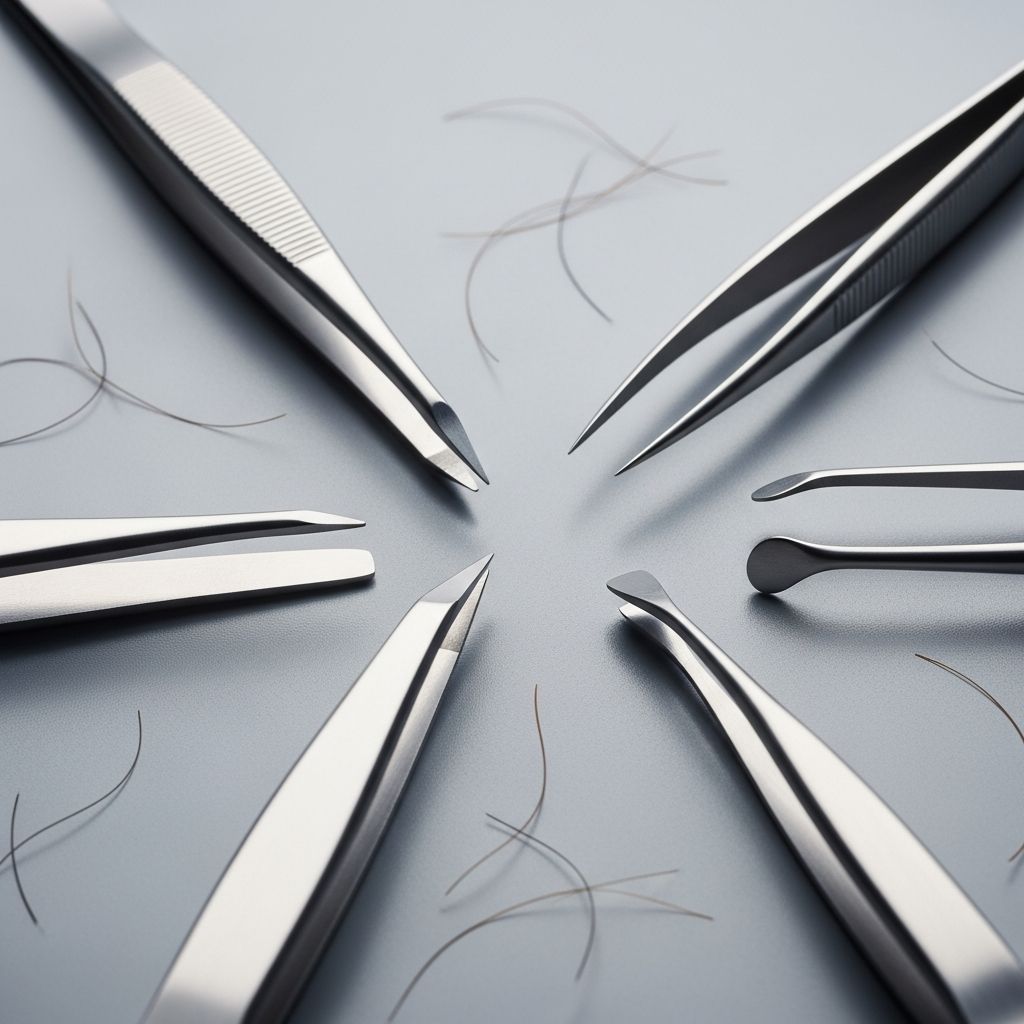
At first glance, tweezers are just two metal arms with a tip. In practice, several design elements separate a great pair from the cheap impulse buy that never quite grips the hair.
Key Design Features to Look For
- Material: High-quality stainless steel is the standard for professional tweezers. It is durable, resists corrosion, and can be sterilized without warping.
- Tip alignment: When you press the arms together, the tips should meet perfectly along their entire edge. Any gap will cause hairs to slip instead of plucking cleanly.
- Spring tension: The resistance when you squeeze the tweezers should feel firm but not stiff. Too tight and your hand tires quickly; too loose and precision suffers.
- Finish and grip: A matte or lightly textured finish can prevent slipping if your hands are slightly oily or damp. Some tweezers add grooves or a wider grip zone.
- Weight and balance: Very light tweezers can feel flimsy; overly heavy ones are tiring. A balanced, medium-weight tool gives better control.
Common Tweezer Tip Shapes
| Tip Type | Best For | Pros | Cons |
|---|---|---|---|
| Slant tip | General brow grooming | Versatile, easy to angle against skin, good visibility | Not ideal for deeply ingrown hairs |
| Pointed tip | Ingrown hairs, very fine hairs | Extremely precise, can isolate single difficult hairs | Sharper; requires a steadier hand and more care |
| Pointed-slant | Advanced users needing both slant and point | Hybrid of precision and versatility | Can feel overkill for simple touch-ups |
| Flat tip | Body hair, larger areas | Grips multiple hairs at once | Too bulky for shaping delicate brows |
Price vs. Performance: Are Expensive Tweezers Worth It?
Beauty aisles now offer tweezers from budget-friendly options to professional models that cost as much as a small facial. The real question: how much improvement do you actually get as the price climbs?
What You Usually Get with Budget Tweezers
Drugstore and low-cost tweezers can absolutely work, but their quality is highly variable. Common issues include:
- Misaligned tips that leave a small gap when pressed together
- Uneven beveling, so only a tiny corner truly grips the hair
- Softer metals that bend or lose alignment if dropped
- Inconsistent tension from one pair to the next in the same line
When tips are dull or poorly aligned, hairs may break at the surface instead of being removed from the root. That can cause the hair to grow back quickly and may increase the risk of ingrown hairs or irritation.
What Higher-End Tweezers Typically Offer
Professional and mid-range tweezers justify their price with more careful engineering and quality control:
- Tips are hand-finished and sharpened for secure grip on fine hairs
- Alignment is tested so the entire inner edge contacts the hair
- Stronger stainless steel alloys maintain tension and shape longer
- Some brands offer free sharpening or repair, extending lifespan
From an economic perspective, a well-made pair that lasts for many years can be more cost-effective than repeatedly replacing cheaper tools that become dull or warped. Since tweezing relies on mechanical precision rather than technology, a classic, high-quality pair can remain your go-to tool for a long time with proper care.
Finding the Sweet Spot for Your Budget
You do not need the most expensive pair on the shelf. For many people, the best option is a mid-range stainless-steel slant-tip tweezer from a reputable brand. Look for:
- Visible alignment (tips close cleanly, no light through the gap)
- A comfortable grip and spring tension that matches your hand strength
- Clear labeling that it is stainless steel and can be disinfected
- A recognizable brand or professional recommendation (for example, from licensed estheticians or dermatology practices)
How to Use Tweezers for Cleaner, Healthier Brows
The way you use tweezers can be just as important as the tool itself. Proper technique makes the process quicker and less irritating to the skin.
Prep Your Skin and Tools
- Cleanse the area: Wash your face with a gentle cleanser to remove oil, makeup, and bacteria. This helps reduce the risk of folliculitis (inflammation of hair follicles), which is sometimes triggered by hair removal.
- Disinfect the tips: Wipe the tweezer tips with 70% isopropyl alcohol and let them air dry before use.
- Use good lighting: Natural light or a bright, white light shows fine hairs more clearly.
- Avoid magnification overload: A mild magnifying mirror can help, but extreme magnification can tempt you to overpluck.
Step-by-Step Tweezing Technique
- Define your target shape: Use the natural top line of your brow as a guide; most professionals recommend making only small changes at a time. Over-removal above the brow can create an uneven or harsh look.
- Stretch the skin gently: With one hand, lightly pull the skin taut. This gives you a flatter surface and can reduce discomfort.
- Grasp at the root: Place the tweezer as close to the base of the hair as possible, angling the slant side down against the skin.
- Pull in the direction of growth: Pluck quickly but smoothly along the hair’s natural growth direction to remove it from the root and decrease breakage.
- Work slowly: Step back every few hairs to assess your progress rather than trying to complete one entire brow in a single pass.
Aftercare to Minimize Redness and Bumps
- Cool the skin: A cool compress can help calm redness immediately after tweezing.
- Apply a soothing product: A light, fragrance-free moisturizer or gel with ingredients like aloe vera or niacinamide can support the skin barrier and reduce irritation.
- Avoid heavy makeup immediately: Try not to apply pore-clogging products directly on freshly tweezed skin, as the follicles are more vulnerable.
Sanitizing and Maintaining Your Tweezers
Because tweezers come into direct contact with skin and hair follicles, they should be kept clean. Infection-control guidance from professional organizations consistently recommends disinfecting reusable tools that break the skin’s barrier or contact follicles.
Routine Cleaning
- After each use, wipe the tips with 70% isopropyl alcohol and let them dry.
- Store tweezers in a dry case or pouch to prevent contamination and protect alignment.
- Avoid dropping them; impact is a common reason tips bend or go out of alignment.
When to Replace or Sharpen
You may need to repair or replace your tweezers if you notice any of the following:
- Hairs slip out repeatedly, even when properly grasped
- You must squeeze very hard just to get a grip
- The tips look visibly rounded, chipped, or misaligned
Some professional brands offer sharpening services. If not, replacing severely worn tweezers is usually more effective than DIY filing, which can worsen alignment.
Comparing Tweezing to Other Brow-Shaping Methods
It helps to understand how tweezers fit into the broader hair-removal landscape. Eyebrow shaping commonly involves waxing, threading, or tweezing, and each has its own trade-offs in precision, speed, and irritation risk.
| Method | Precision | Speed | Skin Considerations | Best Use |
|---|---|---|---|---|
| Tweezing | Very high (one hair at a time) | Slower for large areas | Minimal irritation when done correctly | Detailing and at-home maintenance |
| Waxing | Moderate to high | Very fast (many hairs at once) | May not suit very sensitive or recently treated skin | Initial shaping and larger clean-up |
| Threading | High, especially for fine hairs | Fast with a skilled provider | No chemicals; useful for sensitive skin | Defined lines and full-brow reshaping |
Many people choose a combination approach: professional waxing or threading for major shaping, and tweezers at home to manage regrowth and maintain symmetry between appointments.
How to Choose Tweezers for Your Specific Needs
Instead of buying whatever is on sale, consider how you will actually use your tweezers and match the design and price point to that purpose.
If You Only Tidy Up Occasionally
- Choose an affordable, stainless-steel slant-tip tweezer.
- Focus on comfort and basic alignment rather than advanced features.
- Keep them in a case so they stay aligned between rare uses.
If You Shape and Maintain Your Brows Weekly
- Invest in a mid-range or professional pair with precise, hand-finished tips.
- Consider a slant for general shaping and a pointed pair for occasional ingrown hairs.
- Make cleaning and safe storage part of your routine.
If You Have Very Fine, Sparse, or Coarse Brows
- For fine or sparse brows, prioritize tip sharpness and exact alignment to avoid accidentally grabbing multiple hairs.
- For coarse or dense brows, choose strong, rigid tweezers that do not flex under pressure.
- In both cases, work slowly and remove a few hairs at a time to preserve natural fullness.
Frequently Asked Questions About Tweezers and Brow Grooming
Q: How often should I tweeze my eyebrows?
A: Most people do well with a light touch-up every 5–10 days. Tweezing daily can tempt you to overpluck, while waiting too long may mean more discomfort in a single session. Adjust based on your hair growth rate and how defined you like your brows to look.
Q: Can tweezing cause permanent hair loss?
A: Repeated trauma to the same follicle over many years may lead to reduced regrowth in some cases, but this effect is gradual and varies from person to person. Over-tweezing the same area is a more common reason brows look thin. Working conservatively and following your natural shape reduces that risk.
Q: Why do my brows get bumps after tweezing?
A: Small red bumps can result from irritation, minor inflammation of hair follicles, or ingrown hairs. Cleansing before tweezing, pulling in the direction of hair growth, and using a soothing, non-comedogenic product afterward can help. If bumps are persistent, painful, or infected, dermatology guidance is recommended.
Q: Is tweezing safe for sensitive skin?
A: Tweezing is often better tolerated than waxing for people with very sensitive or reactive skin because it targets individual hairs without spreading product across larger areas. However, any form of hair removal can be irritating. Patch-testing under the tail of the brow and working slowly helps gauge your skin’s response.
Q: Can I share tweezers with someone else?
A: Sharing personal grooming tools is not recommended. Even with surface cleaning, there is a theoretical risk of transmitting bacteria or viruses via tools that contact follicles or microscopic breaks in the skin. Keeping your own pair and disinfecting it regularly is best.
References
- A Comparison of Eyebrow Shaping Techniques — ViolaVIP. 2023-05-10. https://www.violavip.com/a-comparison-of-eyebrow-shaping-techniques/
- Comparing Eyebrow Shaping Techniques: Threading, Waxing, and Plucking — Raw Beauty Lounge. 2023-08-21. https://www.rawbeautylounge.com/comparing-eyebrow-shaping-techniques-threading-waxing-and-plucking
- Infection Prevention and Control for Personal Services — British Columbia Centre for Disease Control. 2020-11-01. https://www.bccdc.ca/resource-gallery/Documents/Guidelines%20and%20Forms/Guidelines%20and%20Manuals/Epid/CD%20Manual/Chapter%202%20-%20Imms/Part-3_Personal_Service_Establishments.pdf
- Hair Removal Methods: A Clinical Review — Journal of Clinical and Aesthetic Dermatology. 2008-07-01. https://www.ncbi.nlm.nih.gov/pmc/articles/PMC2840910/
- Guidelines of Care for the Management of Acne Vulgaris — American Academy of Dermatology. 2016-02-01. https://www.jaad.org/article/S0190-9622(15)02614-6/fulltext