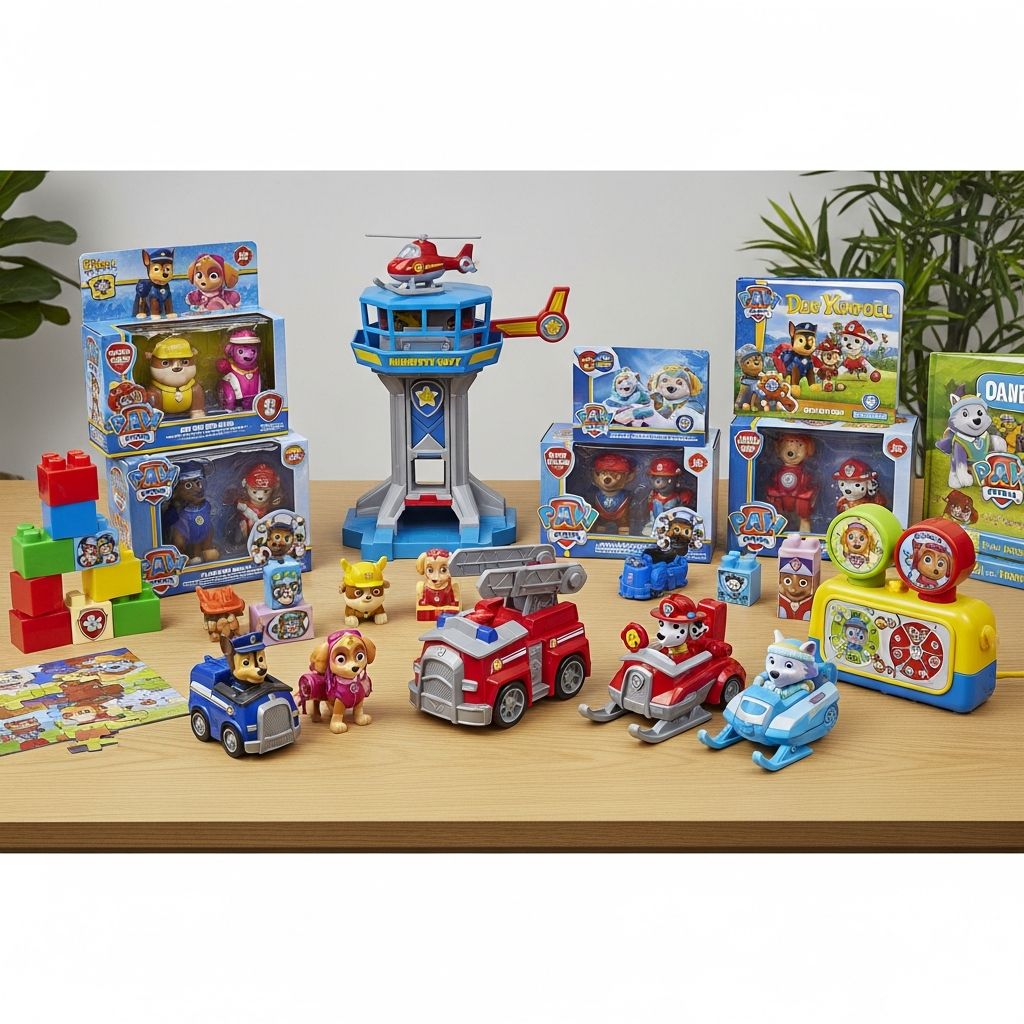
PAW Patrol toys are everywhere—on birthday wish lists, holiday gift guides, and in living room rescue missions—but not every pup, vehicle, or playset is the right match for your child or your budget.
This guide walks you through how to choose PAW Patrol toys that support imaginative play, hold up to real-life roughhousing, and avoid common parent headaches like clutter, broken pieces, and wasted money.
Why Kids Are So Drawn to PAW Patrol
PAW Patrol toys tap into a powerful combination of recognizable characters, bright colors, and clear storytelling roles—leader, pilot, firefighter, builder—that make it easy for kids to jump into pretend play. Each pup has a distinct personality and vehicle, which invites children to assign roles, build teams, and replay rescue missions they’ve seen on screen or invented themselves.
Because the show revolves around problem-solving and teamwork, many children naturally reenact those themes in play. That gives caregivers a chance to reinforce ideas like helping friends, taking turns, and trying again after mistakes, all through play rather than lectures.
Key Types of PAW Patrol Toys
PAW Patrol products fall into a few broad categories. Understanding these makes it easier to build a collection that fits your space, your child’s age, and your budget.
Core Figures and Vehicles
These are the small character figures and their signature vehicles—police trucks, fire engines, helicopters, diggers, and more. They are usually the backbone of a PAW Patrol collection because they’re relatively compact, easy to store, and work with many playsets.
- Great for open-ended storytelling and tabletop play.
- Affordable entry point for relatives or friends who want to give a themed gift without buying a huge set.
- Easy to pack in a bag for travel or restaurant entertainment.
Large Playsets and Headquarters
Tower playsets, command centers, ships, trucks, and mobile headquarters are the centerpieces kids often ask for after seeing them in the show or movies. They typically include ramps, elevators, launchers, or slides and sometimes lights and sounds.
- Encourage group play, letting siblings and friends each take a pup role.
- Provide a dedicated “home base” that organizes smaller vehicles and figures around one big toy.
- Take up significant space, so measuring and planning a storage spot in advance is important.
Plush Toys and Snuggle Buddies
Soft, huggable versions of the pups are a favorite for bedtime, car rides, and quiet time. Some plush toys add simple lights or soothing sounds, while others remain basic and cuddly.
- Ideal for toddlers who are not ready for lots of small plastic parts.
- Help ease nighttime anxiety when paired with a consistent sleep routine.
- Often become “transitional objects,” accompanying kids to daycare, the doctor, or trips.
Activity and Learning Toys
PAW Patrol–themed tablets, electronic learning toys, puzzles, and activity sets use familiar characters to motivate kids to practice letters, numbers, problem-solving, and memory skills. While they are not a replacement for real-world experiences, they can be a useful tool when used with reasonable limits.
- Good for short, supervised sessions to reinforce early literacy and numeracy.
- Can make car rides or waiting rooms easier when screens are not available or desired.
- Look for clear volume controls, durable buttons, and age-appropriate difficulty levels.
Age-Appropriate PAW Patrol Picks
Choosing toys by age helps match your child’s motor skills, attention span, and safety needs. Every child develops at a different pace, but broad guidelines can still be helpful.
| Age Range | Best Toy Types | Why They Work |
|---|---|---|
| 18–24 months | Simple plush, large chunky figures | Safe to grasp and explore without many small detachable parts. |
| 2–3 years | Plush, basic vehicles, sturdy mini playsets | Support emerging pretend play and basic cause-and-effect actions. |
| 3–4 years | Figures with vehicles, small towers, beginner puzzles | Match improving coordination and role-play imagination. |
| 4–6 years | Large headquarters, movie-themed sets, learning toys | Encourage storytelling, problem-solving, and cooperative play. |
| 6+ years | More detailed sets, construction kits, collectible figures | Appeal to kids who enjoy building, organizing, and displaying. |
Always check manufacturer age labels, but also pay attention to your child’s habits: frequent mouthing of toys, chewing on parts, or rough throwing may mean sticking with sturdier, simpler designs longer than the box suggests.
If you have multiple children at different ages, consider having a separate shelf or bin for toys with tiny accessories and enforcing a “table only” rule so curious toddlers cannot easily grab those pieces.
What to Look For Before You Buy
Not all PAW Patrol products are created equal. Small differences in design can have a big impact on how long a toy lasts and how often your child actually plays with it.
Durability and Build Quality
- Check how parts attach: Hinges, ramps, and doors that use solid plastic joints usually last longer than thin clips.
- Look for reviews that mention whether stickers peel, parts snap off, or pieces stop fitting together after a few weeks.
- For electronic toys, consider whether the battery compartment screws shut securely and whether replacement batteries are easy to find.
Play Value and Replayability
- Prefer toys that can be used in many scenarios instead of one narrow function. A vehicle that works with multiple pups, for example, will likely see more use than a single-purpose novelty item.
- Look for open spaces, ramps, and platforms kids can repurpose, rather than toys that only do one pre-programmed action.
- Ask yourself: “Will this still be fun after the sound effects are no longer a novelty?”
Compatibility Within the Collection
Some PAW Patrol playsets are designed for a specific scale of figures and vehicles. Mixing incompatible sizes can frustrate kids when their favorite pup doesn’t fit properly into a new headquarters or launcher.
- Check packaging for notes about which lines or figure sizes are compatible.
- If you are starting from scratch, consider choosing one main figure size and sticking with it as your collection grows.
- Keep a quick note on your phone listing which scale you own, so you can reference it while shopping in store or online.
Space, Storage, and Clutter Control
Large PAW Patrol toys are exciting, but they also claim floor space and can quickly take over a room. Planning ahead avoids arguments later about where everything goes.
Measure Before You Commit
- Check product dimensions—not just height, but the footprint with ramps or arms fully extended.
- Mark out the space with painter’s tape or a blanket on the floor so you can visualize how much room will be left for other activities.
- Consider whether the toy can be moved easily or if it needs a permanent “parking spot.”
Smart Storage Strategies
- Use labeled bins for “vehicles,” “figures,” and “accessories” so clean-up becomes part of the play routine.
- Keep small pieces in clear containers with lids that older kids can open but younger siblings cannot.
- Rotate toys: store some PAW Patrol items out of sight and bring them back after a few weeks. This keeps play fresh without constant new purchases.
Safety Checks Parents Should Always Do
Reputable PAW Patrol toys are designed to meet safety standards, but real-world use and mixed-age households add extra variables. A quick home check can reduce the risk of injuries or choking hazards.
Small Parts and Detachable Pieces
- Inspect figures and vehicles for easily removable accessories—helmets, tools, or decorative pieces—that might come off under stress.
- If your child still puts objects in their mouth, remove or store questionable pieces until they are older.
- Periodically re-check older toys for cracks, loose wheels, or broken joints that may create sharp edges.
Sound Levels and Lights
- Test the volume of electronic toys in a quiet room; if it sounds harsh to you, it may be overwhelming for a child’s ears at close range.
- Prefer toys with multiple volume settings or an off switch so you can adjust sound for shared spaces.
- Ensure light-up functions are not so bright that they become distracting or disruptive at bedtime.
Stretching Your Budget Without Disappointing Your Child
Character toys can add up quickly, especially when every new season or movie introduces another themed set. With a bit of planning, you can give kids the excitement they crave without overspending.
Prioritize High-Impact Items
- Choose one “wow” item—such as a main headquarters or large vehicle—for major occasions like birthdays, and complement it with smaller figures or vehicles.
- Build a collection slowly, focusing on the characters your child truly loves rather than buying every variant.
- Ask relatives to coordinate so you avoid duplicates and fill gaps instead.
Look Beyond the Hype
- Movie tie-ins and newly released themes can be tempting, but older sets often work just as well with your child’s imagination.
- Consider secondhand options from local parent groups or resale shops, especially for large plastic playsets that clean up easily.
- Remember that how your child plays with a toy matters more than how closely it matches the latest marketing art.
Supporting Learning Through PAW Patrol Play
Although PAW Patrol toys are not formal educational tools, they naturally lend themselves to practicing early skills when adults participate occasionally and ask simple questions during play.
- Language skills: Encourage kids to narrate rescues, describe problems, and explain how the team will solve them.
- Social-emotional skills: Use conflicts between characters—who gets which vehicle, who goes first—to practice sharing, apologizing, and compromising.
- Thinking skills: Introduce basic challenges, like storms, blocked roads, or missing items, and brainstorm possible solutions together.
Simple PAW Patrol Play Ideas Parents Can Start
On busy days it can feel hard to come up with new ways to play. Having a few quick prompts ready can extend attention and make old toys feel new again.
- Color Missions: Ask your child to send out pups based on color—“Find everything red for a fire rescue” or “Gather all blue vehicles for a sea mission.”
- Obstacle Courses: Use pillows, boxes, or tape lines on the floor as “bridges,” “cliffs,” and “rivers” the pups must navigate.
- Rescue Reports: After a mission, invite your child to give a short “report” on what happened, who helped, and what they learned.
- Quiet-time Stories: Before bed, let your child pick one pup and tell a short, calm adventure focusing on kindness or bravery rather than loud action.
Frequently Asked Questions About PAW Patrol Toys
Are PAW Patrol toys okay for toddlers under three?
Many PAW Patrol products are labeled for ages three and up because of small parts. For younger toddlers, stick to soft plush toys and any clearly marked “toddler-safe” items with large, non-removable pieces. Always supervise closely and regularly check toys for wear and tear.
How many PAW Patrol toys does a child really need?
There is no magic number, but most children play well with a small core group of favorite characters, a few vehicles, and one main playset. When every surface is covered, kids often feel overwhelmed and play less, so periodic decluttering and rotation can be more helpful than constant adding.
Do I have to buy toys that match the latest show season?
No. While new themes may be exciting, children usually care more about whether the toy works in their stories than whether it perfectly matches a current episode. Classic versions of characters and versatile vehicles often have the longest lifespan in everyday play.
What if my child only wants one specific character?
It is common for kids to fixate on one favorite pup. Providing a few versions of that character across different items—like a plush for bedtime and a vehicle for active play—can feel satisfying without needing the entire team. Over time, many children naturally expand their interests to other characters.
How can I prevent loud sound effects from becoming a problem?
Before giving the toy to your child, test the sounds and locate the volume control or off switch. Setting a house rule—such as “no sound effects during quiet time” or “sounds off in shared spaces”—helps everyone enjoy the toy without constant noise fatigue.