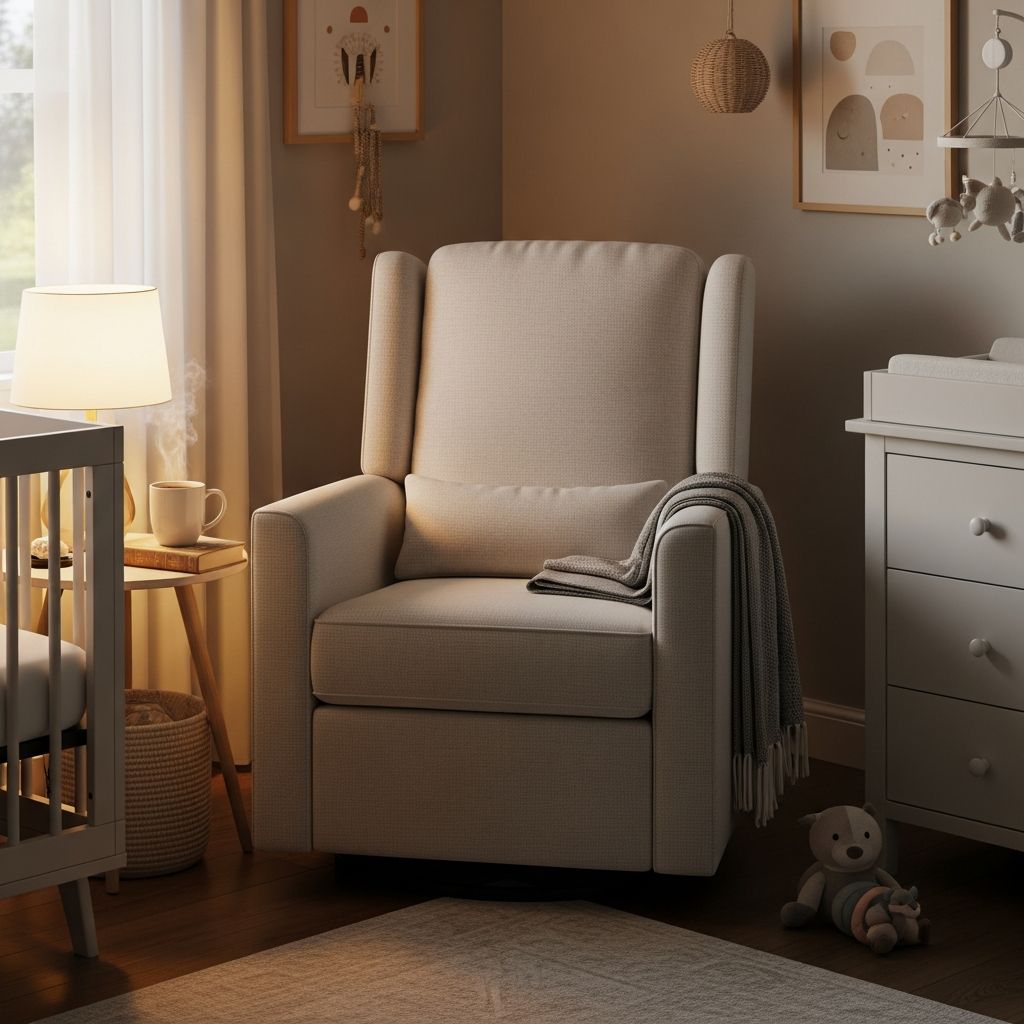
The right nursery glider can turn long nights and endless feeds into calmer, more comfortable moments with your baby. It is one of the few nursery items you will use daily for years, so it deserves careful thought.
This guide walks you through everything that matters: comfort, safety, fabrics, features, size, price, and how the chair fits into your life as your child grows.
Why a Nursery Glider Matters More Than You Think
Parents often agonize over cribs and strollers, but the chair where you sit to feed and soothe your baby is where you will spend a surprising amount of time. A well-chosen glider supports your body, calms your baby, and makes those late-night hours more manageable.
Unlike a regular armchair, a nursery glider combines gentle motion with supportive design so you can hold your baby securely without straining your back, neck, or arms.
- It becomes the go-to spot for feeding, stories, and snuggles.
- Comfortable motion helps lull your baby (and sometimes you) to sleep.
- Supportive design can reduce aches and pains from repetitive holding and feeding positions.
Glider vs Rocker vs Recliner: What Is the Difference?
Before looking at specific models, it helps to understand the main types of nursery chairs. They all aim to soothe, but the way they move and feel can be quite different.
| Type | Motion | Pros | Cons | Best For |
|---|---|---|---|---|
| Nursery glider | Moves smoothly back and forth on a fixed track. |
|
| Parents who want comfort, stability, and all-night feeding support. |
| Traditional rocker | Arched runners create a classic rocking motion. |
|
| Families who love a traditional look and may use the chair beyond the nursery. |
| Reclining glider | Glides and also leans back with a footrest. |
|
| Parents expecting long nights or those with back or leg discomfort. |
Many modern nursery chairs blend these categories, combining gliding, swiveling, and reclining functions in a single piece. Think about which motions you will actually use rather than chasing every possible feature.
Key Comfort Features You Will Appreciate at 3 A.M.
Comfort is more than just soft cushions. An ergonomic nursery glider supports your entire body while keeping your baby at a safe and easy-to-reach height.
- Seat depth and height: Your feet should rest flat on the floor, and your back should touch the backrest without feeling like you are sinking into a hole.
- Armrest height: Arms should be supported so you are not shrugging your shoulders or hunching forward while holding or feeding.
- Lumbar support: A built-in curve or a small pillow at your lower back can prevent pain during long sessions.
- Head and neck support: A slightly taller back lets you lean your head back during late-night rocking or naps.
When possible, sit in the chair the way you will actually use it: cradling an imaginary baby, holding a feeding pillow, or reading a book. If your body immediately feels tense or you cannot easily get up while holding your arms as if holding a baby, the chair is not the right fit.
Safety Considerations for Babies, Toddlers, and Parents
A nursery glider is usually safe when used correctly, but there are specific details to check before you buy and while you use it at home. Safety becomes especially important once your baby grows into a curious crawler or climbing toddler.
- Stable base: Look for a broad, sturdy base that does not wobble, wobble easily, or feel top-heavy when you sit down or stand up.
- Smooth mechanisms: The gliding and reclining motions should feel controlled and not jerk suddenly.
- No exposed pinch points: Check underneath and around the sides for moving parts that little fingers or toes could access.
- Locking function: A lock for gliding and reclining can make it safer to sit down and stand up while holding your baby.
- Clear floor space: Keep toys and small objects away from the moving area around the base and front footrest.
Once your child becomes more mobile, teach them that the chair is not a toy. Supervision, especially when siblings are around, helps prevent climbing, pushing, or swinging that could make the chair tip or trap small fingers.
Choosing the Right Fabric and Materials
Nursery gliders have to survive spills, spit-up, and sticky hands. The fabric you choose can make cleaning easier and reduce stress when messes happen.
- Performance fabrics: Many newer chairs use durable, stain-resistant textiles that wipe clean with mild soap and water.
- Removable cushions or covers: Zip-off covers or cushions make spot cleaning and occasional deep cleaning simpler.
- Color and pattern: Medium tones and subtle patterns hide minor stains and wear better than solid white or very dark colors.
- Breathability: If you live in a warm climate or tend to get hot easily, consider fabrics that feel cooler and do not trap heat.
If you are focused on reducing chemical exposure, you may prefer chairs made with low-emission foams and finishes, or models specifically labeled as having been tested for indoor air quality and material safety.
Size, Layout, and Measuring Your Space
A beautiful glider that barely fits in the room or blocks the closet is more frustrating than helpful. Measuring ahead of time avoids awkward placement and delivery-day surprises.
- Measure the footprint: Compare the chair dimensions to the available floor space, leaving room for you to walk around, swivel, or recline.
- Check wall clearance: Reclining models often need extra room behind them so they can lean back fully.
- Plan the nursing corner: Ideally, the chair sits near a small table or shelf, an outlet for a soft lamp, and within easy reach of the crib.
- Doorways and hallways: Note the narrowest doorway or hallway the chair must pass through, especially for fully assembled delivery.
Think of the glider as part of a little station that includes a side table, dim lighting, and storage for essentials. You want to create a calm, clutter-free bubble where you can sit down without moving a pile of toys first.
Essential Features Worth Paying For
Some glider features are genuinely useful; others are nice-to-have extras. Prioritize the ones that will improve your daily routine rather than chasing every upgrade.
- Swivel base: Rotating the chair lets you turn toward the crib, partner, or side table without standing up and disturbing a sleepy baby.
- Manual or power recline: A recline option is invaluable if you expect long contact naps or want to rest your legs during nighttime feeds.
- Lumbar pillow or built-in support: Extra lower-back support can make a noticeable difference, especially postpartum.
- Quiet operation: Both the gliding motion and any recline mechanisms should be as silent as possible so they do not wake your baby.
- Side pockets: Storage pockets for burp cloths, books, or a remote control keep necessities within reach.
- Supportive ottoman: A matching ottoman, especially one that glides in sync with the chair, helps you maintain a relaxed posture.
Modern high-end chairs may also include extras like built-in charging ports or adjustable headrests. Those are convenient bonuses, but comfort and safety should remain the main decision drivers.
Budgeting: Where to Save and Where to Invest
Nursery gliders range from budget-friendly basics to premium pieces priced like designer sofas. Deciding what to spend is easier when you separate must-haves from nice-to-haves.
Consider investing more if you:
- Expect to have multiple children and plan to use the chair for several years.
- Have back, hip, or shoulder issues that require better ergonomic support.
- Want a piece that will later move to the living room or playroom as a regular armchair.
You may be able to save by choosing simpler upholstery, skipping power features, or selecting a compact model without a separate ottoman. Just avoid sacrificing structural quality or essential comfort for the sake of a lower price.
Longevity: Using Your Glider Beyond the Baby Years
A thoughtfully chosen glider does not have to retire once your child leaves the crib. Many families keep their chair for story time, sibling snuggles, and quiet reading long after diapers are gone.
- Choose a neutral or versatile design that can blend into other rooms later.
- Opt for durable fabrics that can withstand years of use, not just the newborn phase.
- Consider weight limits and dimensions that allow older children to climb up next to you.
If you picture the chair as part of your home for the long term, you may feel more comfortable investing in higher-quality construction and materials from the start.
Practical Setup Tips for Your Glider Corner
Where and how you place your glider can influence how comfortable it is to use. Small adjustments create a more functional, soothing space.
- Lighting: A dimmable lamp or sconce near the chair allows late-night feeds without harsh overhead lights.
- Side table: Keep water, a phone, burp cloths, and pacifiers within easy reach.
- Soft rug: A rug under the chair can absorb sound, protect floors, and visually define the feeding corner.
- Storage basket: Use a basket or bin beside the chair for extra blankets and diapers to avoid digging through drawers mid-feed.
- Extension cord safety: If you need an outlet for a lamp or pump, secure cords out of walking paths and away from little hands.
Once the chair is in place, spend a few minutes pretending you are in the middle of a 3 a.m. feed. If anything feels out of reach, bright, or awkward, adjust now rather than later.
Sample Checklist for Comparing Nursery Gliders
Use this simple checklist when shopping online or in person to compare gliders side by side. Copy it into a note on your phone, or print it and bring it to the store.
- Seat height lets your feet rest flat on the floor.
- Back support reaches at least to the top of your shoulders.
- Armrests are at a comfortable height for feeding positions.
- Motion (glide or rock) feels smooth and quiet.
- Chair feels stable when you sit, stand, and shift your weight.
- Fabric is easy to clean and feels comfortable to the touch.
- Size fits your nursery layout with room to move around.
- Optional features (recline, swivel, ottoman, pockets) match your priorities.
- Price fits your budget while meeting your comfort and safety needs.
Scoring each chair on these points can help make the decision feel more objective when everything starts to blend together.
Frequently Asked Questions About Nursery Gliders
Do I really need a nursery glider?
No single item is mandatory, but many parents find a dedicated feeding chair extremely helpful. A glider or nursing chair offers better support and motion than a regular living room sofa, which can make a big difference when you are feeding and soothing around the clock.
When should I buy a nursery glider?
It is wise to choose and order your glider during the second trimester or early in the third, especially if you are considering a popular model, custom upholstery, or shipping delays. Having the chair assembled before the baby arrives means you can use it right away for those first feeds and snuggles.
Is a rocking chair safe for newborns?
Yes, as long as you use the chair correctly, supervise older siblings, and keep the floor around it clear. Many parents prefer gliders because the motion is more controlled and the base stays in one place, but both can be safe when used responsibly.
Should I choose a power recline glider?
Power recline can be convenient if you have limited mobility or expect to recline frequently while holding the baby. However, it also adds cost and relies on an outlet. Manual recline is often sufficient if you are comfortable operating a lever or push-back mechanism.
Can I use the glider outside the nursery later?
Absolutely. Many families move the glider to a bedroom, playroom, or living room once the nursery transitions to a big-kid room. Choosing a style and fabric that suits the rest of your home makes this transition easier.
How do I clean and maintain a nursery glider?
Follow the manufacturer’s cleaning instructions for fabric and cushions. In general, wipe up spills quickly, spot clean with mild soap and water, and vacuum crevices regularly. Check screws and moving parts occasionally to ensure everything remains secure and operates smoothly.
Making Your Final Choice
Choosing a nursery glider is ultimately about how you feel when you sit in it. The best chair is the one that supports your body, calms your baby, fits your space, and works with your daily routine.
If you imagine yourself in that chair at 3 a.m. and the picture feels calm and manageable, you have likely found the right glider for your growing family.