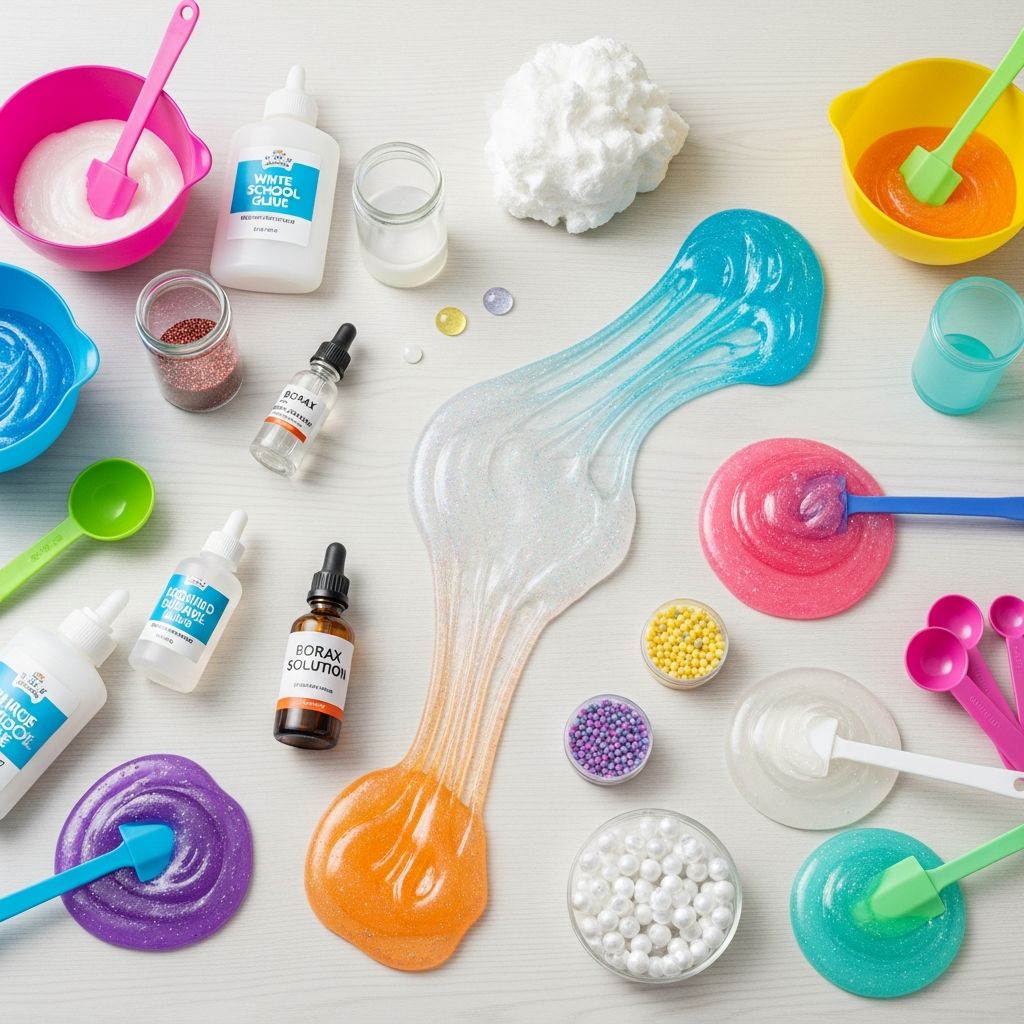
Slime making has become a beloved activity for children and adults alike, offering a tactile experience that boosts creativity, fine motor skills, and sensory development. This guide provides everything you need to create mesmerizing slime variations at home using simple, accessible ingredients. Whether you’re aiming for stretchy classics, fluffy textures, or mess-free options, these recipes ensure safe, enjoyable playtime.
Why Make Slime at Home?
Homemade slime stands out for its customizability and cost-effectiveness. Unlike store-bought versions, you control the ingredients, textures, and colors, tailoring each batch to preferences. It’s an excellent STEM activity, demonstrating concepts like polymerization—where glue’s polyvinyl acetate chains link via activators like boric acid to form a non-Newtonian fluid that behaves as both solid and liquid. Families report enhanced bonding during preparation, with kids gaining confidence through hands-on experimentation.
Essential Tools and Supplies
Before diving into recipes, gather these basics:
- Large mixing bowl (plastic preferred for easy cleanup)
- Spoon or spatula for stirring
- Measuring cups and spoons
- Food coloring or liquid watercolors
- Glitter, beads, or foam bits for add-ins
- Airtight containers for storage
- Protective surface like a placemat
These items ensure smooth sessions and minimal mess.
Classic Stretchy Slime Recipe
This foundational recipe yields about 1 cup of smooth, pullable slime perfect for beginners.
Ingredients
- 8 oz white school glue
- 1 tbsp baking soda
- 1.5-2 tbsp saline solution (must contain boric acid and sodium borate)
- Food coloring (optional)
Step-by-Step Instructions
- Pour glue into a bowl and mix in food coloring until uniform.
- Stir in baking soda thoroughly.
- Add saline solution gradually, starting with 1.5 tbsp; knead until it pulls away from the bowl.
- If sticky, add saline 0.5 tbsp at a time; knead 2-3 minutes for ideal texture.
Store in a zip-top bag for up to a week. This slime stretches without breaking and bounces slightly.
Fluffy Cloud Slime for Extra Fun
For a lighter, airier feel, incorporate shaving cream to create fluffy slime that mimics clouds.
Ingredients (per batch)
- 2/3 cup white glue
- 1/2 tsp baking soda
- 1/4 cup water
- 2-3 cups shaving cream (foam, not gel)
- 1.5 tbsp contact solution with boric acid
- Food coloring
Steps
- Combine glue, water, and baking soda in a bowl; stir well.
- Fold in shaving cream gently for fluffiness.
- Mix in coloring, then add contact solution slowly while stirring.
- Knead until fluffy and non-sticky; adjust solution if needed.
Triple the recipe for multi-color unicorn slime by dividing into batches. It holds shape better for sculpting.
Quick No-Glue Cornstarch Slime
Ideal for allergy concerns or instant play, this two-ingredient wonder is mess-free and non-toxic.
Ingredients
- 2 tbsp cornstarch
- 1.5 tbsp dish soap
Directions
- Mix cornstarch and soap in a bowl.
- Stir until combined; add soap if dry, cornstarch if wet.
- Let sit 2 minutes to set.
Perfect for toddlers, it doesn’t stick to hands and washes off easily.
Baking Soda-Enhanced Variations
Baking soda acts as a pH adjuster, aiding slime formation. Try these twists:
| Variation | Key Add-In | Texture | Best For |
|---|---|---|---|
| Sand Slime | 1 tbsp extra baking soda | Gritty, thick | Sensory bins |
| Oozy Slime | 2 tbsp warm water | Stretchy, drippy | Slow-motion play |
| Shampoo Slime | 1 tbsp shampoo + 1 cup baking soda | Creamy, bubbly | Bubble experiments |
For sand slime: Mix 4-6 oz glue with 1 tbsp each baking soda and solution.
Safe Alternatives for Young Children
For babies 9+ months, fiber-based slime avoids chemicals:
Soapy Slippery Slime
- 3 cups grated pure soap flakes (like Lux)
- 2.5 liters warm water
- Glitter/food coloring (optional)
- Dissolve soap in hot water with whisk.
- Cool slightly; add colors.
- Whip for frothy texture.
Non-toxic and washable; great for sensory tubs.
Customization Ideas to Spark Creativity
Elevate basic slime:
- Galaxy Slime: Black glue base + neon colors + glitter.
- Crunchy Slime: Add foam beads post-mixing.
- Scented Slime: Essential oils like lavender.
- Edible Slime: Marshmallow fluff + cornstarch (supervise closely).
Encourage kids to invent, fostering problem-solving.
Safety Guidelines and Best Practices
While fun, prioritize safety:
- Supervise always: Especially with small parts or solutions.
- Ingredient checks: Confirm contact solutions list boric acid; avoid if borax-sensitive.
- Skin precautions: Wash hands post-play; not for open wounds.
- Ingestion risk: Teach ‘eyes only’ rule; contact poison control if swallowed.
- Cleanup: Use plastic tools; vinegar dissolves residue.
Per CDC guidelines on household chemicals, store out of reach. Recent studies affirm borate-based slimes safe in moderation for supervised play.
Troubleshooting Common Issues
| Problem | Cause | Solution |
|---|---|---|
| Too sticky | Insufficient activator | Add solution/baking soda incrementally |
| Too stiff | Over-activated | Knead in lotion or water |
| Lumpy | Incomplete mixing | Knead longer; warm hands |
| Separating | Old batch | Discard; make fresh |
Texture perfects with practice; note ratios for repeats.
Storage and Shelf Life
Keep slime in airtight containers in cool, dry spots. Classic lasts 5-7 days; fluffy 3-5. Discard if moldy or foul-smelling. Revive sticky batches with a pinch of activator.
Educational Benefits of Slime Play
Beyond fun, slime aids development:
- Motor skills: Kneading strengthens hands.
- Science learning: Explores states of matter.
- Cognitive growth: Experimentation builds hypothesis-testing.
- Calming effect: Fidget tool for stress relief.
Integrate into homeschool: Measure for math, observe changes for chemistry.
Frequently Asked Questions
What is the easiest slime recipe?
The cornstarch-dish soap version requires just two ingredients and no cooking.
Is homemade slime safe for toddlers?
Yes, opt for no-glue, soap-based recipes; always supervise.
Why won’t my slime activate?
Ensure saline has boric acid; generic brands may fail.
Can I make slime without contact solution?
Laundry starch or diluted borax works as substitutes, but test small batches.
How do I color slime evenly?
Add color to glue first before activators thicken it.
Advanced Slime Experiments
Challenge older kids:
- Slime pH Test: Add vinegar for reactions.
- Density Layers: Mix clear glue batches, layer colors.
- Magnetic Slime: Iron oxide powder + strong magnet (adult supervision).
These extend play into science fair projects.
References
- The EASIEST Homemade Slime Recipe (3-Ingredients!) — iheartnaptime.net. Accessed 2026. https://www.iheartnaptime.net/homemade-slime/
- Homemade Easy Slime — spiritedandthensome.com. Accessed 2026. https://www.spiritedandthensome.com/homemade-easy-slime-recipe/
- Fluffy Slime Recipe — thebestideasforkids.com. Accessed 2026. https://www.thebestideasforkids.com/fluffy-slime-recipe/
- 5 Ways to Make Slime with Baking Soda — armandhammer.com. Accessed 2026. https://www.armandhammer.com/en/articles/kid-friendly-slime
- 5 Easy Slime Recipes – Non toxic for Babies and Toddlers! — theempowerededucatoronline.com. 2017-11. https://www.theempowerededucatoronline.com/2017/11/easy-slime-recipes.html/
- Non-Stick Slime with Only 2 Ingredients — glazermuseum.org. Accessed 2026. https://glazermuseum.org/nonstickslime/