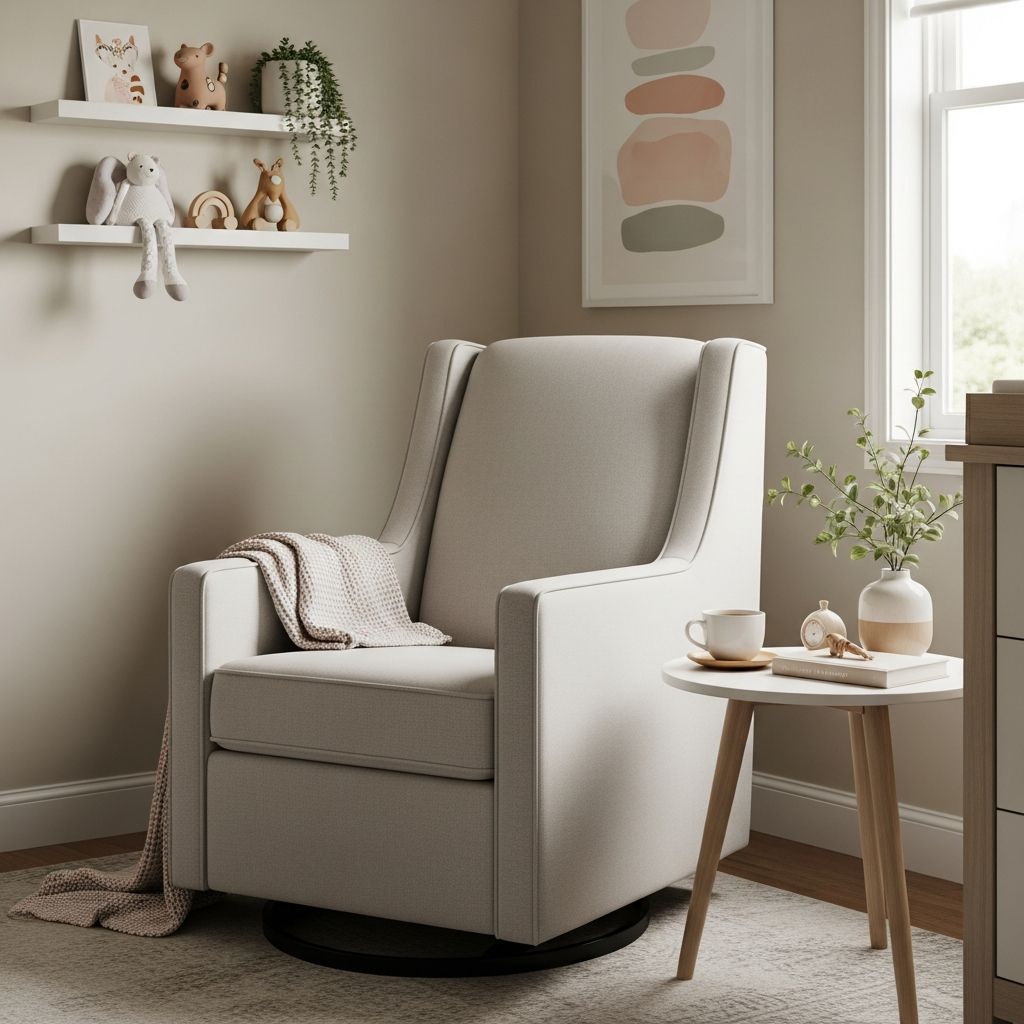
Long before baby arrives, most parents picture a cozy corner where countless feeds, cuddles, and bedtime stories will happen. At the heart of that space is usually one key piece of furniture: the nursery glider.
Choosing a glider is more than a style decision. It affects your comfort during recovery, your posture during long feeds, and even how smoothly those middle-of-the-night wake-ups go. This guide walks you through what matters most so you can pick a glider that feels like a true upgrade to daily life with a newborn.
Why a Glider Matters More Than You Think
On paper, a nursery glider is just a comfortable chair that rocks or glides. In reality, it often becomes one of the most-used pieces of baby gear in your home. New parents routinely spend hours a day feeding, soothing, or simply resting with their baby in the same spot.
Because of that, the glider you choose affects far more than aesthetics. The right model can ease back pain, protect your shoulders and neck, and give you a safe, supported place to hold your baby when you are exhausted. The wrong one can leave you sore, frustrated, and counting the minutes until you can stand up again.
Glider, Rocker, or Recliner: Understanding the Differences
Before diving into specific features, it helps to understand the basic types of chairs parents consider for the nursery. Each one moves differently and offers its own pros and cons.
| Chair Type | Motion | Key Advantages | Potential Drawbacks |
|---|---|---|---|
| Traditional rocker | Arched legs create a back-and-forth rocking motion. | Classic feel; simple construction; often lighter weight. | Can move away from the wall; less stable if older siblings climb on it. |
| Glider | Glides smoothly on a fixed track without shifting across the floor. | Gentle, controlled motion; more stable; easier to keep in one spot. | Mechanism can be heavier; usually needs more floor space. |
| Glider recliner | Gliding plus a footrest and reclining back. | Lets you rest or nap; great for long nights and recovery. | Often bulkier; may require clearance behind and in front. |
Most modern nursery chairs fall into the glider or glider-recliner category, because that combination of smooth motion and stable base tends to work best in small rooms and tight layouts.
Essential Comfort Features to Look For
A nursery glider should feel comfortable the moment you sit down, but comfort is more than a soft cushion. It is about support where your body needs it most and adjustability to match your height and build.
Seat and Back Support
When you sit fully back in the chair, your spine should feel naturally supported, not forced into an awkward curve. Your hips, lower back, and shoulders should all feel cradled rather than sinking too deeply into soft padding.
- Look for a seat that is firm enough to help you stand up easily, especially if you anticipate a C-section or have knee or hip issues.
- Check that the back is high enough to support your head when you lean back, particularly if one parent is tall.
- Make sure there is enough lumbar support in the lower back area, either built in or with an included cushion.
Armrest Height and Width
Feeding sessions are when armrests matter most. If they are too low, you will hunch your shoulders. If they are too high or narrow, your elbows have nowhere to rest, and your wrists end up strained.
- Sit in the chair and mimic holding a baby or a breastfeeding pillow to see where your arms naturally land.
- Choose armrests that are padded and wide enough to support your forearms instead of just your elbows.
- Consider how the arm height will work with bottle feeding, breastfeeding, or a combination of both.
Power vs. Manual Recline: What Really Helps at 3 a.m.
Reclining features used to be optional; now they are often the main reason parents invest in a higher-end glider. The decision usually comes down to a manual lever or handle versus a powered reclining mechanism.
Manual Reclining Chairs
Manual recliners operate with a lever, push-back motion, or pull handle. They do not require an outlet and have fewer electrical components to maintain.
- Pros: No need for a nearby plug, fewer electronics, generally more affordable.
- Cons: Can take more effort to close the footrest, which is hard if you are trying not to wake a sleeping baby.
Power Reclining Gliders
Power recliners move at the press of a button, which feels like a small luxury until you are holding a baby and cannot shift your weight easily. Many models also allow fine-tuned positions instead of only two or three preset angles.
- Pros: Smooth, controlled motion; easy to adjust with one hand; often paired with adjustable lumbar or head support.
- Cons: Requires outlet access and cord management; if power fails, you may lose the motorized adjustment until it is restored.
Fabric, Cleanability, and Everyday Durability
Babies are hard on furniture. Spit-up, milk drips, diaper leaks, and sticky toddler fingers mean your glider will inevitably face spills. The fabric you choose determines how much those mishaps matter.
Performance Fabrics and Stain Resistance
Many modern gliders use performance upholstery designed to repel liquid, resist stains, and wipe clean more easily than traditional materials. These fabrics can make the difference between a permanent stain and a quick wipe-up.
- Look for descriptions such as “stain-resistant,” “liquid-repellent,” or “performance fabric.”
- Favor tightly woven fabrics that feel smooth but durable under your hand instead of open weaves that catch crumbs and pet hair.
- Ask how the fabric should be cleaned so you know whether small messes can be handled with water and mild soap or need specialized products.
Color and Texture Choices
Beyond function, the glider’s appearance affects how well it fits in both a nursery and a future living room or playroom. Neutral tones can outlast changing decor, while textured fabrics like bouclé can add visual warmth and tactile interest for little hands.
- Neutrals like ivory, gray, and taupe blend easily into other rooms if you move the glider out of the nursery later.
- Mid-tone colors tend to hide stains better than very light or very dark upholstery.
- Consider how pet hair, dust, or lint will show on the fabric you are considering.
Space Planning: Measuring Before You Buy
Even the most comfortable chair will cause frustration if it barely fits through the door or blocks the crib. Planning your layout and measuring carefully can save you from surprise headaches on delivery day.
Key Measurements to Take
You do not need complex software to plan your nursery. A tape measure and a quick sketch go a long way.
- Measure the wall space where you expect to place the glider, including width and distance to corners or doors.
- Check the depth of the chair both upright and fully reclined, and confirm you have enough space behind and in front.
- Measure doorways, hallways, and staircases to make sure the boxed chair can be delivered to the room.
Positioning for Nighttime Use
Think about the path you will walk at night, possibly half-asleep and carrying a baby. An efficient layout minimizes obstacles and supports safety.
- Place the glider where you can reach a small side table or shelf for water, burp cloths, and your phone or monitor.
- Ensure there is a clear path from the crib to the chair without sharp corners or trip hazards.
- Consider a soft night light near the glider so you can see without fully waking your baby.
Safety and Stability Considerations
Nursery furniture must balance comfort with safety. While gliders are generally stable, it is still important to check a few structural details, especially if you have older children or pets at home.
- Look for a solid, heavy base that does not tip or wobble when you sit down or stand up.
- If the glider swivels, confirm that cords, curtains, or nearby toys cannot tangle in the mechanism.
- Check that there are no exposed sharp edges or pinch points where small fingers could get hurt.
- For power models, consider how the electrical cord will be routed so it does not become a tripping hazard.
Extra Features That Actually Make Life Easier
Once core comfort and safety boxes are checked, extra features can genuinely improve day-to-day use. Some additions are small, but together they make early parenthood more manageable.
Adjustable Head and Lumbar Support
Adjustable support is particularly valuable if multiple caregivers of different heights will use the same chair. Being able to fine-tune the headrest or lower back area reduces fatigue during long sessions.
- A movable headrest helps taller parents rest their neck without slouching.
- Adjustable lumbar zones can relieve pressure on the lower back, a common problem during pregnancy and postpartum.
Built-In Charging Ports and Pockets
Nursing or bottle-feeding often doubles as time to catch up on messages, track feeds, or read. Small tech-friendly features are surprisingly useful.
- USB or power ports built into the chair keep your phone or tablet charged without snaking cords across the room.
- Side pockets offer a home for pacifiers, burp cloths, and small toys, so they are always within easy reach.
Budgeting for a Glider and Getting the Most Value
Gliders range widely in price, from simple, budget-friendly models to premium chairs with advanced features. Deciding what is worth paying for starts with how you plan to use the chair.
- If you expect to spend many hours a day in the glider, it may deserve a larger share of your nursery budget than decorative pieces.
- Higher initial cost can be justified if the chair’s design and durability allow it to transition to a living room or office after the baby stage.
- Consider warranties, return policies, and delivery options, especially for heavier models that may be difficult to move alone.
Trying Before You Commit: What to Test in Person
If possible, sit in several gliders before making a decision. Even when chairs look similar on screen, they can feel very different in person.
- Check how easy it is to sit down and stand up while imagining a baby in your arms.
- Test the glide motion at both slow and faster speeds to ensure it feels smooth and controlled.
- If the chair reclines, move between positions while picturing yourself half-asleep in the middle of the night.
- Pay attention to noise; a loud click or hum can be distracting when you are trying to keep a baby drowsy.
Frequently Asked Questions About Nursery Gliders
Do I really need a glider, or will any chair work?
Any sturdy, supportive chair is better than none, but a glider offers motion and ergonomics designed around feeding and soothing. That motion can be a powerful tool when you are trying to calm a fussy baby or ease them back to sleep without pacing the room.
Is a power recliner safe around young children?
Most power gliders are designed with safety in mind, but you still need to supervise curious toddlers. Keep an eye on moving parts, route the power cord securely, and show older children that the chair is not a toy.
What if I have very limited space?
Look for compact gliders with a smaller footprint and check the distance required from the wall when reclined. In small nurseries, placing the glider in a corner at an angle often frees up extra floor space for storage or play.
How long will I actually use a nursery glider?
Many families use their glider daily for the first year and then continue using it for toddler bedtime, stories, and quiet time. Choosing a style and fabric that suits the rest of your home makes it easier to repurpose the chair once the nursery stage is over.
Can a glider help with postpartum recovery?
A well-designed glider can certainly support recovery by reducing strain on sore muscles and surgical sites. Features like gentle recline, ergonomic back support, and an easy-to-stand-from seat are especially valuable if you are healing from a C-section or dealing with back pain.
Bringing It All Together
The best nursery glider for your family is the one that fits your body, your space, and your daily rhythm with a new baby. Prioritizing support, adjustability, and cleanability will serve you far better than focusing on looks alone.
Think of this chair as an investment not just in your nursery, but in your own comfort and well-being during a season when rest is rare and small conveniences matter a great deal. When you find a glider that truly supports you, those long nights become a little softer and those everyday moments with your baby become easier to savor.