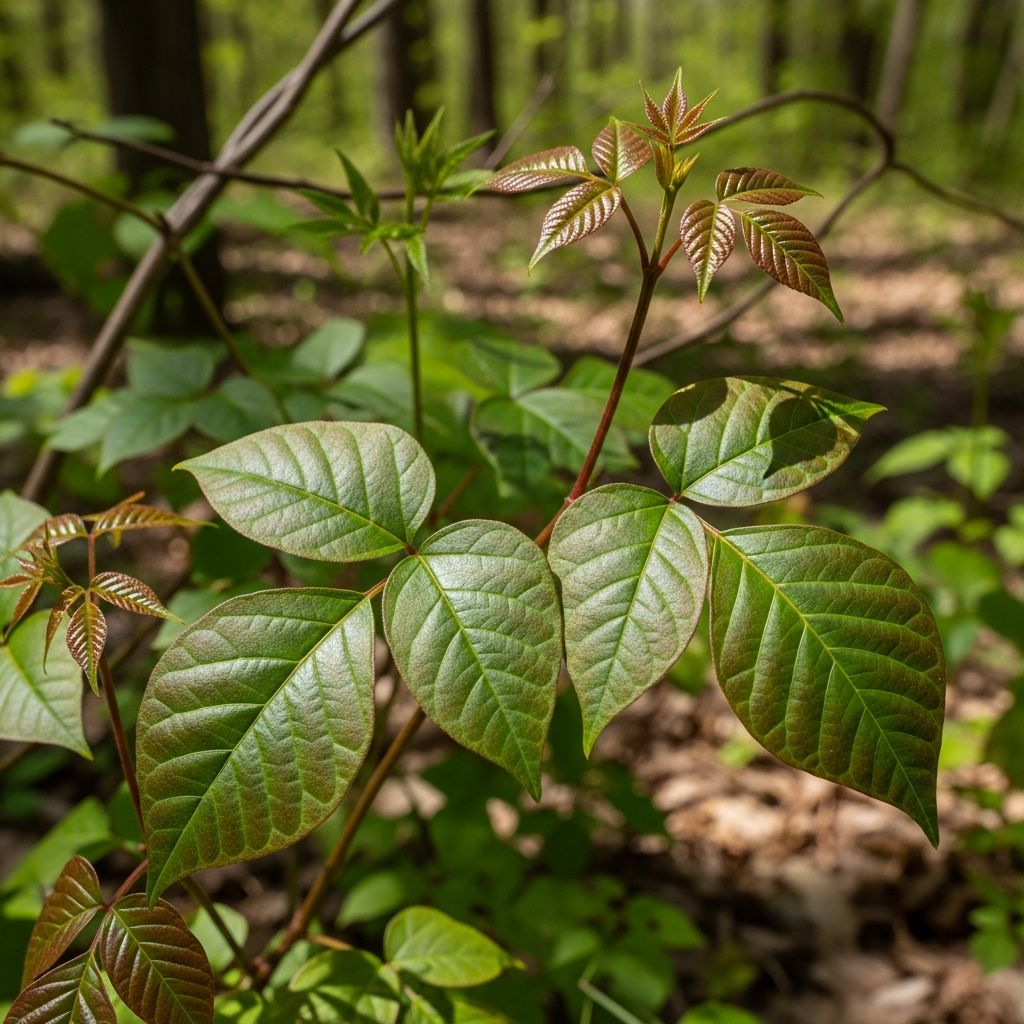
Poison ivy is a common plant found across much of North America, capable of causing severe skin irritation upon contact due to its oily resin called urushiol. This guide provides detailed strategies for recognizing it in various forms, differentiating it from similar plants, and implementing safety measures for families.
Understanding the Plant’s Basic Characteristics
The hallmark feature of poison ivy is its compound leaves arranged in groups of three leaflets, often summarized by the rhyme ‘leaves of three, let it be.’ This structure remains consistent regardless of the plant’s growth stage or location.
- Middle leaflet typically attaches via a noticeably longer stalk than the side ones, creating an asymmetrical appearance.
- Leaflet edges vary from smooth to lobed or slightly toothed, sometimes resembling a mitten shape.
- Leaves display seasonal color changes: reddish in spring, green in summer, and vibrant red or orange in fall.
Stems often show reddish hues, particularly in younger growth, and the plant emits no distinctive odor when crushed, unlike some edible berries.
Diverse Growth Forms in Natural Settings
Poison ivy adapts to multiple habits, making it tricky to spot in yards, forests, or along trails. It thrives in sunny edges, disturbed soils, and near water sources.
| Growth Type | Description | Common Locations |
|---|---|---|
| Climbing Vine | Thick, woody stems up to 2 inches in diameter with aerial rootlets giving a ‘hairy’ texture; climbs trees or structures. | Forest edges, fences, tree trunks. |
| Ground Cover | Trailing stems forming mats up to several feet wide; low-growing without support. | Lawns, paths, open fields. |
| Upright Shrub | Erect stems reaching 3-4 feet tall; bush-like without climbing. | Woodlands, roadsides. |
Recognizing these forms helps in early detection during family hikes or gardening.
Seasonal Clues for Reliable Identification
Throughout the year, poison ivy offers distinct markers beyond leaves. In spring, new leaves emerge shiny and reddish; summer brings glossy green foliage; autumn showcases fiery colors; winter reveals bare vines with white berries.
- Spring: Tender red leaves with reddish stems.
- Summer: Three shiny leaflets, possible white flower clusters.
- Fall: Red, yellow, or orange hues.
- Winter: Grayish vines with persistent waxy white berries in clusters.
Berries, about pea-sized and matte white or yellowish, persist into winter, aiding identification when leaves are absent.
Distinguishing Poison Ivy from Common Impostors
Several harmless plants mimic poison ivy’s trifoliate leaves, leading to unnecessary avoidance or risky contact. Key differentiators include leaflet count, stem arrangement, and fruit color.
| Plant | Key Differences from Poison Ivy | Leaflets |
|---|---|---|
| Virginia Creeper | Five leaflets from one point; tendrils on vines; blue-black berries. | 5 |
| Boxelder Seedling | Opposite leaves; silvery-blue waxy stems; grows into tree. | 3 (opposite) |
| Fragrant Sumac | Shorter central stalk; red fuzzy fruits; opposite leaves. | 3 |
| Black Raspberry | Prickly stems; whitish leaf undersides; finer teeth. | 3-5 |
| Boston Ivy | Five leaflets usually; no urushiol; urban climber. | 3-5 |
For instance, Virginia creeper’s extra leaflets and tendrils make it safe for casual contact, while boxelder’s opposite arrangement contrasts poison ivy’s alternate pattern.
The Science Behind the Itch: Urushiol Effects
Urushiol, a clear oil in all plant parts including roots and stems, triggers an allergic reaction in about 85% of people. It penetrates skin quickly, binding to proteins and provoking T-cell immune responses, leading to rashes 12 hours to days later.
Symptoms include red lines or streaks, intense itching, blisters, and swelling, lasting 1-3 weeks. Severity increases with exposure amount and sensitivity; children may react more dramatically due to thinner skin.
Safe Removal Techniques for Homeowners
Eliminating poison ivy requires caution to avoid spreading urushiol, which remains active in dead plants and smoke. Protective gear is essential.
- Wear long sleeves, pants, gloves, eye protection, and boots.
- For small patches, hand-pull when soil is moist, bagging roots immediately.
- Larger vines: Cut stems at base with shears, avoiding saws that aerosolize oil.
- Apply glyphosate herbicide to cut surfaces in late summer for systemic kill.
- Wash tools, clothes, and pets with degreasing soap like Dawn.
Professionals handle mature infestations; never burn, as smoke causes severe lung irritation.
Immediate Response to Potential Exposure
If contact occurs, act swiftly: rinse with lukewarm soapy water within 30 minutes to remove oil. Cool compresses and calamine lotion soothe; oral antihistamines or hydrocortisone cream help mild cases. Seek medical care for facial swelling, widespread blisters, or fever.
For children, monitor closely and trim nails to prevent spreading. Jewelweed sap offers a natural field remedy.
Prevention Strategies for Families and Pets
Educate kids on ‘leaves of three’ and teach trail avoidance. Mow lawns regularly, mulch bare areas, and supervise play. Pets rarely react but can transfer oil; bathe them promptly post-exposure.
Gardening parents should scout yards seasonally, using barriers like fabric under mulch to suppress growth.
Frequently Asked Questions
Can poison ivy affect everyone the same way?
No, about 15% of people are immune initially, though sensitivity can develop. Children often show stronger reactions.
Is poison ivy only dangerous in summer?
All parts contain urushiol year-round, even bare winter vines.
How do I identify it without leaves?
Look for hairy aerial roots on vines and clustered white berries.
What’s the difference between poison ivy and poison oak?
Poison oak has more lobed leaves and grows mainly as a shrub; both have three leaflets but oak edges are rounder.
Can I eat plants that look like poison ivy?
Avoid assuming edibility; confirm with multiple traits, as some berries are toxic.
References
- Poison Ivy ID — Missouri Department of Conservation. 2023-10-15. https://mdc.mo.gov/discover-nature/field-guide/poison-ivy
- Identifying Poison Ivy — Mississippi State University Extension Service. 2022-06-01. https://extension.msstate.edu/publications/identifying-poison-ivy
- How to Recognize Poison Ivy — Mass Audubon. 2024-05-20. https://www.massaudubon.org/nature-wildlife/plants/poison-ivy
- How to Identify Poison Ivy — University of Maryland Extension. 2023-08-12. https://extension.umd.edu/resource/how-identify-poison-ivy
- Poison Ivy, Poison Oak and Similar Plant Identification — Oklahoma State University Extension. 2023-04-10. https://extension.okstate.edu/fact-sheets/poison-ivy-poison-oak-and-similar-plant-identification.html
- Tips to Identify Poison Ivy — American Museum of Natural History. 2021-07-22. https://www.amnh.org/learn-teach/curriculum-collections/biodiversity-counts/plant-identification/tips-to-identify-poison-ivy