Kids’ scooters are more than just toys—they build balance, coordination, confidence, and a love of active play. Choosing the right one, however, can feel overwhelming with so many wheel layouts, brake types, and age labels on the market.
This guide walks you through the essentials: how scooters differ by age and skill level, which safety features truly matter, how to size a scooter correctly, and what to consider before you buy.
Why Scooters Are Great for Growing Bodies
Doctors and health organizations consistently recommend active play as a key part of healthy childhood development. Regular physical activity helps build strong bones and muscles, supports heart health, and improves coordination and balance.
- Balance and coordination: Standing on a moving deck and steering with the body engages core muscles and teaches weight shifting.
- Motor skills: Pushing off, braking, and turning fine-tune both gross and fine motor skills.
- Confidence: Kids gain independence as they master new skills and speeds.
- Active transportation: For older kids, scooters can be an easy way to get to school or nearby activities.
When paired with a helmet and simple safety rules, scootering can be a fun way to meet daily movement recommendations from organizations such as the World Health Organization and U.S. health agencies.
Types of Kids’ Scooters Explained
Not all scooters are built for the same age or purpose. Understanding the main categories helps you narrow options quickly.
Three-Wheel Scooters (Best for Toddlers & New Riders)
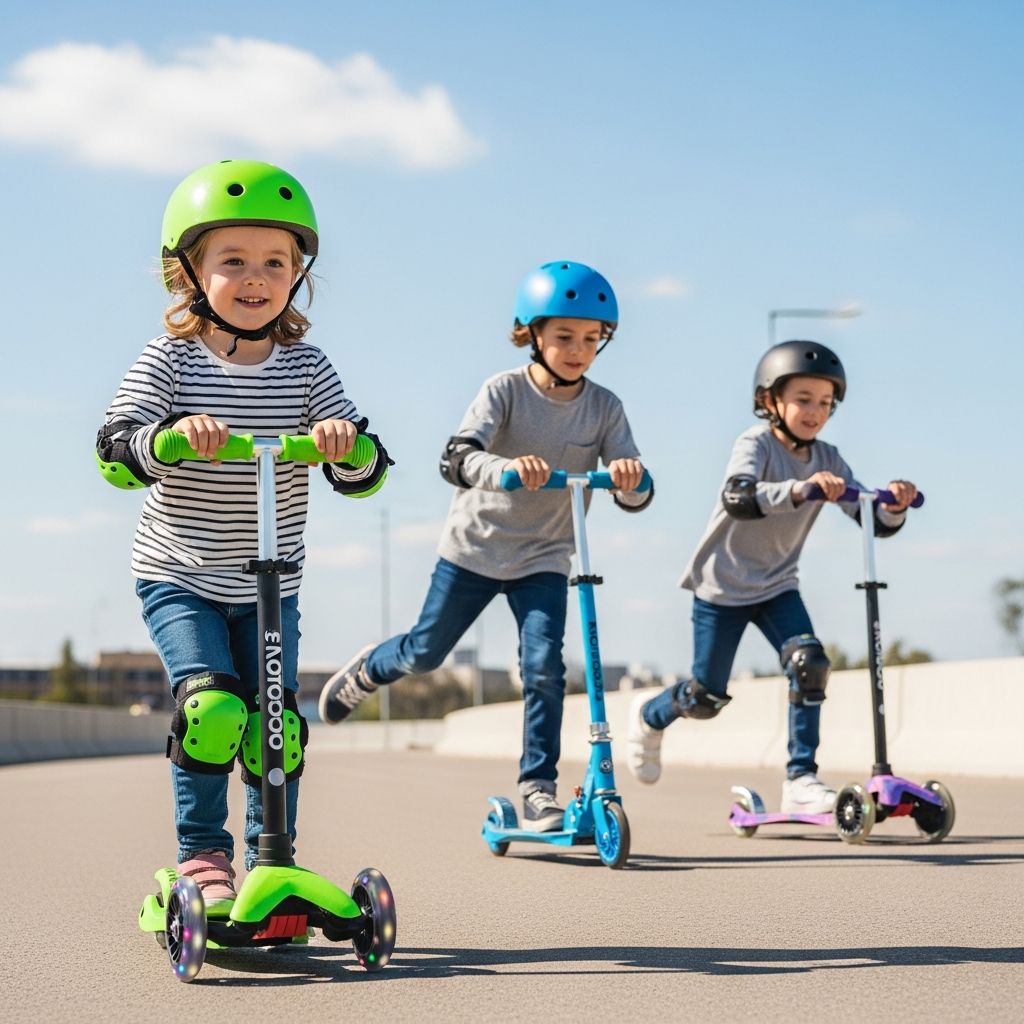
Three-wheel designs usually have two wheels in front and one in back. They provide more stability for children who are still mastering balance.
- Typical age range: About 2–5 years (check each model’s rating).
- Steering: Often uses a “lean-to-steer” system—kids shift weight instead of twisting handlebars.
- Pros: Very stable, forgiving of wobbles, confidence-building.
- Consider if: Your child is just starting or is a bit cautious about riding.
Two-Wheel Kick Scooters (For School-Age Kids)
Two-wheel scooters are the classic style most parents recognize. They require better balance but open up more speed and maneuverability.
- Typical age range: About 5–12 years (varies with height and skill).
- Steering: Handlebar turns like a bicycle.
- Pros: Faster, usually more compact and often foldable.
- Consider if: Your child can balance on one foot, steer a bike, or has outgrown their three-wheel scooter.
Electric Scooters (For Older, Responsible Riders)
Electric scooters add a motor to the mix. They can be fun and practical but also introduce more safety and supervision needs.
- Typical age range: Around 8+ depending on speed and local rules.
- Speed: Many kids’ electric models top out around 8–10 mph to keep things manageable.
- Pros: Great for longer distances and older kids who want a “big kid” ride.
- Consider if: Your child follows rules well and understands road/sidewalk safety.
Always check your local regulations before buying an electric scooter; some areas have minimum ages, helmet requirements, or restrictions on where they can be used.
Convertible and Grow-With-Me Scooters
Some scooters include removable seats, or can switch from three wheels to two as kids grow.
- Best for: Families who want one scooter to last several stages.
- Features: Adjustable handlebars, changeable deck height, or add-on seats.
- Watch for: Weight limits and the highest handlebar setting to ensure a long usable life.
Key Features Parents Should Evaluate
Beyond the number of wheels, look closely at features that affect safety, comfort, and how long the scooter will be usable.
1. Size and Fit
A well-fitted scooter is easier to control and safer to ride.
- Handlebar height: Ideally around waist to mid-chest when your child stands on the deck.
- Adjustability: Telescoping handlebars help the scooter grow with your child.
- Deck length and width: There should be room for both feet without feeling cramped, but not so long it becomes hard to turn.
- Weight limit: Ensure the maximum rider weight covers your child now and for at least a couple of years.
2. Wheels and Ride Quality
Wheel size and material change how the scooter feels on different surfaces.
- Smaller wheels: Lighter and nimble but more affected by cracks or gravel.
- Larger wheels: Roll more smoothly over bumps and rougher pavement.
- Hard PU wheels: Common on kids’ scooters; low maintenance and fine for sidewalks.
- Air-filled (pneumatic) wheels: Softer ride but can get flats and require more care.
3. Brake Style
Stopping power is crucial. Help your child practice braking in a safe area before any street or path riding.
- Rear fender (foot) brake: Most common on kick scooters; kids press down on the back fender to slow the wheel.
- Hand brake: Some models, especially electric scooters, add a bicycle-style hand brake for extra control.
- Electronic brake (electric scooters): Activated via handlebar controls; often paired with a foot brake for redundancy.
4. Deck Height and Stability
Deck height—the distance between the deck and the ground—affects both comfort and control.
- Low deck: Easier to push because kids don’t have to lift their kicking leg very high.
- Higher deck: Offers more clearance but may feel less stable for new riders.
- Non-slip surface: Look for textured or rubberized decks that help prevent slipping when shoes are dusty or wet.
5. Folding and Portability
For families on the go, a compact scooter can make life easier.
- Folding mechanism: Helpful for carrying up stairs, storing in the car, or hanging in a garage.
- Scooter weight: Lighter models are easier for kids to pick up and for adults to carry when a child is done riding.
6. Extra Kid-Pleasing Features
While not essential, a few fun touches can make your child more excited to use their scooter.
- Light-up wheels or decks for visibility and fun at dusk.
- Color options that match your child’s personality.
- Removable baskets or bags on some preschool scooters for toys and treasures.
Safety First: What Parents Need to Know
Falls are a normal part of learning, but you can reduce the risk of serious injury with a few simple steps. Public health agencies emphasize using helmets, especially to prevent head injuries, which are a major concern in wheeled sports.
Essential Protective Gear
- Helmet (non-negotiable): Choose a helmet meeting a recognized safety standard (for example, CPSC in the U.S.) and ensure it fits snugly and is worn level on the head.
- Wrist guards and knee/elbow pads: Particularly helpful for new riders and kids who like to go fast.
- Closed-toe shoes: Sneakers with good grip protect toes and help kids control the deck.
Safe Riding Habits
- Practice starting, stopping, and turning on a flat, traffic-free surface.
- Teach kids to slow down and look carefully at driveways, intersections, and blind corners.
- Set clear rules about where scooters can and cannot be ridden (for example, not on busy streets).
- Supervise younger children closely until they show consistent control and rule-following.
Matching a Scooter to Your Child’s Age and Skill
Use age as a rough guide, but always consider your child’s height, coordination, and comfort level.
| Child Stage | Approx. Age | Suggested Scooter Type | Key Priorities |
|---|---|---|---|
| Toddler starter | 2–3 years | Stable 3-wheel with lean-to-steer | Stability, wide deck, very simple controls |
| Preschool rider | 3–5 years | 3-wheel or beginner 2-wheel (for advanced kids) | Light weight, easy braking, adjustable handlebars |
| Grade-school explorer | 5–9 years | 2-wheel kick scooter | Durability, smooth wheels, foldability for transport |
| Older kid / tween | 8–12+ years | Sturdy 2-wheel or low-speed electric (if allowed) | Weight capacity, stronger frame, reliable brakes |
Practical Buying Tips for Parents
Once you know the type of scooter your child needs, a few extra checks can help you choose a model that will last.
Check Reviews for Durability
Look for patterns in parent reviews about:
- How the scooter holds up after months of daily use.
- Whether folding mechanisms stay secure.
- Any recurring issues with wheels or brakes needing replacement.
Compare Value, Not Just Price
The cheapest scooter may cost more in the long run if it needs replacing quickly. Consider:
- Whether it has adjustable handlebars for multiple years of use.
- If common wear parts (wheels, grips) are easy to replace.
- Warranty information and the brand’s reputation for customer service.
Think About Where Your Child Will Ride
- Mostly smooth sidewalks: Standard wheel sizes are usually fine.
- Rougher paths or older pavement: Slightly larger wheels and a sturdier deck can improve comfort.
- Short commutes: For older kids traveling to school, consider reflectors, lights, and a bell or horn.
Frequently Asked Questions (FAQs)
What is the best age for a child’s first scooter?
Many children are ready for a stable three-wheel scooter around 2–3 years old, provided they can walk steadily and follow basic safety directions. Always use a helmet from the very first ride.
How do I know if a scooter is the right height?Have your child stand on the deck and hold the grips. The handlebars should be roughly at waist to mid-chest level. If they are much higher, steering gets awkward; much lower can cause slouching and poor control. Adjustable handlebars help you fine-tune the fit.
Q: Are electric scooters safe for kids?
Electric scooters can be safe when matched to an appropriate age, speed, and environment, and when children wear protective gear and follow clear rules. Choose kid-focused models with modest top speeds, supervise closely at first, and check local regulations about where and at what age they can be used.
Does my child really need a helmet if we stay on the sidewalk?
Yes. Falls can happen on any surface, and head injuries are a major concern in wheeled sports. Health and safety agencies strongly recommend helmets for bikes, scooters, and similar activities, even at low speeds.
What’s the difference between a stunt scooter and a regular scooter?
Stunt or “trick” scooters are designed for skateparks and jumps. They usually have a fixed (non-folding) deck and reinforced parts to handle hard landings. Standard scooters are built for everyday cruising and may fold or be lighter; they are not intended for tricks off ramps or rails.
How can I tell if my child is ready to upgrade from three wheels to two?
Signs of readiness include strong balance on their current scooter, good control when turning and stopping, and comfort riding at slightly higher speeds. If your child can balance on one foot easily and steers a bicycle confidently, they may be ready to try a two-wheel scooter with adult supervision.
References
- Physical Activity Facts — Centers for Disease Control and Prevention (CDC). 2022-10-07. https://www.cdc.gov/physical-activity-basics/benefits/index.html
- Physical activity and young people — World Health Organization. 2022-03-01. https://www.who.int/news-room/fact-sheets/detail/physical-activity
- Choosing the Right Scooter for Your Child — Car and Driver (Kids/Electric Scooter Buying Guidance, derived from tested scooter review content). 2024-06-15. https://www.caranddriver.com/car-accessories/g62530668/best-electric-scooters-tested/
- Heads Up: Helmets — Centers for Disease Control and Prevention (CDC). 2023-07-28. https://www.cdc.gov/headsup/helmets/index.html