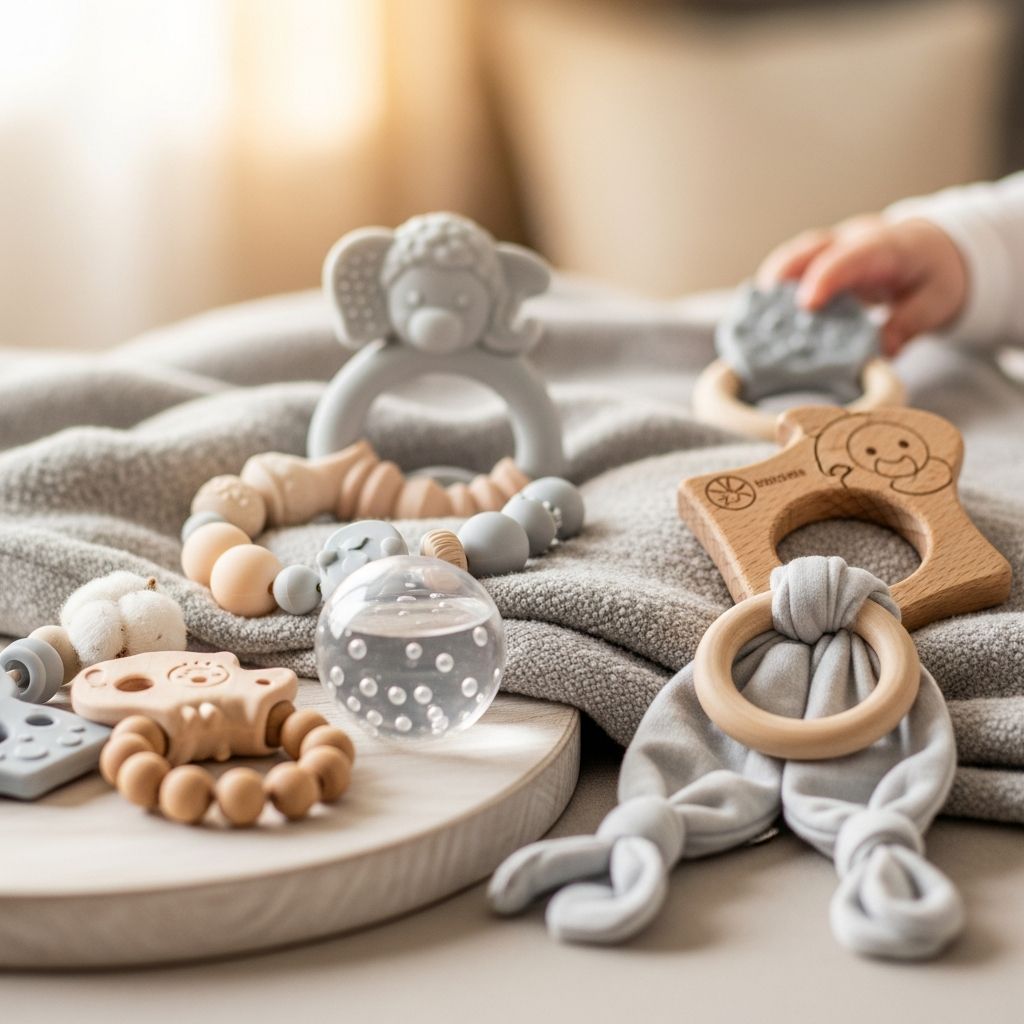
Teething is one of the first real discomforts your baby will experience, and for many families it can mean sleepless nights, lots of drool, and a very frustrated little one. A thoughtfully chosen teether can give your baby a safe outlet to chew, relieve pressure on sore gums, and even support fine motor and sensory development.
This guide walks through the main types of teethers, what to look for in safer materials, how to match a teether to your baby’s age and stage, and practical tips for using and cleaning these everyday essentials. The goal is to help you feel confident choosing teethers that work for your baby and fit your family’s lifestyle.
Why Babies Need Teethers
Teething usually starts sometime between 4 and 7 months, but some babies begin earlier and some much later. As teeth push toward the surface, the gums feel tight, itchy, and sore, which creates a strong urge to bite and chew. A well-designed teether gives your baby something safer than random household objects to put in their mouth.
Beyond comfort, chewing helps babies build jaw strength, hand–mouth coordination, and sensory awareness. Different textures, shapes, and resistance levels can help your child explore how their mouth works, which lays groundwork for later skills like eating solids and forming sounds.
Major Types of Baby Teethers
Teethers come in many shapes and styles, but most fall into a few broad categories. Understanding these can simplify your decision.
Classic Handheld Teethers
These are simple shapes designed for small hands—rings, loops, animals, fruits, or geometric forms. They are typically made from silicone, natural rubber, or wood and may have ridges or bumps for extra gum massage.
- Great first option for most babies because they are easy to grip.
- Often lightweight and compact, so you can toss one in every diaper bag or room.
Textured Teething Toys
Some teethers are designed to double as toys, with interesting shapes, textures, and sometimes gentle rattles or crinkles. These give your baby something fun to explore while also providing areas to chew.
- Multiple textures (smooth, ribbed, knobby) can reach different parts of the gum line.
- Good for older babies who are eager to play and chew at the same time.
Teething Rings and Bracelets
Teething rings can be worn (by the caregiver) as bracelets or used as standalone toys. Bracelets and necklaces for adults are particularly useful on outings, because you always know where the teether is.
- Convenient for babywearing or nursing parents who want a safe item within easy reach.
- Make sure any wearable teether is designed specifically for adults to wear and is not left on the baby unattended.
Teething Mitts and Wrist Teethers
Some babies constantly gnaw on their hands. Teething mitts and wrist-style teethers attach to the baby’s hand or wrist so that they can gnaw without needing to hold a toy perfectly.
- Helpful for younger babies who have not yet mastered their grip.
- Look for breathable fabrics and secure closures that are not too tight.
Teething Keys and Multi-Piece Sets
Key-style teethers or linked rings give babies multiple pieces to chew, often with different textures or thicknesses. These can be especially engaging for curious babies who like to manipulate and compare objects.
- Offer variety in texture and shape in one toy.
- Check that pieces cannot detach and that the set is free of sharp edges.
Silicone Teething Spoons and Training Tools
Some teethers double as first utensils or oral motor tools, shaped like spoons or brushes. They are soft enough for gums but introduce your baby to the concept of bringing a utensil to the mouth.
- Great bridge between early teething and beginning solids.
- Choose designs that have built-in choke guards or wide handles to prevent over-insertion.
Teether Materials: Pros and Cons
The material of a teether matters for both safety and function. Here is a quick overview of commonly used materials and their typical characteristics.
| Material | Main Benefits | Potential Drawbacks | Best For |
|---|---|---|---|
| Food-grade silicone | Soft yet durable, non-porous, easy to clean, available in many textures and colors. | Can attract lint and hair if left on fabric; low-quality versions may not meet safety standards. | Daily use, refrigerators, multi-textured teethers. |
| Natural rubber | Soft and springy, often from renewable sources, pleasant resistance for chewing. | Some babies have latex sensitivity; may age or discolor over time; needs gentle cleaning. | Babies who like a squishy, flexible chew. |
| Untreated hardwood (e.g., beech) | Firm pressure for sore gums, very durable, usually minimal ingredients. | Harder on gums; must be kept dry between uses; can crack if soaked or boiled. | Older babies or those who prefer a firm bite. |
| Fabric + silicone combos | Soft for snuggling plus chewy edges; interesting textures and sounds. | Fabric needs frequent washing; not ideal for constant drool without drying time. | Teething comfort plus sensory play or lovey-style toys. |
Safety Checklist Before You Buy
Safety is more important than any cute design. Use this checklist while you browse to narrow down your options.
- Check age recommendations: Choose items labeled for your baby’s age range, especially under 6 months.
- Look for clear material information: Prefer teethers that specify food-grade silicone, natural rubber, or known woods and that state they are free from BPA, PVC, and phthalates.
- Avoid small detachable parts: No beads, buttons, or pieces that could break off and fit inside a small parts test cylinder.
- Skip liquid-filled teethers that can leak: If you do use them, inspect frequently and discard at any sign of weakness.
- Watch out for sharp seams or edges: Run your fingers along all surfaces before giving a new item to your baby.
- Choose reputable brands and sellers: Look for clear contact information, safety testing claims, and consistent reviews.
Matching Teethers to Age and Stage
Babies’ needs change quickly in the first year, and the same applies to their ideal teether. While every child is different, these general guidelines can help you choose what to offer when.
Early Signs (Around 3–6 Months)
At this stage babies are just learning to grab and bring items to their mouths. Gums may look slightly swollen, and babies drool more and chew on their fists.
- Lightweight silicone rings or slim, easy-to-grip shapes work best.
- Mitts or wrist teethers help babies who cannot yet hold toys consistently.
Active Teething (Around 6–12 Months)
Front teeth are emerging or already in, and molars may start to move under the surface. Babies at this age are more coordinated and eager to explore.
- Textured toys, keys, and multi-surface designs help reach different areas of the mouth.
- Teething spoons or soft training brushes begin to introduce the idea of oral care.
Toddlers and Molars (12 Months and Beyond)
Back teeth require more pressure to feel relief, and toddlers may prefer stronger chewing options. They also move around more, so any teether needs to withstand drops and rough handling.
- More robust silicone or wood teethers can offer firmer resistance.
- Look for simple shapes that are easier to clean and harder to damage.
Practical Teether Features Worth Considering
Once safety and material are covered, practical design details can make daily use and cleaning much easier. These small features often determine which toy becomes the family favorite.
- Size and shape: The teether should fit easily in your baby’s hand and reach the sore parts of their gums without being long enough to trigger a gag reflex.
- Weight: Very heavy toys are frustrating for younger babies, who will drop them constantly.
- Gripping points: Holes, loops, or textured handles help tiny fingers hold on.
- Ease of cleaning: Avoid complicated crevices that trap drool and food; smooth transitions between parts simplify scrubbing.
- Attachment options: A hole for a pacifier clip or strap can keep the teether from hitting the floor when you are on the go.
- Color and contrast: High-contrast colors or simple shapes can be easier for young babies to visually track and reach for.
How to Clean and Care for Baby Teethers
Anything that spends time in a baby’s mouth needs regular cleaning. The exact method depends on the material and manufacturer guidelines, but a few universal principles apply.
- Rinse new teethers before first use with warm, soapy water and let them air-dry completely.
- For silicone-only toys, many families prefer dishwasher-safe options for easy sanitizing; always confirm this on the packaging.
- Wooden teethers should not be soaked or boiled, as this can cause warping and cracks. Instead, wipe them down and dry them promptly.
- Inspect regularly for cracks, tears, or changes in texture; discard any item that looks damaged or feels sticky despite cleaning.
- Store clean teethers in a dry container or drawer rather than loose in the bottom of a bag where lint and dust collect.
Using Cold for Extra Relief
Cool temperatures can provide numbing relief for sore gums, which is why many families like to chill teethers. However, there are safe and unsafe ways to do this.
- Chill teethers in the refrigerator, not the freezer; rock-hard frozen items can hurt delicate gums.
- Always dry the surface after refrigeration to make it less slippery for your baby’s hands.
- Do not improvise with household items like frozen spoons or food bags unless you can ensure they are clean, safe, and supervised at all times.
Common Mistakes to Avoid
With so many products on the market it is easy to feel overwhelmed. Steering clear of a few common pitfalls will keep things simpler and safer.
- Buying too many similar teethers at once instead of testing one or two types to see what your baby prefers.
- Relying on necklaces or bracelets made for babies to wear; these can pose strangulation or choking risks and are not recommended for unsupervised use.
- Using medicated gels on teethers without discussing them with a healthcare provider.
- Ignoring wear and tear, especially tiny cracks where saliva and bacteria can collect.
Frequently Asked Questions About Teethers
How many teethers does my baby really need?
Most families do fine with a small rotation rather than a large collection. Two or three different styles—a simple ring, a textured toy, and perhaps a cold-friendly option—usually cover most situations. Having a few allows you to keep one in the diaper bag, one in the crib or play area, and one drying after cleaning.
Are plastic teethers safe?
Some teethers are made from plastics that are labeled free from common chemicals of concern, but many caregivers prefer alternatives like food-grade silicone, natural rubber, or wood to minimize exposure to questionable additives. If you do choose plastic, look for transparent information about materials and avoid any item with strong chemical smells or unclear labeling.
Can my baby sleep with a teether?
For safety, it is best to keep the sleep space as clear as possible, especially for young infants. Teethers are designed for supervised use. If your baby falls asleep with a toy or teether, gently remove it once they are settled, and return it when they wake and play again.
What if my baby just wants household objects instead?
Many babies are fascinated by remote controls, keys, and phones, but these items are not designed for mouthing and can contain batteries, sharp edges, or heavy metals. Offering a few interesting teethers with different textures and shapes can redirect that curiosity to safer options. Over time, your baby will learn to associate their own toys with comfort and relief.
Do I need organic or fully natural teethers?
Organic or fully natural materials can be a nice bonus, especially for families focused on reducing synthetic exposures, but safety and design quality matter more than any one label. A well-made food-grade silicone teether can be just as safe and effective as a wooden one, provided both are tested and used according to instructions.
When should I replace a teether?
Replace any teether as soon as you notice cracks, tears, sticky surfaces, or changes in shape. Some families also choose to refresh teethers after intense teething phases or when a younger sibling comes along, especially if earlier toys show significant wear.
Final Thoughts: Focus on Comfort and Simplicity
The best teether for your baby is the one that feels good on their gums, fits safely in their mouth and hand, and is easy for you to keep clean. You do not need the most elaborate or expensive design for your child to feel relief. Start with a couple of simple, well-made options, observe what your baby enjoys, and let those real-world experiences guide any future purchases.