Baby play gyms are more than colorful toys scattered on a mat—they are small developmental hubs where your baby practices essential skills in a safe, cozy space. Thoughtfully choosing one can make everyday play more meaningful, less stressful, and a lot more fun for both you and your little one.
This guide walks through why play gyms matter, what features are worth paying for, how to match a gym to your baby’s age and temperament, and practical tips to keep things safe, clean, and engaging.
What Is a Baby Play Gym?
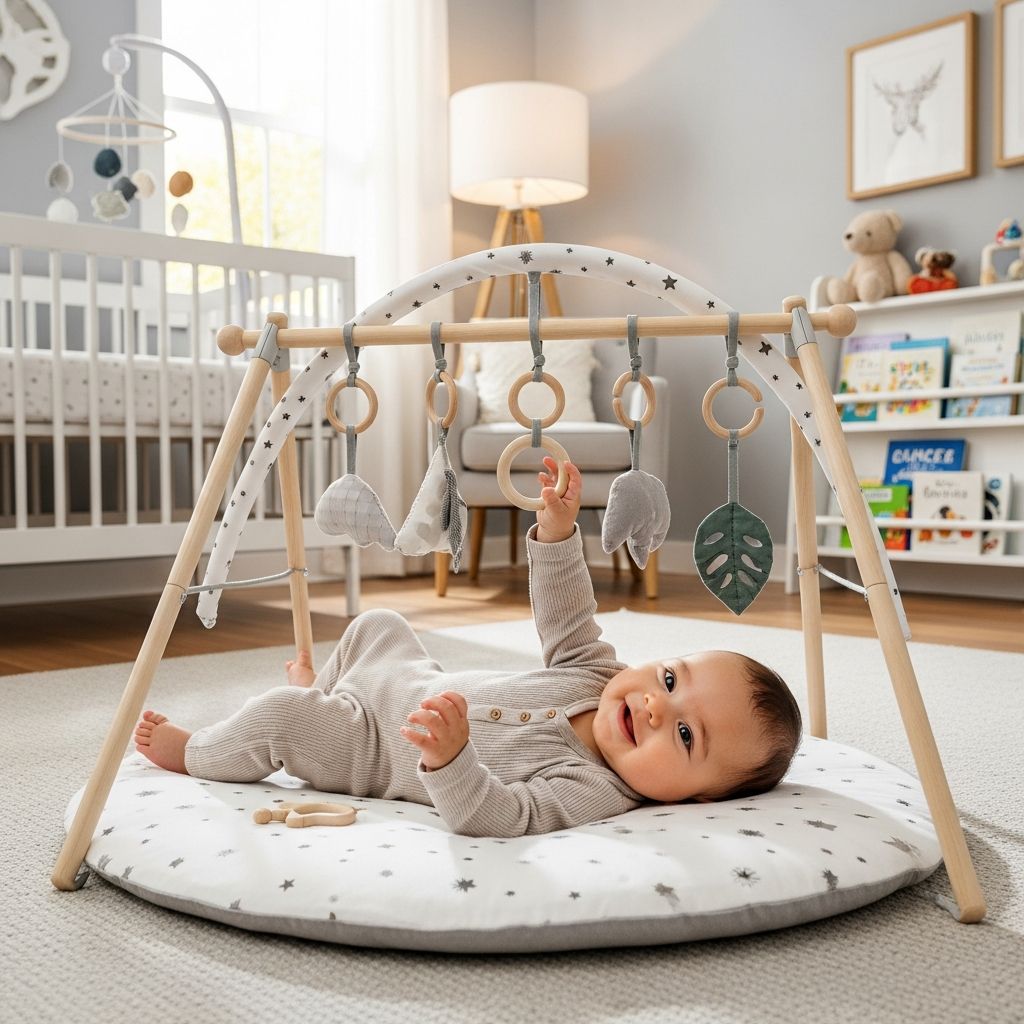
A baby play gym typically includes a padded mat with an arch or frame overhead and a selection of hanging toys for your baby to reach, bat, and kick. Some designs are simple and wooden; others include lights, sounds, mirrors, and detachable toys.
You can think of a play gym as your baby’s first mini “learning station,” designed to encourage movement, visual tracking, and early exploration through play.
Why Baby Play Gyms Matter
Even short daily sessions on a play gym can support multiple areas of early development while giving caregivers a brief, much-needed break. The best gyms are inviting enough that babies want to stay and explore, but calm enough that they do not become overstimulated.
Many parents also find that using a play gym creates a predictable routine: a spot for morning stretching, afternoon tummy time, and quiet wind-down play before naps.
Key Benefits for Your Baby
- Motor skills practice: Reaching for toys helps build shoulder, arm, and hand strength; kicking overhead toys works the core and legs.
- Sensory exploration: Different textures, colors, and sounds encourage your baby to notice, touch, and compare new sensations.
- Hand–eye coordination: Tracking a dangling toy, then successfully grabbing it, lays foundations for later skills like self-feeding.
- Tummy time support: Interesting objects at eye level make it easier for babies to tolerate and eventually enjoy tummy time.
- Early independence: Brief periods of self-directed play help babies feel comfortable exploring without constant adult interaction.
Benefits for Caregivers
- Safe parking place: A flat, padded surface with age-appropriate toys lets you step back while still supervising closely.
- Less clutter: Instead of loose toys scattered around, the play gym becomes a dedicated “toy zone.”
- Built-in bonding prompts: The toys provide easy conversation starters as you narrate colors, textures, and actions.
- Routines that stick: Using the gym at the same times daily can anchor your baby’s schedule without being rigid.
Types of Baby Play Gyms
Not all play gyms look and feel the same. Understanding the main styles will help you narrow your options quickly.
Common Styles at a Glance
| Type | Main Materials | Best For | Typical Extras |
|---|---|---|---|
| Soft, fabric gym | Padded polyester or cotton mat with plush arches | Newborns and young infants who need extra cushioning | Crinkle toys, rattles, mirrors, removable soft toys |
| Wooden minimalist gym | Wood frame, separate mat or rug underneath | Parents who prefer a neutral look and simple, open-ended play | Wooden rings, silicone teethers, simple hanging shapes |
| Developmental / stage-based gym | Fabric mat and arches with zones for specific skills | Families wanting guidance on milestones and activities | Activity cards, high-contrast areas, removable panels, tummy time stations |
| Convertible play mat | Large padded mat that can be folded or reconfigured | Small spaces and parents who want gear that lasts into toddlerhood | Removable arches, fold-up sides, optional toy bars |
How to Match a Play Gym to Your Baby’s Age
Babies use play gyms differently as they grow. Choosing features that align with their current stage helps keep the gym useful instead of becoming floor clutter.
Newborn to 2 Months
Very young babies spend much of their awake time simply observing the world. They do not yet reach accurately, but they can already benefit from having a safe spot to lie down and look around.
- Prioritize a thick, supportive mat and a stable frame.
- Look for high-contrast patterns (black and white or bold colors) that are easy for immature eyes to see.
- Hang toys slightly off to the side so your baby can turn their head and begin early tracking.
2 to 4 Months
During this stage, babies begin to swipe, bat, and kick intentionally. They also start to spend more time on their tummies, even if they protest at first.
- Choose a gym with a few light, easy-to-move toys your baby can make wobble or jingle.
- Use a baby-safe mirror during tummy time to encourage lifting the head and pushing up on the forearms.
- Rotate toys every few days to spark renewed interest without buying more gear.
4 to 6+ Months
Older infants roll, pivot, and may start to scoot off the mat. They also explore with both hands and mouth, which changes how they use the gym.
- Look for toys that can be detached and held, such as teethers and soft rattles.
- Ensure the mat is large enough that your baby can roll without landing directly on the floor.
- As your baby becomes more mobile, gradually lower the toys or move them to floor level for sitting and kneeling play.
Essential Features to Look For
Marketing often highlights flashy add-ons, but a reliable play gym only has to do a few things very well: support your baby safely, invite gentle exploration, and fit your real life.
Safety Basics
- Stable frame: The arches or wooden bar should not tip easily if your baby kicks or pulls on a toy.
- Secure attachments: Hanging toys should be firmly fastened, with no small parts that could break off.
- Non-toxic materials: Choose products free from harsh chemical treatments, since babies often mouth toys and fabrics.
- Flat surface use: Always set up the gym on the floor, never on a bed, sofa, or other soft elevated surface.
Comfort and Practicality
- Padded mat: Slight cushioning reduces pressure on the back and gives extra support during tummy time.
- Machine-washable cover: Removable fabric saves time when spit-up, diaper leaks, or pet hair show up.
- Foldability: If space is tight, a gym that folds flat or disassembles quickly is much easier to live with.
- Quiet footprint: Consider how much visual and physical space the gym will occupy in your living area.
Development-Friendly Design Choices
- Mix of simple and interesting toys: Too many gadgets can overwhelm; a few well-chosen items are usually enough.
- Different heights and positions: Toys that can be moved higher, lower, or to the side encourage reaching in varied directions.
- Opportunities for cause and effect: Items that crinkle, ring, or shake when touched help babies discover “When I do this, something happens.”
- Room to grow: Consider whether the mat can later double as a reading or play area for a sitting baby or toddler.
How to Use a Play Gym Effectively
Buying the right gear is only half the story. The way you introduce and use a play gym can shape how much your baby enjoys and gains from it.
Suggested Daily Routine Ideas
- Morning stretch: After the first diaper change, place your baby on their back under the gym for 5–10 minutes of gentle kicking and gazing.
- Midday tummy time: Roll your baby onto their tummy on the mat, placing a mirror or toy at eye level just beyond their hands.
- Afternoon wind-down: Use the gym for calm, low-stimulation play—perhaps with just one or two toys attached—before a nap.
Encouraging Active Play (Without Overdoing It)
- Stay nearby to offer smiles, encouragement, and gentle narration, but resist the urge to constantly shake toys for your baby.
- Watch for signs of fatigue or overstimulation, such as turning the head away, fussing, or arching the back, and end the session when needed.
- Alternate positions—back, side-lying, and tummy—to prevent flat spots and strengthen different muscle groups.
Cleaning and Maintenance Tips
Because babies spend a lot of time on their play gym and often put toys in their mouths, regular cleaning is important. Fortunately, a simple routine is usually enough.
- Check the care label and wash removable covers as frequently as you launder crib sheets.
- Spot clean the mat between washes with a gentle, baby-safe cleaner or mild soap and water.
- Wipe wooden parts with a damp cloth and dry thoroughly; avoid soaking wood to prevent warping.
- Inspect seams, stitching, and toy attachments every few weeks to catch any loose threads or damage.
Budget, Space, and Lifestyle Considerations
A premium play gym is not a necessity for healthy development, but it can be a convenient tool. Balancing cost, available space, and aesthetic preferences will help you feel confident in your choice.
Stretching Your Budget
- Choose a basic gym with a solid frame and upgrade the experience with a few high-quality add-on toys over time.
- Prioritize features that extend the usable life of the gym, such as a large mat that still works when your baby is sitting or crawling.
- Consider sharing gear with friends or family, as long as all parts are in good condition and meet current safety guidelines.
Fitting a Play Gym Into a Small Home
- Measure the floor space first and select a gym that fits comfortably in the area where you naturally spend the most time.
- Look for neutral colors or simple wooden designs if you prefer baby gear that blends with your décor.
- Opt for gyms that fold flat or come apart easily so you can slide them under a sofa or into a closet between uses.
Frequently Asked Questions
When can my baby start using a play gym?
Many families introduce a play gym within the first few weeks, using it initially as a comfortable spot for brief supervised stretches on the back. As your baby begins to focus on objects and show interest in movement, you can start hanging toys and extending play sessions in small increments.
How long can we keep using it?
Most babies use a traditional play gym regularly through about six months, when rolling, scooting, and sitting change how they interact with the space. After that, the mat itself often remains useful as a soft landing zone for sitting play, stacking toys, or early book time.
Is a play gym necessary if I already do tummy time on a blanket?
A simple blanket and a few toys can absolutely support tummy time and floor play. A dedicated play gym adds structure, built-in toy attachment points, and often a more cushioned surface, which some babies and caregivers find more inviting and convenient.
Are light-up and musical toys helpful or distracting?
Some babies enjoy brief bursts of lights and sounds, but constant flashing and noise can be overstimulating, especially for very young or sensitive infants. A balanced approach is to have mostly quiet, simple toys with one or two special-effect items you can bring out occasionally.
How do I know if my baby is getting bored of the play gym?
If your baby starts to lose interest quickly in a space they previously enjoyed, try changing a few variables before assuming the gym is “done.” Rotating toys, moving the gym to a new part of the room, or switching between back, side, and tummy positions can make familiar equipment feel new again.
Making the Most of Your Play Gym
The best baby play gym is not necessarily the most expensive or the one with the most features; it is the one you feel comfortable using daily, in a way that suits your baby’s unique rhythm. With a safe design, a handful of thoughtfully chosen toys, and short, consistent sessions, your play gym can become a beloved part of your baby’s first year.
Instead of treating it as a piece of gear you “set and forget,” think of the gym as a flexible stage to rearrange as your child grows—supporting everything from first eye contact to the triumphant moment they roll off the mat and into the next adventure.