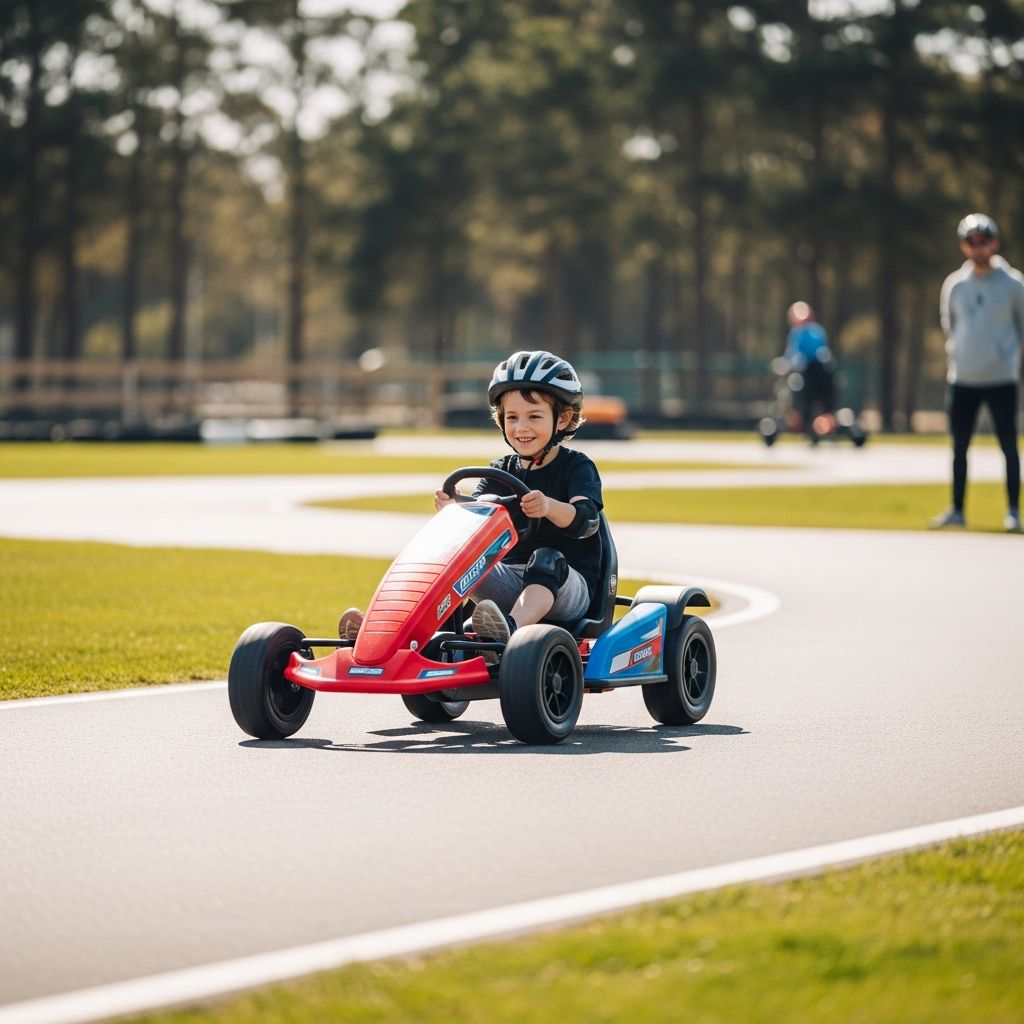
Electric go-karts for kids sit in a sweet spot between toy and real vehicle: they feel thrilling and grown-up to children, yet can be engineered with layers of safety that keep parents confident and in control.
This guide breaks down what matters most when choosing a child-friendly electric go-kart, from safety design and performance limits to comfort, durability, and day-to-day ownership.
Why Electric Go-Karts Are Different from Regular Ride-Ons
Unlike basic ride-on cars that creep along at a walking pace, kids’ electric go-karts are designed for higher speeds, sharper handling, and a more “real” driving feel.
That extra excitement means design choices around stability, braking, and parental control matter far more than they do on slower toys.
- Go-kart frames usually sit lower to the ground for stability in corners.
- Steering and braking systems are more responsive and closer to real vehicles.
- Speed settings and electronic control systems can limit performance for new drivers.
Core Safety Features Every Parent Should Look For
Safety should be the first filter when comparing kids’ go-karts, especially if they offer more speed than a standard sidewalk toy.
When reading spec sheets or product pages, focus on how the kart is built to prevent accidents and protect your child if something does go wrong.
Seat Belts and Harnesses
A lap-only belt is better than nothing, but many of the best youth karts use a three- or four-point harness that secures the shoulders as well as the waist.
This type of harness keeps a child firmly in the seat through sudden stops, uneven terrain, or minor bumps.
Roll Protection and Side Structure
Look for a strong protective frame and side rails that help shield young riders from impacts and reduce the risk of contact with obstacles.
Even on electric models built for backyard use, a rigid frame and protective side structures add meaningful peace of mind.
Brakes That Match the Speed
Efficient braking is critical because even moderate top speeds feel fast to kids with limited experience.
Well-designed brake systems allow kids to scrub off speed smoothly instead of locking up or stopping unpredictably.
Parental Override and Speed Limiting
Many modern kids’ karts include features such as multi-level speed settings, app-based controls, or handheld remotes that allow adults to cap speed or stop the kart entirely.
Features like these are especially valuable for first-time drivers, siblings of different ages, or small yards where space is limited.
Visibility and Lights
LED headlights, tail lights, and reflectors are more than cosmetic details because they help you track the kart visually and keep children visible at dusk.
Audible elements, such as horns or warning tones, can also help kids alert others to their presence.
Matching Kart Design to Your Child’s Age and Size
Age recommendations on the box are only a starting point; real safety comes from a good fit between kart, driver, and environment.
Think in terms of height, coordination, and judgment rather than birthday alone.
Preschool and Early Elementary (Roughly 4–7)
- Prioritize low top speeds and very simple controls.
- Look for wide stances, low seating positions, and generous side protection.
- Remote stop or very conservative speed limits are especially helpful at this stage.
Older Kids (Roughly 8–12)
- These riders can typically handle slightly higher speeds and more responsive steering.
- Adjustable seats and pedals help the kart “grow” with your child.
- Multi-mode performance (beginner, intermediate, advanced) supports progression over several years.
Teens and Pre-Teens
Bigger kids may be ready for higher performance, but only if they consistently follow rules and demonstrate good judgment.
At this level, pay close attention to maximum weight limits, braking capability, and whether riding areas are truly appropriate for the kart’s speed.
Performance Specs That Actually Matter
Marketing materials love big numbers, but more speed is not always better for young drivers; controllability and predictability are usually more important.
Focus on how power, speed, and range come together to suit your yard, your child’s experience, and your supervision style.
| Spec | What It Means | What Parents Should Consider |
|---|---|---|
| Top speed | The maximum speed the kart can reach on flat ground. | Lower is better for younger kids; adjustable limits make one kart usable for multiple ages. |
| Acceleration | How quickly the kart gains speed when the pedal is pressed. | Smoother acceleration is easier to manage and less likely to startle new drivers. |
| Battery capacity | The amount of energy stored, affecting drive time per charge. | Higher capacity means longer rides but also more weight; consider your typical play session length. |
| Drive mode options | Selectable settings for different speed or response levels. | Let you start slow and unlock more performance as skills improve. |
Comfort and Ergonomics: Keeping Kids Happy and in Control
A comfortable child is a safer child; if they can see clearly, reach the controls easily, and sit securely, they make better choices on the move.
Even on short rides, small ergonomic details shape confidence and control.
- Seat design: Look for supportive seats with side bolsters that keep kids centered during turns.
- Adjustable fit: Seats and pedals that move forward or backward extend the usable life of the kart.
- Control layout: Pedals, steering wheel, and buttons should all be reachable without stretching.
- Ride quality: Large wheels, suspension, or cushioned tires can help smooth out rough ground.
Where Your Child Will Drive: Picking the Right Environment
The safest kart becomes risky in the wrong environment, so match the vehicle to the surfaces and spaces your family actually has access to.
Thinking about where the kart will live and be driven also helps you decide whether advanced features are truly necessary.
Backyard and Driveway Use
- Prioritize tight turning radius and modest speeds over high power.
- Check for slopes, drop-offs, and hard obstacles like walls or trees.
- Set clear boundaries kids must not cross, especially near streets.
Private Lots, Cul-de-Sacs, and Trails
- Higher speeds and more powerful motors may be appropriate if the area is truly controlled.
- Bright lighting and easily visible colors make it easier to track the kart at a distance.
- Always keep an adult nearby; empty spaces can give kids a false sense of invincibility.
Essential Riding Rules and Safety Gear
No kart is safe without good habits; making rules part of the fun is one of the best things parents can do.
Introduce them early, repeat them often, and treat them as non-negotiable once the helmet goes on.
Minimum Gear for Every Ride
- Properly fitted helmet with a secure chin strap.
- Closed-toe shoes with good grip (no sandals or bare feet).
- Snug clothing that will not catch on moving parts.
- Optional but helpful: gloves and basic elbow or knee protection for more adventurous kids.
Simple Rules Kids Can Remember
- Only drive when an adult is watching.
- Stay within the marked riding area at all times.
- No passengers unless the kart is specifically designed for two.
- Keep hands and feet inside the kart while moving.
- Stop immediately if something feels wrong or if an adult signals.
Day-to-Day Ownership: Charging, Storage, and Maintenance
Electric go-karts are easier to live with than gas-powered models, but they still need basic care to stay safe and enjoyable.
Turning upkeep into a shared ritual can also teach kids responsibility and respect for their gear.
Battery Care
- Charge the kart after use rather than letting the battery sit empty for long periods.
- Store and charge in a dry, well-ventilated space away from flammable materials.
- Teach kids not to handle chargers or outlets without adult help.
Pre-Ride Checks
- Look over the kart for loose bolts, damaged parts, or low tires.
- Test the brakes and steering at very low speed before each session.
- Confirm the speed mode is appropriate for the child who is about to drive.
Long-Term Durability
Sturdy frames, quality plastics, and replaceable parts make the difference between a one-season toy and something that can be passed down to younger siblings.
If replacement batteries, tires, or body panels are available, the kart is more likely to handle years of real-world kid use.
Questions Parents Commonly Ask
Is go-karting actually safe for kids?
With age-appropriate speeds, proper safety gear, and close supervision, kids’ electric go-karts can be a safe way for children to explore motion, coordination, and responsibility.
Risk can never be eliminated entirely, but thoughtful design and clear rules lower it to a level many families find acceptable.
What top speed is reasonable for a child’s electric go-kart?
Ideal speeds depend on age and environment, but beginner-friendly settings that keep early rides relatively slow give kids time to build skills.
Karts that offer adjustable speed modes allow families to start conservatively and unlock more performance only when kids prove they are ready.
How long does a typical battery charge last?
Run time depends on battery size, rider weight, terrain, and speed settings, but many kids’ karts can deliver a substantial play session on a single charge.
Families who plan long days outdoors may appreciate models with higher-capacity batteries or optional spares.
Do kids need lessons before driving?
Formal lessons are rarely required for youth-oriented electric karts, but a parent-led orientation session is essential.
Walking a child through controls, braking practice, and boundaries at very low speed helps build confidence and good habits from day one.
How can multiple siblings of different ages share one kart?
Adjustable seats, pedals, and speed modes make it easier for a single kart to suit kids of various sizes and skill levels.
Parents can assign each child a specific speed setting and riding area so everyone has fun without stretching the limits of safety.
Bringing It All Together
Choosing a kids’ electric go-kart is about more than chasing the highest top speed; the best options blend smart safety engineering with enough performance to feel genuinely exciting.
By prioritizing protective design, age-appropriate performance, solid construction, and family-friendly controls, parents can give kids a thrilling ride that still fits within a thoughtful approach to risk.