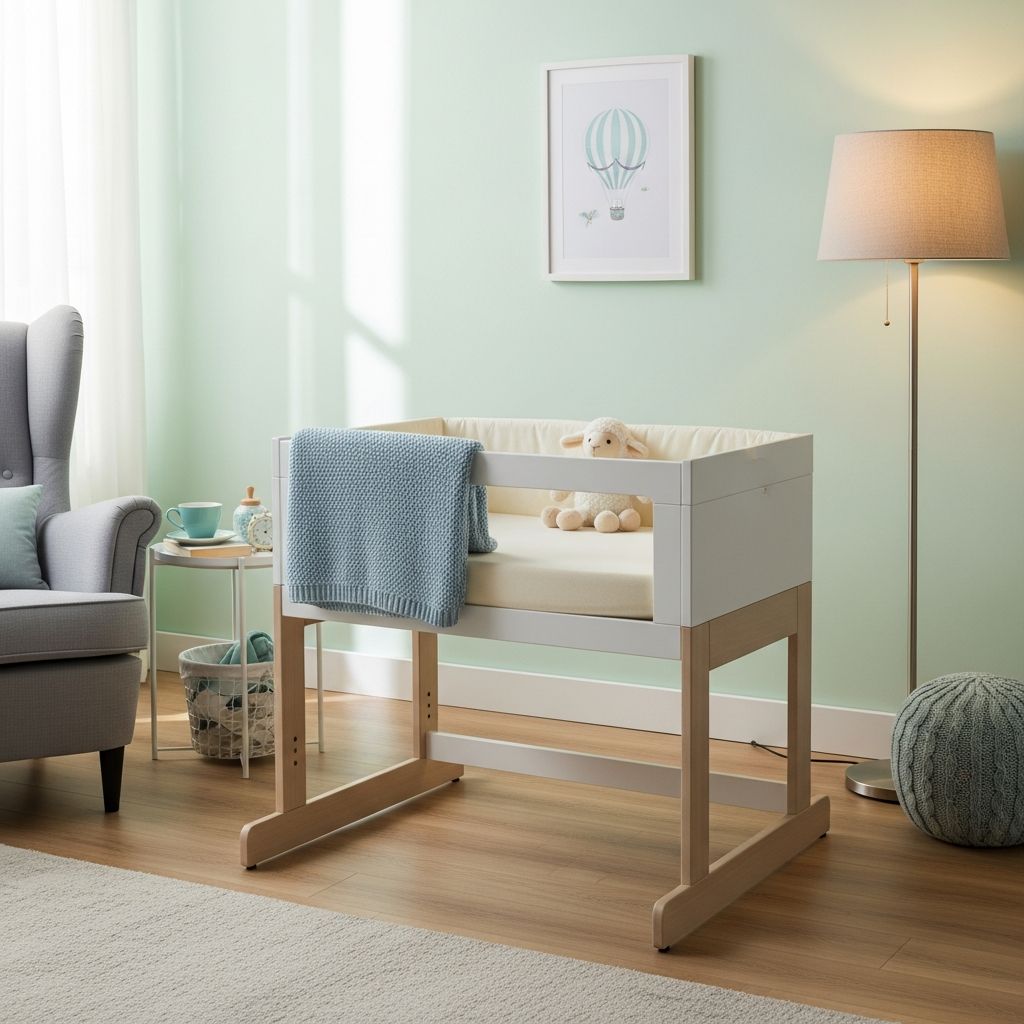
Bringing home a newborn marks an exciting yet challenging time for parents. One of the first big decisions involves creating a secure sleep environment. A bassinet offers a cozy, close-by spot for your baby, promoting easier nighttime feedings and bonding while adhering to recommended sleep practices. Unlike larger cribs, bassinets provide a compact solution ideal for the initial months when infants prefer proximity to caregivers. This guide explores critical considerations for selecting a bassinet that prioritizes safety, functionality, and comfort, drawing on established standards to help you make an informed choice.
Understanding Bassinet Basics and Benefits
Bassinets are small, bedside sleepers designed for newborns up to about five months or until they reach specific weight and height limits, typically around 20 pounds or when they begin to push up on their hands. Their elevated design brings baby closer to parents, facilitating quick responses to cries without fully waking. Studies show room-sharing without bed-sharing reduces SIDS risk by up to 50%, making bassinets a practical tool for safe sleep. They often feature gentle rocking or swiveling mechanisms to soothe fussy infants, mimicking womb-like motions.
Beyond convenience, bassinets encourage adherence to back-sleeping guidelines, which the American Academy of Pediatrics (AAP) endorses as the safest position to lower sudden unexpected infant death risks. Portable options allow movement between rooms, while standalone models offer sturdier bases. Weighing these benefits against your lifestyle—such as limited space or frequent travel—helps narrow options effectively.
Prioritizing Safety Certifications and Standards
Safety forms the foundation of any bassinet purchase. The Consumer Product Safety Commission (CPSC) mandates federal standards under 16 CFR Part 1218 for bassinets and cradles, ensuring structural integrity and hazard prevention. Look for products certified to these rules, which include a sturdy base, smooth edges without protrusions, locking legs to avoid accidental folding, and a firm mattress that fits snugly without gaps.
For rocking or swinging models, the incline must not exceed 10 degrees in stationary mode to prevent entrapment or rolling. Mesh-sided walls require rigid components spaced to avoid limb entrapment, verified through dummy testing protocols. Static load tests confirm the bassinet supports infants from birth through early months without collapse. Always verify the JPMA (Juvenile Products Manufacturers Association) seal, indicating voluntary compliance beyond federal minimums. Avoid second-hand units lacking current labels, as older designs may miss updated protections against suffocation or mechanical failures.
Key Features to Evaluate in a Bassinet
Modern bassinets incorporate user-friendly elements that enhance daily routines. Swivel or rotating bases allow 360-degree access, ideal for C-section recoveries or partners sharing night duties. Height-adjustable legs match various bed heights, ensuring mattress levels align within 16 inches for fall prevention.
- Breathable mesh sides: Promote airflow and visibility while maintaining security.
- Storage compartments: Hold essentials like diapers and wipes without cluttering space.
- Folding mechanisms: Facilitate travel or storage post-use.
- Canopy or mosquito netting: Shields from light or insects in versatile placements.
- Machine-washable fabrics: Simplify cleaning amid frequent spit-ups.
Consider soothing features like vibration or white noise, but ensure they deactivate automatically to avoid dependency. Battery life and recharge options matter for cordless models. Test stability by pushing gently; it should remain firm without wobbling.
Decoding Weight and Size Limits
Manufacturers specify maximums based on rigorous testing—typically 15-20 pounds or when baby exceeds 26 inches or shows head control. Exceeding these invites collapse risks or entrapment. Monitor growth weekly; transition to a crib promptly upon approach. Some models include growth indicators or height charts for easy tracking. Premature or larger newborns may outgrow faster, so factor in family history when selecting.
Essential Mattress and Bedding Choices
A proper mattress is non-negotiable: firm, flat, and fitting precisely to eliminate gaps wider than two fingers, which pose suffocation hazards. Breathable materials like organic cotton or foam cores wick moisture, regulating temperature. Avoid soft padding that contours to baby’s shape, as it increases rebreathing risks.
Limit bedding to one fitted sheet—tight, lightweight, and breathable. Skip quilts, pillows, or positioners; AAP research links loose items to 25% of sleep-related incidents. Wash sheets weekly in hypoallergenic detergent to prevent irritants.
| Mattress Type | Pros | Cons | Best For |
|---|---|---|---|
| Foam Core | Lightweight, waterproof options available | May retain heat | Budget-conscious parents |
| Organic Cotton | Breathable, hypoallergenic | Requires frequent airing | Eco-friendly homes |
| Innerspring | Supportive, durable | Heavier, pricier | Longer-term use |
Placement and Daily Usage Guidelines
Position the bassinet in your bedroom, six feet from heat sources, away from windows, cords, and drapes that could tangle. Lock wheels if equipped, and ensure even flooring prevents tipping. Elevate away from pet zones or high-traffic paths.
Daily checks include inspecting seams for wear, confirming locks engage, and verifying no sagging occurs. Room temperature should hover at 68-72°F; dress baby in layers mimicking your own minus one. Nightly routines: back placement, clear bassinet, and proximity monitoring via video if desired.
Common Bassinet Varieties Compared
Options abound, each suiting different needs:
- Bedside sleepers: Attach to adult bed for seamless access.
- Freestanding: Versatile for any room, often with rockers.
- Travel/portable: Collapsible for on-the-go families.
- Multi-function: Convert to changing stations or play yards.
Budget models under $100 offer basics; premium ones over $200 add tech like apps for tracking sleep patterns.
Addressing Myths and Realities
Myth: Babies need inclined sleep for reflux. Reality: Flat surfaces under 10 degrees are safest; consult pediatricians for elevations. Myth: Bumpers protect from falls. Reality: They heighten suffocation odds. Prioritize evidence-based practices over trends.
Frequently Asked Questions
Can I use a bassinet longer than recommended limits?
No—strictly follow manufacturer guidelines to avoid structural failure and ensure compliance with CPSC standards.
Is a rocker bassinet safe for everyday sleep?
Yes, if it meets 10-degree incline rules and locks securely; disable motion during unsupervised sleep.
What if my bassinet has mesh sides?
Ensure even spacing prevents entrapment; they enhance airflow when intact.
How do I transition from bassinet to crib?
Move at weight/height max or first roll; maintain back-sleeping and firm surfaces.
Are second-hand bassinets okay?
Only if fully inspected for recalls and standards; prefer new for warranty and updates.
Long-Term Value and Maintenance
Invest in durable materials like steel frames and reinforced fabrics for longevity. Clean weekly with mild soap, avoiding harsh chemicals. Store disassembled in dry areas post-use. Many brands offer 1-3 year warranties; register upon purchase for recall alerts.
Pairing a quality bassinet with consistent routines fosters better sleep for all. Consult your pediatrician for personalized advice, especially with multiples or medical needs. Safe choices today build confidence for tomorrow’s milestones.
References
- Bassinet Use and Sudden Unexpected Death in Infancy — PMC – NIH. 2008-10-14. https://pmc.ncbi.nlm.nih.gov/articles/PMC2575771/
- Understanding Bassinet Safety Standards of 2026 — Clafbebe. 2026 (accessed). https://www.craft-child.com/blog/understanding-bassinet-safety-standards/
- Bassinet Safety: Age, Weight Limits & More — Halo Sleep. 2026 (accessed). https://www.halosleep.com/blogs/halo/newborn-bassinet-safety
- A New Parent’s Quick Guide to Bassinet Safety — Naturepedic. 2026 (accessed). https://www.naturepedic.com/blog/bassinet-safety
- Bassinet Safety: 10 Tips For New Parents — Newton Baby. 2026 (accessed). https://www.newtonbaby.com/blogs/parenting-kids/bassinet-safety
- Bassinets and Cradles Business Guidance — CPSC.gov. 2026 (accessed). https://www.cpsc.gov/Business–Manufacturing/Business-Education/Business-Guidance/Bassinets-and-Cradles
- Safe Sleep — AAP. 2026 (accessed). https://www.aap.org/en/patient-care/safe-sleep/
- Safety Standard for Bassinets and Cradles — Federal Register. 2024-04-16. https://www.federalregister.gov/documents/2024/04/16/2024-07706/safety-standard-for-bassinets-and-cradles