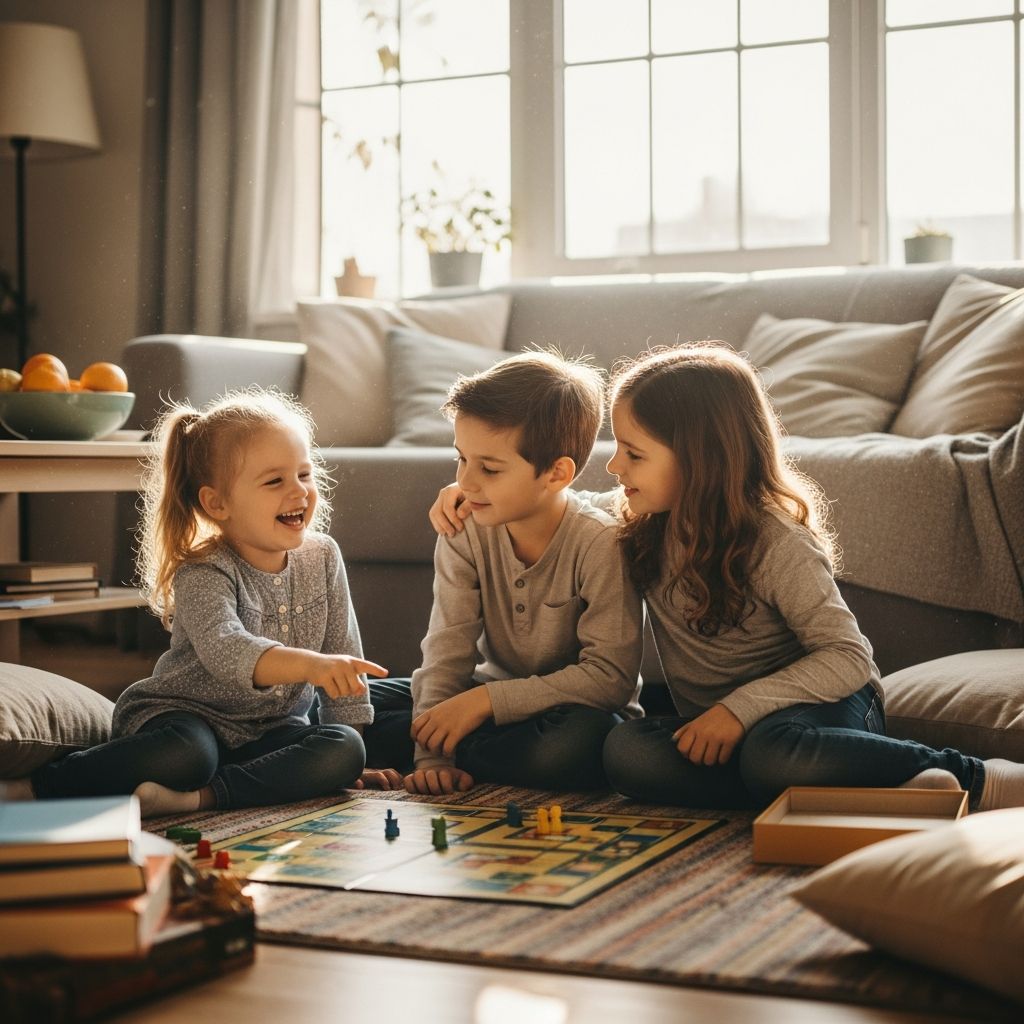
Brothers and sisters can be each other’s greatest allies or fiercest critics. While parents cannot control every interaction, they can shape a home environment that steadily grows connection, trust, and cooperation between siblings from the very beginning.
Why Sibling Bonds Matter So Much
Sibling relationships are often the longest relationships of a person’s life. They become the training ground where children practice sharing, negotiating, comforting, and standing up for themselves. Learning these skills with a brother or sister shapes how they relate to friends, partners, and coworkers later on.
When children feel safe and valued in their sibling relationship, they are more likely to show empathy, become confident problem-solvers, and carry a sense of belonging into the world. A strong sibling bond will not erase conflict, but it makes it easier for children to recover from disagreements and grow closer over time.
Core Principles for Peaceful Sibling Relationships
Before diving into age-specific strategies, it helps to ground your parenting in a few guiding principles. These principles shape how rules are set, how conflicts are handled, and how each child understands their place in the family.
- Connection before correction: Children cooperate more and compete less when they regularly feel seen, heard, and valued.
- No comparison, ever: Comparing siblings fuels rivalry and shame. Focusing on each child’s individual growth reduces the urge to compete.
- All feelings welcome, not all behavior: Anger, jealousy, and frustration are normal, but hurtful actions still need firm, calm limits.
- Fair does not always mean equal: Children of different ages and needs may require different responses, and that is okay when explained with care.
- Parents as calm coaches: Rather than judges who assign blame, parents can coach siblings on how to solve problems together.
Preparing an Older Child for a New Baby
The arrival of a baby is one of the most intense transitions an older child will ever experience. Even a child who is excited about being a big sibling is likely to feel confused, displaced, or worried about losing their parents’ love.
Before the Baby Arrives
- Tell a simple, honest story: Explain that a new baby will join the family, babies need a lot of care, and everyone will be learning how to be a family of four (or more).
- Invite participation, not pressure: Offer choices like picking a toy for the baby or helping choose a song, but never insist they must “love” the baby right away.
- Preserve their special role: Talk about what makes life with the older child unique: shared jokes, favorite games, special outings.
- Practice new routines: If daily patterns will change, try them out before the birth so the older child is not hit with multiple shocks at once.
In the First Weeks After Birth
- Greet the older child first: Whenever you enter a room or return home, connect with the older child before turning to the baby when possible.
- Create predictable “just us” time: Even ten minutes of one-on-one connection daily can dramatically soften jealousy.
- Translate baby behavior: Say things like, “The baby cries because that is how babies talk, not because you did anything wrong,” to reduce confusion.
- Acknowledge mixed emotions: Normalize that they can feel both proud and annoyed about being a big sibling at the same time.
Reducing Sibling Rivalry Day to Day
Rivalry grows in the gap between what children feel and what they are allowed to express. When parents make room for difficult emotions, power struggles over toys, attention, or privileges tend to ease.
Common Triggers of Rivalry
- Perceived unfairness in how time, attention, or treats are distributed
- Changes in routines such as starting school, a new baby, or a move
- Unresolved resentments from earlier conflicts
- Comparisons from adults or other relatives
Everyday Practices That Help
- Use each child’s name often: Look them in the eyes and offer specific appreciation that is not tied to their sibling.
- Give age-appropriate privileges: Offer extra responsibility to the older child without making them the “assistant parent.”
- Avoid labels: Refrain from calling one child “the clever one,” “the shy one,” or “the wild one”; labels fix roles and increase tension.
- Focus on effort, not comparison: Praise persistence and kindness instead of saying, “You’re better at this than your brother.”
Coaching, Not Policing: Handling Sibling Conflict
Conflict is not a sign that you are doing something wrong as a parent; it is a sign that your children are human. The goal is not to eliminate disagreements, but to teach siblings how to navigate them without emotional or physical harm.
A Simple Step-by-Step Conflict Script
- Check for safety: If anyone is being hurt, you intervene immediately and separate the children calmly.
- Pause and calm: Take a few breaths with the children, or give them a brief cooling-off period so brains can reset.
- Hear each side: Briefly reflect what each child says without taking sides: “You both had an idea about the same toy.”
- Name the feelings: Label emotions like angry, disappointed, left out, or frustrated, so they learn to recognize what is going on inside.
- Set limits on hurtful behavior: Make it clear that hitting, name-calling, and destroying property are not allowed.
- Invite problem-solving: Ask, “What could we do so everyone can feel okay about this?” and support them in brainstorming.
At first, this approach takes time, but as children experience it consistently, they begin to use the language of problem-solving on their own. Over time, they internalize the idea that their sibling is not an enemy but a partner in finding solutions.
House Rules That Protect the Relationship
Clear, consistently enforced family rules act as guardrails. They protect siblings from crossing lines that damage trust while still leaving plenty of space for play, disagreement, and independence.
| Rule | What It Teaches |
|---|---|
| “We keep hands and bodies safe.” | Physical safety and respect for personal boundaries. |
| “We speak to each other with respect.” | Words can hurt; tone and language matter. |
| “Everyone gets a turn.” | Patience, sharing, and trust that needs will be met. |
| “Feelings are allowed; hurting is not.” | Emotional expression combined with clear limits on behavior. |
| “We clean up what we use.” | Responsibility for shared spaces and belongings. |
These rules are most effective when reviewed during calm moments, not only introduced during conflicts. Posting them in a visible place and revisiting them in playful ways, such as role-play or drawings, helps siblings remember them during tense situations.
Encouraging Cooperation and Team Spirit
Children are more likely to see each other as allies when family life offers regular opportunities to work together rather than compete. Cooperation does not have to be forced; it can be gently invited through meaningful, fun, and achievable tasks.
Activities That Build a “We” Identity
- Shared missions: Set simple family challenges such as “Let us see how quickly we can all get the living room tidy together.”
- Joint choices: Give siblings a shared decision, like choosing a story to read together or voting on a weekend activity.
- Collaborative play: Offer open-ended toys—blocks, art supplies, dress-up items—that invite cooperation rather than individual scoring.
- Family rituals: Establish recurring moments like “siblings snack time” or “story circle” that highlight their bond.
When acknowledging cooperation, focus on the way siblings worked as a team rather than only on the outcome. Statements that highlight “we” language reinforce the idea that they share successes and can rely on one another.
Supporting the Older Child Without Overburdening
Older siblings often feel pressure—from adults or from their own sense of responsibility—to be endlessly patient, helpful, and mature. While some of this responsibility can be healthy, too much can breed resentment.
- Clarify roles: Make it clear that parents are in charge of safety and discipline, not the older sibling.
- Offer real choices: Ask if they want to help, and respect “no” when possible so that help remains voluntary and meaningful.
- Protect their belongings: Provide special items that younger siblings may not use without permission to preserve a sense of control.
- Celebrate their individuality: Make time for interests that have nothing to do with being a big brother or sister.
Balancing support and boundaries helps the older child enjoy their role instead of feeling used or overshadowed. When they trust that their needs matter too, they are more able to show kindness and patience to younger siblings.
Helping Younger Siblings Develop Respect
Younger children often admire their older siblings but may show that admiration in clumsy ways—copying, grabbing toys, or insisting on joining every game. Parents can guide younger siblings to respect boundaries while still feeling included.
- Teach waiting skills: Use timers, songs, or simple visual aids to help younger children understand waiting for turns or attention.
- Model asking for permission: Show how to ask, “Can I play with this?” or “Is it okay if I join?” and praise respectful attempts.
- Offer parallel activities: Provide similar but separate tasks near the older sibling, such as drawing at the same table with different supplies.
- Explain older child needs: Gently communicate that big brothers and sisters sometimes need quiet or alone time, just as little ones do.
Over time, younger siblings learn that closeness does not mean constant access. Respectful boundaries allow admiration and closeness to grow in ways that feel good to both children.
Special Time and One-on-One Attention
One of the most powerful gifts parents can offer is consistent one-on-one time with each child. Even a brief, predictable window of undivided attention can reduce acting out, competition, and repeated bids for negative attention.
Making Individual Time Workable
- Keep it short but consistent: Ten to fifteen minutes each day or a bit longer once or twice a week can make a noticeable difference.
- Let the child lead: Allow each child to choose the activity within reasonable limits, whether that is drawing, talking, or playing a simple game.
- Protect it like an appointment: Treat this time as nonnegotiable whenever possible so children feel secure counting on it.
- Verbally reinforce it: Name it as something special (“our secret reading time”) so it stands out in the child’s memory.
When children trust that they will get attention regularly, they feel less driven to fight over every shared moment. This emotional security spills over into how generously they share parents and space with their siblings.
Supporting Siblings Through Big Transitions
Major life changes can strain even the closest sibling bond. New schools, moves, separations, or family stress often increase clinginess, aggression, or withdrawal, all of which can show up in sibling dynamics.
- Offer a shared narrative: Talk openly about what is happening in language each child can understand and invite their questions.
- Preserve routines: Maintain familiar rituals, such as bedtime stories or weekend breakfasts, so life still feels anchored.
- Encourage mutual support: Gently highlight how siblings can help each other, such as sitting together at a new place or sharing a familiar game during stressful times.
- Watch for individual needs: While strengthening the sibling bond, also check in separately, since each child may process change differently.
By framing siblings as teammates facing change together, parents help them build resilience. These shared experiences, handled with openness and empathy, can become the foundation of deep lifelong loyalty.
Frequently Asked Questions About Sibling Harmony
How much fighting is “normal” between siblings?
It is normal for siblings to clash daily, especially in early childhood, as they learn to share space, toys, and parents. What matters more than the number of conflicts is how they are resolved: do children feel heard, are limits upheld, and is there a chance for repair afterward?
Should parents always stay neutral in sibling conflicts?
Staying neutral does not mean ignoring harmful behavior. Parents can avoid assigning blame while still stepping in firmly when safety or dignity is at risk. The goal is to support both children in expressing their feelings, understanding each other’s perspective, and finding a solution together.
What if one child seems to “start it” every time?
Often, the child who appears to provoke more may be struggling with unmet needs, stress, or lagging skills in self-regulation. Rather than focusing only on stopping the behavior in the moment, look for patterns: are they more volatile when tired, hungry, or seeking connection?
How can parents handle jealousy about gifts or special outings?
Explain the context clearly: “Today is your sister’s special day; your special time is coming on your birthday,” and invite the child to help celebrate while still acknowledging their disappointment. Emphasize that everyone will have times when they are the focus and that this does not reduce the love you have for anyone else.
Can a strained sibling relationship improve later on?
Yes. Many siblings who struggle as children grow closer as they mature and develop better emotional skills. Parents can lay important groundwork by modeling respectful communication, making room for repair, and avoiding labels that trap children in old roles.
Growing a Bond That Lasts
No parent can guarantee that their children will always get along. What parents can do is create a family culture that values kindness, honesty, and repair after conflict. Within that culture, each argument becomes a chance to practice listening, compromise, and forgiveness.
Over time, the daily efforts—taking a deep breath before intervening, listening to both sides, protecting each child’s dignity—add up. Siblings learn they can disagree without losing love, make mistakes and still be accepted, and lean on each other when life feels hard. Those lessons form the heart of a sibling relationship that can grow, adapt, and endure for a lifetime.