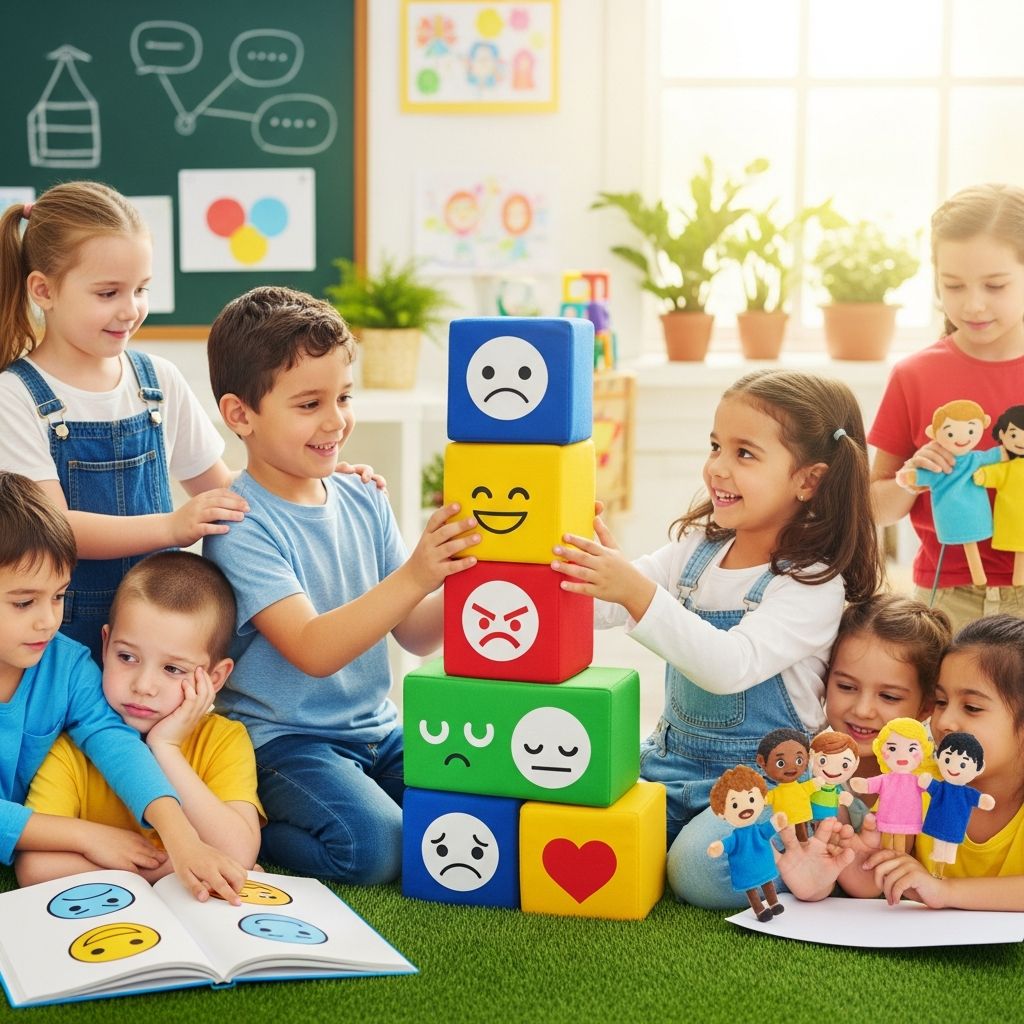
Emotional intelligence, often called EQ, equips children with the ability to understand, manage, and express their feelings effectively while navigating social interactions. Developing these skills early leads to improved academic performance, stronger peer relationships, and better mental health outcomes.
Why Emotional Intelligence Matters for Young Minds
Children with strong emotional smarts demonstrate greater focus in class, form deeper connections with others, and handle setbacks more resiliently. Research from child development experts highlights that kids who master EQ skills achieve higher grades and enjoy healthier physical well-being. In early childhood settings, those proficient in recognizing and regulating emotions engage more fully in learning activities.
Unlike IQ, which is relatively fixed, EQ can be cultivated through consistent guidance. Parents and educators play pivotal roles by modeling behaviors and creating supportive environments where feelings are discussed openly. This foundation helps kids transition smoothly into adolescence and adulthood, reducing risks of behavioral issues or emotional distress.
Core Components of Emotional Intelligence
Emotional intelligence comprises five key skills: recognizing emotions in self and others, comprehending their origins and impacts, accurately naming them, expressing them suitably, and regulating them effectively. Mastering these builds a toolkit for life’s challenges.
- Self-Awareness: Identifying personal feelings through bodily cues like tense muscles or rapid heartbeat.
- Self-Regulation: Using techniques to calm down, such as deep breathing.
- Motivation: Channeling emotions toward positive goals.
- Empathy: Sensing others’ emotions and responding compassionately.
- Social Skills: Managing relationships through clear communication.
These elements interconnect, forming a robust framework for emotional growth.
Daily Practices to Foster Self-Awareness
Begin by tuning into your child’s emotional signals. Notice subtle signs like furrowed brows or slumped shoulders during playtime or homework. Encourage them to articulate these sensations by asking open questions: “What do you notice in your body right now?” This builds their emotional vocabulary, essential for self-regulation.
Incorporate mood check-ins into routines. Use a simple color-coded chart—red for high energy unpleasant feelings, blue for low energy unpleasant, green for pleasant high energy, yellow for pleasant low energy. Have kids place their name on the matching section upon arriving home or before bed. This practice helps them reflect on their state and its influences.
| Energy Level | Pleasant Feelings | Unpleasant Feelings |
|---|---|---|
| High | Excited, Energetic (Green) | Angry, Anxious (Red) |
| Low | Calm, Content (Yellow) | Sad, Tired (Blue) |
Regular reflection on past reactions reinforces learning. Discuss a recent frustration, like a lost game, praising constructive responses such as taking deep breaths while exploring alternatives to outbursts.
Modeling Emotions as a Parent
Children learn profoundly from observation. Share your own emotional experiences briefly during family time. For instance, recount a work stress moment: “I felt frustrated when the project delayed, my heart raced, but deep breaths helped me refocus.” This demystifies adult feelings and models regulation.
Follow a structured coaching approach: notice the emotion, view it as a teaching moment, listen actively, label it, and guide problem-solving. “You’re disappointed the playdate canceled. It’s okay to feel sad; let’s plan something fun together.” Patience is crucial, as big emotions may require multiple sessions.
Reframe challenges positively. Instead of dismissing tears, say, “This is a chance to connect and figure it out.” This shifts emotions from burdens to bonding opportunities.
Building Empathy Through Stories and Play
Read-aloud sessions expand emotional language. Select books depicting diverse feelings, pausing to discuss characters’ expressions: “How do you think the puppy feels here? Why?” Relate stories to real life, introducing words like “disappointed” or “grateful.”
Pretend play hones empathy. Act out scenarios like sharing toys, guiding kids to voice others’ perspectives: “How might your friend feel if you take the truck?” This practices appropriate expressions for intense emotions.
Encourage perspective-taking daily. After playground interactions, ask, “What do you think made your classmate upset?” Validate their insights to nurture compassionate responses.
Strategies for Emotional Regulation
Teach calming tools proactively. Deep breathing exercises, visualized as “balloon breaths,” lower arousal quickly. Pair with positive self-talk: “I can handle this step by step.”
For ongoing challenges, brainstorm options. Facing sibling rivalry? List alternatives like using words over shouts or seeking a quiet space. Praise efforts: “Great job using your words!”
- Deep breathing to slow heart rate.
- Self-talk for encouragement.
- Reframing situations positively.
- Physical movement like short walks.
- Seeking support from trusted adults.
Mindfulness activities, such as kid-friendly yoga, enhance focus and present-moment awareness, aiding impulse control.
Creating Social Opportunities for Growth
Facilitate playdates and group activities to practice real-world interactions. Debrief afterward: “What went well? How did others react?” This reinforces social-emotional skills.
At school, seek SEL programs teaching these competencies systematically. Programs like “lunch buddies” pair kids for peer support, boosting confidence.
Age-Appropriate Milestones and Tips
| Age Group | Key Focus | Activities |
|---|---|---|
| Preschool (3-5) | Basic emotion naming | Mood charts, simple stories |
| Early Elementary (6-8) | Empathy and regulation | Role-play, breathing games |
| Tweens (9-12) | Complex social dynamics | Group discussions, journaling |
Tailor approaches to developmental stages for maximum impact.
Frequently Asked Questions
What if my child has outbursts despite practice?
Outbursts decrease with consistency. Stay calm, validate feelings, and revisit strategies later when composed.
How do I handle my own emotions during coaching?
Model self-regulation. Take a breath if needed, then engage mindfully.
Can emotional intelligence improve school performance?
Yes, studies link higher EQ to better attention, engagement, and grades.
Is professional help ever necessary?
For persistent issues, therapy or social skills groups provide targeted support.
How long until I see changes?
Progress varies; consistent daily practice yields noticeable shifts in weeks to months.
Overcoming Common Challenges
Resistance may arise if kids view emotions as weaknesses. Counter this by normalizing all feelings while distinguishing them from actions: “Feeling mad is fine; hitting isn’t.” Track progress in a family journal to celebrate wins, motivating continuation.
For diverse needs, like neurodiverse children, adapt visuals and routines. Programs emphasizing SEL accommodate various learning styles effectively.
Sustain momentum by integrating practices into fun rituals, like emotion charades at dinner. Community resources, including online tools from reputable organizations, offer supplementary materials.
References
- How to Strengthen Your Child’s Emotional Intelligence — The Gottman Institute. 2023-05-15. https://www.gottman.com/blog/strengthen-childs-emotional-intelligence/
- Teaching Emotional Intelligence in Early Childhood — NAEYC. 2017-03-01. https://www.naeyc.org/resources/pubs/yc/mar2017/teaching-emotional-intelligence
- 6 Tips for Helping Your Child Build Emotional Intelligence — Understood.org. 2024-01-10. https://www.understood.org/en/articles/6-tips-for-helping-your-child-build-emotional-intelligence
- Build Social and Emotional Intelligence in Children — Child Focus. 2023-08-20. https://www.child-focus.org/news/ways-to-build-social-and-emotional-intelligence-in-your-children/
- How Parents Teach Emotional Intelligence to Kids — Empowering Education. 2022-11-05. https://empoweringeducation.org/blog/redefining-emotional-intelligence/