Instilling a deep respect for the planet in children starts at home with intentional daily practices. Parents can transform routine moments into opportunities for learning sustainability, helping kids grow into responsible global citizens who prioritize environmental health.
Modeling Green Behaviors Daily
The foundation of eco-awareness lies in what children observe from adults. When parents consistently demonstrate resource conservation, such as switching off unused lights or opting for reusable bags, kids naturally adopt these habits. Research from child development experts emphasizes that imitation is a primary learning mechanism for young minds, making parental actions more influential than verbal instructions alone.
Begin with simple routines: teach turning off faucets while brushing teeth to save water, a practice that reduces household consumption significantly. According to the U.S. Environmental Protection Agency (EPA), everyday actions like these can cut water use by up to 10% in homes, fostering both planetary and financial benefits. Extend this to energy by using LED bulbs and unplugging devices, explaining how it lowers carbon emissions. Over time, these modeled behaviors build intrinsic motivation in children to sustain the planet independently.
- Carry reusable water bottles and snack containers to model zero-waste outings.
- Repair toys instead of discarding them, showing the value of longevity over disposability.
- Choose public transport or biking for short trips, discussing air quality improvements.
Immersing Kids in Nature’s Embrace
Direct exposure to the outdoors sparks wonder and connection to the natural world. Family hikes, park picnics, or backyard explorations allow children to witness ecosystems firsthand, cultivating empathy for wildlife and landscapes. Studies from the National Wildlife Federation indicate that regular nature time enhances cognitive skills and environmental stewardship attitudes[10].
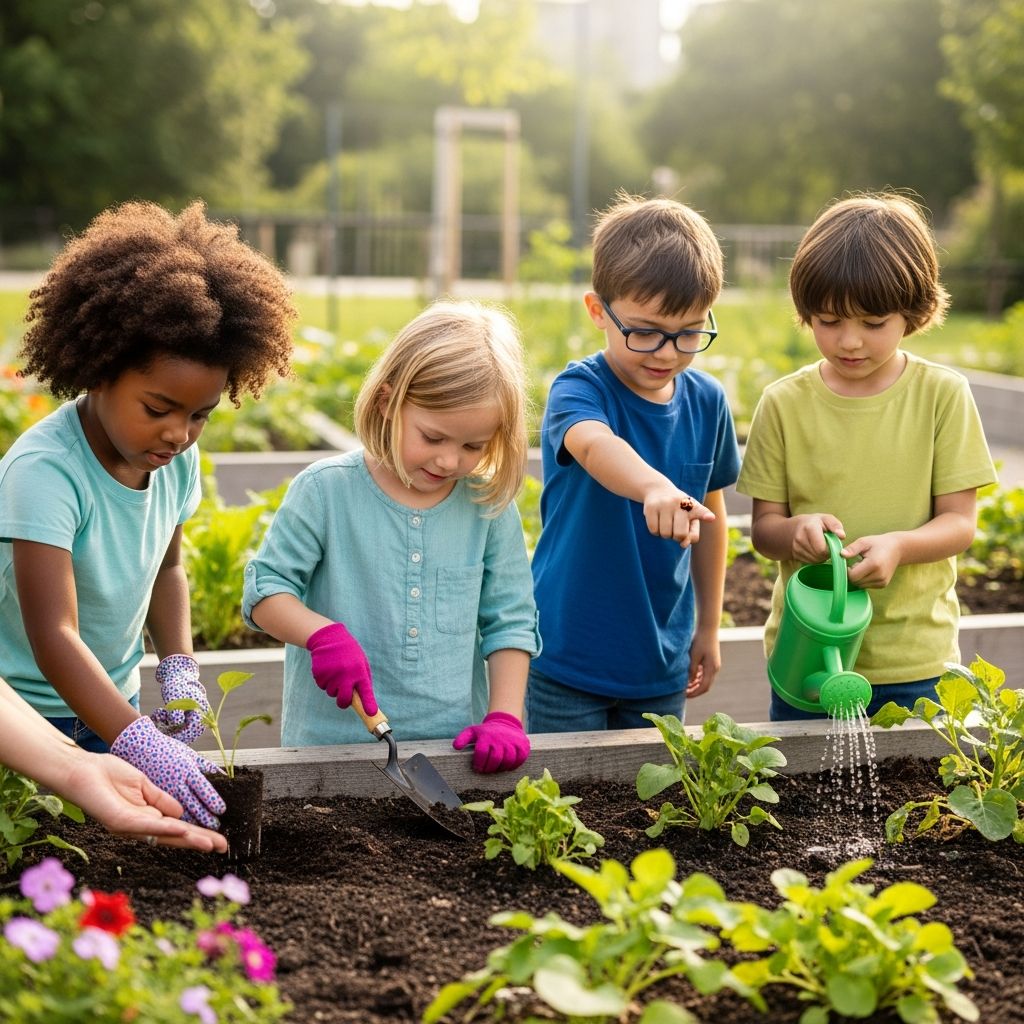
For urban families, community green spaces or balcony gardens suffice. Encourage kids to observe insects, birds, or plant growth cycles, prompting questions like “What do trees need to thrive?” This hands-on approach counters screen time dominance, promoting physical health alongside eco-literacy. Seasonal activities, such as leaf collecting in autumn or birdwatching in spring, create memorable bonds with seasonal changes.
| Age Group | Activity Ideas | Learning Outcome |
|---|---|---|
| Toddlers (2-4) | Sensory walks, touching leaves and soil | Sensory awareness of nature |
| Preschool (5-6) | Planting seeds in pots | Responsibility and growth cycles |
| School-age (7+) | Guided hikes, trail cleanups | Ecosystem understanding |
Hands-On Waste Management Lessons
Transform trash handling into an engaging game by setting up a home sorting station with labeled bins for recyclables, compost, and landfill waste. Children thrive on sorting tasks, quickly mastering what belongs where when presented playfully. The EPA reports that proper household recycling diverts millions of tons from landfills annually, directly impacting climate change mitigation.
Introduce composting with a family bin or worm farm, explaining decomposition’s role in soil enrichment. Use the resulting compost in a vegetable garden, linking waste reduction to food production. For water conservation, install low-flow fixtures and involve kids in timing showers or collecting rainwater for plants. These activities demystify sustainability, making abstract concepts tangible.
- Weekly recycling audits to track progress and celebrate reductions.
- Litter hunts in neighborhoods, discussing pollution’s wildlife effects.
- Upcycling crafts from cardboard and jars to inspire creativity.
Fostering Empathy Through Stories and Care
Books and caregiving roles nurture emotional ties to living things. Reading tales of animal adventures or conservation heroes builds empathy, as evidenced by behavioral science research showing narrative exposure increases pro-environmental actions. Select diverse stories featuring global ecosystems to broaden perspectives.
Assign plant or pet responsibilities: watering herbs or feeding birds teaches nurturing. For older kids, volunteer at animal shelters or plant community trees, instilling pride in contributions. Frame climate discussions positively, focusing on solutions like renewable energy to avoid anxiety, per child psychology guidelines.
Community Engagement and Leadership
Extend learning beyond home by joining local cleanups, farmers’ markets, or eco-clubs. These experiences demonstrate collective impact, with children taking leadership in organizing family events. The United Nations Environment Programme highlights youth involvement in sustainability initiatives as key to global goals[11].
Encourage questions and debates on topics like plastic pollution, tailoring responses to age. Track family carbon footprints via apps, setting reduction goals. Celebrate milestones with eco-rewards, like nature outings, reinforcing positive change.
Age-Appropriate Eco-Challenges
Tailor strategies by developmental stage for maximum engagement. Toddlers grasp basic “reduce, reuse, recycle” through songs; schoolkids tackle gardens and data tracking.
| Challenge | Toddler | Preschooler | School-Age |
|---|---|---|---|
| Water Save | Splash-free brushing | Timer showers | Rain barrel setup |
| Waste Sort | Color-coded bins | Compost sorting | Zero-waste week |
| Nature Quest | Backyard bugs | Seed planting | Hiking journals |
Frequently Asked Questions (FAQs)
What age should I start teaching eco-habits?
Begin as early as toddlerhood with simple modeling; habits solidify by school age through hands-on activities.
How do I handle kids’ resistance to changes?
Make it fun with games and rewards; involve them in choices to build ownership.
Are reusable products worth the cost?
Yes, they pay off long-term via savings and reduced waste, per EPA lifecycle analyses.
Can urban kids become eco-conscious?
Absolutely—use parks, balconies, and community programs for immersive learning.
How to discuss climate change without scaring kids?
Emphasize hope, solutions, and actions, using curiosity-driven questions.
References
- Ways to Raise Eco Conscious Children — Stepping Stone School. 2023. https://www.steppingstoneschool.com/ways-to-raise-eco-conscious-children/
- Want to raise eco-conscious children? Here are five everyday tips — Rare.org. 2023. https://rare.org/stories-articles/tips-raise-eco-conscious-children/
- Green Parenting Guide: How To Raise Eco-Conscious Kids — Perch Energy. 2024-01-15. https://www.perchenergy.com/blog/lifestyle/green-parenting-tips-how-to-raise-eco-conscious-kids
- Water Use and Savings Tips — U.S. Environmental Protection Agency (EPA). 2025-03-10. https://www.epa.gov/watersense
- Recycling Basics and Benefits — U.S. Environmental Protection Agency (EPA). 2025-02-20. https://www.epa.gov/recycle
- GreenTime Guidelines for Outdoor Play — National Wildlife Federation. 2024. https://www.nwf.org/Educational-Resources/Green-Hour