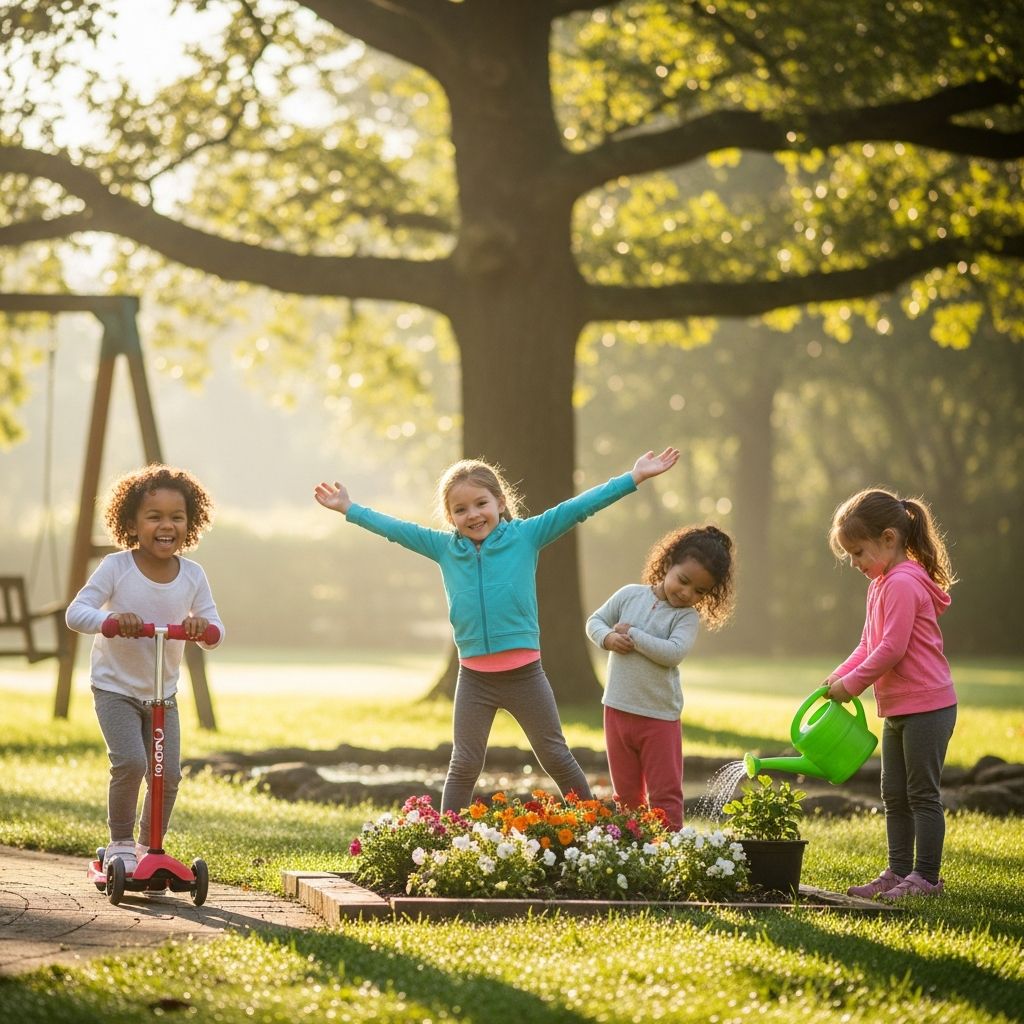
The morning hours present a unique opportunity to set a positive tone for the entire day. When families prioritize outdoor time early in the morning, they unlock multiple developmental, physical, and emotional benefits for children. Morning outdoor experiences can reduce stress, boost energy levels, and create meaningful family connections before the demands of the day take over. However, transitioning children from indoor spaces to outdoor environments requires thoughtful planning and consistent implementation.
The Science Behind Morning Outdoor Exposure
Research demonstrates that exposure to natural light and outdoor environments in the morning has profound effects on children’s circadian rhythms and overall well-being. Morning sunlight helps regulate sleep-wake cycles, improving both nighttime sleep quality and daytime alertness. Additionally, outdoor morning activities promote physical activity during peak energy hours, when children are most likely to engage in vigorous play. Natural environments stimulate sensory development, encourage exploration, and provide opportunities for physical development that indoor spaces cannot replicate.
Beyond physiological benefits, morning outdoor time establishes a foundation for healthy habits. Children who begin their day outdoors demonstrate increased curiosity about the natural world, improved focus during academic activities, and better emotional regulation throughout the day. The combination of fresh air, natural light, and physical movement creates an ideal starting point for cognitive development and behavioral well-being.
Building Consistency Through Strategic Scheduling
The most effective approach to establishing morning outdoor routines involves creating predictable, non-negotiable blocks of outdoor time. Rather than treating outdoor play as an optional activity dependent on mood or weather, families benefit from treating it as a scheduled appointment—similar to meal times or homework sessions. This consistency helps children develop expectations and reduces resistance to outdoor transitions.
Consider these timing frameworks for morning outdoor involvement:
- 9:00 AM to 1:00 PM windows: Ideal for families with early risers or during seasons with limited morning activities. This extended block allows for sustained play and exploration before returning home for lunch and rest periods.
- 10:30 AM to 2:30 PM schedules: Better suited for families requiring more gradual mornings or during colder seasons when early hours feel prohibitively chilly. This timing accommodates single nap schedules for younger children.
- 4:30 PM to 8:00 PM options: Effective for school-aged children after academic instruction concludes, capturing late afternoon and early evening outdoor play opportunities.
The specific timing matters less than the consistency of implementation. Once established, children internalize the expectation and prepare mentally for outdoor engagement without requiring persuasion.
Transitioning Indoor-Oriented Children to Outdoor Spaces
Many contemporary families face challenges encouraging children accustomed to indoor entertainment to embrace outdoor activities. Rather than attempting dramatic shifts from zero to four hours of daily outdoor time, experts recommend gradual progression. Beginning with modest thirty-minute to one-hour outdoor blocks allows children to acclimate to outdoor environments while building positive associations. As these shorter sessions become routine, families can incrementally extend duration.
Starting small prevents overwhelm for both children and parents. A sustainable one-hour daily outdoor commitment establishes momentum, which can be increased to two hours after establishing this as habit. Progressive expansion proves more successful than attempting to reach ambitious targets immediately.
Parental Modeling and Engagement Strategies
Children demonstrate significantly increased outdoor enthusiasm when observing caregivers modeling outdoor engagement themselves. Parents need not be extreme outdoor enthusiasts to encourage children’s participation. Simple activities such as reading books outdoors, sitting outside with a beverage, or engaging in low-intensity outdoor tasks demonstrate that outdoor time is valuable and accessible.
Parental enthusiasm—even when initially tentative—proves contagious. When caregivers approach outdoor mornings with intentional engagement rather than reluctance, children absorb this positive framing. Modeling outdoor participation teaches children that outdoor activities integrate naturally into daily life rather than constituting special occasions requiring extensive preparation.
Merging Meals and Outdoor Spaces
One of the most practical strategies for increasing morning outdoor time involves relocating meal and snack consumption to outdoor settings. Serving breakfast, snacks, or light lunches outside creates natural motivation for children to venture outdoors. The combination of eating—an activity children willingly engage in—with outdoor location normalizes outdoor presence.
This approach functions particularly effectively with younger children who may resist unstructured outdoor play but readily participate when food is involved. Once children establish themselves outdoors for meals, they frequently remain engaged in play long after finishing eating. This spontaneous extension of outdoor time occurs without requiring additional persuasion or structured programming.
Spreading blankets, setting up outdoor tables, or arranging picnic-style seating transforms meals into outdoor events. The ritual aspect—special plates, specific outdoor furniture, or particular beverage selections—enhances the appeal while requiring minimal additional effort from caregivers.
Integrating Educational and Recreational Activities
Morning outdoor time need not separate from academic instruction or educational content. Reading stories, conducting lessons, or completing educational activities outdoors combines multiple objectives simultaneously. Children benefit from outdoor environmental exposure while completing necessary educational tasks, maximizing time efficiency while building positive associations with both academics and outdoor environments.
Garden projects represent particularly effective integrated activities. Establishing even small garden spaces—containers, raised beds, or community garden plots—creates daily incentives for morning outdoor engagement. Children develop responsibility through regular watering, weeding, and monitoring. Simultaneously, gardening teaches biological concepts, provides opportunities for physical activity, and generates harvest rewards that reinforce positive outdoor associations.
Leveraging Community Resources and Programs
Families seeking structured outdoor morning experiences benefit from community-based programs designed specifically to facilitate regular outdoor engagement. Organizations like Tinkergarten operate nationwide, providing guided outdoor exploration for children. Following Tinkergarten participation, 85 percent of families report increased outdoor time, with 93 percent of parents noting enhanced children’s curiosity about natural environments.
Hike It Baby groups exist in 48 states, offering organized outdoor outings specifically designed for young children. While requiring membership fees and advance planning, these group experiences provide structured activities, social interaction with peers, and professional guidance that enhance morning outdoor engagement.
Local parks, nature centers, and community gardens frequently offer free or low-cost morning programs. Investigating available resources within specific geographic regions reveals opportunities for guided exploration, group activities, and environmental education integrated into morning routines.
Age-Appropriate Morning Outdoor Approaches
Different developmental stages require tailored outdoor engagement strategies. Younger children thrive with imaginative storytelling frameworks that transform outdoor exploration into adventure narratives. Prompts such as “Let’s search for fairies in the garden” or “Can we identify five different bird species today?” provide structure while encouraging imaginative engagement.
School-aged children respond effectively to challenge-based framing. Competitive elements—”Can we walk to the summit faster than yesterday?” or “Who can collect the most interesting natural objects?”—tap into children’s developing goal-orientation and achievement motivation. This approach transforms outdoor time from passive activity into purposeful engagement.
Teenagers and older children often resist outdoor activities perceived as childish or insufficiently stimulating. Incorporating skill-building elements—photography, nature journaling, geocaching, or outdoor fitness activities—creates relevance for older age groups. Involving older children in morning outdoor planning and activity selection increases ownership and commitment.
Creating Appealing Outdoor Environments
Children demonstrate increased outdoor engagement when outdoor spaces contain interesting features and engaging equipment. Sandboxes, trampolines, climbing structures, or water features provide immediate entertainment value. However, spaces need not be elaborate or expensive. Strategic placement of balls, buckets, natural materials, or sports equipment encourages exploration and creative play.
Establishing small outdoor traditions builds positive associations with specific morning outdoor rituals. Regular backyard tea times, weekly sunrise observations, or consistent morning exploration routes create anticipated routines. These traditions provide structure while generating positive memories associated with outdoor mornings.
Managing Resistance and Building Motivation
Children accustomed to entertainment-focused indoor activities may initially resist unstructured outdoor time. Rather than fighting this inclination, families can strategically introduce entertaining outdoor elements. Demonstrating how outdoor environments provide genuine entertainment—through guided discovery activities, social play opportunities, or novelty experiences—reframes outdoor time as desirable rather than obligatory.
Inviting peer participation significantly reduces resistance. Children frequently engage enthusiastically in activities with siblings or neighbors that they resist when alone. Coordinating morning outdoor sessions with other families creates social incentive for participation while providing peer interaction.
Incorporating Daily Tasks Into Morning Outdoor Routines
Practical morning tasks offer opportunities for outdoor engagement when approached playfully. Walking household pets, washing vehicles, watering plants, or checking gardens transforms necessary chores into outdoor activities. This integration teaches children that outdoor time naturally incorporates life responsibilities while making mundane tasks feel like play.
The educational component of task-based outdoor time should not be overlooked. Children develop practical skills, environmental responsibility, and work ethic while engaging in outdoor morning routines. Washing the family car becomes a physics lesson about water and surfaces; walking dogs becomes exercise and animal care education; gardening tasks teach biology, ecology, and food production.
Adapting to Seasonal and Weather Variations
Establishing sustainable morning outdoor routines requires flexibility accommodating seasonal changes and weather variations. Rather than abandoning outdoor time during less ideal seasons, families benefit from embracing diverse weather experiences. Rain, cooler temperatures, and seasonal transitions offer unique exploration opportunities and build children’s resilience.
Different seasons suggest varied outdoor morning activities. Spring offers planting and growth observation; summer provides extended daylight for play; autumn showcases natural color changes and harvest activities; winter invites snow exploration and identification of dormant plant structures. Rotating seasonal activities maintains novelty while ensuring year-round outdoor engagement.
Measuring Progress and Maintaining Momentum
Establishing morning outdoor routines requires patience and persistence. Initial resistance frequently decreases within two to four weeks of consistent implementation. Tracking participation patterns—noting dates, durations, and activities—provides tangible evidence of progress. Many families discover that resistance diminishes substantially once outdoor mornings become habitual expectation rather than novel initiative.
Celebrating milestones—”We’ve completed two weeks of outdoor mornings!” or “Our garden is producing vegetables!”—reinforces commitment while providing positive feedback. Involving children in progress tracking increases ownership and motivation.
Frequently Asked Questions About Morning Outdoor Routines
How long does it typically take for children to adapt to new morning outdoor routines?
Most children require two to four weeks of consistent outdoor morning exposure before resistance decreases and outdoor time becomes anticipated rather than resisted. Individual variation exists based on prior outdoor experience and temperament.
What should families do if weather prevents outdoor morning activities?
Light rain and cool temperatures need not eliminate outdoor time. Weather-appropriate clothing and embracing seasonal conditions maintains routine consistency. Extreme weather represents legitimate exceptions; on such days, families can reschedule outdoor time to afternoon or evening periods.
How can families balance morning outdoor time with other morning responsibilities like school preparation?
Strategic scheduling allows outdoor time before school preparation begins or by combining outdoor activities with necessary tasks. Some families position outdoor time as reward following completion of school-related preparation.
Are there benefits to morning outdoor routines for children with sensory sensitivities or physical limitations?
Yes. Outdoor time benefits children across ability spectrums. Adaptations might include shorter durations, specifically designed outdoor spaces, or activities accommodating individual needs. Professional guidance from occupational or physical therapists can inform individualized approaches.
How can families maintain morning outdoor routines during busy seasons like school preparation or holiday periods?
Even brief outdoor morning engagement—fifteen to twenty minutes—maintains routine continuity during busy periods. Flexibility regarding activity type and duration preserves the fundamental habit while accommodating increased responsibilities.
References
- 12 Expert-Led Tips to Get Your Kids Outside — Good To. Accessed April 2, 2026. https://www.goodto.com/family/12-clever-ways-to-get-your-kids-outside-when-they-just-don-t-feel-like-it
- Four Ways to Get Your Kids Outside and Moving — KING 5 Seattle. Accessed April 2, 2026. https://www.youtube.com/watch?v=Dg6wUO58I_k
- How to Spend Four Hours Outside with Kids — 1000 Hours Outside. Accessed April 2, 2026. https://www.1000hoursoutside.com/blog/how-to-four-hours-outside
- The Indoorsy Mom’s Guide to Getting Outside — My Little Robins. 2017. https://mylittlerobins.com/2017/05/getting-outside/
- 5 Simple Ways to Incorporate More Outdoor Time Into Your Family’s Day — Taylor Kulik. Accessed April 2, 2026. https://taylorkulik.com/moreoutdoortime/
- The No Nag Guide to Getting Kids Outside — Super Healthy Kids. Accessed April 2, 2026. https://www.superhealthykids.com/the-no-nag-guide-to-getting-kids-outside/
- 21 Ways to Help Children Enjoy the Outdoors — Daybreak Cacao. Accessed April 2, 2026. https://daybreakcacao.com/blogs/news/21-ways-to-help-children-enjoy-the-outdoors