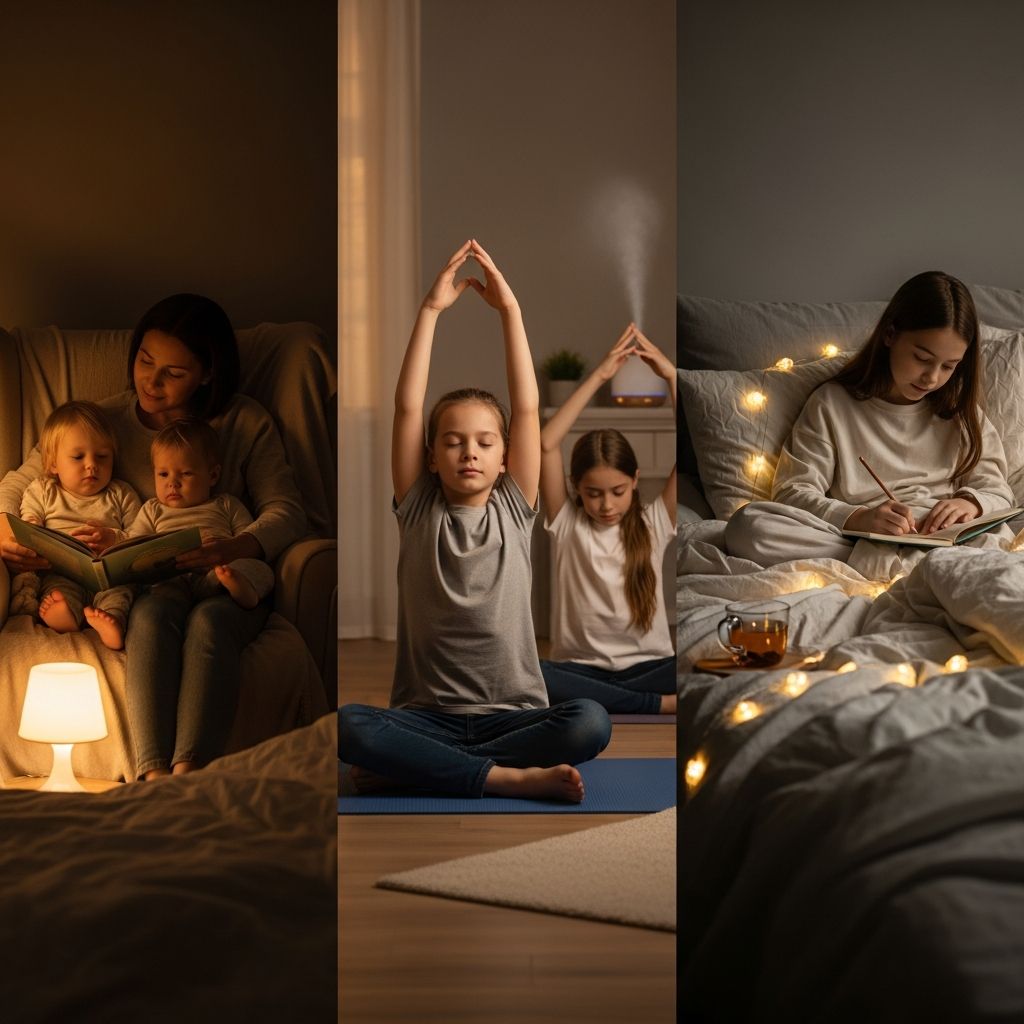
Evenings can feel like the most chaotic part of family life: everyone is tired, homework is unfinished, and bedtime keeps sliding later than planned. A clear, predictable evening routine transforms that chaos into a calmer end to the day, helping children feel secure, easing transitions, and improving sleep for the whole family.
This guide walks through how to create flexible, age-appropriate evening routines for toddlers, school-age children, and teenagers, with practical ideas you can adapt to your family’s needs.
Why Evening Routines Matter
An evening routine is a repeatable sequence of activities between late afternoon and bedtime. It tells a child’s body and brain, “The day is ending; it’s time to slow down.” Rather than a rigid schedule, think of it as a gentle pattern that provides structure and safety.
Consistent evening routines support:
- Better sleep quality and more regular bedtimes.
- Lower stress and fewer power struggles before bed.
- Improved emotional regulation, because kids know what to expect.
- Stronger family connection through built-in moments to talk and play.
- Growing independence as children learn to manage their own nightly tasks.
Core Elements of a Calming Evening
Every family’s routine will look different, but most effective evening rhythms include a few core elements that repeat in the same order most nights.
- Transition from day to evening: Coming home, snack, change of clothes, quick connection.
- Responsibilities: Homework, chores, packing for the next day.
- Body care: Dinner, bath or shower, toothbrushing, pajamas.
- Wind-down: Quiet play, reading, talking about the day.
- Bedtime ritual: A brief, predictable set of final steps before lights out.
Within this framework, you can adjust timing, activities, and expectations according to each child’s age and temperament.
Evening Rhythm by Age Group
Different ages need different levels of structure, independence, and parental involvement. The table below gives a high-level overview.
| Age Group | Main Goals | Parent Role | Typical Bedtime Window |
|---|---|---|---|
| Toddlers & Preschoolers (2–5) | Security, simple habits, early bedtime | High guidance, hands-on help | 6:30–8:00 pm |
| Early School-Age (6–9) | Predictability, shared responsibilities, calm wind-down | Coach and supervisor | 7:30–9:00 pm |
| Preteens & Teens (10+) | Ownership, healthy tech habits, adequate sleep | Partner and boundary-setter | 8:30–10:30 pm (varies) |
Toddlers and Preschoolers: Safety and Soothing
Young children rely heavily on repetition and physical closeness to feel safe. A consistent evening pattern helps reduce resistance and tantrums because the steps become familiar and predictable.
Goals for Ages 2–5
- Create a strong association between the routine and sleep.
- Keep bedtime early enough to prevent overtiredness.
- Introduce simple self-care habits with lots of support.
Sample Evening Flow for Toddlers
Adjust times as needed, but keep the order mostly the same:
- Late afternoon: Light snack, calm play, maybe outdoor time.
- Early evening: Dinner together when possible; limit screens close to mealtime.
- After dinner: Short tidy-up with you (“Let’s put the blocks in the basket together”).
- Bath or wash-up: Warm water, low lights, no high-energy games right before bed.
- Toothbrushing and pajamas: Offer simple choices (two pajama options, one toothbrush color).
- Wind-down: One or two short stories, lullaby, cuddle.
- Final signal: Same goodnight phrase, hug, or song every night.
Tips to Reduce Bedtime Battles
- Use playful transitions: Pretend to be slow turtles going to the bathroom or astronauts floating to bed.
- Offer limited choices: “Do you want your dinosaur pajamas or your star pajamas?”
- Keep the environment calm: Dim lights, quiet voices, soft music if it helps.
- Repeat the same words: A short, consistent goodnight phrase reassures little ones.
Early School-Age Kids: Structure and Responsibility
Kids in early elementary school juggle homework, activities, and expanding social lives. They still need plenty of sleep, but also benefit from taking more responsibility for evening tasks.
Goals for Ages 6–9
- Balance school obligations with downtime and family connection.
- Build simple planning skills (packing bags, choosing clothes for the next day).
- Encourage cooperation rather than constant reminders.
Sample Evening Flow for Early School-Age
- After school: Snack, decompress (play, talk, or quiet time).
- Homework block: Short, focused period with breaks as needed.
- Pre-dinner: Light chore or contribution (setting the table, feeding a pet).
- Dinner: Share highs and lows of the day to stay emotionally connected.
- Post-dinner: Finish any remaining homework or quick tidy-up of personal areas.
- Hygiene: Bath or shower as needed, teeth, pajamas.
- Wind-down: Reading together or independently, gentle stretching, or quiet play like drawing.
- Bedtime ritual: Brief check-in, questions, and a consistent goodnight routine.
Practical Strategies for This Stage
- Use visual checklists: Hang a simple picture or word list in the bathroom or bedroom so kids can see “what’s next” without constant verbal reminders.
- Set time anchors, not strict clocks: “After dinner, we do homework; after homework, it’s hygiene; after that, it’s reading.”
- Involve them in planning: Let them choose which order to do two tasks in, or what they want to read during wind-down.
- Protect a calm buffer: Leave at least 20–30 minutes of screen-free time before sleep.
Preteens and Teens: Autonomy and Healthy Boundaries
As kids approach adolescence, evenings often fill with homework, activities, and social time. Sleep needs remain high, but teens may resist early bedtimes or parental involvement. The focus shifts from doing everything together to guiding them toward taking ownership of their own habit-building.
Goals for Ages 10 and Up
- Help them connect their choices (screen use, caffeine, bedtime) to how they feel the next day.
- Negotiate reasonable boundaries around technology and lights-out times.
- Preserve at least a few minutes of connection each evening.
Sample Evening Flow for Preteens and Teens
- After school: Snack, quick check-in, then homework or activities.
- Early evening: Homework block, sports or clubs, possibly part-time work for older teens.
- Dinner: Aim for sitting together at least a few nights per week.
- Later evening: Complete remaining work, prepare backpack and clothes for the next day.
- Tech wind-down: A device curfew 30–60 minutes before bed; charge devices outside the bedroom if possible.
- Personal wind-down: Reading, journaling, light stretching, music, or a quick shower.
- Final check-in: Short conversation, affirmation, or simple “goodnight, love you” moment.
Supporting Independence Without Letting Go Completely
- Collaborate on rules: Discuss and agree on a realistic bedtime window, screen limits, and expectations for homework completion.
- Use questions instead of commands: “What time do you need to be asleep to feel decent for tomorrow’s test?”
- Model what you ask for: Keep your own late-night screen use in check and talk about your own wind-down habits.
- Respect privacy: Maintain connection through brief but consistent nightly check-ins, not lengthy interrogations.
Balancing Multiple Children at Different Ages
When you have siblings in different stages, a shared family routine with staggered bedtimes can keep evenings manageable. The key is to build one overall rhythm, then adjust specific pieces for each child.
Layering Routines in One Household
Think of your evening as a series of overlapping time blocks where children rotate through age-appropriate activities.
| Time Block | Toddler | School-Age Child | Teen |
|---|---|---|---|
| 5:00–6:00 pm | Snack, play near caregiver | Snack, start homework | Snack, decompress from school |
| 6:00–7:00 pm | Dinner, short play, bath | Dinner, finish homework | Dinner, activities or study |
| 7:00–8:00 pm | Stories and early bedtime | Hygiene, reading, bed | Homework wrap-up, light chore |
| 8:00–9:30 pm | Asleep | Asleep or quiet reading | Tech wind-down, personal bedtime ritual |
Strategies for Managing Different Needs
- Start with the youngest: Begin the bedtime process with the child who needs the earliest sleep, then move up in age.
- Use older children as helpers: A school-age child can read to a younger sibling, or a teen can supervise quick tidy-up while you settle the toddler.
- Protect quiet time for all: Teach older kids to respect younger siblings’ earlier bedtimes with lower voices and quieter activities.
- Keep one shared ritual: A brief family moment—such as “goodnight circle” or a song—can happen before the youngest goes to bed.
Common Challenges and Gentle Solutions
Even well-designed routines face real-life bumps. The goal is not perfect adherence but a steady return to the pattern after disruptions.
When Kids Stall or Refuse
- Connect before you direct: Offer a hug, brief chat, or acknowledgment of their feelings before moving to the next step.
- Use “when-then” language: “When you finish brushing your teeth, then we can read our story.”
- Keep expectations consistent: Occasional exceptions are fine, but frequent changes make stalling more tempting.
Busy Evenings, Activities, and Homework
- Protect a minimum wind-down: Even on late nights, keep a shortened but familiar routine: quick wash, teeth, one-minute cuddle, goodnight phrase.
- Adjust daytime loads when possible: If evenings are always rushed, consider trimming activities or front-loading homework earlier in the day or weekend.
- Communicate about exceptions: Let kids know in advance when the routine will be different, and what will stay the same.
Designing Your Family’s Custom Evening Routine
Instead of copying someone else’s schedule, build a routine around your actual life: your work hours, commute, children’s school start times, and energy levels. Involve kids in the design so they feel invested rather than controlled.
Steps to Build Your Routine
- Clarify your priorities: Decide what matters most in the evening (sleep, connection, homework, chores) and in what order.
- Work backward from wake time: Determine how many hours of sleep each child needs, then choose a reasonable lights-out time.
- Map the main blocks: Sketch a simple evening: home/snack, homework, dinner, hygiene, wind-down, bed.
- Choose 1–2 anchor rituals: A shared dinner question, a specific bedtime phrase, or a nightly story becomes the emotional “glue” of the routine.
- Test and tweak: Try your plan for a week, notice what works, and adjust one piece at a time.
Simple HTML-Friendly Routine Template
You can adapt a basic structure like this in your own notes or family calendar:
<ul> <li>After school: Snack and decompress.</li> <li>Homework: Focused work time with one short break.</li> <li>Dinner: Eat together and share one thing about your day.</li> <li>After dinner: Light chore and pack school bag.</li> <li>Hygiene: Bath/shower, teeth, pajamas.</li> <li>Wind-down: Reading, quiet play, or stretching.</li> <li>Bedtime ritual: Goodnight phrase, hug, lights out.</li></ul>
Frequently Asked Questions
How long should an evening routine take?
Most families do well with 45–90 minutes from the first “time to get ready for bed” signal to lights out. Younger children often need more time to move slowly through transitions, while older kids may need extra minutes for homework or showers. If bedtime always feels rushed, start the process 15–20 minutes earlier.
What if my child has a different temperament than their siblings?
Some children need more physical activity before they can settle; others become overstimulated easily. Adjust the wind-down activities for each child: one might benefit from quiet reading, while another might calm down better after a few minutes of gentle, playful roughhousing earlier in the evening, followed by a quieter final phase.
Do we have to keep the same routine on weekends?
Routines can be looser on weekends, but preserving the basic order of events and a roughly similar bedtime helps maintain healthy sleep patterns. If bedtimes are later on weekends, try to limit the difference to about an hour so Monday mornings are not too difficult.
Is it too late to start an evening routine with my teen?
It is never too late to improve evening habits. With teens, avoid imposing a sudden, rigid plan. Instead, talk about their goals—better mood, more energy, improved grades—and invite them to design a sleep-friendly evening pattern with your support and gentle limits around tech and lights out.
How strict should I be about sticking to the routine?
Consistency matters, but flexibility keeps the routine sustainable. Aim for following the general pattern most nights while allowing for deviations when there are special occasions, guests, or family events. When the evening goes off track, calmly return to one or two familiar steps to signal that it is still time for bed.