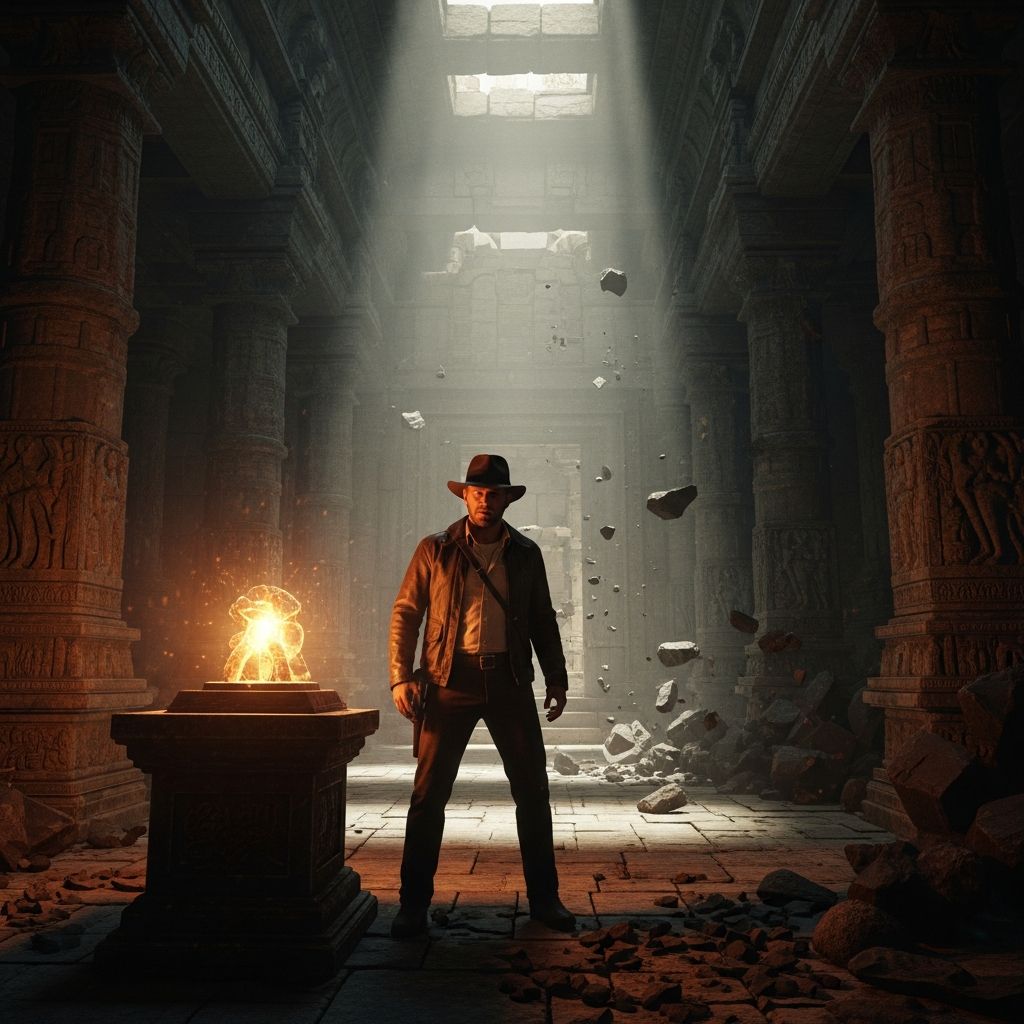
In the summer of 1984, one sequel stood out not just for its daring stunts and breathless pace, but for how deeply it rattled and thrilled a generation of young moviegoers: Indiana Jones and the Temple of Doom.
The film did more than continue the adventures of a fedora-wearing archaeologist; it rewired the DNA of family entertainment, sparked a cultural debate about screen violence, and helped create an entirely new movie rating that still shapes what families watch today.
The Dark Heart of a Blockbuster
Released in May 1984 as the second film in the Indiana Jones series, Temple of Doom was technically a prequel to Raiders of the Lost Ark, set in 1935 with Harrison Ford returning as the adventurous archaeologist. Instead of another globe-trotting battle with Nazis, audiences were dropped into a story about a stolen sacred stone, enslaved children, and a violent underground cult in India.
Director Steven Spielberg and creator George Lucas leaned into pulp serial inspirations, filling the movie with booby-trapped temples, human sacrifices, and a hero who was more morally ambiguous than in any other entry in the series. The result felt less like a straightforward family romp and more like a roller coaster that flirted openly with horror.
- Scenes of ritual sacrifice and heart-ripping rituals shocked parents who expected lighter adventure.
- The enslaved children and underground mines gave the film a grim emotional weight that stayed with young viewers long after the credits.
- Indiana Jones himself briefly turns into a villain under the influence of a dark potion, something unheard of in most mainstream adventure films of the time.
Summer 1984: When Kids Met Fear
The summer of 1984 is widely remembered as one of the great seasons for genre movies, loaded with titles that blended comedy, horror, and fantasy for mainstream audiences. Temple of Doom landed in the middle of this mix and became a rite of passage for many children and teens who were technically allowed into the theater but not emotionally prepared for what they would see.
Families bought tickets expecting globe-trotting fun and instead encountered child slavery, occult ceremonies, and a protagonist literally branded into submission by a cult leader. For kids, that collision between expectation and reality made the movie feel thrilling, dangerous, and sometimes traumatic, marking it as one of their first encounters with cinematic terror that was not overtly labeled as horror.
- Viewers who grew up in the 1980s often recall hiding behind seats or covering their eyes during the mine-cart chase and sacrificial scenes.
- The film became a playground legend, retold in half-remembered details that made it seem even more dangerous than it was on screen.
- Parents, meanwhile, started to question whether a single rating could really cover everything from mild comedy to near-horror.
From PG to PG-13: A New Rating Is Born
One of the most enduring legacies of Temple of Doom is what it did to the American movie rating system. At the time, the Motion Picture Association of America (MPAA) offered a limited set of categories, and the film was rated PG despite its intense images.
The controversy around the movie’s violence, amplified by similar concerns about the Spielberg-produced Gremlins, led to a wave of complaints from parents who felt blindsided by the intensity of PG releases. In response, and with Spielberg’s own encouragement, the MPAA introduced a new middle-ground category, PG-13, just two months after Temple of Doom came out.
| Aspect | Before 1984 | After Temple of Doom |
|---|---|---|
| Key ratings in use | G, PG, R, X (no PG-13) | PG-13 created as a bridge between PG and R. |
| Place for intense adventure films | Often pushed into PG, regardless of tone. | Could be labeled PG-13 to warn parents more clearly. |
| Parent expectations | PG assumed to be broadly child-appropriate. | Greater nuance; PG vs PG-13 started to signal intensity. |
| Legacy | Fewer tools to distinguish family adventure from near-horror. | Modern blockbusters with darker themes now routinely use PG-13. |
Fortune, Glory, and Moral Ambiguity
While earlier and later Indiana Jones films lean on a more straightforward heroic persona, Temple of Doom showcases a version of Indy who begins the story as a self-interested treasure hunter before gradually rediscovering his conscience. He opens the film negotiating over a relic not for a museum, but for personal gain, an edge that makes his later heroism feel more earned.
The narrative confronts him with enslaved children and a village robbed of its sacred stone, forcing him to move beyond “fortune and glory” toward responsibility and sacrifice. Even his temporary corruption under the influence of the Blood of Kali underscores how close he stands to the line between good and evil, a complexity that made the film both unsettling and compelling for young viewers.
- Indy’s arc from mercenary adventurer to reluctant savior tells children that courage is not automatic; it is a choice repeatedly made under pressure.
- The film suggests that greed and heroism can coexist inside the same person, a nuance not often present in children’s entertainment at the time.
- By the ending, returning the sacred stone and freeing the children, Indy models the idea that past selfishness does not prevent future redemption.
A Prequel That Refuses to Feel Smaller
Though it takes place chronologically before Raiders of the Lost Ark, Temple of Doom never behaves like a typical prequel carefully setting up later events. Instead, it hurls viewers into an almost self-contained adventure, with new side characters like Short Round and Willie Scott and a plot that barely references the wider series mythology.
Its independence from the rest of the franchise has helped keep the film strangely timeless: audiences can watch it without any prior context and still understand everything that matters. This stand-alone quality, combined with its uncompromising darkness, makes it feel more like a bold offshoot than a safe middle chapter.
Iconic Set Pieces and Practical Spectacle
Beyond its tone and themes, Temple of Doom remains memorable because of its relentless, practical-action set pieces, created long before digital effects dominated the blockbuster landscape. The opening nightclub brawl in Shanghai, the escape in an inflatable raft from a plunging airplane, and the extended mine-cart chase all showcase a physicality that audiences could almost feel in their bones.
The film’s visual effects won an Academy Award, cementing its reputation as a technical milestone in 1980s adventure cinema. Intricate miniatures, stunt work, and practical gags combined to create sequences that looked impossibly dangerous but were meticulously engineered behind the scenes.
- The mine-cart chase, with its dizzying twists and near-collisions, became one of the defining images of ‘80s action spectacle.
- The rope-bridge climax, suspended over a crocodile-filled ravine, blended suspense and spectacle in a way that felt both terrifying and exhilarating.
- John Williams’s score, including a distinct theme for the film, amplified the sense of constant movement and danger.
Controversy, Criticism, and Cultural Blind Spots
Even as it thrilled children, Temple of Doom drew significant criticism for its violent content and depiction of India and Indian culture. Some commentators argued that the film leaned on stereotypes, presenting a distorted, exoticized vision of the country and its people.
In India, the movie faced backlash and was not granted a theatrical release upon its original run, reflecting concerns about its portrayal of religious practices and local customs. Over time, many fans have learned to hold two ideas at once: that the film is a technically brilliant, emotionally formative adventure, and that some of its cultural imagery remains uncomfortable or harmful by modern standards.
- Discussions of the movie now often acknowledge both its influence and its problematic elements.
- For viewers who grew up loving the film, rewatching it can be a complex experience that mixes nostalgia with critical self-awareness.
- Its legacy has prompted broader conversations about how blockbusters engage with non-Western cultures.
How Temple of Doom Shaped a Generation
For many kids of the 1980s, Temple of Doom was one of the first films that truly scared them while still being presented as mainstream entertainment. That sense of permitted fear—of being allowed to watch something “too intense” under the banner of a family adventure—helped define how that generation related to risk and danger on screen.
It also became a shared touchstone: decades later, people still trade stories about how old they were when they first saw the heart-ripping scene or how they reacted to the underground temple sequence. In a time before streaming and constant content, a single movie could become a cultural landmark that circulated in theaters, video stores, and schoolyard conversations for years.
Practical Takeaways for Modern Parents and Fans
Revisiting Temple of Doom today can be an opportunity rather than a problem, especially for parents watching with their children. The very qualities that made the film controversial—its intensity, moral ambiguity, and flawed cultural lens—can open the door to conversations that go beyond “Was it scary?”
Handled thoughtfully, the movie can serve as a springboard to talk about fear, heroism, cultural representation, and how movie ratings work.
- Use the viewing to discuss the difference between adventure and horror, and why some scenes might feel more frightening than others.
- Talk about stereotypes and why certain portrayals no longer reflect how people understand cultures today.
- Explain the history of the PG-13 rating and how films like Temple of Doom changed what families expect from movie labels.
- Encourage kids to articulate what scared them and what they found exciting, helping them learn to process intense media.
Frequently Asked Questions
Was Indiana Jones and the Temple of Doom a box office success?
Yes. Despite controversy, the film was a major financial success, earning over 333 million dollars worldwide and becoming the highest-grossing movie of 1984.
Why is Temple of Doom considered darker than other Indiana Jones films?
The movie leans on horror-inflected elements such as human sacrifice, brainwashing, and child enslavement, and it briefly turns its hero into a villain under the influence of a magical potion. These choices, combined with its underground cult setting, give it a more oppressive, nightmarish tone than other entries in the series.
Did Temple of Doom directly create the PG-13 rating?
The film was one of the main catalysts. Complaints about its intense content, alongside similar concerns about Gremlins, motivated the MPAA—encouraged by Steven Spielberg—to introduce PG-13 as a new rating shortly after the movie’s release.
Is Temple of Doom suitable for children today?
Suitability depends on a child’s age, sensitivity to horror elements, and a family’s comfort with violence and frightening imagery. Parents who choose to show it may want to preview the film, be ready to pause and talk through intense scenes, and discuss its dated cultural depictions.
How does Temple of Doom fit into the overall Indiana Jones timeline?
The story is set in 1935, technically making it a prequel to Raiders of the Lost Ark, which takes place in 1936. However, its largely self-contained plot means viewers can watch it on its own without needing detailed knowledge of other Indiana Jones adventures.
SEO note: This article explores the cultural impact, box office success, and rating legacy of Indiana Jones and the Temple of Doom, situating the movie within the broader landscape of 1984 summer blockbusters and modern family viewing habits.