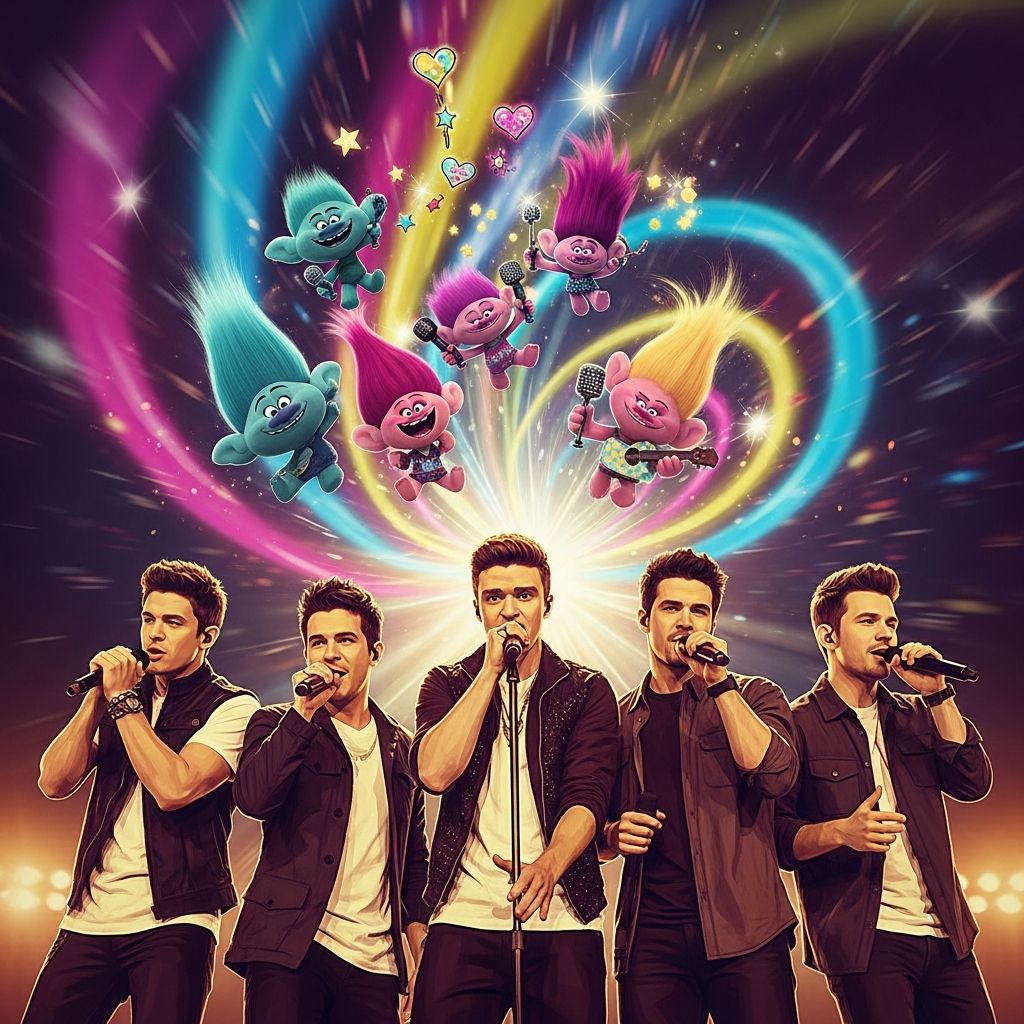
When a legendary boy band steps into the world of animated trolls, the result is not just a movie tie-in—it is a crash course in how pop nostalgia, family entertainment, and multigenerational fandom all collide.
The Unexpected Return of a Pop Phenomenon
For many millennial parents, the words “boy band” summon instant flashbacks: carefully choreographed dance routines, matching outfits, and choruses that seemed designed to be screamed at in unison from the back row of an arena. Those memories have sat dormant for years, buried under school runs, mortgage payments, and kids’ playlists on repeat.
Then an animated franchise about glittery, singing trolls invited one of the most iconic groups of that era back into the spotlight, and suddenly those memories snapped into focus again. Instead of stadium lights, the stage is now a movie screen; instead of teenagers, the fans are adults with their own children in tow.
From Posters on the Wall to Parents in the Theater
Long before streaming and social media, pop fandom meant saving up for CDs, calling radio stations to request a favorite song, and covering bedroom walls with posters torn from teen magazines. Boy bands like *NSYNC were the center of that universe: endlessly discussed at lunch tables, shrieked over at concerts, and replayed until discs were scratched beyond repair.
Fast-forward a couple of decades and those same kids have grown up. They now navigate work schedules, homework help, and bedtime routines, but the emotional charge associated with their favorite group never quite disappeared. When that band returns in a family-friendly movie, it creates a rare moment where an adult’s internal teenager and their actual children can dance to the same beat.
Why Boy-Band Pop Hits So Hard
It is easy to joke about boy bands, but their impact on listeners is rarely a joke. The genre’s power lies in three simple but potent elements: melody, harmony, and emotion. Catchy hooks lodge themselves into memory, layered vocals make every chorus feel huge, and romantic or aspirational lyrics offer a safe outlet for big feelings.
- Accessibility: The songs are structured for instant sing-along, even on a first listen.
- Emotion on the surface: Feelings are not hidden behind irony; they sit right in the chorus.
- Collective identity: Fans do not just love a song; they often attach to a favorite member, a favorite era, and a shared language of inside references.
When that kind of pop sound reappears in a colorful animated setting, it feels familiar but lighthearted—a throwback wrapped in glitter, safe to share with kids who have never heard it before.
Animated Worlds as a Stage for Pop Legends
Animated movies about music-loving creatures are built around soundtracks that lean hard on joy, color, and recognizable tunes. This makes them a natural home for legacy acts looking to reintroduce themselves without the pressure of a full-scale comeback tour. A single new song or a small role can thread the needle between nostalgia and novelty.
For children, an animated film is just a fun story with bouncy songs. For adults, the same movie can feel like a secret reunion concert hidden inside a family matinee. The animation gives older artists a kind of creative disguise, while the soundtrack gives them a megaphone.
Millennial Parents, Meet Your Childhood Soundtrack
When a beloved boy band shows up in a kids’ movie, it is more than clever stunt casting. It is a reflection of who now holds the wallet for family entertainment: parents in their 30s and 40s who grew up in the peak pop era of the late 90s and early 2000s. Studios understand that if adults feel emotionally invested, they are more likely to buy tickets, merchandise, and soundtrack downloads.
This creates a new kind of movie-going experience. Parents laugh at in-jokes and musical nods that fly straight over their kids’ heads, while children respond purely to the colorful chaos on screen. Everyone leaves humming, but for different reasons.
| Audience | Primary Reaction | Emotional Layer |
|---|---|---|
| Millennial parents | Recognize the band, style, and references | Nostalgia, surprise, and a sense of being seen |
| Young kids | Respond to bright visuals and catchy rhythms | Excitement, silliness, and pure fun |
| Teens | View it as quirky or retro-cool | Curiosity about “old-school” pop |
Why *NSYNC’s Legacy Still Resonates
Part of what makes *NSYNC’s return feel so satisfying is that the band arrived at a specific cultural moment. They emerged when CDs still ruled, music videos dominated television blocks, and fans had to work to participate—lining up for tickets, taping performances, and phoning radio stations to vote for their favorite song.
The group represented peak mainstream pop spectacle: intricate harmonies, synchronised choreographies, and instantly identifiable choruses that still live rent-free in the minds of anyone who grew up in that era. Those memories are not just about the music; they are about who listeners were when they first heard it.
A Different Kind of Boy-Band Comeback
Most reunion stories focus on sold-out tours or dramatic behind-the-scenes documentaries. A cameo in a family movie offers a quieter, more playful alternative. Instead of centering on past conflicts or industry politics, the focus shifts to joy: the simple act of singing together again, even in animated form.
For fans, this can be oddly more intimate than a stadium tour. The encounter happens in a darkened theater with kids in booster seats, popcorn in hand, and a familiar voice surfacing unexpectedly from the speakers. It feels casual and low-stakes, but emotionally it can hit just as hard as a major comeback announcement.
Shared Soundtracks and Family Bonding
Parents are constantly searching for cultural touchpoints that do not feel like a compromise—something that entertains their kids without draining their own patience. When a favorite band from their youth appears in a film aimed squarely at children, it provides a built-in bridge between generations.
- Car rides become more fun when everyone agrees on the soundtrack.
- Parents can share stories of concerts and school dances that make their kids see them as more than just rule-enforcers.
- Children get to inherit a piece of their parents’ emotional history in a format tailored to their age.
In this sense, a single appearance by a classic boy band inside a kids’ movie can do more for family connection than a dozen lectures about what childhood used to be like.
The Business Logic Behind Nostalgia
While the emotional dimension is real, there is also a straightforward commercial reason to embed legacy pop acts into children’s movies. Recognizable names generate headlines, social media buzz, and curiosity clicks from adults who might otherwise ignore a new animated release.
At the same time, nostalgia is one of the most dependable marketing tools available. It promises not only familiarity but a kind of emotional safety, reassuring adults that the experience they are buying for their kids will be rooted in something they already know and love. When the strategy works, it boosts ticket sales, soundtrack streams, and merchandise revenue in one swoop.
How Kids Hear a Band They Have Never Known
For children, encountering *NSYNC (or any classic boy band) through an animated movie is like discovering a new band that just happens to have been around for decades. They do not bring baggage about teen magazines or TRL countdowns; they only hear high-energy voices and bright, tightly produced choruses.
This clean slate can actually extend the life of the group’s catalog. Kids who latch onto one new song may end up browsing older tracks, turning what used to be throwback playlists into something closer to a cross-generational canon.
What This Says About Today’s Pop Culture
The blending of legacy pop acts and kids’ movies highlights how flattened the timeline of culture has become. Old and new coexist in the same algorithm-driven playlists, with no clear dividing line between eras. A track that debuted at the turn of the millennium can play comfortably alongside songs released this year.
By placing a 90s/2000s boy band in the middle of a contemporary animated story, filmmakers are making that blend literal. Time collapses: parents hear a familiar chord progression from their past, kids absorb it as part of their present, and the band itself moves seamlessly between eras.
Tips for Parents Sharing Their Old Favorites
For parents excited by the idea of revisiting their boy-band era with their children, a little planning can turn casual listening into a meaningful experience. The goal is not to force old favorites on kids, but to invite them into a shared musical world.
- Start with the movie track: Use the song your kids already recognize as a springboard to explore older hits.
- Create a mixed playlist: Alternate between your childhood favorites and current songs your kids love to keep everyone engaged.
- Tell stories, not lectures: Instead of insisting that one band was “the best,” share specific memories—who you went to see them with, what you wore, or how long you waited in line for tickets.
- Let kids pick a favorite: Just as you once chose a favorite band member, let your children decide which voice or vibe they like most, even if it is not the one you adored.
Looking Ahead: The Future of Pop Nostalgia
The reunion of a beloved boy band through an animated franchise is unlikely to be the last of its kind. As more generations grow up with distinct musical identities, studios will continue to search for ways to fold those identities into family media. Each new wave of parents brings its own soundtrack, and each soundtrack is a marketing opportunity waiting to be remixed.
Whether this leads to more collaborations, full-scale reunion tours, or entirely new kinds of multimedia projects, one thing is clear: the line between children’s entertainment and adult nostalgia will only become more intertwined. The arena of the future might just as easily be a movie theater or a streaming platform as a physical stage.
Frequently Asked Questions
Why do boy bands keep coming back?
Boy bands rarely disappear completely because their songs are attached to formative memories. Whenever a generation reaches an age where it controls cultural and economic choices, the demand for those familiar sounds returns.
What makes *NSYNC special compared to other groups?
Every fan will have a different answer, but many point to a combination of strong harmonies, tightly produced pop tracks, and a knack for creating instantly recognizable hooks. Their songs tend to be both theatrical and accessible, which is ideal for big stages and animated settings alike.
Is a cameo in a kids’ movie as significant as a new album?
In terms of artistic scope, a full album obviously carries more weight. However, a high-profile appearance in a family film can reach a broader, more varied audience in one moment, reigniting interest among old fans while capturing the curiosity of new, younger listeners.
How can families make the most of this kind of crossover?
Use the shared experience as a conversation starter. Talk about what music meant to you as a kid, ask your children how they feel about the songs, and consider building small rituals—like Friday dance nights or car sing-alongs—that reinforce the connection.
Will this trend extend beyond boy bands?
Absolutely. Any musical act with a strong back catalog and a devoted fan base is a candidate for revival through family-friendly media. The basic formula—blend nostalgia with accessibility—applies across genres and generations.
The collision of *NSYNC, animated trolls, and millennial parenting is more than a novelty headline. It is a sign of how pop culture now moves across time, how childhood obsessions become adulthood comfort food, and how a single song can connect a parent’s past with a child’s present in the space of a three-minute chorus.