Managing pumped breast milk can feel like a juggling act: you are tracking feedings, naps, and now also room temperatures and timestamps on bottles. This guide breaks down how long breast milk can safely sit out and how to store it in ways that fit into a busy family’s actual routine.
Why Breast Milk Storage Matters
Fresh breast milk is a living fluid full of antibodies, enzymes, and beneficial bacteria that support your baby’s immune system and digestion. Poor storage habits can allow harmful bacteria to grow and quietly reduce milk’s nutritional and protective qualities. Thoughtful handling helps preserve the milk you worked hard to pump and protects your baby from foodborne illness.
Quick Answer: How Long Can Breast Milk Sit Out?
Most healthy, full-term babies can safely drink freshly expressed milk kept at typical indoor room temperature (around 20–25°C / 68–77°F) for up to about 4 hours in everyday conditions. In very clean conditions and cooler rooms, some experts allow a slightly longer window, but using or chilling within 4 hours is a practical and conservative habit. Once milk has been warmed or a baby has started drinking from the bottle, aim to use it within about 1–2 hours and then discard leftovers.
- Freshly pumped, room temperature (up to ~77°F / 25°C): Ideally use or refrigerate within 4 hours.
- Previously chilled or thawed and then warmed: Use within 2 hours.
- Milk that baby has already drunk from: Use within 1–2 hours, then discard.
These ranges assume a healthy baby, clean pumping and handling practices, and normal indoor conditions. For premature or medically fragile infants, a pediatrician or hospital may advise stricter timelines.
Room Temperature Rules in Everyday Situations
Real life is messy: commutes run long, naps run short, and planned feeding times change. Understanding how room temperature affects milk helps you make safer decisions on the fly.
Understanding “Room Temperature”
Safety guidelines for milk sitting out usually refer to standard indoor temperatures, not a hot car or sunny windowsill. Warmer environments encourage bacteria to grow more quickly, so the hotter it is, the shorter the safe window.
- In cooler rooms (closer to 20°C / 68°F), milk is generally more stable for the recommended time frame.
- In warmer rooms (approaching 25°C / 77°F or more), staying closer to the 4-hour upper limit is wise, and chilling sooner is even better.
- Never treat milk left in a parked car or direct sun as safe for the full room-temperature guideline.
Freshly Pumped Milk Left on the Counter
If you pump and plan to feed soon, you do not always have to refrigerate immediately. Many parents simply leave fresh milk on the counter if a feeding is expected within a few hours.
- If you know you will use the milk within 2–4 hours, leaving it covered at room temperature is typically acceptable.
- If your plans change and several hours pass, you can still refrigerate it as long as you are within that safe window.
- If you are not sure when the next feed will be, chilling sooner preserves quality and gives you more flexibility later.
Fridge and Freezer Storage at a Glance
Refrigeration and freezing extend the life of your milk, but each has its own time limits and best practices. Keeping an easy-reference table near your pump station can help anyone who cares for your baby follow the same rules.
| Milk Type & Location | Typical Home Recommendation | Best Practice Tips |
|---|---|---|
| Freshly expressed at room temperature (~20–25°C / 68–77°F) | Use or refrigerate within about 4 hours. | Shorter times in warmer rooms; cover container and keep out of sun. |
| Freshly expressed in the refrigerator (≤4°C / 40°F) | Generally up to 4 days is considered acceptable. | Store in the back of the fridge, not in the door where temperatures fluctuate. |
| Freshly expressed in a standard freezer (around −18°C / 0°F) | Best within about 6 months; up to 12 months is often considered acceptable. | Store toward the back of the freezer and avoid frequent thaw–refreeze cycles of the surrounding food. |
| Thawed milk (previously frozen), kept in refrigerator | Use within 24 hours of complete thawing. | Start the 24-hour clock once all ice crystals are gone. |
| Thawed or chilled milk brought to room temperature or warmed | Use within 2 hours. | Discard leftovers after a feed. |
Always follow recommendations from your baby’s own health care providers if they differ from general household guidance, especially for babies born prematurely or with medical conditions.
Containers, Labeling, and Portion Sizes
The right container and clear labeling make milk safer and easier to use, especially if multiple caregivers are involved or your baby attends childcare. It also helps prevent wasted milk when your baby’s intake changes.
Choosing Safe Containers
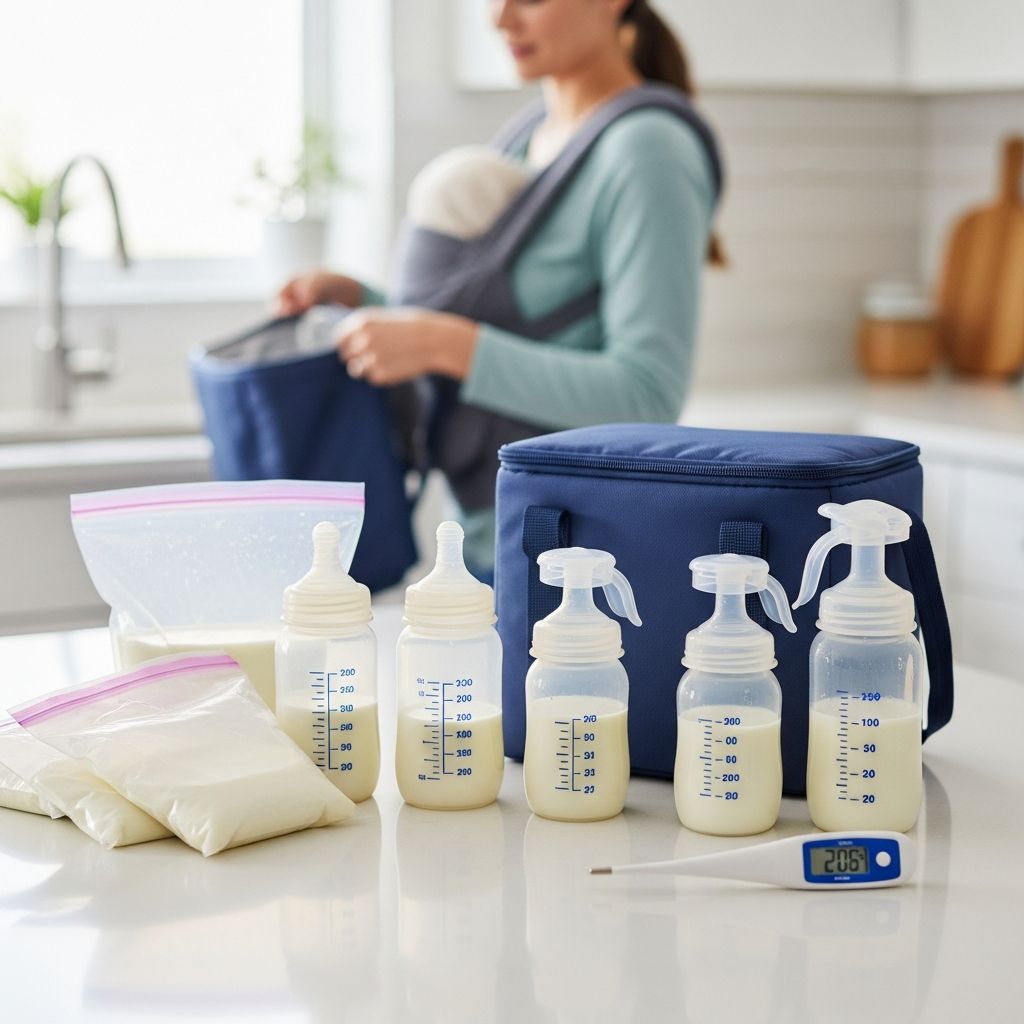
- Use clean, food-grade glass bottles or hard plastic containers with tight-fitting lids designed for feeding or milk storage.
- Special breast milk storage bags can save space and are convenient for freezing and thawing.
- Avoid thin, general-purpose plastic bags or disposable bottle liners that can leak or break.
Whatever container you choose, wash your hands before handling milk, and make sure bottles, flanges, and storage items are well cleaned and dried between uses.
Labeling and Portioning
Labeling does more than help you remember what is oldest. It can prevent mix-ups in daycare and helps family members grab the right bottle without guessing.
- Write the date and time the milk was pumped on every container.
- Add your baby’s name if milk goes to daycare or is stored with other children’s milk.
- Freeze or refrigerate in small portions (about 60–120 ml / 2–4 oz) to match typical feed sizes and reduce waste.
- Keep a small number of even smaller portions (30–45 ml / 1–1.5 oz) on hand for top-ups or when offering milk after a solid meal.
Using Older Milk First (and When to Discard)
Much like food rotation in your fridge, organizing breast milk on a “first in, first out” basis minimizes waste and ensures your baby benefits from fresher milk. While milk that has passed its safe storage time must be thrown away, planning can reduce how often that happens.
- Store newer bottles or bags behind older ones so the oldest milk is easiest to grab.
- Set a regular time each day to move freshly pumped milk into its proper storage spot and update any tracking app or log you use.
- When in doubt about how long a particular bottle has been sitting out or stored, it is safer to discard it than to risk illness.
Milk that smells sour, has a curdled texture that does not mix when gently swirled, or simply seems off should be discarded, even if storage times were followed.
Thawing and Warming Breast Milk Safely
How you thaw and warm milk affects both safety and nutrient preservation. Gentle, gradual warming protects the milk’s helpful components and reduces the chance of hot spots that could burn your baby’s mouth.
Thawing Frozen Milk
- Thaw overnight in the refrigerator whenever possible; this is the gentlest method.
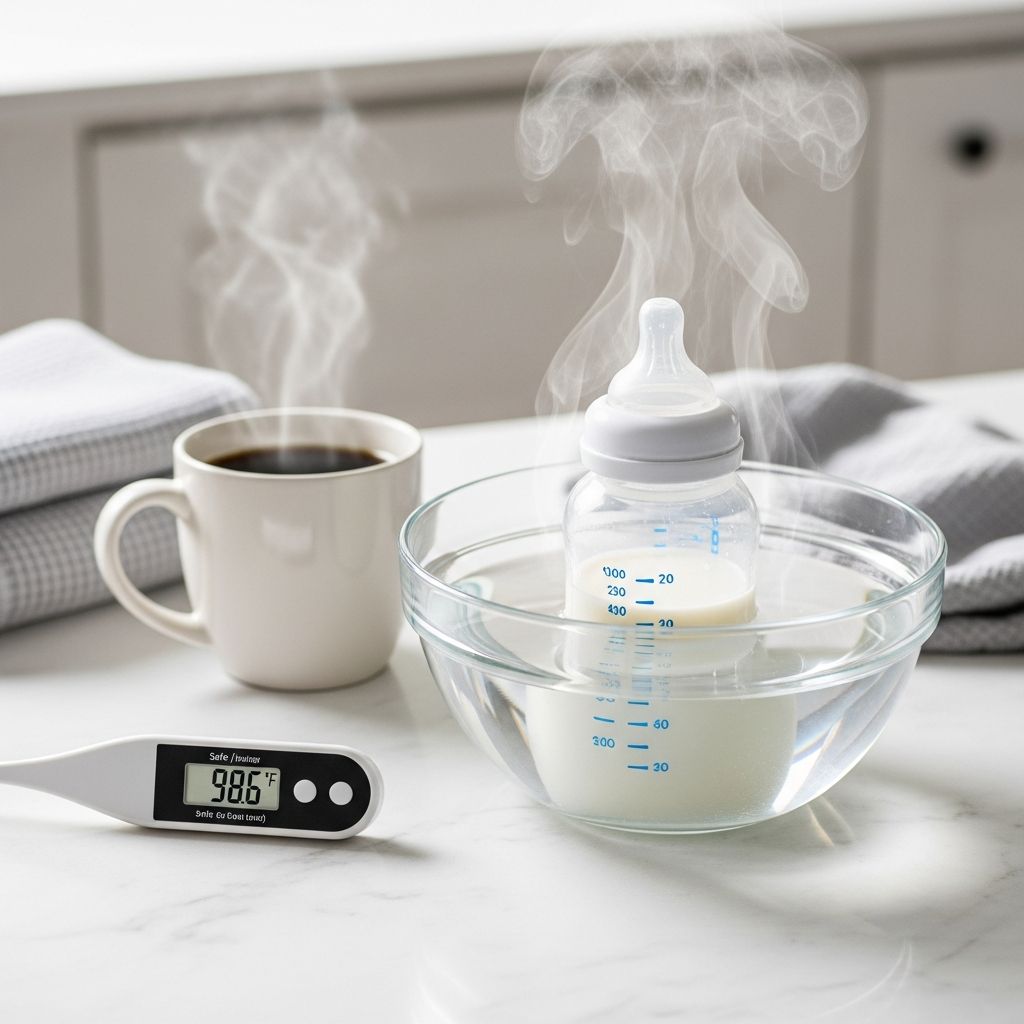
- For quicker use, place a well-sealed bag or bottle of frozen milk in a bowl of warm tap water, changing the water as needed.
- Do not use a microwave; it can create uneven hot spots and damage some of the milk’s beneficial properties.
- Once thawed, keep the milk in the fridge and use within approximately 24 hours.
Warming Milk for Feeding
Some babies are happy with cool or room-temperature milk; others prefer it warmed. Either approach can be safe if the milk has been stored properly.
- Warm milk by placing the container in a bowl or cup of warm water or using a bottle warmer according to its instructions.
- Gently swirl the container to mix the fat layer back in; avoid vigorous shaking, which can introduce extra air.
- Test the temperature on the inside of your wrist; it should feel warm but not hot.
- Once warmed or brought to room temperature, plan to use the milk within about 2 hours.
Special Case: Milk Left Over After a Feeding
Once your baby has started drinking from a bottle, saliva and oral bacteria can enter the milk. That is why leftover milk has a shorter safe window than untouched milk that has simply been sitting on the counter.
- Offer amounts that match your baby’s usual intake so there is less leftover in the bottle.
- If some milk remains after a feed, use it within about 1–2 hours or discard it.
- Avoid repeatedly rewarming the same bottle; each reheat shortens the safe use time.
Strategies for Working Parents and Pumping on the Go
Parents who pump at work or while traveling often face extra challenges in keeping milk cool. With a bit of planning, you can maintain safe temperatures even when fridges are not immediately available.
- Use an insulated cooler bag with several frozen ice packs for commuting and pumping sessions away from home.
- Place milk as close to the ice packs as possible and limit how often you open the cooler.
- Once you reach a fridge or freezer, move the milk in as soon as you can.
- Ask your workplace or childcare provider in advance what refrigeration options and policies are available.
If you know that pumped milk will be in a cooler with ice packs for many hours, treat that cooler as a chilled environment and follow refrigerator-style time limits once you transfer the milk.
Common Myths About Breast Milk Storage
Well-meaning advice from relatives or online forums can sometimes conflict with current guidance. Clearing up a few common myths can help you feel more confident in your decisions.
- Myth: Milk must be discarded immediately if not refrigerated. In reality, freshly pumped milk can sit at normal room temperature for several hours for healthy, full-term babies, as long as handling is clean.
- Myth: You can always refreeze thawed milk. Once milk has been completely thawed, it should not be refrozen. Plan ahead and thaw only what you expect to use within about a day.
- Myth: Milk that looks separated is spoiled. Breast milk often separates into layers; gentle swirling usually makes it look uniform again. Spoilage is more about smell, taste, and exceeding storage limits.
- Myth: All families must follow the strictest possible time limits. While some situations require extra caution, many recommendations already include a margin of safety. Your baby’s health team can help you individualize guidance if needed.
Simple Routine for Tracking Milk Times
Remembering exactly when each bottle was pumped, chilled, warmed, or offered can be overwhelming. A simple, repeatable routine lowers stress and helps everyone caring for your baby stay consistent.
- Right after pumping: Cap the container, write the date and time, and note “fresh” on the label.
- When moving to fridge or freezer: Add a quick note such as “fridge” or “freezer” and rearrange to keep oldest milk front and center.
- Before feeding: Check the label to confirm the milk is within safe time limits for its storage type.
- After feeding: If there is leftover milk, either use within about 1–2 hours or discard.
There are also apps and printable logs designed for pumping parents, but a simple marker and masking tape system can be just as effective.
Frequently Asked Questions (FAQs)
1. What if I forgot when I pumped the milk?
If you truly cannot remember when milk was expressed or how long it has been sitting out, it is safest not to use it. As frustrating as it is to discard milk, your baby’s safety is more important than saving a bottle with uncertain timing.
2. Can I mix freshly pumped milk with cold milk from the fridge?
Many caregivers prefer to chill freshly pumped milk first, then combine it with already cold milk. Adding warm milk directly into a cold bottle can temporarily raise the temperature, so chilling the new portion first keeps the overall bottle within a safer range.
3. Is it okay if my milk smells soapy or metallic after storage?
Some parents notice a soapy or metallic smell in stored milk due to higher natural lipase activity, an enzyme that helps break down fats. This does not always mean the milk is unsafe, but if your baby refuses it or you are unsure, consult a lactation professional or your pediatrician for personalized advice.
4. Do storage rules change for premature or medically fragile babies?
Yes. Babies who are premature, have immune challenges, or are hospitalized may need stricter time limits and additional hygiene steps. Always follow neonatal unit or pediatrician instructions when storing and transporting milk for these infants.
5. Can I leave a bottle next to my sleeping baby for night feeds?
It may be tempting to prepare a bottle in advance and leave it out overnight, but that usually exceeds safe room-temperature time limits. For night feeds, consider storing milk in a bedside cooler or the fridge and warming it quickly when your baby wakes.
6. Is shaking breast milk harmful?
Shaking is not generally considered dangerous, but many caregivers prefer gentle swirling to mix layers without introducing extra air bubbles. Swirling also helps maintain the milk’s natural texture and avoids unnecessary froth.
Final Thoughts
Perfect storage is not required to be a great parent, and you will occasionally misread a label or lose track of time. By learning basic time limits for milk sitting out, in the fridge, and in the freezer, and by building a simple labeling routine, you create a safe, forgiving system that protects both your baby and your hard-earned milk. When in doubt, discarding questionable milk and discussing any special circumstances with your baby’s health care provider is always the safest path.