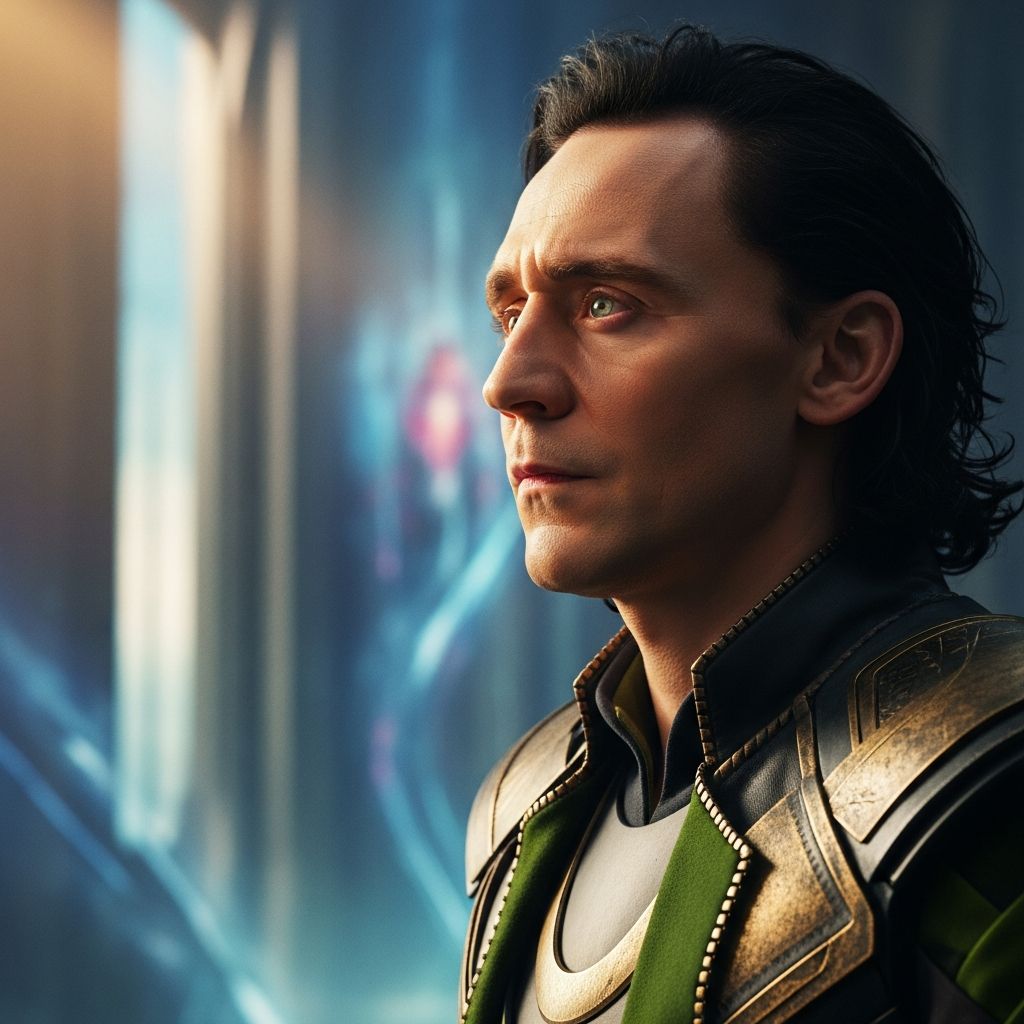
Marvel’s Loki series is full of big ideas about fate, free will, and identity, but one of its sharpest moves is surprisingly simple: it drops Bonnie Tyler’s “Holding Out for a Hero” into a crucial episode moment and lets pop culture do the talking. The song isn’t just background noise; it becomes a commentary on Loki himself, on what it means to be a hero, and on how the Marvel Cinematic Universe (MCU) plays with audience expectations.
This article explores how that needle-drop works, why the song is such a perfect (and ironic) fit, and what it says about the way modern genre TV uses familiar music to reshape iconic characters.
The Scene: A Battle, a Banger, and a Mischief God
To understand why the song choice lands so strongly, you have to look at when and how it appears. The sequence is stylized, colorful, and chaotic—very much in tune with the rest of Loki, but the music kicks it into a different emotional register.
- High-stakes confrontation: Loki and the Time Variance Authority (TVA) are hunting a dangerous Variant, a different version of Loki who has been outwitting them at every turn.
- Genre mashup tone: The show leans into 1980s aesthetics, blending retro visuals with futuristic tech and bureaucratic absurdity.
- Music-driven momentum: As “Holding Out for a Hero” blares, the action sequence becomes less about physical danger and more about what the song is saying about the characters on screen.
The result is a sequence that feels both exhilarating and slyly self-aware. Instead of solemnly building up a classic superhero moment, the show uses a bombastic power anthem to question whether anyone in this story actually fits the word hero.
Why “Holding Out for a Hero” Is Such an Iconic Choice
Bonnie Tyler’s “Holding Out for a Hero” was first released in 1984, written by Jim Steinman and Dean Pitchford for the film Footloose, and later appearing on Tyler’s album Secret Dreams and Forbidden Fire. The track quickly became synonymous with over-the-top heroics, frequently used in movies and TV as shorthand for high-energy, melodramatic stakes.
| Song Element | What It Conveys | How Loki Uses It |
|---|---|---|
| Driving rock beat | Urgency, action, momentum | Propels the chase and fight, making the moment feel larger-than-life. |
| Soaring vocals | Emotional longing for a savior | Highlights the irony that Loki is no traditional savior at all. |
| Romanticized lyrics | Mythic, flawless hero ideal | Clashes with the morally gray reality of every character involved. |
The MCU has increasingly leaned on recognizable pop and rock tracks—think of the way Guardians of the Galaxy foregrounds 1970s and 1980s hits as emotional anchors and character backstory. Marvel Studios president Kevin Feige has acknowledged that music is used deliberately to complement character arcs and tone in MCU projects. In Loki, that tradition continues, but with a twist: instead of confirming a hero’s cool factor, the song undermines the very idea of a clear-cut hero.
Hero Worship vs. Loki’s Self-Image
The lyrics of “Holding Out for a Hero” describe someone searching for a noble, larger-than-life champion. Lines about needing a strong, fast, and fearless protector conjure a mythic, almost fairy-tale hero—a far cry from Loki’s slippery, self-interested brand of charm.
Within the context of Loki as a series, that’s exactly the point. The Loki we follow is an alternate-timeline version who has just seen a montage of his own future: his failures, his betrayals, and his eventual death. He is stripped of illusions about his glorious destiny, yet he still can’t resist the fantasy of his own importance.
- He sees himself as the savior: Loki believes he is smarter than the TVA and more important than the Variant he is chasing.
- Everyone else sees a problem to contain: The TVA doesn’t trust him, and the Variant doesn’t respect him.
- The soundtrack mocks the gap: A song longing for a pure hero blasts as Loki flails through a morally ambiguous situation he helped create.
The gap between the heroic fantasy in the lyrics and the messy reality of Loki’s personality becomes a kind of running joke, but it’s also character development. The episode nudges him toward understanding that he is neither the villain he was branded as nor the pristine hero of his fantasies.
The Variant, Sylvie, and the Anti-Hero Twist
The episode that uses “Holding Out for a Hero” culminates in a reveal: the mysterious Variant is a woman who will eventually adopt the name Sylvie. She is ruthless, driven, and uninterested in Loki’s elaborate schemes or ego. That subversion is crucial.
Instead of centering the spotlight on a singular, triumphant hero, the show gives us a fractured mirror:
- Loki: A reformed-but-not-really trickster learning about his own capacity for growth.
- Sylvie: A radical disruptor with her own traumatic history and agenda.
- The TVA: An authoritarian organization declaring itself the protector of a “Sacred Timeline,” despite its opaque ethics.
When viewed through the song’s lens, everyone fails the test of classic heroism. Sylvie is not the song’s noble savior; she is a rebel willing to tear down an unjust system at catastrophic cost. Loki is not the fearless protector; he’s a wildcard exploring whether he can be more than his worst impulses. Even the TVA, which claims to preserve order, falls short of the moral clarity “Holding Out for a Hero” longs for.
The result is a vivid musical irony: the more the song insists we need a flawless hero, the more obvious it becomes that this story refuses to provide one.
1980s Nostalgia and the MCU’s Time Games
Loki is, at its core, a show about time: branching timelines, erased possibilities, and the bureaucratic absurdity of trying to control the entire flow of history. Choosing a 1980s anthem is more than a vibe decision; it anchors the series within a pop-cultural past that audiences immediately recognize.
The 1980s have become a rich nostalgia well for modern television and film—from Stranger Things to superhero properties—and that nostalgia carries implications:
- Comfort vs. chaos: Familiar songs soften the weirdness of multiverse rules, giving viewers an emotional foothold.
- Time as collage: In a story that jumps between eras and worlds, a 1980s track reminds us that timelines are not just historical—they’re cultural.
- Retro hero ideals: 1980s media often embraced archetypal, uncomplicated heroes. Dropping that aesthetic into Loki’s morally tangled narrative highlights how far we’ve come from that ideal.
From a broader perspective, using period music to ground speculative storytelling is part of a larger trend. Popular science fiction cinema, such as Guardians of the Galaxy and other MCU projects, uses familiar songs to evoke emotional resonance while juxtaposing them with futuristic or cosmic visuals. Loki follows suit, but uses the juxtaposition to actively critique the simplistic hero fantasies those songs can represent.
Soundtracking Character Growth: Loki’s Slow Turn Toward Complexity
One reason the song lands so well is that it arrives at a moment when Loki is being forced to confront himself. In earlier MCU films, he often operates as a foil or antagonist; here, he is the point-of-view character, and the show has room to interrogate his mythology.
By the time “Holding Out for a Hero” plays, several things have already happened:
- Loki has watched records of his own future losses and failures, including the destruction of his home, Asgard.
- He has learned that the TVA treats his grandest moments as mere “events” to be cataloged and pruned.
- He has glimpsed that the Time-Keepers and their supposed grand design might not be as benevolent as advertised.
The anthem’s exaggerated faith in a pure hero contrasts with Loki’s dawning realization that the universe is far murkier than the labels “hero” and “villain” suggest. His potential evolution is not about becoming the kind of hero the song describes, but about learning how to live honestly in a morally complicated world.
Music, Irony, and the MCU’s Evolving Tone
Marvel’s use of licensed music has grown more sophisticated over time. Early MCU films leaned heavily on orchestral scores, with licensed tracks mostly appearing over credits or as occasional flavor. Newer series and films use songs as structural and thematic devices, shaping how viewers interpret entire sequences.
In Loki, “Holding Out for a Hero” accomplishes several things at once:
- It signals playfulness: The show is willing to poke fun at its own characters and at superhero tropes.
- It deepens character tension: Loki wants to be the hero of this story; the song subtly mocks that desire.
- It comments on the genre: Viewers familiar with decades of heroic storytelling recognize the irony of using a pure hero anthem in a narrative filled with unreliable institutions and morally gray protagonists.
This kind of layered deployment matches broader scholarly observations about how soundtracks in blockbuster franchises now carry narrative weight rather than just atmosphere. The music is part of the story’s argument about who gets to be called a hero and why.
Key Takeaways from Loki’s “Holding Out for a Hero” Moment
- The song transforms an action beat into a commentary on Loki’s conflicted identity.
- Its 1980s, big-chorus style highlights the contrast between simple heroic myths and messy modern anti-heroes.
- The lyrics’ longing for a flawless savior clashes with the show’s refusal to crown anyone as unambiguously good.
- Nostalgia becomes a tool, not just an aesthetic—connecting timelines, genre history, and viewer expectations.
- The sequence exemplifies how the MCU now uses licensed music as a narrative engine rather than a decorative add-on.
Frequently Asked Questions (FAQs)
Why did Loki use “Holding Out for a Hero” instead of an original score cue?
Using a widely recognizable 1980s hit instantly anchors the scene in pop culture memory, creating an ironic contrast between the song’s earnest hero worship and the morally ambiguous characters on screen. It delivers both energy and commentary, which a traditional orchestral cue might not achieve as directly.
Is Loki supposed to be the “hero” the song is talking about?
Not in a straightforward way. The placement of the song is deliberately ironic: Loki wants to see himself as a grand, destined hero, but the story and other characters keep exposing his flaws. The sequence uses the song to question whether he can ever fit that ideal, or whether he must invent a different kind of heroism for himself.
How does the song tie into Sylvie’s introduction?
The song plays as we move toward the revelation that the dangerous Variant is another Loki—Sylvie. Instead of revealing a classic savior figure, the episode introduces a rebel who does not care about anyone’s heroic fantasies. The music primes viewers to expect a conventional hero moment, then the narrative swerves toward complexity.
Is the 1980s nostalgia important, or just stylistic?
It is both. The 1980s aesthetic and soundtrack choice make the episode fun and accessible, but they also evoke an era of more straightforward heroic storytelling. In a series about time, free will, and fractured identities, that nostalgia becomes a way to highlight how far Loki’s world is from the simple hero myths of the past.
How does this compare to other MCU uses of classic songs?
Where some MCU projects, like Guardians of the Galaxy, use songs to express character emotion and backstory, Loki often uses music more pointedly as thematic irony. “Holding Out for a Hero” doesn’t just tell us how a character feels; it comments on the gap between pop culture hero fantasies and the messy realities of power, control, and identity in the show.
References
- Secret Dreams and Forbidden Fire – Album Notes — Columbia Records / Sony Music. 1986-04-01. https://www.sonymusic.com/
- Kevin Feige Discusses the Role of Music in the Marvel Cinematic Universe — The Guardian. 2017-04-26. https://www.theguardian.com/film/2017/apr/26/guardians-of-the-galaxy-vol-2-music-marvel-kevin-feige
- Loki, TVA, and the Sacred Timeline: Exploring Determinism in the MCU — BBC Culture. 2021-07-12. https://www.bbc.com/culture/article/20210712-how-marvels-loki-explores-free-will-and-fate
- Mixtapes, Memory, and the Guardians of the Galaxy — The Atlantic. 2014-08-06. https://www.theatlantic.com/entertainment/archive/2014/08/guardians-of-the-galaxy-and-the-awesome-mix/375456/
- Marvel’s Loki and the Reinvention of a Villain — The New York Times. 2021-06-14. https://www.nytimes.com/2021/06/14/arts/television/loki-marvel-disney-plus.html
- Sound Design and Popular Music in Contemporary Blockbusters — Journal of Popular Film and Television. 2019-10-01. https://doi.org/10.1080/01956051.2019.1669374