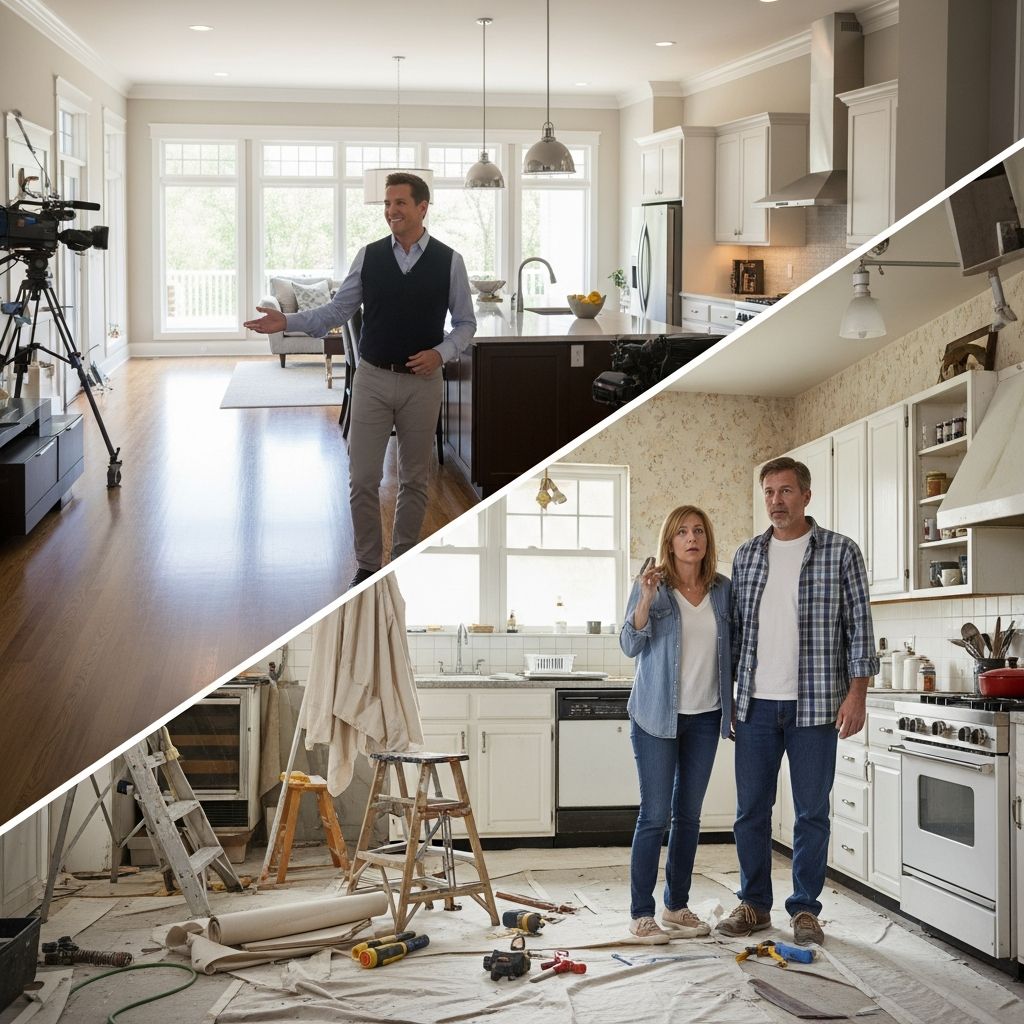
The modern middle-class vision of homeownership is increasingly shaped not by neighborhoods, local agents, or boring bank appointments, but by a diet of glossy home-renovation shows that make every starter home look like a failure and every budget feel too small.
The Scripted Dream vs. Real Life
Home-renovation TV operates on a simple premise: take a dated house, add some personality-filled hosts, sprinkle in staged conflict, and finish with a stunning reveal that makes everything look easy, fast, and surprisingly affordable. Yet the gap between this scripted dream and the financial reality of most middle-class families is wider than it appears on screen.
Instead of offering neutral entertainment, these shows quietly reset what viewers believe a “normal” home should look like. Outdated tile, laminate countertops, and small closets are framed as emergency problems rather than neutral quirks of an ordinary, livable house.
- Cosmetic imperfections start to feel like moral failures.
- Families feel pressure to upgrade immediately instead of over time.
- Reasonable budgets begin to look embarrassingly small.
How Renovation TV Rewrites Middle-Class Expectations
Middle-class homebuyers historically accepted that their first or second home would be a work in progress. The yard would mature over years, the furniture would mix old and new, and improvements would happen when savings allowed. Home-renovation TV compresses that patient journey into a single dramatic arc.
The result is a powerful shift in expectations that can quietly undermine financial stability and emotional satisfaction with an otherwise solid home.
Common Expectations Shaped by TV
- Instant perfection: Viewers begin to believe that move-in day should coincide with “dream home” status.
- Large, flexible budgets: Five- or six-figure renovation costs are presented as routine instead of exceptional.
- Endless customization: Every wall, cabinet, and fixture is treated as negotiable rather than expensive to change.
- Designer-level finishes: Quartz, solid wood, bespoke tile, and custom carpentry are framed as basic expectations.
The Hidden Economics of “Made for TV” Houses
Home-renovation shows present a simplified financial story: purchase price plus renovation budget equals finished masterpiece. What rarely makes it into the script are the layers of cost and support that normal buyers don’t receive but that quietly subsidize the televised transformation.
From discounted materials to unpaid labor and behind-the-scenes sponsorships, the on-air budget is often more fiction than fact, even when it is presented as tightly calculated.
Typical Off-Screen Financial Advantages
- Discounted or donated materials from brands seeking publicity.
- Contractor rates that do not reflect what a one-off homeowner would pay.
- Free or subsidized design labor bundled into the show’s production costs.
- Unmentioned extras: landscaping, staging, and décor often gifted or heavily discounted.
On-Screen Budgets vs. Real-World Costs
The simplified budgets shown on TV often fail to include:
- Permits, inspections, and zoning-related changes.
- Temporary housing if the home is unlivable during major work.
- Structural surprises that emerge once walls are opened.
- Future maintenance for high-end finishes and custom builds.
| Line Item | How It Appears on TV | How It Often Works in Real Life |
|---|---|---|
| Materials | Neatly rounded total (e.g., “$30,000 for all finishes”) | Multiple vendor invoices, delivery fees, upgrades, and taxes that push totals well beyond initial estimates |
| Labor | One bundled line item for “contractor” costs | Separate trades (plumbing, electrical, carpentry, HVAC) billing at different hourly or project rates |
| Design | Included as part of the show’s magic | Designer or architect fees often charged as a percentage of total project cost or at a significant hourly rate |
| Timeline | Compressed into a few weeks or a single episode | Extended over months, with delays from backordered materials, permits, or contractor availability |
| Contingency | Handled with a quick, dramatic “We found a problem” segment | Necessitates a real emergency fund or credit capacity homeowners must absorb without camera crews or sponsors |
The Emotional Fallout for Ordinary Buyers
Financial strain is only one side of the story. The emotional and psychological impact of comparing a normal house to a highly produced reveal can be subtle yet powerful. Ordinary spaces begin to feel inadequate, even when they are safe, functional, and financially sensible.
Homebuyers who absorb TV-level expectations may find themselves perpetually dissatisfied, chasing upgrades instead of appreciating the stability their home already provides.
Signs You’ve Internalized the TV Version of “Normal”
- Feeling embarrassed to host guests because your home doesn’t look “Instagram-ready.”
- Viewing practical finishes (like vinyl, laminate, or older tile) as personal failures.
- Talking about your house primarily in terms of what’s wrong rather than what’s working.
- Delay buying altogether because no home in your price range feels as polished as what you see on screen.
Middle-Class Math: What These Shows Rarely Emphasize
For many middle-class households, the monthly payment—not the final photo—is what decides whether homeownership is sustainable. Yet this side of the equation is rarely treated as the main character on renovation TV. The narrative often prioritizes aesthetics and layout over long-term financial resilience.
Real financial security depends more on debt levels, emergency funds, and stable income than on statement lighting or feature walls, but that reality rarely tests well with focus groups.
Key Financial Questions Missing from the Script
- How will this renovation affect long-term savings and retirement?
- Is the new mortgage or loan structured to withstand job loss or medical emergencies?
- What happens if the housing market dips and high-end improvements never pay back their cost?
- How much pressure will these choices place on day-to-day life and relationships?
Building a Healthier Relationship with Home-Renovation TV
Enjoying renovation shows does not automatically doom anyone to financial or emotional ruin. The key is learning to separate entertainment from guidance. The same way viewers understand that crime dramas don’t resemble actual police work, homebuyers can retrain themselves to view design television as stylized storytelling rather than a checklist.
By consciously reframing what appears on screen, middle-class viewers can protect their finances, mental health, and long-term satisfaction with homes that are perfectly fine but not camera-ready.
Practical Ways to Watch More Critically
- Mute the budget numbers. Treat them as part of the plot, not as realistic benchmarks.
- Assume substantial off-screen discounts and help that you will not receive in your own projects.
- Notice how rarely long-term maintenance, insurance, or property taxes are discussed.
- Ask, “Would this choice still make sense without TV cameras or sponsorships?”
Redefining What a “Good” Home Looks Like
One of the most radical moves a middle-class homebuyer can make in this media environment is to reclaim a quieter, more grounded definition of a good home. Instead of chasing cinematic perfection, success can mean owning a place that supports life rather than dominating it.
That might mean embracing older finishes, smaller spaces, or modest renovations completed over years instead of weeks. It may even mean choosing a less expensive property specifically to preserve flexibility in other areas of life.
Alternative Benchmarks for Home Satisfaction
- Comfort and safety rather than trendiness.
- Commuting time that preserves your health and relationships.
- A monthly payment that leaves room for savings and rest, not constant hustle.
- Spaces that genuinely match how your family lives, not how a scripted family behaves on camera.
Protecting Your Budget from the “HGTV Effect”
Even highly self-aware buyers can find themselves drifting toward expensive changes after binge-watching home-renovation marathons. The visual repetition of massive islands, open-concept spaces, and spa bathrooms can rewire what feels standard, not luxurious. Guardrails can help prevent that subtle pressure from turning into real debt.
Instead of rejecting aesthetic enjoyment altogether, middle-class homeowners can channel design inspiration through a realistic financial filter that respects their actual resources.
Concrete Strategies Before You Renovate
- Set a firm renovation cap linked to your income and emergency savings, not to what you’ve seen others spend.
- Create two lists: “must-fix for safety/function” and “nice-to-have for looks”—and fund them in that order.
- Use a 30-day cooling-off rule before committing to nonessential upgrades inspired by something you watched.
- Request at least three quotes from local contractors and assume costs may still overrun by 10–20%.
Talking Honestly with Your Agent and Contractor
Real estate agents and contractors increasingly work with clients whose expectations have been shaped by TV rather than by local norms and building realities. Clear communication about what is feasible for a given budget, timeline, and neighborhood can spare everyone frustration.
Bringing your media-influenced wish list into the open also allows professionals to suggest creative compromises that capture a similar feeling without replicating a specific, expensive on-screen project.
Questions to Ask Professionals
- “What does a realistic renovation budget look like for a home in this price range?”
- “Which projects tend to add genuine resale value in this area, and which are mostly personal preference?”
- “What are three lower-cost alternatives to achieve a similar look?”
- “What timeline should we truly expect, including delays and inspections?”
FAQs: Navigating the Gap Between TV and Reality
Do home-renovation shows ever reflect real budgets?
Some shows incorporate more realistic numbers than others, but nearly all benefit from advantages that ordinary homeowners do not receive—such as bulk pricing, promotional discounts, and free labor from the production team. Viewers should treat any televised budget as a simplified narrative tool, not an exact model.
Is it wrong to want a “dream home” like the ones on TV?
Wanting a beautiful, well-designed space is not inherently problematic. The challenge lies in tying your sense of worth or success to reaching that specific, highly curated standard, especially if doing so jeopardizes financial stability or long-term goals like education, retirement, or time with family.
How can I tell if a renovation idea is financially responsible?
A simple test is to calculate how the project affects your savings rate, emergency cushion, and long-term investment plans. If a single remodel forces you to pause retirement contributions, drain reserves, or rely on high-interest debt, its true cost is far greater than the price quoted on any contractor’s estimate.
What if my home never looks as polished as the ones I see on screen?
Most homes never do, even those owned by people deeply involved in design or construction. Televised houses are staged, professionally lit, and photographed from flattering angles, often just days after completion. Real life inevitably introduces clutter, wear, and evolving needs that never appear in final reveal shots.
How can parents shield kids from unrealistic housing expectations?
Parents can make a point of talking about trade-offs when watching renovation shows together—explaining that big houses might mean longer commutes, higher bills, or fewer vacations. Inviting children into small, age-appropriate home projects also helps them see the value of gradual improvement instead of instant transformation.
Choosing a Home That Serves Your Life, Not Your Screen
When the noise of home-renovation TV is turned down, a quieter set of questions comes into focus: Does this home keep us safe and reasonably comfortable? Does it support our work, relationships, and rest? Can we afford it without constant anxiety? Those questions rarely create dramatic television, but they create much better lives.
For middle-class buyers navigating a housing market already strained by high prices and limited inventory, resisting the gravitational pull of televised perfection may be one of the most powerful financial and emotional decisions they make. A home that anchors your reality will always be more valuable than one that merely imitates someone else’s storyline.