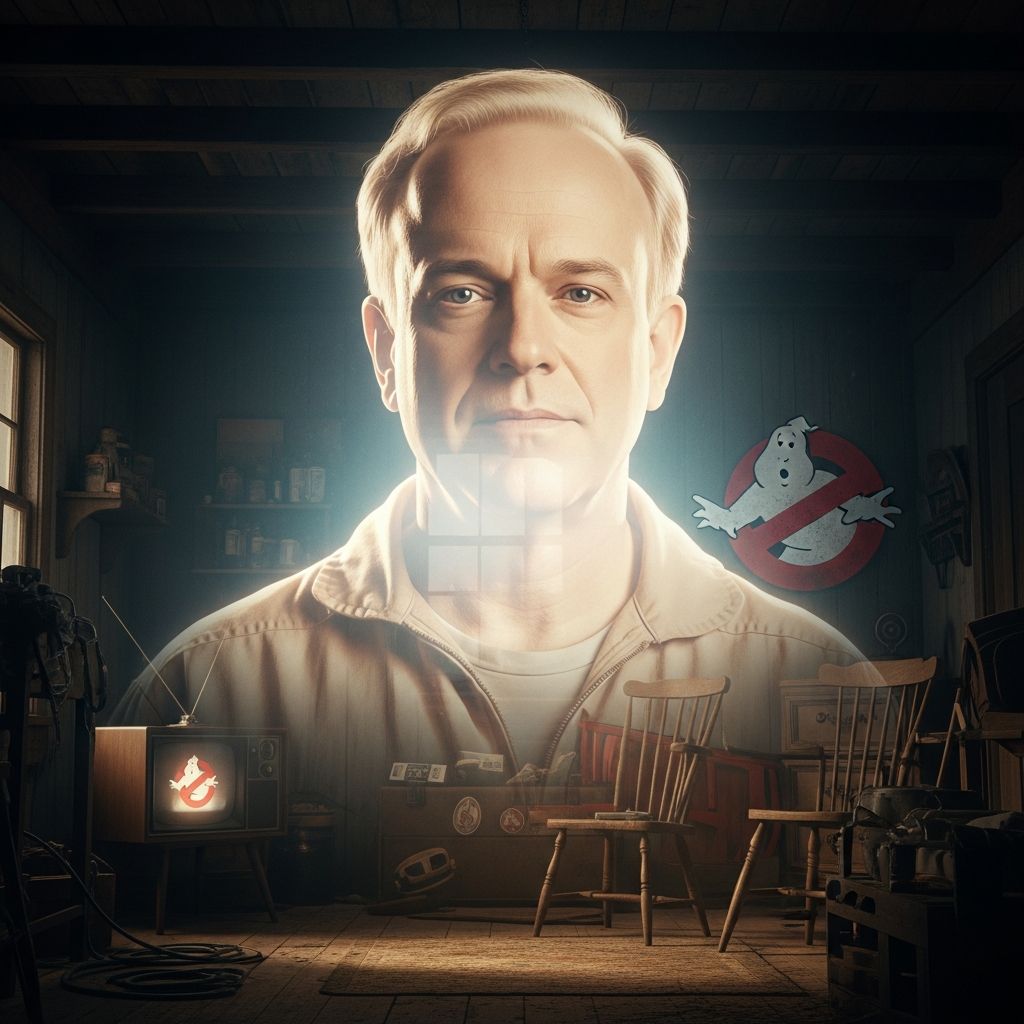
In Ghostbusters: Afterlife, the return of Egon Spengler is more than a surprise cameo. It is a carefully crafted farewell to Harold Ramis, a handoff to a new generation, and a statement about what Ghostbusters stories can be in the twenty-first century.
Using the original article as inspiration, this piece explores how the film transforms Egon’s ghost from a risky visual-effects experiment into the emotional and thematic core of the movie, without repeating the language or structure of that piece.
The Stakes of Bringing Egon Back
When Harold Ramis died in 2014, many fans assumed Egon’s story had ended for good. Any attempt to resurrect him digitally risked feeling cynical or exploitative. Instead, Ghostbusters: Afterlife leans into the supernatural premise of the franchise: if a world is full of ghosts, it makes sense that one of them could be a Ghostbuster himself.
The filmmakers faced three intertwined challenges:
- Respect the real person – Harold Ramis was not just an actor but a co-writer and creative architect of the original Ghostbusters films.
- Stay true to the character – Egon is a socially awkward, obsessive scientist whose choices shape the plot of Afterlife from the opening scene.
- Serve the new story – The film centers on Egon’s estranged daughter Callie and his granddaughter Phoebe, who inherit his secrets and his fight.
The risk paid off: Egon’s presence drives the mystery, the family drama, and the climactic battle, turning what could have been a throwaway nostalgia moment into the spine of the narrative.
From Absent Father to Guiding Spirit
For most of Ghostbusters: Afterlife, Egon is physically absent but narratively central. He dies in the prologue, but the farm he leaves behind is filled with clues, gadgets, and quiet interventions that reveal how he continues to care for his family even after his death.
The film reframes Egon as:
- The misunderstood protector – He abandons New York and his team to chase an imminent supernatural threat in rural Oklahoma, a decision everyone else mistakes for madness.
- The estranged parent – Callie believes he chose science over family, leaving her resentful and financially insecure.
- The unseen caretaker – As the story unfolds, it becomes clear he has been preparing both the town and his descendants to survive a coming disaster.
Because Egon rarely appears in a conventional way, every subtle sign of his presence — a moving lamp, a guided tool, a mysteriously opening drawer — becomes emotionally charged. The movie treats these moments less like jump scares and more like a parent wordlessly helping a child with homework.
How the Ghost Is on Screen Without Explaining the Trick
Director Jason Reitman has deliberately avoided giving a detailed public breakdown of the technique used to bring Egon’s ghost to life, emphasizing the desire to preserve the moment’s mystery. Behind the scenes, however, visual effects studio MPC has described a process that blends performance, reference footage, and digital craftsmanship.
Key elements of the approach, based on industry reports and VFX disclosures, include:
- Archival study – Artists built a detailed library of Egon’s look and manner from the 1984 and 1989 films, observing posture, facial structure, and the way Ramis carried the proton pack.
- On-set double – A body double performed Egon’s movements, giving the other actors real eyelines and physical presence to respond to, rather than forcing them to interact with empty space.
- Digital aging and stylization – Rather than simply recreating Ramis’ real-world older appearance, the team designed a version of Egon that looks like an older Ghostbuster, not a direct hologram of the late actor.
- Physical effects for the “invisible” Egon – Earlier scenes use puppeteered props and lighting cues to suggest a ghost moving through the house, emphasizing presence over spectacle.
Crucially, Egon’s ghost does not speak in the film. That restraint avoids the uncanny valley of synthetic dialogue and keeps the focus on visual performance and on how the living characters react to him. Fans and commentators have widely praised this choice as a key reason the scene feels respectful instead of exploitative.
Honoring Harold Ramis Without Pretending He’s Still Alive
Egon’s final appearance is shaped not just by studio decisions but also by the involvement of Harold Ramis’ family. His daughter, Violet Ramis Stiel, has spoken publicly about how closely the filmmakers consulted her during development, from story concept to the emotional tone of the climax.
According to Stiel, several principles guided the portrayal:
- It had to feel like Egon, not Harold Ramis – The focus was on sustaining the fictional character, not on recreating her father for sentimental effect.
- The themes needed to be about grief, not resurrection – The cameo underscores that loved ones remain with us in memory and influence, even when they are gone.
- The goodbye had to be cathartic – The scene lets surviving Ghostbusters and Egon’s family say the kind of farewell that Ramis’ sudden death denied them in real life.
The film is explicitly dedicated to Harold Ramis in its end credits, aligning the story’s farewell to Egon with a broader farewell to the man who helped invent this world.
Why the Cameo Is the Emotional Payoff of the Story
The climactic sequence in which Egon’s ghost stands beside his old teammates to confront Gozer is narratively simple but emotionally layered.
| Story Element | How Egon’s Cameo Raises the Stakes |
|---|---|
| Family drama | Callie finally sees that her father sacrificed everything to protect her and her children, transforming anger into understanding. |
| Legacy of the Ghostbusters | The original trio and Egon cross streams one last time, visually handing off responsibility to the kids who helped set the trap. |
| Genre expectations | What might have been a standard effects battle becomes a quiet, almost wordless reunion built around eye contact and physical gestures. |
| Grief and closure | The characters and audience receive a goodbye that gently acknowledges Ramis’ death without pretending he never left. |
Instead of delivering a barrage of quips, Egon’s final act is to stand next to his granddaughter and hold a proton wand with her. The image captures the core of the film’s message: scientific curiosity, courage, and responsibility can be inherited, even when a family is broken.
Nostalgia vs. Story: Does the Scene Go Too Far?
Like many legacy sequels, Ghostbusters: Afterlife walks a fine line between pleasing long-time fans and telling a story that stands on its own. Some critics have argued that the movie leans heavily on callbacks and familiar beats, including the return of Gozer and the use of classic gear.
Egon’s cameo sits at the center of this debate:
- Supporters see the ghost as an earned emotional payoff, anchored in the film’s focus on family, loss, and reconciliation.
- Skeptics worry that digital resurrections of deceased performers may set an uneasy precedent, even when handled with care.
What differentiates Afterlife from more controversial examples is the degree of integration: Egon’s choices shape the plot from scene one, and his family’s emotional arc culminates in the moment he appears. Without him, the story simply does not function in the same way.
Passing the Proton Pack to a New Generation
Egon’s ghostly farewell is not just an ending; it is also a beginning. The younger characters — especially Phoebe — echo his traits: intellectual intensity, social awkwardness, and a willingness to ask questions no one else is asking.
Through Egon’s legacy, the film suggests a new future for the franchise:
- Science as inheritance – Phoebe’s bond with Egon is rooted in shared curiosity and problem-solving, not in genetics alone.
- Chosen and found family – Podcast, Lucky, and others become an oddball crew reminiscent of the original team, but with their own quirks and dynamics.
- Responsibility across generations – Winston’s post-credits role as a benefactor hints that older Ghostbusters will support, but not overshadow, new heroes.
By fading away after his final goodbye, Egon makes clear that his story is complete. His presence blesses the future of Ghostbusting but does not dominate it.
Ethics of Digital Ghosts: Where Afterlife Fits In
The use of a deceased performer’s likeness through digital effects has sparked ongoing debate across the film industry. While Ghostbusters: Afterlife is a commercial entertainment project, it also participates in a broader ethical conversation.
Important considerations include:
- Consent and collaboration – Involving the family and treating the character as distinct from the real person gave the filmmakers a moral framework for the cameo.
- Narrative necessity – Egon’s return addresses unresolved relationships and thematic questions instead of merely supplying fan service.
- Limitations by design – Keeping him silent and largely confined to a single extended scene reduces the risk of turning him into a digital puppet.
While norms around digital likeness use are still evolving, Afterlife offers a case study in how restraint, family involvement, and clear thematic intent can mitigate some of the unease.
Key Takeaways for Fans and Storytellers
For viewers who grew up on the original films or are discovering Ghostbusters through Afterlife, Egon’s ghostly return delivers several overlapping messages:
- Grief can coexist with adventure – The film proves that a supernatural comedy can also be a meditation on loss and reconciliation.
- Heroes change, but values endure – Curiosity, teamwork, and responsibility remain central, even when the faces holding the proton packs are different.
- Goodbyes can happen late – Both the characters and the real-world audience receive a chance to say farewell to a beloved figure long after his death.
Egon Spengler’s final stand in Ghostbusters: Afterlife is not just about reviving a character. It is about accepting that stories — like families — can grieve, remember, and still move forward.
Frequently Asked Questions (FAQs)
Q: How does Ghostbusters: Afterlife bring Egon Spengler back if Harold Ramis died?
The film uses a combination of an on-set body double, archival visual reference, and advanced digital effects to create a non-speaking ghostly version of Egon that resembles an older incarnation of the character without fully recreating Harold Ramis as he appeared late in life.
Q: Did Harold Ramis’ family approve of Egon’s ghostly cameo?
Yes. Public interviews with his daughter Violet Ramis Stiel indicate that she was consulted throughout the process and felt the portrayal honored both the character and her father by focusing on Egon’s personality and the film’s themes of grief and connection.
Q: Why doesn’t Egon’s ghost speak in the movie?
Keeping Egon silent avoids the uncanny effect of synthetic dialogue and shifts attention to facial expressions, body language, and the reactions of the living characters. This creative limitation also reinforces the sense that he is a memory and presence, not a full return from the dead.
Q: Is Egon’s appearance just fan service, or is it important to the plot?
Egon’s presence is structurally crucial: his earlier actions drive the move to Oklahoma, his hidden equipment enables the kids to fight Gozer, and his final appearance resolves long-standing emotional rifts with his family and fellow Ghostbusters.
Q: Who was responsible for the visual effects behind Egon’s ghost?
The VFX work was led by MPC, whose Character Lab team studied earlier films, collaborated with the production on performance capture, and digitally crafted an older version of Egon tailored specifically for the story of Afterlife.
References
- Ghostbusters: Afterlife — Columbia Pictures / Sony Pictures Releasing. 2021-11-19. https://www.sonypictures.com/movies/ghostbustersafterlife
- ‘Ghostbusters: Afterlife’ Director Explains Why That Shocking Cameo Had to Happen — Fatherly. 2021-11-19. https://www.fatherly.com/play/ghostbusters-afterlife-egon-spengler-cameo-harold-ramis
- Ghostbusters: Afterlife — Plot and production details. Columbia Pictures via secondary coverage. 2021-11-19. https://en.wikipedia.org/wiki/Ghostbusters:_Afterlife
- The story behind Ghostbusters: Afterlife’s posthumous Harold Ramis cameo — SYFY / NBCUniversal. 2021-11-23. https://www.syfy.com/syfy-wire/harold-ramis-cameo-ghostbusters-afterlife-backstory
- How MPC Brought Back the Late Harold Ramis in Ghostbusters: Afterlife — MPC. 2022-06-08. https://www.mpcvfx.com/en/news/how-mpc-brought-back-the-late-harold-ramis-in-ghostbusters-afterlife/
- Ghostbusters: Afterlife: That Harold Ramis “Cameo” Wasn’t Just One Scene — Consequence. 2021-11-22. https://consequence.net/2021/11/ghostbusters-afterlife-harold-ramis-cameo/