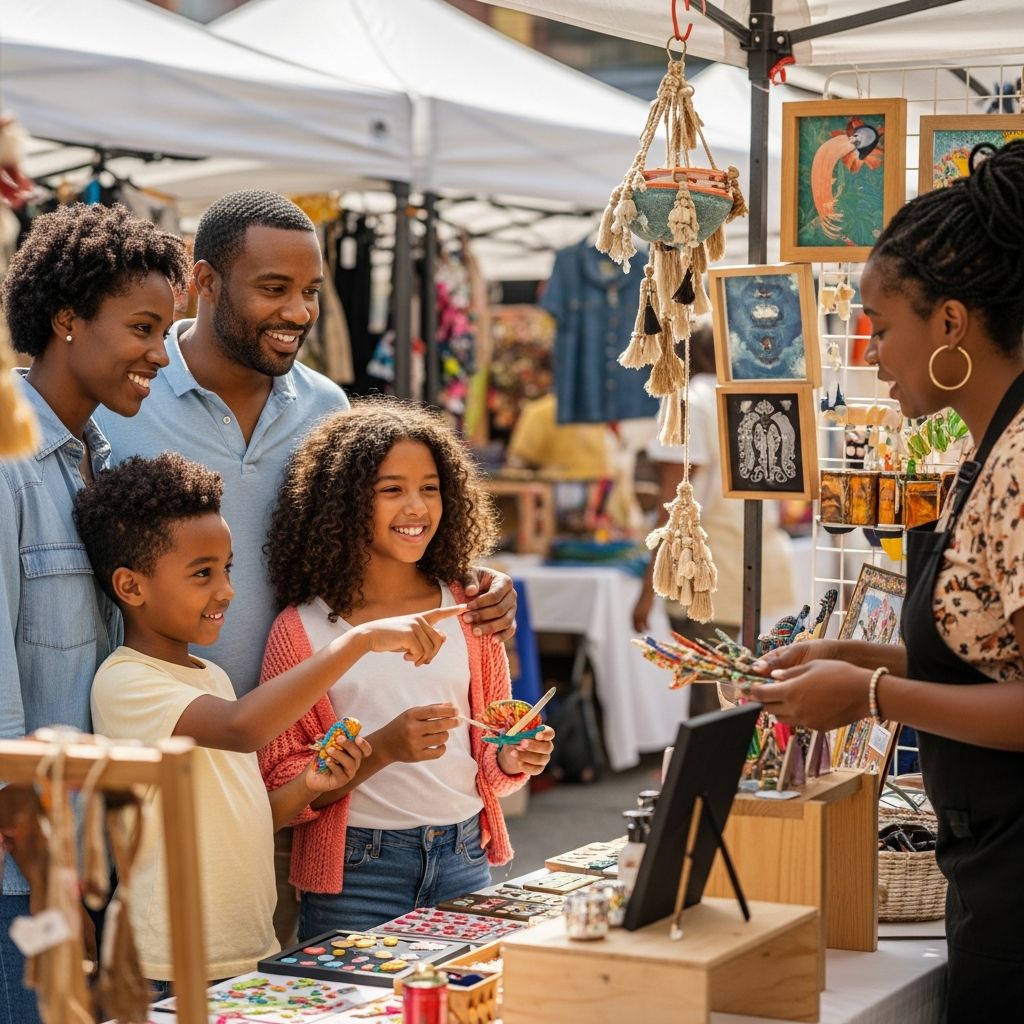
Choosing where you spend your money is one of the most powerful tools your family has to shape the world your children grow up in. Supporting Black-owned businesses is a concrete, everyday way to promote fairness, celebrate culture, and strengthen local communities while meeting your family’s real-life needs.
Why Black-Owned Businesses Deserve Intentional Support
Black entrepreneurs are starting and growing businesses at impressive rates, yet their firms still represent only a small share of all U.S. businesses and total business revenue. In 2022, there were about 194,585 majority Black-owned firms, employing roughly 1.6 million workers and generating over $200 billion in revenue—but that accounted for only about 3% of all firms and 1% of total business revenue in the U.S.
For parents and caregivers, these numbers translate into an opportunity: with some intentional choices, your family can help close persistent gaps in access, visibility, and wealth-building.
- Economic impact: Spending at Black-owned businesses helps create jobs and keep money circulating in communities that have historically been excluded from investment and credit.
- Representation: When kids see Black founders creating products and services they love, it normalizes leadership, creativity, and expertise across racial lines.
- Equity in practice: Supporting Black-owned businesses is a practical way to respond to systemic barriers such as less access to financing and lower approval rates for business loans.
Understanding the Challenges Black Entrepreneurs Face
Talking honestly with children about why your family makes certain buying choices starts with understanding the bigger picture. Black business owners often contend with structural obstacles that go beyond typical start-up challenges.
Limited access to capital
Research shows that Black-owned businesses face higher denial rates for loans and lower levels of approval even when controlling for creditworthiness. That means:
- Less money available to launch or expand a business
- Greater reliance on personal savings, friends, or family
- Slower growth, even when a business has strong demand
Visibility and customer reach
Many Black-owned firms operate in neighborhoods or online spaces that receive less media coverage and consumer attention. Analyses of business reviews and local visibility have found that businesses in majority-Black neighborhoods often receive fewer reviews and lower ratings than comparable businesses elsewhere, directly affecting growth and revenue.
For families, this means you may need to look a little harder to discover amazing Black-owned brands—but once you find them, you can help boost their visibility through word of mouth and online engagement.
Why this context matters for parents
- It explains why you might go out of your way to choose a Black-owned business when there are many options.
- It gives you a chance to teach children about fairness and equity in age-appropriate language.
- It helps kids see the link between everyday choices and big-picture social change.
How Supporting Black-Owned Businesses Helps Your Family Too
Backing Black entrepreneurs is not just an act of solidarity; it can genuinely enrich your family’s daily life.
- Unique products: Many Black-owned brands are rooted in specific cultural traditions, problem-solving for textured hair, melanin-rich skin, or cultural celebrations that mainstream products overlook.
- Innovation: Black business owners often create solutions in gaps the larger market has ignored—like inclusive children’s books, diverse dolls, or parenting resources centering Black families.
- Community connection: Shopping at local Black-owned cafés, bookstores, or play spaces helps your family build relationships beyond your immediate circle and strengthens social ties.
Everyday Categories Where Families Can Choose Black-Owned
You do not have to overhaul your entire shopping routine. Start with small, repeatable switches in categories where your family already spends money.
1. Home and family essentials
- Bath and body care: Look for Black-owned brands that offer gentle, fragrance-conscious products for babies, kids, and parents, often formulated with curly and coily hair and melanin-rich skin in mind.
- Household goods: From candles and home fragrances to eco-friendly cleaning products, many Black-founded companies center sustainability and bold, modern design.
- Snacks and pantry staples: Explore sauces, spices, teas, coffee, and snacks that bring in new flavors and family food traditions.
2. Clothing, toys, and books for kids
- Children’s clothing: Seek out Black-owned brands featuring inclusive sizing, affirming messages, or vibrant prints inspired by African and diasporic cultures.
- Dolls and toys: Black-owned toy makers increasingly offer dolls in a wide range of skin tones, hair textures, and abilities, as well as games that highlight Black history and culture.
- Books: Support Black authors, illustrators, and independent bookstores that prioritize stories with Black protagonists in everyday, joyful settings.
3. Beauty, wellness, and self-care for parents
- Skin and hair care: Black-founded brands often lead in transparent ingredient lists, inclusive shade ranges, and products designed for curly, coily, and protective styles.
- Wellness services: Consider Black-owned yoga studios, mental health practices, doulas, lactation consultants, and fitness spaces that understand the specific experiences of Black parents.
4. Local experiences and services
- Restaurants and cafés: Make a point to try Black-owned eateries in your area—brunch spots, juice bars, bakeries, and family-friendly diners.
- Creative spaces: Look for art studios, music schools, or dance classes led by Black instructors and entrepreneurs.
- Professional services: When you need photographers, event planners, tutors, or home services, seek out Black-owned options and keep them in your family’s recommendations list.
Practical Ways to Find Black-Owned Businesses
Because Black-owned firms still only account for a small share of all businesses, you might not see them featured prominently in big-box stores or search results. Here are simple strategies to discover more options.
- Use curated directories: Many cities maintain online lists of Black-owned businesses across categories like food, child care, wellness, and retail. Community organizations and local chambers of commerce also publish guides.
- Follow local leaders: Pay attention to recommendations from Black parents, community organizers, and creators who highlight businesses on social media.
- Ask small-business owners: When you find one Black-owned business you love, ask the owner where they shop, who prints their T-shirts, or which café they recommend.
- Search smart: Combine your city or neighborhood name with phrases like “Black-owned bookstore” or “Black-owned kids clothing” in your search engine.
Comparing the Impact of Your Spending Choices
To understand why directing even a portion of your family’s budget toward Black-owned companies matters, it helps to look at the broader business landscape.
| Business Type | Share of U.S. Firms | Share of Total Revenue | Approximate Employment |
|---|---|---|---|
| Black-owned firms | About 3% of all firms | About 1% of business revenue | ~1.6 million workers (2022) |
| All other firms combined | About 97% of firms | About 99% of revenue | Many tens of millions of workers |
Because Black-owned businesses represent a relatively small slice of the market, each purchase you direct their way has a proportionally larger impact on growth, hiring, and long-term survival than the same purchase at a large, established chain.
Making It a Family Practice, Not a One-Time Gesture
Kids learn most from what they see over and over again. Instead of a single shopping spree, think about building a steady habit of supporting Black-owned businesses.
Start with one budget line
Choose one area of your monthly spending and commit to finding Black-owned options there first. For example:
- Birthday gifts
- Coffee and snacks on weekends
- Books and school supplies
- Seasonal clothing or hair care products
Share the “why” with your children
You can tailor the explanation to your child’s age:
- Toddlers: Focus on simple fairness: “We’re buying from lots of different kinds of people so everyone has a chance to grow.”
- School-age kids: Introduce the idea of opportunity: “Some people haven’t had the same chances to get loans or open stores. When we buy from them, we help even that out.”
- Teens: Talk about systemic racism, access to capital, and how economic power shapes neighborhoods, schools, and media representation.
Let kids help choose
- Invite them to pick books, snacks, or toys from Black-owned brands.
- Let older kids help research businesses or manage a small “family impact” budget.
- Encourage them to share their favorite finds with friends and teachers.
Beyond Buying: Other Ways to Support Black-Owned Businesses
Money matters, but families can offer support in many non-financial ways that still make a difference.
- Leave thoughtful reviews: Positive, specific online reviews help small businesses stand out in search results and can counteract biased rating patterns that hurt firms in majority-Black neighborhoods.
- Share on social media: Post photos (with permission), tag the business, and highlight what you loved—especially if it’s kid- or family-friendly.
- Recommend to schools and groups: Suggest Black-owned caterers, bookstores, or vendors for PTA events, team celebrations, or school book fairs.
- Buy gift cards: Gift cards provide immediate cash flow and introduce new customers to the business.
- Attend workshops and events: Support Black-owned art shows, story times, markets, and panels, and bring your kids when appropriate.
Supporting Black Women Entrepreneurs
Black women are among the fastest-growing groups of business owners in the United States, but they also encounter some of the steepest hurdles in accessing capital and scaling their ventures. Recent research estimated that Black/African American women-owned businesses represent a significant share of all women-owned and Black-owned firms and have seen strong revenue growth, yet still face systemic disparities in financing and contracting opportunities.
When your family chooses to purchase from a Black woman–owned company—whether that’s a hair care brand, a doula practice, a tutoring service, or a clothing line—you are supporting both racial and gender equity in entrepreneurship.
Frequently Asked Questions (FAQs)
How can I be sure a business is truly Black-owned?
Many businesses identify themselves as Black-owned on their websites or social media profiles. You can also look for certification through local chambers of commerce or minority business councils. If you are unsure, it is acceptable to ask respectfully how the founder identifies and whether the company is Black-owned.
Is it exclusionary to intentionally seek out Black-owned businesses?
Choosing to support Black-owned companies does not mean you never buy from anyone else. It is a way to address documented disparities in access to capital, visibility, and revenue by directing some of your existing spending toward businesses that have historically been underrepresented and under-resourced.
We are on a tight budget. Can we still make an impact?
Yes. You do not need to spend more—just shift where some of your current dollars go. Even small, repeat purchases like coffee, a monthly book, or hair products can create steady support. Non-monetary actions like reviews and recommendations are also powerful.
What if there are few Black-owned businesses in my immediate area?
You can support online shops that ship nationally, look for virtual services (like therapy, tutoring, or consulting), and plan to visit Black-owned businesses when you travel. You can also ask local community groups if they have recommendations that might not appear easily in online searches.
How do I avoid tokenizing Black business owners?
Treat Black-owned businesses as you would any business you respect: expect quality, give honest but considerate feedback, and build long-term relationships. Avoid one-time, performative purchases driven by trends or guilt; instead, integrate these businesses naturally into your recurring routines.
References
- Black Owned Business Statistics You Should Know 2025 — United Capital Source. 2025-01-10. https://www.unitedcapitalsource.com/blog/black-owned-business-statistics/
- A look at Black-owned businesses in the U.S. — Pew Research Center. 2025-02-12. https://www.pewresearch.org/short-reads/2025/02/12/a-look-at-black-owned-businesses-in-the-us/
- Black-Owned Businesses in the US See Significant Growth but Still Face Barriers — NCHStats. 2025-02-01. https://nchstats.com/black-owned-businesses-in-us/
- The 2025 Impact of Women-Owned Businesses: Black/African American Women — Wells Fargo Institute for Women’s Entrepreneurship. 2025-01-01. https://smallbusinessresources.wf.com/wp-content/uploads/2025/01/wells-fargo-2025-impact-of-women-owned-businesses-blackafrican-american.pdf
- Reaping the unrealized gains of Black businesses — Brookings Institution. 2025-03-01. https://www.brookings.edu/articles/reaping-the-unrealized-gains-of-black-businesses/
- Census Bureau Releases New Data About Business Owners — U.S. Census Bureau. 2025-04-29. https://www.census.gov/newsroom/press-releases/2025/business-owner-characteristics.html