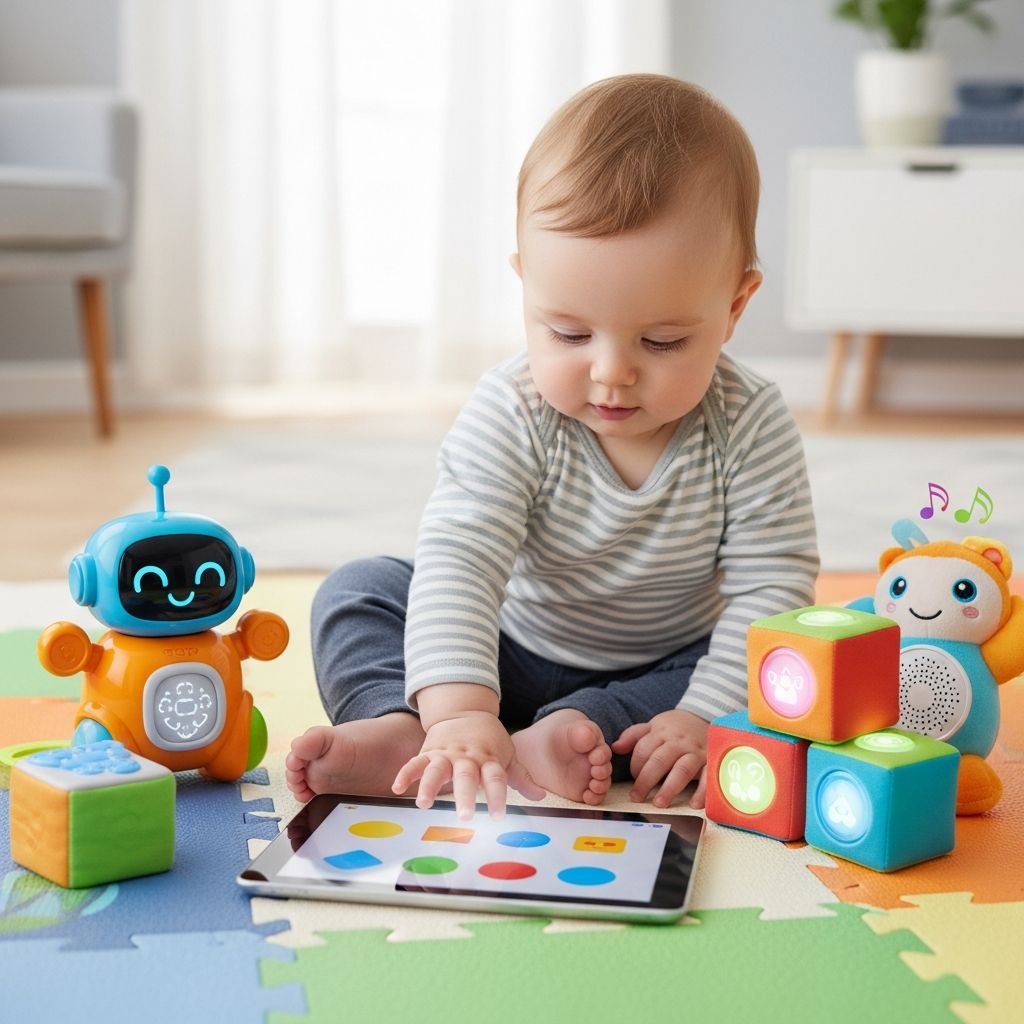
Modern parents often select toys featuring lights, sounds, and interactive screens to captivate young children. However, emerging research indicates these electronic gadgets might hinder rather than help the development of essential language abilities in babies. Traditional playthings without batteries encourage richer dialogues between caregivers and infants, fostering vocabulary expansion and conversational skills vital for cognitive growth.
Understanding the Language Learning Process in Babies
Infants acquire language primarily through everyday interactions with trusted adults. From birth, babies absorb sounds, rhythms, and words during responsive exchanges. Caregivers’ speech patterns, repetitions, and expansions on a child’s babble lay the foundation for phonemic awareness, word recognition, and sentence formation. High-quality verbal input during play directly correlates with advanced expressive and receptive language milestones.
Studies emphasize that the quantity and variety of words children hear predict their linguistic proficiency. Caregivers who describe actions, label objects, and engage in back-and-forth dialogue create optimal learning environments. This interactive dynamic stimulates neural pathways responsible for communication, far surpassing passive exposure to recorded voices or melodies from devices.
How Electronic Toys Disrupt Verbal Exchanges
Devices like talking dolls, musical mats, and tablet apps dominate attention with automated sounds and visuals. These features often overpower natural conversation, causing parents to speak less and respond minimally to their child’s cues. Research with toddlers aged 16 to 24 months reveals that electronic play leads to fewer caregiver utterances, reduced unique vocabulary, and shorter conversational turns compared to non-tech alternatives.
In controlled observations, both children with typical development and those with autism spectrum disorder produced significantly fewer spoken utterances and diverse words per minute when using battery-operated toys. The constant barrage of toy-generated noises—songs, animal calls, and phrases—leaves minimal space for child contributions, effectively silencing budding speakers.
Key Research Findings on Toy Types and Speech Output
| Toy Type | Child Utterances/Minute | Unique Words/Minute | Parent Speech Volume |
|---|---|---|---|
| Traditional Toys | Higher (e.g., 10+) | More diverse | Increased quantity & variety |
| Electronic Toys | Lower (e.g., 4-5) | Fewer unique roots | Decreased; toys “talk” instead |
This table summarizes patterns from peer-reviewed studies comparing play sessions. Electronic toys consistently yield quieter interactions, with pauses dominated by device audio rather than human dialogue.
Parental Roles in Mitigating Tech Toy Effects
Adults often defer to the toy’s output, assuming it educates independently. Yet, children thrive on personalized feedback. When toys activate unilaterally, parents engage less responsively, diminishing teaching moments. Experts note that noisy gadgets isolate children, limiting peer and adult dialogues essential for emotional regulation and social skills.
- Electronic play reduces parent-child turn-taking, a cornerstone of conversational competence.
- Toys’ pre-recorded speech lacks adaptability to a child’s gestures or interests.
- Flashy distractions shift focus from meaningful exchanges to passive observation.
Benefits of Switching to Simple, Traditional Playthings
Non-electronic items like wooden blocks, soft dolls, puzzles, and stacking rings invite imagination and narration. These tools prompt caregivers to vocalize actions, ask questions, and mirror child efforts. Research confirms that such play boosts child vocalizations and lexical diversity, even among those with developmental delays.
Books stand out as supreme language enhancers. Shared reading sessions generate extensive dialogue, far outperforming screen-based stories. Puzzles similarly demand collaborative problem-solving, weaving in descriptive language naturally.
Proven Strategies to Boost Language Through Play
To counteract potential setbacks from tech toys, adopt evidence-based techniques like Toy Talk. This method trains parents to produce varied, syntactically rich sentences during play, accelerating toddlers’ sentence-building skills.
- Self-Talk: Narrate your actions, e.g., “I’m stacking the red block on top.”
- Parallel Talk: Describe the child’s moves, e.g., “You’re rolling the ball fast!”
- Responsive Labeling: Name objects in focus, e.g., “That’s a soft teddy bear.”
A study funded by the National Institute of Child Health funded coaching in these approaches yielded measurable gains in children’s syntactic growth over six months. Integrate them with traditional toys for maximum impact.
Age-Specific Recommendations for Toy Selection
0-12 Months: Sensory Foundations
Prioritize rattles, cloth books, and textured balls. These encourage grasping and cooing responses without overwhelming stimuli.
12-24 Months: Vocabulary Explosion
Opt for shape sorters, farm animals, and pretend food sets. Use play to introduce 5-10 new words daily through expansive talk.
24-36 Months: Sentence Building
Introduce simple puzzles and role-play figures. Facilitate storytelling to refine grammar and narrative skills.
Balancing Technology with Intentional Play
Not all screens are detrimental when used mindfully. Limit to 10-15 minutes of interactive apps with co-viewing, pausing to discuss content. Prioritize human-led activities 80% of playtime. Monitor milestones: by 18 months, babies should combine words; delays warrant professional consultation.
High-tech toys teach device navigation but rarely retain core concepts like letters or numbers without guidance. Reserve them as occasional novelties, not staples.
Frequently Asked Questions
Do all electronic toys harm language development?
No, but most reduce interactive talk. Choose quiet, parent-responsive ones sparingly.
How much daily play without tech is ideal?
Aim for 60+ minutes of caregiver-led, toy-facilitated conversation to support milestones.
Can tech toys benefit children with delays?
Limited evidence; traditional play shows broader gains, including for ASD.
What if my baby loves noisy toys?
Gradually introduce alternatives, modeling enthusiastic narration to shift preferences.
Are tablets okay for learning ABCs?
They teach swiping over letters; pair with live reading for retention.
Long-Term Implications for Cognitive Health
Consistent language-rich play correlates with stronger executive function, literacy readiness, and social competence by school age. Conversely, over-reliance on passive tech may widen vocabulary gaps, especially in underserved families. Empower parents with knowledge to curate play spaces prioritizing human connection over gadgetry.
By selecting wisely and actively participating, caregivers unlock infants’ innate language potential, setting stages for lifelong communication success.
References
- Electronic Toys Decrease the Quantity and Lexical Diversity of … – NIH — National Institutes of Health (PMC). 2022-07-01. https://pmc.ncbi.nlm.nih.gov/articles/PMC9286016/
- High-tech toys could stagnate babies’ communication skills — Kansas State University Research & Extension. 2016-02-03. https://www.ksre.k-state.edu/news/stories/2016/02/hightech-toys020316.html
- Are Electronic Toys “Bad” for Children’s Development? — Parenting Translator (Substack). Accessed 2026. https://parentingtranslator.substack.com/p/are-electronic-toys-bad-for-childrens
- Toy Talk promotes language development — University of Illinois Department of Speech and Hearing Science. Accessed 2026. https://ahs.illinois.edu/toy-talk-promotes-language-development/